When you see "eco-friendly" on a bottle of cleaner, you might assume it’s the same as "organic." But they’re not. And using the wrong one could mean you’re not actually making a safer choice for your home or the planet.
Eco-friendly doesn’t mean natural
"Eco-friendly" is a broad term. It just means the product claims to have less harm on the environment. That could mean less plastic packaging, lower carbon emissions during shipping, or being biodegradable. But it doesn’t say anything about what’s inside the bottle.Many "eco-friendly" cleaners still contain synthetic chemicals like sodium lauryl sulfate, phthalates, or artificial fragrances. These can irritate skin, trigger asthma, or wash into waterways and hurt aquatic life. Just because the label says "green" doesn’t mean it’s clean inside.
Take a common brand: a spray labeled "eco-friendly" might say it’s "plant-based." But if 80% of that "plant-based" content is water and the rest is a petroleum-derived surfactant, you’re not getting a natural product. You’re getting a marketing term.
Organic means regulated ingredients
"Organic" is different. In cleaning products, organic usually refers to ingredients grown without synthetic pesticides, fertilizers, or GMOs - just like organic food. But here’s the catch: there’s no single government standard for organic cleaning products in the U.S. like there is for food.That’s why you need to look for certifications. The most trusted one is USDA Organic. If a cleaner has the USDA Organic seal, at least 95% of its ingredients (by weight, excluding water and salt) are certified organic. The rest must be on the National List of allowed non-organic substances - and even those are tightly restricted.
Another reliable label is Ecocert. It’s used in Europe and accepted globally. Products with Ecocert certification must contain at least 95% natural ingredients and 10% organic ingredients by total formula weight. No synthetic fragrances, no parabens, no phthalates.
Compare that to a product that just says "made with organic ingredients." That could mean 1% of the formula is organic. The rest? Could be anything.
What’s really in your cleaner?
Let’s break down a real example. Two all-purpose cleaners:- Cleaner A: "Eco-Friendly All-Purpose Spray" - ingredients: water, ethanol, citric acid, fragrance (unnamed), preservative (unknown).
- Cleaner B: "USDA Organic All-Purpose Cleaner" - ingredients: water, organic vinegar, organic castile soap, organic lemon oil, rosemary extract.
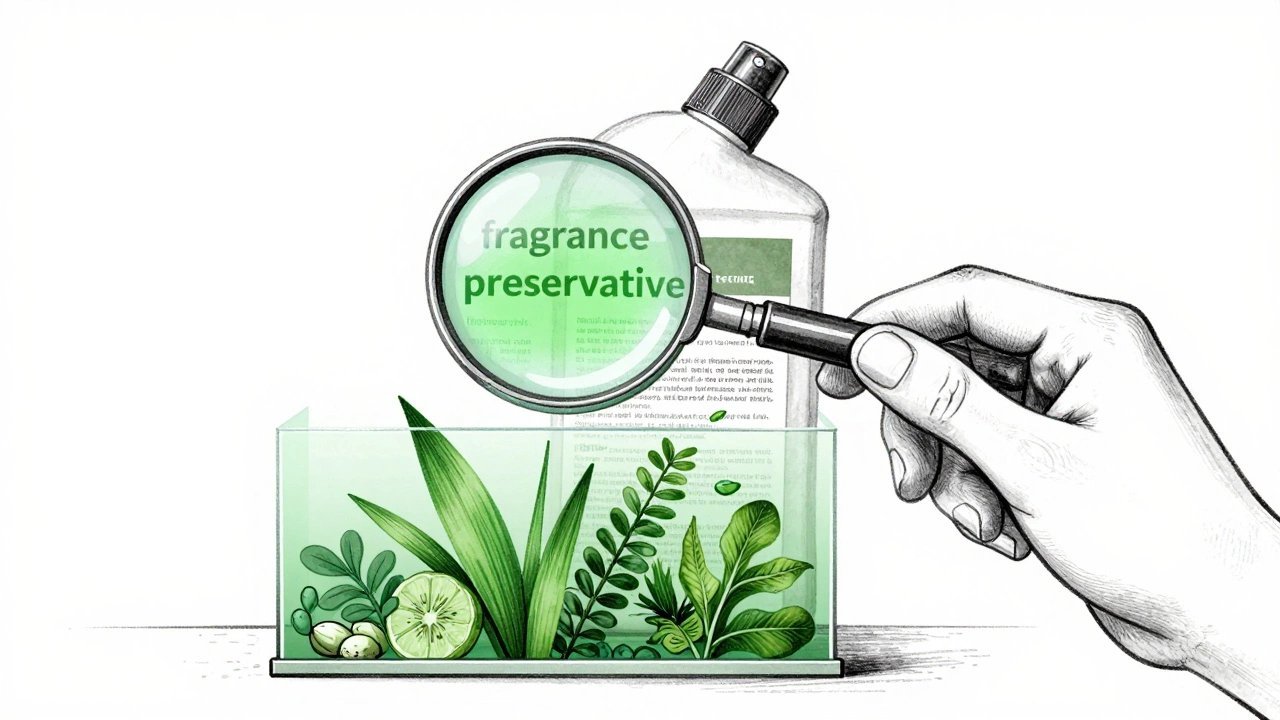
Cleaner A might be biodegradable and come in a recycled bottle. But "fragrance" is a loophole. Companies don’t have to list what’s in that term - it could contain phthalates, which are endocrine disruptors. The preservative? Could be formaldehyde-releasing agents.
Cleaner B? Every ingredient is traceable, plant-derived, and certified organic. No hidden chemicals. No synthetic scents. It’s safe for kids, pets, and septic systems.
Why the confusion exists
The confusion between eco-friendly and organic is intentional. Greenwashing is big business. Companies know you care about health and the environment. So they slap on green labels, earthy colors, and leaf icons to make you think you’re doing the right thing.A 2023 study by the Environmental Working Group found that 68% of cleaning products labeled "green" or "natural" contained at least one ingredient linked to respiratory or skin irritation. Only 12% had third-party organic certification.
It’s not that eco-friendly products are bad. Some are genuinely better than conventional cleaners. But if your goal is to avoid toxins - not just reduce plastic - then organic certified is the only real guarantee.
What to look for on the label
Here’s what to check before you buy:- Look for certifications: USDA Organic, Ecocert, or COSMOS. These are the only ones that mean something.
- Read the full ingredient list: If you can’t pronounce it, or it sounds like a chemical compound, be suspicious.
- Avoid "fragrance," "parfum," or "essential oil blend": These are often covers for synthetic chemicals. Look for products that name the specific oils - like "organic lemon oil" - not just "citrus scent."
- Check for third-party testing: Products tested by independent labs (like EWG Verified or Green Seal) are more trustworthy.
- Ask: "Is this organic, or just marketed as green?" If the answer isn’t clear, it’s probably not.
Real-world impact
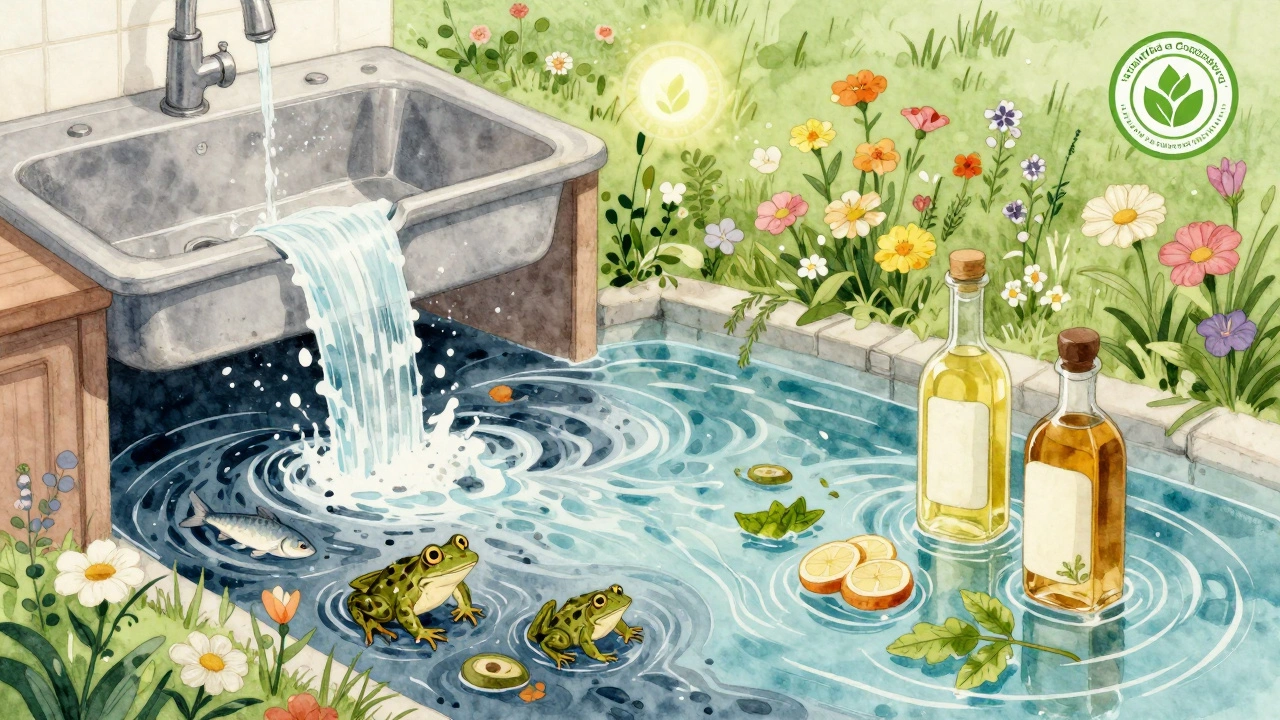
Switching from a regular cleaner to a certified organic one isn’t just about your kitchen counters. It’s about what ends up in your water supply.A 2024 EPA report found traces of synthetic surfactants - common in non-organic cleaners - in 37% of U.S. rivers and streams. These chemicals don’t break down easily. They build up in fish, frogs, and even drinking water sources.
Organic cleaners, made with plant oils and mineral salts, break down quickly and safely. They don’t pollute. They don’t bioaccumulate. They’re designed to return to nature without leaving a trace.
And for people with allergies, asthma, or chemical sensitivities, the difference isn’t theoretical. It’s daily relief.
Can you make your own?
Yes. And it’s the only way to be 100% sure what’s in your cleaner.Simple recipe: mix 1 cup white vinegar (organic if possible), 1 cup water, and 10 drops of organic lemon or tea tree oil. Pour into a spray bottle. Done.
That’s organic. That’s eco-friendly. That’s transparent. And it costs less than $2 a bottle.
You don’t need fancy brands. You need honesty. And you can get that without buying anything.
Bottom line
Eco-friendly is about packaging, shipping, and waste. Organic is about what’s inside. One reduces environmental impact. The other reduces health risk.If you want a cleaner home that’s also a healthier home - go for certified organic. If you’re just trying to feel good about your choices, eco-friendly might be enough. But don’t confuse the two. They’re not the same.
Next time you pick up a cleaner, ask: "Is this truly clean?" Not just green. Not just natural-sounding. Truly clean. And if the label doesn’t prove it, don’t buy it.
Are all organic cleaners eco-friendly?
Most certified organic cleaners are also eco-friendly because they avoid synthetic chemicals and use biodegradable ingredients. But eco-friendliness also depends on packaging, manufacturing, and shipping. A product can be organic but come in a plastic bottle shipped across the world - so check both the ingredients and the packaging.
Can a cleaner be organic without being certified?
Yes, but it’s meaningless. Without certification, there’s no way to verify claims. A company can say "organic" even if only 1% of the ingredients are organic. Only USDA Organic, Ecocert, or COSMOS labels are legally enforceable and backed by third-party audits.
Is vinegar really effective as a cleaner?
Yes. Vinegar is a natural acid that breaks down grease, kills mold, and removes hard water stains. It’s not a disinfectant against all bacteria, but for everyday cleaning in kitchens and bathrooms, it’s more than enough. Add baking soda for scrubbing power, and you’ve got a powerful, non-toxic combo.
Do organic cleaners cost more?
Sometimes, but not always. Certified organic cleaners can be 20-50% more expensive than conventional ones. But homemade versions using vinegar, baking soda, and essential oils cost pennies per use. And you’re not paying for marketing, fancy packaging, or false claims.
What’s the safest cleaner for babies and pets?
The safest option is a simple mix of water and organic castile soap, or vinegar and water with a drop of organic lavender oil. Avoid anything with essential oils like tea tree or eucalyptus around pets - some are toxic to cats and dogs. Always choose fragrance-free or explicitly pet-safe labels with certification.