Oven Cleaning Cost Calculator
Enter your cleaning frequency and method to see your annual savings.
Pro Tip: According to the article, dishwasher tablets are typically £5-£8 for 24 tablets, giving you about 30p per clean. Commercial cleaners cost £4-£6 per bottle (for 1-2 uses).
If you’ve ever stared at a greasy, baked-on oven interior and thought, There’s got to be an easier way, you’re not alone. Most people spend hours scrubbing, spraying, and sweating over oven cleaners that smell like chemicals and still leave streaks. But a quiet cleaning hack has been spreading through UK kitchens - using a simple dishwasher tablet to clean your oven. No fancy tools. No harsh fumes. Just one tablet, some water, and about an hour of patience.
How the Dishwasher Tablet Hack Actually Works
Dishwasher tablets aren’t just for dishes. They’re packed with alkaline compounds - things like sodium carbonate and sodium citrate - that break down grease and burnt-on food. These are the same ingredients found in many commercial oven cleaners, but without the toxic fumes or plastic packaging. When you dissolve a tablet in hot water and let it sit in your oven, the solution softens years of grime so you can wipe it away with a cloth.
It’s not magic. It’s chemistry. Oven grease is mostly fat and carbonized food residue. Alkaline cleaners like dishwasher tablets saponify fats - turning them into soap - which makes them easy to rinse off. That’s why your dishes come out sparkling. The same process works on oven racks, the door, and even the bottom of the oven cavity.
Step-by-Step: How to Use a Dishwasher Tablet to Clean Your Oven
Here’s exactly how to do it right - no guesswork, no mess-ups.
- Remove oven racks and any loose debris. Don’t skip this. Big chunks of food will block the solution from working.
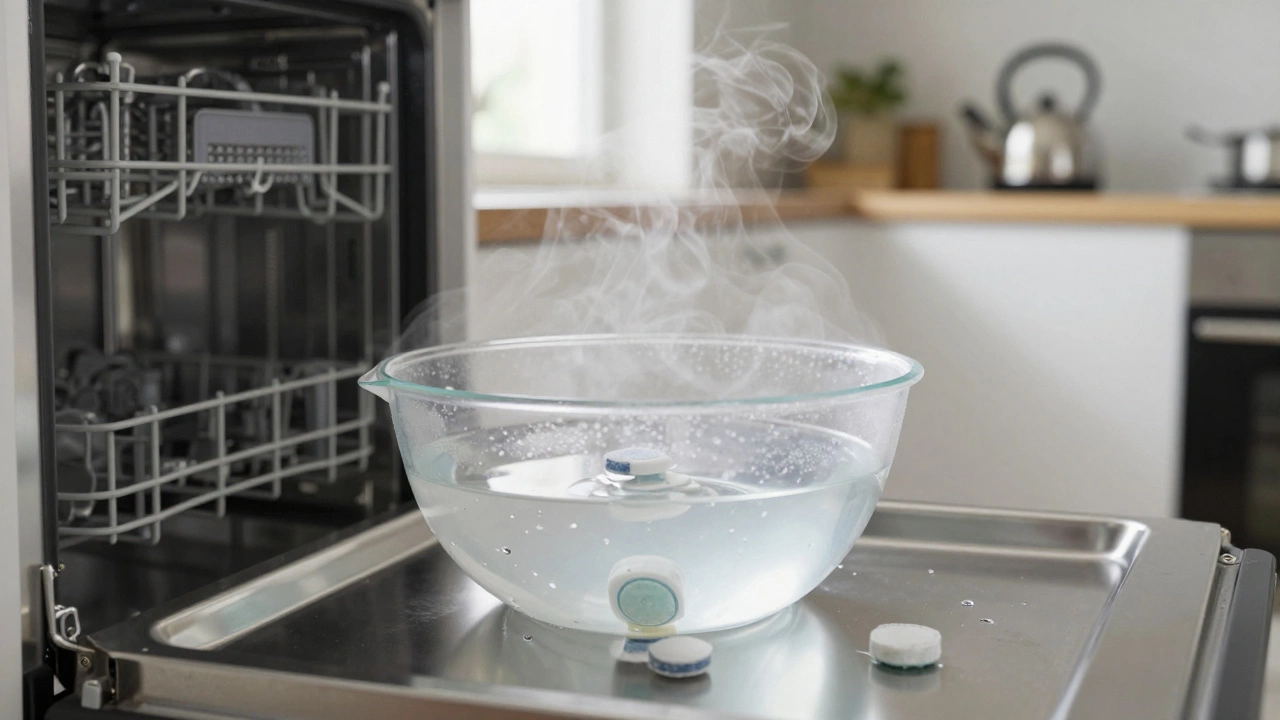
- Place one standard dishwasher tablet (like Finish or Ecover) in a heatproof bowl or oven-safe dish. Use a tablet meant for automatic dishwashers - not hand-wash tablets.
- Pour about 250ml of boiling water over the tablet. Let it fizz and dissolve completely. If it doesn’t dissolve fully, stir gently with a wooden spoon.
- Place the bowl on the bottom rack of your cold oven. Don’t turn the oven on.
- Close the oven door and let it sit for at least one hour. For heavy grease, leave it overnight.
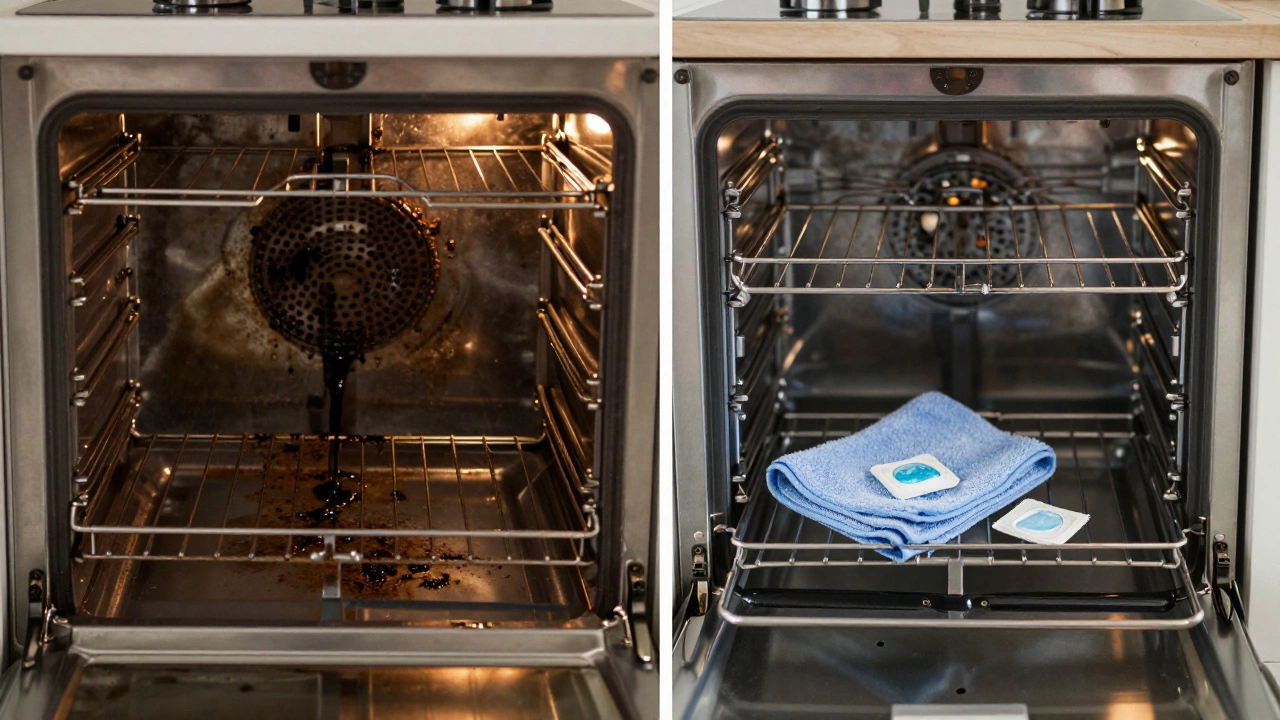
- After the waiting time, open the oven door. You’ll notice the grime has softened into a sludge-like layer.
- Wear gloves and wipe the interior with a damp microfiber cloth. Start from the top and work down. The grime should lift easily.
- Rinse the cloth often. For stubborn spots, use a non-scratch sponge or a plastic scraper.
- Wipe down the oven door with the same solution. Don’t forget the glass panel - it often holds the worst buildup.
- Rinse the oven with clean water and a fresh cloth to remove any residue. Dry with a towel.
- Reinsert the racks and wipe them down separately with the same solution if needed.
This method works best on electric ovens. If you have a gas oven, be extra careful not to get water near the burner holes. Just wipe around them gently.
Why This Beats Commercial Oven Cleaners
Most oven sprays contain lye (sodium hydroxide), which is dangerous if inhaled or touched. They also leave behind a chemical residue that can affect food taste. The dishwasher tablet method avoids all that.
It’s cheaper too. A pack of 24 dishwasher tablets costs around £5-£8 in the UK. That’s less than 30p per clean. A single bottle of commercial oven cleaner? £4-£6 - and it’s often only good for one or two uses.
It’s also better for the environment. Dishwasher tablets come in minimal packaging, and many brands are biodegradable. You’re not adding plastic bottles or toxic runoff to landfills.
And it’s quiet. No screaming warnings on the label. No need to open all the windows. No need to leave the house for hours. Just a calm, safe clean while you make tea.
What Kind of Dishwasher Tablet Works Best?
Not all tablets are created equal. Stick to standard automatic dishwasher tablets - the kind you throw in whole. Avoid:
- Hand-wash detergents (too weak)
- Tablets with added bleach or fragrance (can leave odors)
- Powders or liquids (they don’t dissolve evenly in this setup)
Brands like Finish Quantum, Ecover, or Somat work well. If you’re using a tablet with a built-in rinse aid, that’s fine - it won’t hurt. Just make sure it’s designed for automatic machines.
Some people swear by eco-tablets. They work just as well, and if you’re trying to reduce plastic waste, they’re the better pick. Look for ones labeled ‘biodegradable’ or ‘plastic-free packaging’.
When the Hack Doesn’t Work - And What to Do
It’s not a miracle cure. If your oven is caked with years of carbonized grease - think ten years of Sunday roasts without a clean - you might need more than one pass.
If the grime doesn’t budge after the first hour:
- Repeat the process. Leave the bowl in overnight.
- Scrape gently with a plastic putty knife. Never use metal - it scratches enamel.
- Try a second tablet if the oven is very large or heavily soiled.
Also, don’t use this method on self-cleaning ovens unless you’ve checked the manual. Some manufacturers warn against using any external cleaners, even natural ones, because they can interfere with the pyrolytic coating.
If your oven has a steam-clean function, you can still use the tablet hack - just don’t run the steam cycle after applying the solution. Let it sit and wipe manually.
Real Results: Before and After
A friend in Oxford cleaned her 12-year-old oven using this method. The bottom was black with burnt-on bolognese sauce and grease from years of roasting. After one tablet and a two-hour soak, she wiped it clean with a cloth. No scrubbing. No burning eyes. No chemical smell. She took a photo - the before looked like a crime scene. The after looked like a brand-new oven.
Another person in Bristol used it on oven racks that had been tossed in the bin because they looked ‘too dirty’. After soaking them in the same solution for 90 minutes, they came out shiny. He reused them for another three years.
This isn’t a trick for small messes. It’s a real solution for stubborn, long-term buildup.
How Often Should You Use This Hack?
For most households, cleaning your oven every 3-4 months keeps it manageable. If you cook heavily - roasts, baking, grilling - do it every two months. Light users can stretch it to six months.
Regular cleaning prevents the buildup that makes this hack necessary. Wipe spills as they cool. Use a liner or foil on the bottom rack to catch drips. A quick wipe after each use cuts down on deep cleaning time.
Think of the dishwasher tablet method as your monthly reset button. Not a yearly emergency.
Other Uses for Dishwasher Tablets Around the Kitchen
Once you try this, you’ll wonder why you didn’t do it sooner. Dishwasher tablets are surprisingly versatile:
- Stovetop burners: Dissolve a tablet in hot water and soak burner caps and grates for 30 minutes.
- Coffee makers: Run a cycle with a dissolved tablet to remove mineral buildup.
- Kettle limescale: Add a tablet to boiling water, let sit for an hour, then rinse.
- Tile grout: Make a paste with water and rub on stained grout. Let sit 20 minutes, then scrub.
- Sink drains: Drop a tablet down the drain, pour hot water, wait 15 minutes - helps with odors and slow drainage.
It’s one of those household hacks that pays for itself in time, money, and peace of mind.
Final Thoughts: A Simple Fix for a Common Problem
The dishwasher tablet oven hack isn’t new. But it’s still underused. Most people don’t know that the same chemistry that cleans your plates can clean your oven. You don’t need to buy special products. You don’t need to spend hours scrubbing. You just need to let time and chemistry do the work.
It’s safe, cheap, and effective. And in a world full of complicated cleaning gadgets and overpriced sprays, that’s rare.
Try it next time your oven looks like a charcoal briquette factory. You’ll wonder why you waited so long.