Window Cleaner Formula Calculator
Professional Window Cleaning Formula Calculator
Calculate exact measurements for streak-free professional-grade window cleaner based on your bucket size and climate conditions.
Your Professional Formula
Pro Tips
• Always use deionized water to prevent mineral spots
• Wipe squeegee blade between strokes
• For tinted windows, avoid ammonia-based cleaners
Ever wonder why your windows look streak-free after a pro cleans them, but your own efforts leave smears and streaks? It’s not just about the tool-it’s about what’s in the bucket. Professional window cleaners don’t use vinegar, ammonia, or store-bought sprays labeled ‘for all glass.’ They use something far more precise. And it’s not magic. It’s science.
The Standard Mix: Water, Detergent, and a Secret Ingredient
Most commercial window cleaners rely on a simple but powerful formula: deionized water, a small amount of liquid dish soap, and a touch of isopropyl alcohol. That’s it. No dyes. No perfumes. No confusing chemicals.
Why deionized water? Tap water has minerals-calcium, magnesium, iron-that dry on glass and leave white spots. Deionized water has those minerals stripped out. It’s pure H₂O. You can buy it in bulk from cleaning supply stores, or some pros use reverse osmosis systems to filter their own water on-site. It’s not expensive, but it’s essential.
For detergent, they use a few drops of a low-sudsing dish soap like Dawn or Joy. Too much soap leaves residue. Too little won’t break down grease and bird droppings. The sweet spot? About 1/4 teaspoon per gallon of water. That’s less than a teaspoon for a full bucket.
Then comes the alcohol. Isopropyl alcohol (70-90%) speeds up drying and cuts through oily residues from fingerprints, exhaust fumes, and pollen. It evaporates fast, leaving no streaks behind. Some pros add a few ounces per gallon. Others skip it if humidity is high-alcohol can dry too fast in dry climates and cause streaking.
Why Not Ammonia or Vinegar?
You’ve probably heard to clean windows with vinegar and water. Or ammonia. Both are common DIY fixes. But pros avoid them for good reasons.
Ammonia? It’s harsh on rubber squeegee blades. Over time, it cracks and degrades the rubber, making them lose their seal. A bad seal means water leaks around the edge-and streaks appear. Plus, ammonia fumes are strong, and many commercial buildings ban it for indoor air quality.
Vinegar? It’s acidic, which sounds good for cutting grime. But it can damage tinted windows, aluminum frames, and some sealants over time. It also leaves a faint odor that lingers. And if the water isn’t purified, vinegar won’t stop mineral deposits-it just adds another layer.
Professionals don’t risk long-term damage to windows or frames. They use what works, not what’s trendy.
The Tools Matter-But the Liquid Does More
A good squeegee, a microfiber cloth, and a scrubber are important. But if you pour tap water into that squeegee, you’re fighting an uphill battle. The liquid is the real game-changer.
Think of it like painting. You can use the best brush, but if your paint is cheap, the finish looks awful. Same here. The right liquid makes even a basic squeegee perform like a high-end tool.
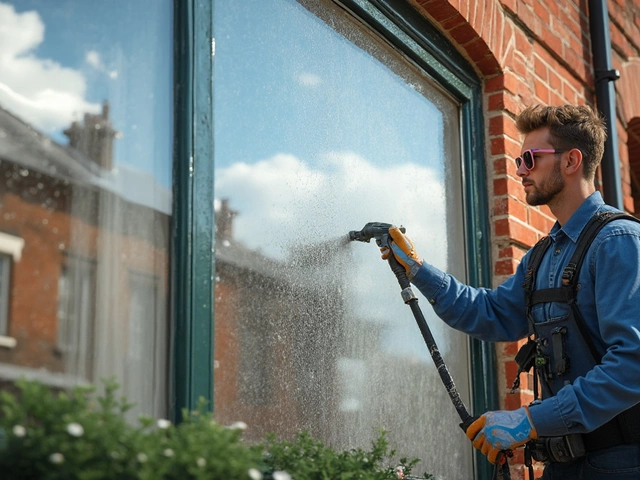
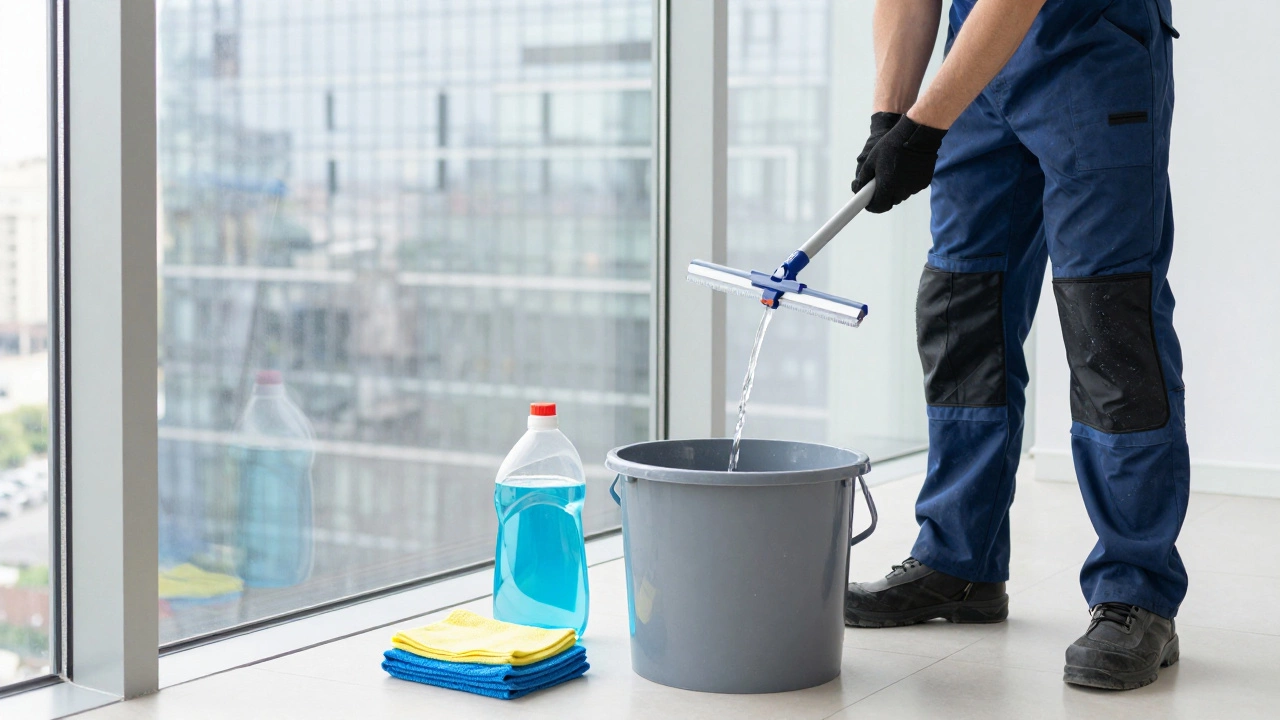
Many pros carry two buckets: one for the cleaning solution, one for rinsing the squeegee. After each pass, they dip the blade into clean deionized water and wipe it on a clean towel. That keeps the blade free of dirt and prevents redepositing grime onto the glass.

What About Commercial Brands Like Windex?
Windex and similar products? They’re fine for occasional home use. But in professional settings? Rarely used.
Why? They’re watered down. They contain alcohol and ammonia, yes-but also fillers, dyes, and fragrances. Those additives can leave behind a film. They’re designed for convenience, not perfection. And they’re expensive per ounce compared to mixing your own.
One pro in Chicago told me he used to buy 5-gallon jugs of Windex. After six months, he switched to homemade solution. His cost per window dropped by 80%. His results? Better.
Real-World Formula: What’s in the Bucket?
Here’s what a typical professional window cleaner uses daily:
- 1 gallon of deionized water (or filtered through a RO system)
- 1/4 teaspoon of low-sudsing dish soap (Dawn, Joy, or equivalent)
- 2-4 ounces of 70-90% isopropyl alcohol (adjust based on climate)
Stir gently. Don’t shake. You don’t want suds. Pour into a spray bottle or bucket. Use with a quality squeegee and lint-free cloths.
For stubborn grease-like near a kitchen or highway-you might add a drop of degreaser, but only if the glass is non-tinted. Always test on a small area first.
Seasonal Adjustments
Professionals tweak their mix depending on the weather.
- Summer (hot, dry): Use less alcohol. Too fast evaporation = streaks. Stick to water and soap.
- Winter (cold, humid): Increase alcohol to 4-6 ounces. Helps prevent freezing on frames and speeds drying.
- Rainy season: Add a tiny bit of surfactant (like a drop of Jet-Dry) to help water sheet off evenly.
These aren’t guesses. They’re based on decades of trial and error in real conditions-from high-rises in New York to coastal homes in Florida.
What to Avoid
- Tap water unless you’re in an area with very soft water (rare).
- Ammonia-based cleaners on tinted or older windows.
- Paper towels-they leave lint and scratches.
- Old rags-they hold dirt and can scratch glass.
- Over-spraying-dripping solution onto frames invites rot and rust.
Final Tip: The Two-Pass Method
Most amateurs clean once. Pros do two passes.
First pass: Apply solution, scrub gently with a brush or sponge. Let it sit for 10-15 seconds to loosen grime.
Second pass: Squeegee from top to bottom in one smooth motion. Wipe the blade after each stroke. Then, go over the edges and corners with a dry microfiber cloth.
That second pass removes the last traces of residue. It’s what turns good glass into flawless glass.
It’s not about buying expensive gear. It’s about using the right liquid, the right technique, and the right mindset. The best window cleaner isn’t the one with the fanciest tool. It’s the one who knows what’s in the bucket-and why.