Pro Window Solution Mixer
1. Set Your Environment
2. Additive Checklist
Pro Recommendation:
The Secret Ingredient: Why Dish Soap Wins
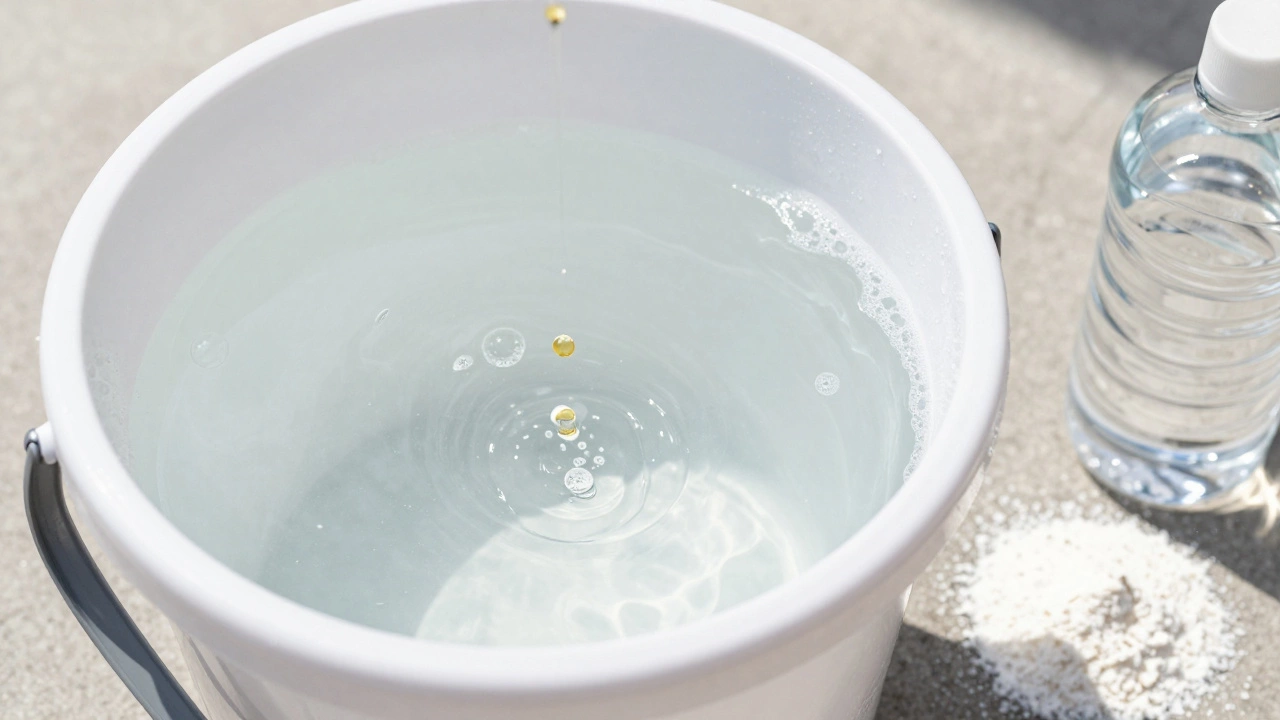
If you peeked into a pro's bucket, the first thing you'd notice is that they aren't using fancy, expensive glass cleaners. Instead, they use Dish Soap is a concentrated surfactant used to break the surface tension of water and encapsulate dirt particles. Commonly, pros lean toward brands like Dawn or Fairy because they have a high concentration of surfactants that lift grease and grime without leaving a heavy residue.
But they don't just pour the soap in. They use it sparingly. Too much soap creates too many suds, which actually leaves a film on the glass and makes the squeegee jump. A typical professional ratio is just a few drops per gallon of water. The goal is window cleaning solution that provides enough lubrication to move the scrubber across the pane without scratching it, while still being "thin" enough to be wiped away completely by the blade.
The Role of Water and Temperature
Water is the primary solvent here. While most cleaners use tap water, those dealing with extreme mineral buildup or "hard water" areas might use Distilled Water, which is water that has been purified through distillation to remove impurities and minerals like calcium. Hard water contains minerals that leave white spots (scaling) when they dry. By using purified water or adding a water softener to the mix, cleaners ensure that the only thing left on the window is a clean surface.
Temperature also matters. Warm water is generally better at breaking down organic oils and pollen, especially during the spring "pollen bomb" season. However, on a scorching July afternoon, a pro might actually use cool water to prevent the solution from evaporating too quickly on the glass, which is what causes those dreaded streaks.
Adding "Slip" for Better Performance
You might see some cleaners adding a bit of Cornstarch or a specific professional-grade lubricant to their water. Why? Because it adds "slip." Slip is the quality that allows the squeegee blade to glide smoothly across the glass without "chattering" or skipping. When a blade skips, it leaves a small crescent of water behind that dries into a streak.
In high-end commercial work, they might swap dish soap for a specialized Glass Detergent. These are formulated to have a specific pH level-usually slightly alkaline-to eat through stubborn bird droppings or oxidation without damaging the window frames or the seals.
The Hardware: It's Not Just About the Liquid
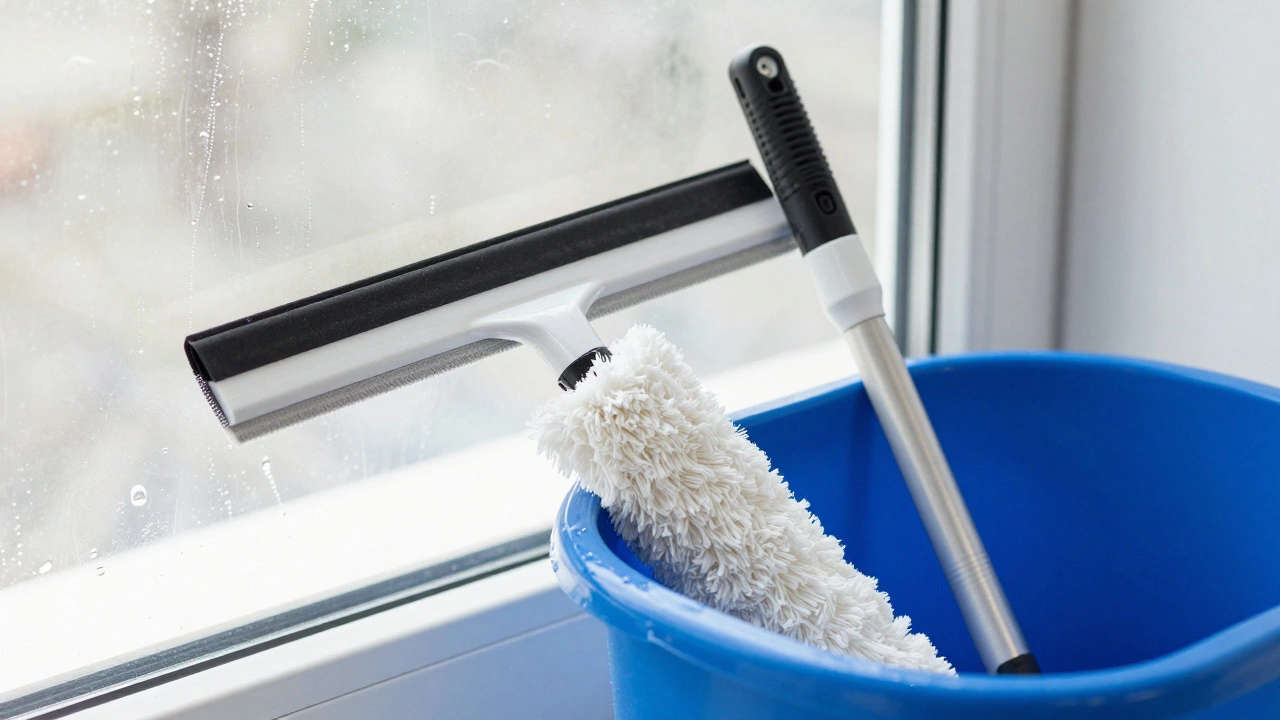
The bucket isn't just a container; it's a workstation. A professional setup almost always includes a Squeegee, which is a tool with a flat, smooth rubber blade used to remove liquid from a surface. The rubber blade is the most critical part. Pros often switch blades based on the weather; a "soft" blade is used in the winter because the rubber stays flexible in the cold, while a "harder" blade is used in the summer to provide a cleaner cut through the thicker, warmer water.
Then there's the T-Bar Scrubber. This is the fuzzy tool used to apply the soapy water. Instead of scrubbing in circles, pros use the T-bar to agitate the dirt and then use the squeegee to pull it all away in one fluid motion. This prevents the dirt from being smeared across the pane.
| Additive | Primary Purpose | Best For... | Potential Downside |
|---|---|---|---|
| Dish Soap | Degreasing/Lubrication | Everyday grime | Too much causes streaks |
| Distilled Water | Mineral Removal | Hard water areas | Expensive for large jobs |
| Cornstarch | Increasing "Slip" | High-streak environments | Can get messy if overused |
| Vinegar | Cutting through film | Heavy mineral deposits | Strong smell; acidic |
Dealing with Tough Grime and Debris
Sometimes soap and water aren't enough. If a window has been neglected for years, you'll see cleaners reach for a Steel Wool Scrubber (specifically grade #0000). This is an incredibly fine abrasive that can scrape off paint specks or concrete splatter without scratching the glass. They use this dry or with a bit of the bucket solution to physically lift the debris.
For organic buildup, like algae or mold on the exterior of a window in a damp climate, they might add a small amount of Ammonia to the bucket. Ammonia is a powerhouse for cutting through organic films, but it's used with caution. It can eat away at the rubber seals of a window if left on too long, which is why pros always rinse the frames after using it.
The Finishing Touches: The Microfiber Secret
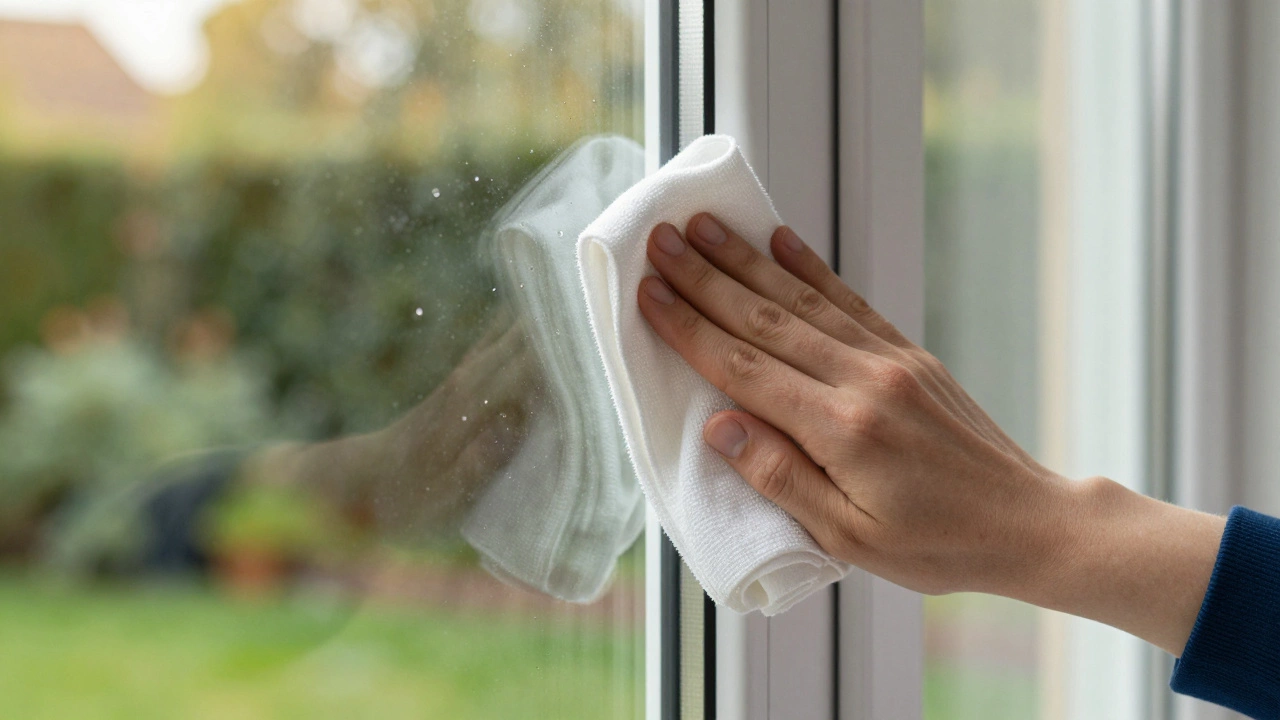
Even the best squeegee technician leaves a tiny bit of water around the edges of the frame. To solve this, the bucket is usually accompanied by several Microfiber Cloths. Unlike paper towels, which leave lint and dust behind, microfiber is designed to grab the water and hold onto it. A pro will use a "scrim" (a lint-free cloth) to detail the edges of the glass, ensuring not a single drop remains to drip down the side.
This combination of high-lubricity soap, the right rubber hardness, and a final microfiber wipe is why professional results are so different from DIY attempts. It's not about the brand of the cleaner; it's about managing the surface tension of the water and the physical removal of the debris.
Can I use vinegar instead of dish soap in my bucket?
You can, but vinegar doesn't provide the same "slip" that soap does. Vinegar is great for removing mineral deposits and cutting through film, but if you use it alone, your squeegee will likely chatter and skip, leaving streaks. The best approach is a mix of a tiny bit of soap for glide and a splash of vinegar for cleaning power.
Why don't professionals use Windex or spray cleaners?
Spray cleaners evaporate too quickly. In the time it takes to spray a whole window and wipe it, the liquid has already started drying, which creates streaks. Bucket-based cleaning keeps the glass wet for longer, allowing the cleaner to move all the dirt off the pane in one go before the water evaporates.
Is it bad to use too much soap in the bucket?
Yes. Too much soap creates an excess of suds. These bubbles cling to the glass and create a soapy film that doesn't get fully removed by the squeegee. When that film dries, it leaves behind a hazy residue. A few drops are all you need; you want the water to be slippery, not frothy.
What is the best type of rubber for a squeegee?
It depends on the temperature. Soft rubber is more flexible and creates a tighter seal against the glass, making it ideal for cold weather. Hard rubber is more durable and provides a sharper cut, which works better in high heat when the water is more viscous.
How often should you change the water in the bucket?
As soon as the water looks cloudy or gray. If you're dipping a dirty scrubber into the bucket, you're just redistributing dirt onto the next window. Professionals often keep a separate bucket for rinsing their tools and another for their clean solution to avoid this.