Oven Cleaning Method Selector
Not sure which approach to take? Describe your oven's condition to find the recommended strategy.
Recommended Strategy:
Quick Specs:
- Wait Time:
- Toxicity:
- Effort:
Quick Tips for Heavy-Duty Oven Cleaning
- Patience is key: Layers of grease built up over years won't vanish in ten minutes. Let cleaners sit overnight.
- Safety first: Always wear gloves. Old grease often requires strong alkaline cleaners that can irritate your skin.
- Avoid the heating element: Never scrub the heating elements or spray chemicals directly onto them.
- Ventilate: Open windows. The smell of burning grease mixing with cleaning agents can be overwhelming.
The Battle Plan for Years of Grime
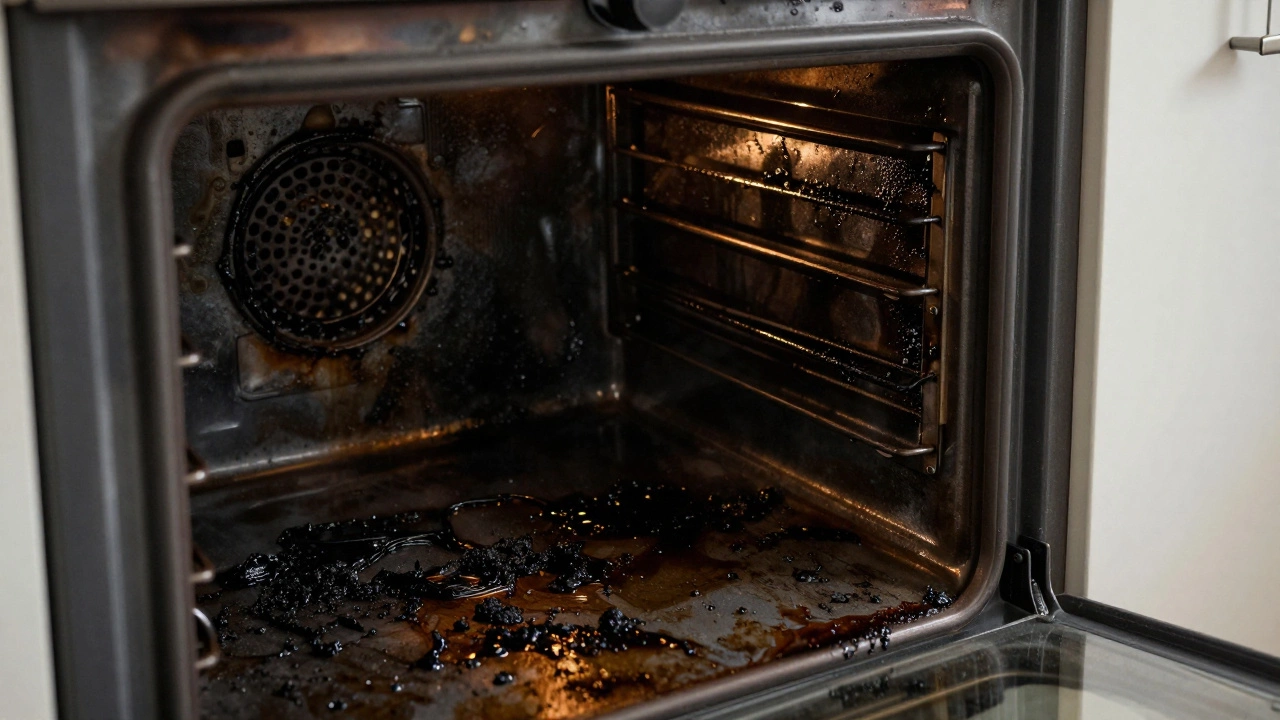
When an oven hasn't been touched in years, you aren't just cleaning; you're excavating. The first step is to clear the decks. Remove the oven racks, broiler pan, and any removable trays. If you leave them in, you'll miss the corners and the undersides where the worst of the sludge hides. Use a damp cloth to wipe out any loose crumbs or flaky ash from the bottom of the oven before you apply any liquids. This prevents you from just pushing a muddy paste around the interior.
Now, identify your enemy. You're dealing with Carbonized Grease is a hard, black residue formed when fats and oils are heated repeatedly until they chemically bond to the oven surface. This stuff doesn't dissolve in water. To tackle it, you need a high-pH alkaline solution. You can go the industrial route with a store-bought cleaner or the home-remedy route with baking soda. For ovens that are truly neglected, a combination of both-starting with a natural soak and finishing with a targeted degreaser-usually works best.
Method 1: The Deep-Clean Baking Soda Paste
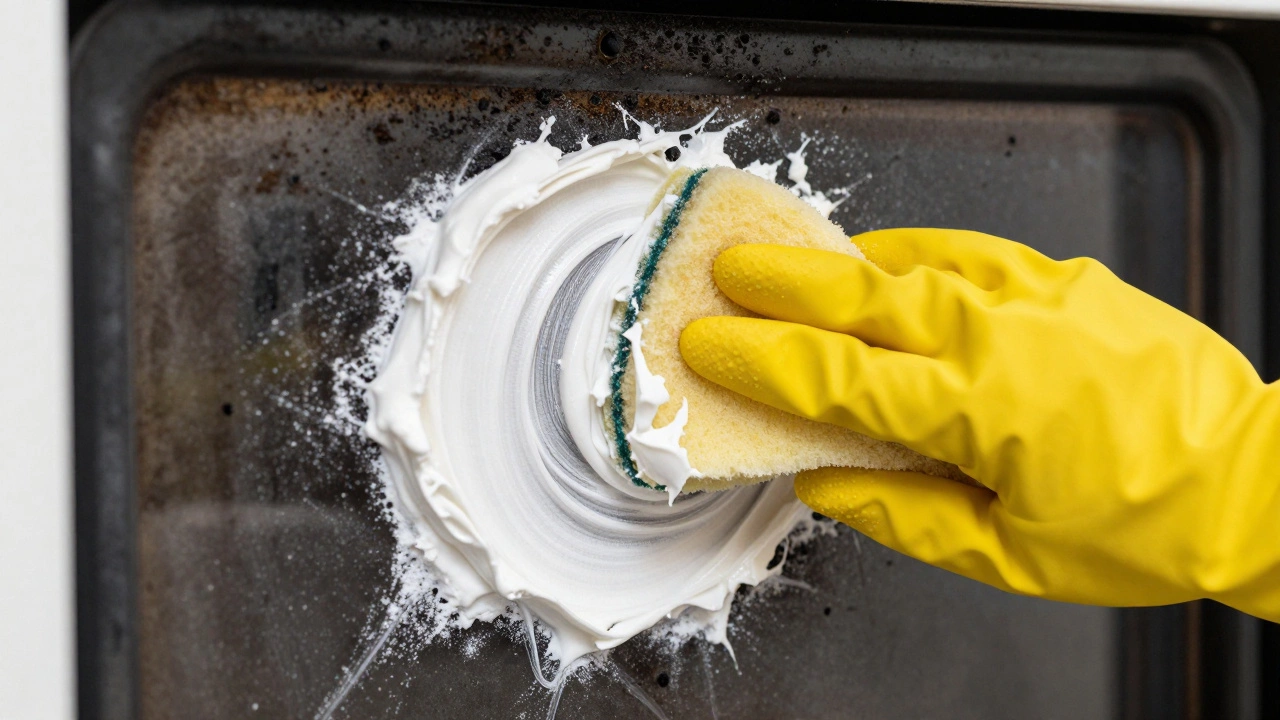
If you're wary of harsh fumes, Baking Soda (sodium bicarbonate) is your best friend. It's a mild alkali that breaks down acidic grease without eating through the oven's lining. Mix about a half-cup of baking soda with a few tablespoons of water until you have a spreadable paste. It should look like toothpaste-thick enough to stick to the walls without sliding off immediately.
Apply this paste liberally over every inch of the oven interior. Focus on the areas with the heaviest black crust. Avoid the heating elements. Once the oven is coated, the real secret is the wait. For a light clean, a few hours suffice. For an oven that hasn't been cleaned in years, leave it for 24 hours. During this time, the baking soda works to lift the grease from the enamel, making it much easier to scrub away later.
Method 2: The Heavy-Duty Chemical Approach
Sometimes, years of neglect require a more aggressive tool. Oven Cleaner is a concentrated alkaline solution, often containing sodium hydroxide (caustic soda), designed to dissolve organic matter and carbon deposits rapidly. If you choose this route, check if your oven is "self-cleaning." If it is, be extremely careful; some chemical cleaners can damage the special porous coating of self-cleaning ovens.
Spray the cleaner onto the cold oven walls, starting from the bottom and working your way up to avoid drips. Let it sit for the time specified on the bottle-usually 30 minutes to two hours. You'll see the black grime start to turn brown or translucent as the chemical breaks the molecular bonds of the grease. This is significantly faster than the baking soda method but requires much more caution regarding ventilation and skin protection.
| Feature | Baking Soda Paste | Commercial Degreasers |
|---|---|---|
| Wait Time | 12-24 Hours | 30 Minutes - 2 Hours |
| Toxicity | Low / Non-toxic | High (Corrosive) |
| Effort | High Scrubbing | Moderate Scrubbing |
| Scent | Neutral | Strong Chemical/Bleach |
| Cost | Very Cheap | Moderate |
Dealing with the Oven Racks and Trays
The racks are often the hardest part because the grease is baked into the metal wire. Instead of scrubbing them in the sink, use the "soaking" technique. Find a large plastic tub or a heavy-duty garbage bag. Fill it with hot water and a generous amount of Dish Soap and a splash of ammonia or a commercial degreaser. Submerge the racks completely. Let them soak for at least 8 hours.
After soaking, the grease should slide off with a scrubbing brush or a piece of steel wool. If there are still stubborn black spots, make a thick paste of baking soda and a little water, apply it to the spots, and let it sit for another hour before scrubbing. Rinse them thoroughly and dry them completely before putting them back in the oven to prevent rust.
The Final Scrub and Rinse
Once your chosen cleaning agent has had time to work, it's time for the manual labor. Use a damp sponge or a microfiber cloth to wipe away the paste or chemicals. For the truly stubborn bits that refuse to budge, a plastic scraper or a non-scratch scrub pad is essential. Avoid using metal scrapers or steel wool directly on the oven enamel, as you can scratch the surface, which actually makes it easier for grease to stick in the future.
If you used baking soda, you might notice some white residue left behind. This is normal. To neutralize this, spray a mixture of White Vinegar and water. The vinegar reacts with the remaining baking soda, creating a fizzing action that lifts the last remnants of the powder. Wipe everything down one last time with a clean, damp cloth until the surfaces are smooth and the smell is gone.
Preventing Future Build-Up
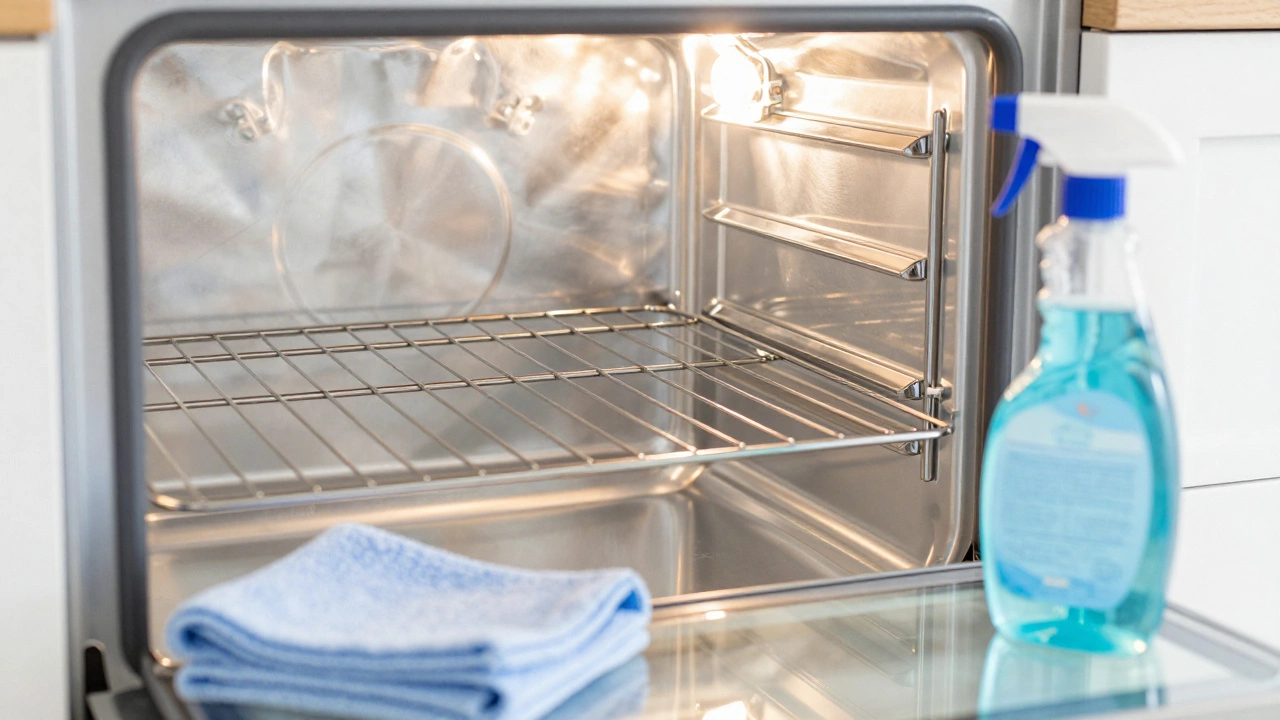
Now that you've spent hours restoring your oven, you don't want to do this again in another five years. The simplest way to prevent grease buildup is to use a drip tray or a piece of parchment paper on the bottom rack to catch spills. Whenever you notice a spill, wipe it up as soon as the oven cools down; if you let a spill bake on during the next three roast dinners, it becomes part of the permanent landscape.
Consider a monthly "mini-clean" where you wipe the walls with a damp cloth and a bit of mild soap. This prevents the grease from layering and hardening into that impenetrable black crust. If you have a self-cleaning oven, use the high-heat cycle sparingly, as the extreme temperatures can sometimes warp the oven's internal components over time.
Will cleaning my oven with baking soda damage the enamel?
No, baking soda is generally safe for oven enamel because it is a mild abrasive. It is far less aggressive than steel wool or harsh caustic chemicals. However, always avoid scrubbing the heating elements or the glass door too vigorously with abrasive pads to prevent scratching.
What do I do if the grease is so thick it won't move?
For extreme buildup, you need to increase the "dwell time." Instead of wiping the cleaner after an hour, leave the baking soda paste or the commercial cleaner on for a full 24 hours. If that fails, use a plastic putty knife to gently scrape away the thickest layers of carbon before applying the cleaner again.
Is it safe to use ammonia for cleaning ovens?
Ammonia is a powerful degreaser, but it's very pungent and can be irritating to the lungs and eyes. If you use it, only do so in a well-ventilated area. Never mix ammonia with bleach, as this creates toxic chloramine gas. It's best used for soaking racks in a sealed bag rather than spraying it inside the oven.
How do I clean the oven glass without scratching it?
Use a mixture of baking soda and water to create a paste, apply it to the glass, and let it sit for 30 minutes. Use a soft sponge or a microfiber cloth to wipe it away. Avoid using the green side of a scrubbing sponge or steel wool, as these can leave permanent micro-scratches on the glass.
Can I use a pressure washer inside my oven?
Absolutely not. A pressure washer will force water into the electrical components, insulation, and heating elements, likely destroying the oven and creating a serious electrical hazard. Stick to sponges, cloths, and chemical cleaners.
Next Steps and Troubleshooting
If you've followed these steps and still see black spots, don't keep scrubbing. You might be dealing with "burnt-on' carbon that has essentially fused with the metal. In these rare cases, you can try a specialized oven cream or a professional cleaning service that uses dip-tanks for the racks and high-temperature steam for the interior.
For those who find the manual process too daunting, consider investing in an oven liner. It's a non-stick sheet that sits on the bottom of the oven and catches all the drips. When it gets dirty, you just slide it out and wash it in the sink, saving you from ever having to face a 24-hour baking soda soak again.