Eco-Cleaner Audit Tool
Select the characteristics that apply to your current cleaning product to determine its environmental score.
1. Ingredients & Formulation
2. Packaging & Waste
3. Transparency & Certifications
You’ve probably stood in the cleaning aisle, staring at a bottle with a leaf on it and wondering if that’s actually proof of sustainability or just clever marketing. It’s a fair question. The term "green" has been hijacked so often that it barely means anything anymore. But when we talk about what truly makes a cleaner environmentally friendly, we’re looking for specific, measurable traits-not vibes.
An environmentally friendly cleaner isn’t just one that smells like pine trees. It’s a product designed to minimize harm to ecosystems, human health, and water systems throughout its entire lifecycle, from manufacturing to disposal. If you want to clean your home without wrecking the planet, you need to know what to look for on the label and why certain ingredients matter more than others.
The Ingredient List: What’s Actually Inside?
The biggest red flag for an eco-unfriendly cleaner is hidden toxicity. Many conventional products rely on harsh chemicals to do the heavy lifting. Think ammonia, chlorine bleach, and synthetic fragrances. These substances might kill bacteria quickly, but they also release volatile organic compounds (VOCs) into your indoor air. According to the Environmental Protection Agency (EPA), indoor air pollution can be two to five times higher than outdoor levels, largely due to these household products.
True eco-friendly cleaners prioritize biodegradability. This means the chemical structure breaks down into harmless natural elements-like carbon dioxide, water, and simple minerals-within a short period after entering the wastewater system. Look for certifications like the EPA Safer Choice label or the EU Ecolabel. These aren’t just stickers; they require rigorous testing to ensure ingredients don’t persist in the environment or accumulate in fish and wildlife.
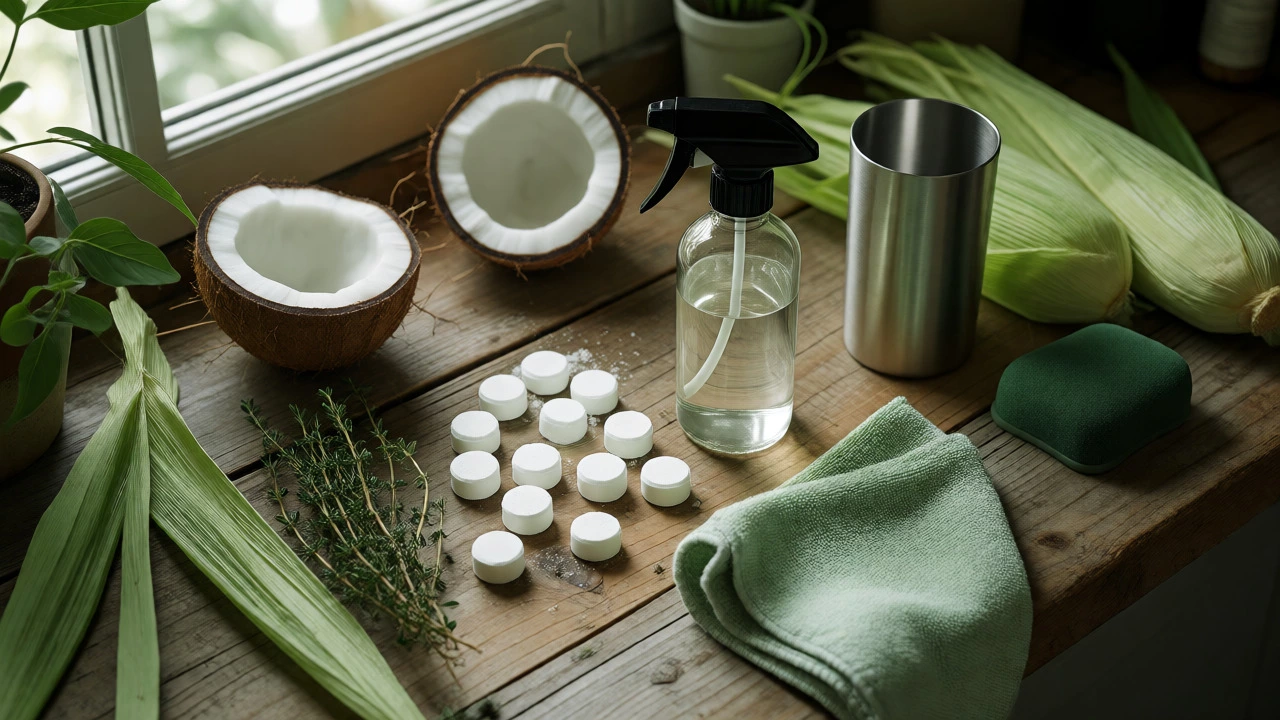
Instead of petroleum-based solvents, green cleaners often use plant-derived surfactants. These are molecules derived from coconut, corn, or soy that help lift dirt off surfaces. They work effectively but degrade much faster than their synthetic counterparts. When reading labels, avoid terms like "fragrance" or "parfum" without further explanation. A single fragrance blend can contain dozens of undisclosed chemicals, some of which are known endocrine disruptors.
Packaging and Waste Reduction
Cleaning up your house shouldn’t mean filling up your trash bin. Packaging accounts for a massive portion of the environmental footprint of any consumer good. Traditional plastic bottles contribute significantly to microplastic pollution, especially when they aren’t recycled properly. In fact, only about 9% of all plastic ever made has been recycled. That’s a sobering statistic.
A genuinely sustainable cleaner addresses this by changing how it’s delivered. Concentrates are a great example. Instead of shipping water-heavy bottles across the country, brands send small tablets or concentrated liquids that you mix with tap water at home. This drastically reduces transportation emissions and plastic waste. Another emerging trend is refillable systems, where you buy a durable glass or stainless steel bottle once and top it up at local refill stations or via mail-order pouches.
Check the packaging material itself. Is it post-consumer recycled (PCR) content? Does it have a high percentage of PCR plastic, or is it made from aluminum or glass? Aluminum, for instance, can be recycled infinitely without losing quality, whereas plastic degrades each time it’s processed. If the brand claims to be "zero waste," ask yourself: zero waste for whom? If you still have to throw away a plastic cap every month, it’s not really zero waste.
| Feature | Conventional Cleaner | Eco-Friendly Cleaner |
|---|---|---|
| Surfactants | Petroleum-based, slow degradation | Plant-based (coconut/corn), rapid biodegradation |
| Fragrance | Synthetic phthalates, potential allergens | Essential oils or fragrance-free |
| Packaging | New virgin plastic, high transport weight | Refillable, concentrates, PCR plastic/glass |
| Water Usage | High water content shipped globally | Low water content, mixed locally |
| Health Risk | Higher VOC emissions, skin irritation | Low VOCs, safer for sensitive groups |
Performance and Efficiency
Here’s the hard truth: many people abandon green cleaning because they think it doesn’t work as well. That used to be true ten years ago. Today, chemistry has advanced enough that plant-based enzymes and citric acids can tackle grease, limescale, and mold effectively. However, they often require a different approach. You might need to let the product sit on the surface for a few minutes longer to break down grime, rather than scrubbing immediately.
Efficiency also ties into dilution ratios. Some "eco" products are diluted so heavily with water that you end up using twice as much product per clean, negating the environmental benefit. Always check the recommended usage instructions. A highly concentrated formula that requires a tiny amount per gallon of water is far superior to a pre-diluted spray that comes in a bulky plastic trigger bottle. If you find yourself pouring half the bottle to clean one counter, the product isn’t efficient, regardless of its ingredient list.
Consider the energy required to produce and use the cleaner. Hot water uses more energy than cold. Effective cold-water detergents are a hallmark of good sustainable design. If a cleaner requires hot water to activate, it indirectly increases your carbon footprint through higher utility bills. Look for products labeled "cold water effective" or those that specify low-temperature activation.
Water Safety and Aquatic Life
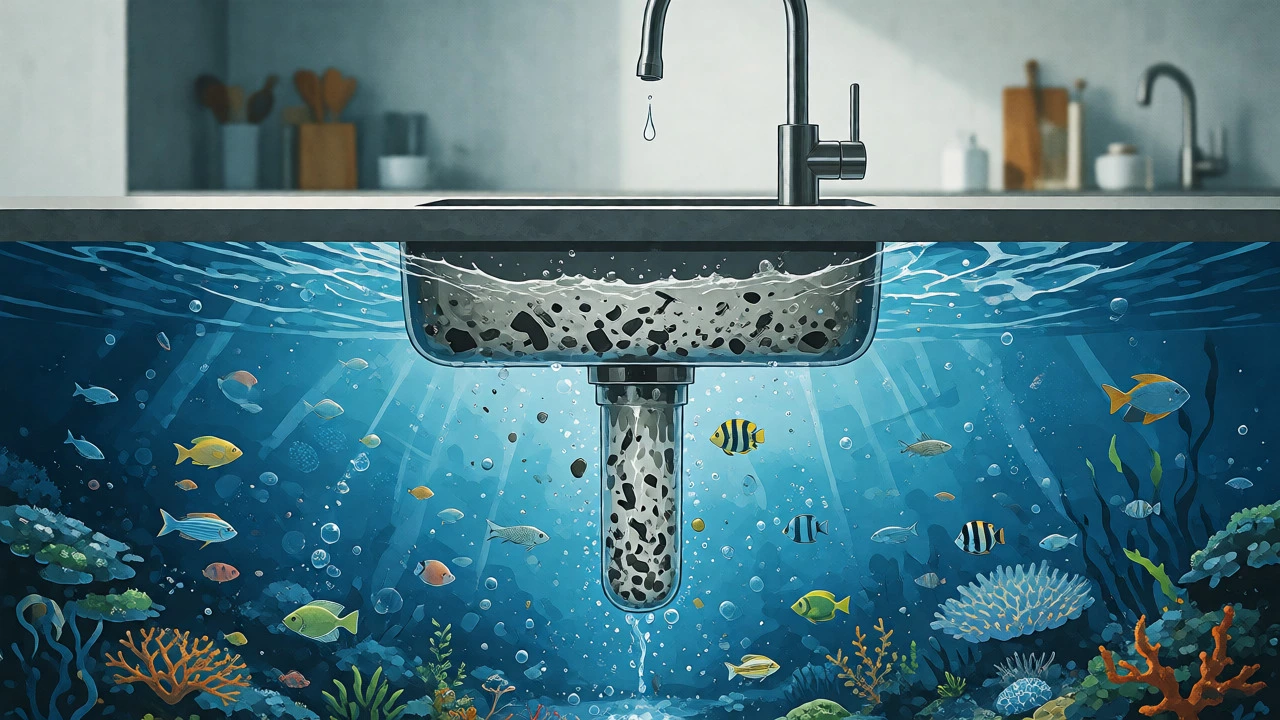
Every drop of cleaner you wash down the drain eventually enters our waterways. Wastewater treatment plants are impressive, but they aren’t perfect. They struggle to filter out complex synthetic chemicals, phosphates, and microplastics. Phosphates, commonly found in dishwasher pods and laundry detergents, cause algal blooms. These blooms deplete oxygen in lakes and rivers, creating "dead zones" where fish and other aquatic life cannot survive.
Environmentally friendly cleaners are formulated to be safe for septic systems and municipal water treatment. They avoid persistent pollutants that bioaccumulate in the food chain. For example, triclosan, an antibacterial agent once common in hand soaps and surface cleaners, was banned by the FDA in 2016 because it contributed to antibiotic resistance and harmed aquatic organisms. Modern green cleaners skip such controversial additives entirely, opting for simpler disinfecting agents like hydrogen peroxide or thymol (derived from thyme oil).
If you live near a coastal area or rely on a private well, this aspect matters even more. Runoff from urban areas carries cleaning residues directly into oceans and groundwater. Choosing phosphate-free and chloride-free options helps protect marine ecosystems. It’s a small choice, but multiplied by millions of households, it creates a significant positive impact.
How to Spot Greenwashing
Greenwashing is when a company spends more time and money marketing themselves as environmentally friendly than actually minimizing their environmental impact. Don’t fall for vague claims. "Natural" is not a regulated term. Water is natural. Arsenic is natural. Neither is necessarily safe or eco-friendly in a cleaning context.
Here is a quick checklist to verify legitimacy:
- Specific Ingredients: Does the label list actual chemical names (e.g., sodium carbonate) rather than just "plant-based ingredients"?
- Third-Party Certifications: Look for logos from reputable organizations like Green Seal, EPA Safer Choice, or Leaping Bunny (for cruelty-free). Self-made badges like "Earth Promise" mean little unless backed by data.
- Transparency: Can you easily find a full ingredient disclosure online? Brands hiding behind proprietary blends are often hiding questionable components.
- Lifecycle Analysis: Does the brand discuss their carbon offsetting, renewable energy use in factories, or supply chain ethics?
If a brand can’t answer basic questions about where their ingredients come from or how their packaging is disposed of, proceed with caution. Authenticity usually correlates with transparency.
Making the Switch: Practical Steps
You don’t need to throw out every bottle under your sink today. Start with the products you use most frequently. Multi-surface sprays and dish soaps are easy swaps. Keep your heavy-duty oven cleaner or mold remover if it contains stronger chemicals, but use them sparingly and with ventilation.
DIY solutions are another option, but beware of myths. Mixing vinegar and baking soda creates a fizzy reaction that looks dramatic but results in saltwater, which cleans nothing. Vinegar alone is great for descaling and glass. Castile soap works well for general washing. Hydrogen peroxide is excellent for disinfecting. Stick to proven combinations rather than internet hacks.
Finally, consider the tools you use. Microfiber cloths reduce the need for chemical cleaners because they trap dust and bacteria physically. Reusable silicone sponges last longer than porous yellow ones, which harbor bacteria and require frequent replacement. Sustainability isn’t just about the liquid; it’s about the whole ecosystem of cleaning habits.
Are essential oils always safe for pets?
No. While essential oils are natural, they can be toxic to cats and dogs. Tea tree, citrus, and pine oils can cause liver damage or respiratory issues in animals if ingested or inhaled in high concentrations. Always check pet safety before using aromatherapy-based cleaners in homes with furry friends.
Do eco-friendly cleaners disinfect as well as bleach?
It depends on the active ingredient. Bleach is a powerful disinfectant but corrosive. Eco-friendly alternatives like hydrogen peroxide, thymol, or quaternary ammonium compounds (quats) derived from plants can meet EPA standards for disinfection. However, they may require longer contact times (often 5-10 minutes) compared to bleach.
Is "biodegradable" the same as "compostable"?
Not exactly. Biodegradable means the substance breaks down over time, potentially taking years. Compostable means it breaks down within a specific timeframe (usually 90 days) in industrial composting conditions, leaving no toxic residue. For cleaners, biodegradability in water systems is the key metric, not compostability.
Why are some green cleaners expensive?
Small batch production, ethical sourcing of plant ingredients, and sustainable packaging costs drive prices up. Additionally, you are often paying for R&D to prove efficacy without harsh chemicals. Buying concentrates or making DIY solutions can significantly lower the cost per use.
Can I recycle all plastic cleaning bottles?
Most HDPE (#2) and PET (#1) bottles are recyclable, but caps and pumps often aren’t. Rinse bottles thoroughly before recycling. Labels vary by municipality, so check local guidelines. Refillable containers are generally better than single-use plastics, even if recyclable.