Natural Cleaner Selector
Find Your Perfect Cleaner
Select a surface to see your recommended cleaner
Key Cleaning Guide
| Surface | Best Cleaner | How to Use |
|---|---|---|
| Glass windows and mirrors | White vinegar + water | Spray, wipe with microfiber cloth. No streaks. |
| Tile and grout | Baking soda + water paste | Scrub with old toothbrush, rinse. |
| Kitchen counters | Castile soap + water | Wipe down after meals. Safe around food. |
| Bathroom sink and tub | Hydrogen peroxide + vinegar | Spray peroxide, wait 5 min, then spray vinegar. Fizzing action lifts grime. |
| Hardwood floors | Castile soap + warm water | Use a damp mop. Never soak. Dry immediately. |
| Toilet bowl | Baking soda + vinegar | sprinkles baking soda, pour vinegar, let sit 30 min, scrub. |
| Refrigerator | Vinegar + water | Wipe shelves and drawers. Removes sticky residue and odors. |
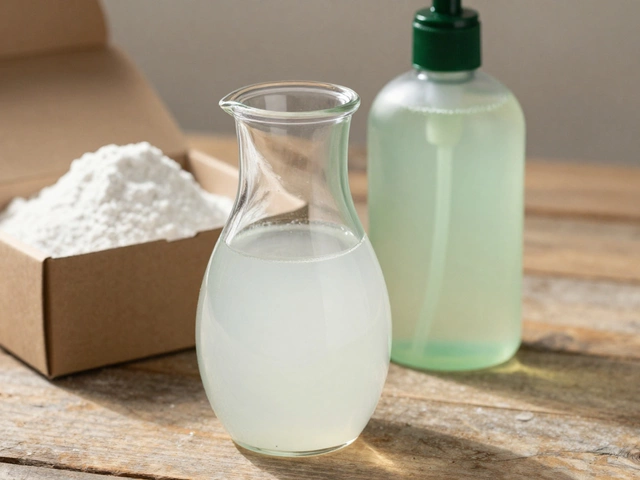
Let’s cut to the chase: you don’t need a shelf full of chemical sprays to clean your house. In fact, most of what you’re using right now is either overpriced, toxic, or just plain unnecessary. The best thing to clean a house with? It’s probably already in your pantry or garage. Simple, cheap, and safe options like white vinegar, baking soda, castile soap, and hydrogen peroxide can tackle dirt, grease, mold, and grime better than half the store-bought cleaners on the market. And they don’t leave behind fumes that make your kids cough or your pets restless.
Why Store-Bought Cleaners Are a Trap
Think about how many cleaning products you’ve bought this year. Did you notice how many say "powerful," "industrial strength," or "kills 99.9% of germs"? Those aren’t marketing fluff-they’re warnings. Many mainstream cleaners contain chemicals like quaternary ammonium compounds (quats), chlorine bleach, and phthalates. These are linked to respiratory issues, hormone disruption, and even asthma in children. A 2023 study from the University of Bergen tracked 3,000 adults over 20 years and found that those who used chemical cleaners regularly had a 20% higher risk of developing chronic lung problems. That’s not a coincidence. It’s science.
And here’s the kicker: most of these cleaners don’t actually clean better than vinegar or baking soda. They just smell stronger and come in fancy bottles. The truth? Dirt doesn’t care about scent. It cares about pH balance, abrasion, and surfactants. And guess what? Your kitchen staples deliver all three.
The Top 5 Natural Cleaners That Actually Work
Forget the 10-step cleaning routines. You only need five things to clean your whole house-from the toilet to the hardwood floor.
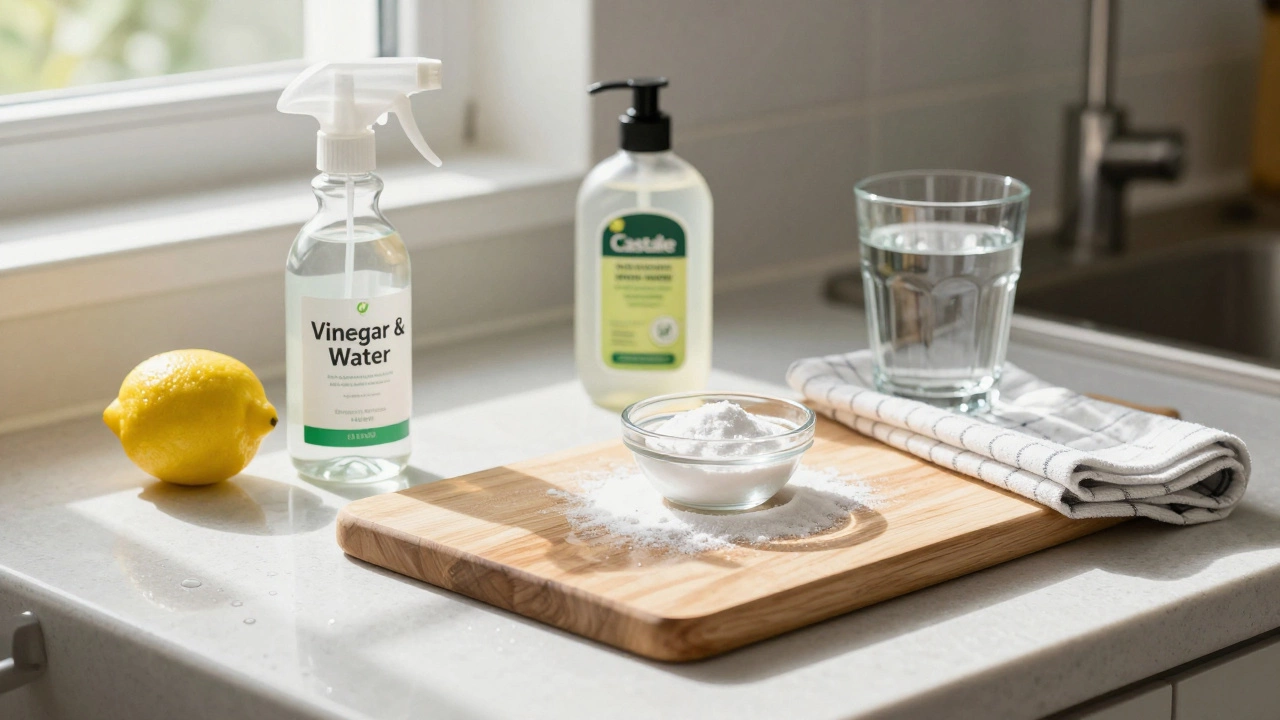
- White vinegar - This 5% acetic acid solution cuts through grease, dissolves mineral deposits, and kills mold. Mix equal parts vinegar and water in a spray bottle. Use it on glass, tiles, sinks, and even fridge interiors. It won’t leave streaks, and the smell? It vanishes in minutes.
- Baking soda - A gentle abrasive that scrubs without scratching. Sprinkle it on a sponge, scrub your bathtub, or mix it with water to make a paste for stubborn oven stains. It also neutralizes odors, so toss a bowl of it in your fridge or trash can.
- Castile soap - Made from plant oils, this concentrated soap is biodegradable and safe for kids and pets. Dilute 1/4 cup in a quart of water for an all-purpose cleaner. Use it on floors, countertops, and even as a dish soap. It’s the only cleaner I’ve seen that works on both greasy stovetops and sticky high chairs.
- Hydrogen peroxide (3%) - This is your go-to for disinfecting without bleach. Spray it on cutting boards, bathroom surfaces, or doorknobs. Let it sit for 10 minutes, then wipe. It kills bacteria, mold, and even some viruses. Bonus: it breaks down into water and oxygen-no toxic residue.
- Microfiber cloths - Not a liquid, but just as important. These cloths trap dust and dirt mechanically. No chemicals needed. Use them dry for dusting, damp for wiping surfaces. They last for hundreds of washes and reduce the need for sprays entirely.
What to Clean With What: A Simple Guide
Here’s how to match the right tool to the job. No guesswork. No mixing dangerous chemicals.
| Surface | Best Cleaner | How to Use |
|---|---|---|
| Glass windows and mirrors | White vinegar + water | Spray, wipe with microfiber cloth. No streaks. |
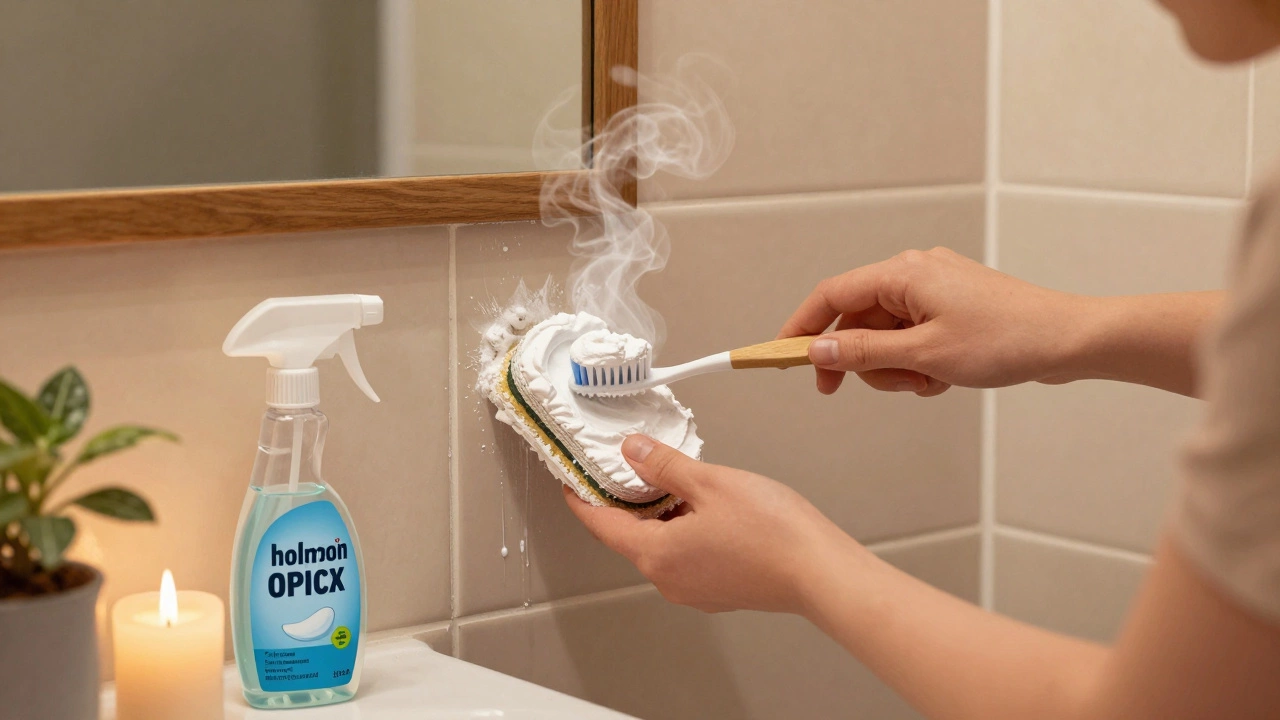
| Tile and grout | Baking soda + water paste | Scrub with old toothbrush, rinse. |
| Kitchen counters | Castile soap + water | Wipe down after meals. Safe around food. |
| Bathroom sink and tub | Hydrogen peroxide + vinegar | Spray peroxide, wait 5 min, then spray vinegar. Fizzing action lifts grime. |
| Hardwood floors | Castile soap + warm water | Use a damp mop. Never soak. Dry immediately. |
| Toilet bowl | Baking soda + vinegar | sprinkle baking soda, pour vinegar, let sit 30 min, scrub. |
| Refrigerator | Vinegar + water | Wipe shelves and drawers. Removes sticky residue and odors. |
What Not to Mix (And Why)
Here’s where most people mess up. Even natural cleaners can be dangerous if combined. Never mix:
- Vinegar + hydrogen peroxide - Creates peracetic acid, which is corrosive and irritating. Use them separately, not together.
- Baking soda + vinegar - They cancel each other out. The fizzing looks cool, but it neutralizes the cleaning power. Use baking soda as a scrub, then rinse. Use vinegar as a spray, then wipe.
- Any cleaner + ammonia - Even if you think it’s "natural," ammonia is toxic. Avoid it completely.
Keep your cleaners separate. Label your spray bottles. It’s not complicated. Just don’t be lazy.
How to Make Your Own All-Purpose Cleaner
You don’t need to buy anything. Here’s the simplest, most effective formula:
- Fill a 16-ounce spray bottle with 1 cup of white vinegar.
- Add 1 cup of water.
- Add 10 drops of tea tree oil (optional, for extra disinfecting power and a light scent).
- Add 1 teaspoon of castile soap (helps cut grease).
- Shake gently. Use on countertops, appliances, sinks, and tile.
This one bottle replaces 5 different store-bought cleaners. It costs less than $2 to make. Lasts 3 months. And it’s safe for your dog, your baby, and your lungs.
What About Tough Stains or Mold?
Yes, some jobs are harder. Here’s how to handle them.
- Mold in shower grout: Spray hydrogen peroxide directly on the area. Let sit for 10 minutes. Scrub with a stiff brush. Repeat if needed. No bleach required.
- Grease on stovetop: Sprinkle baking soda, then spray with vinegar. Wait 5 minutes. Wipe with a damp cloth. The reaction lifts grease without scratching.
- Sticky residue from labels: Dab with rubbing alcohol (isopropyl alcohol) on a cloth. Works on glass, plastic, and metal.
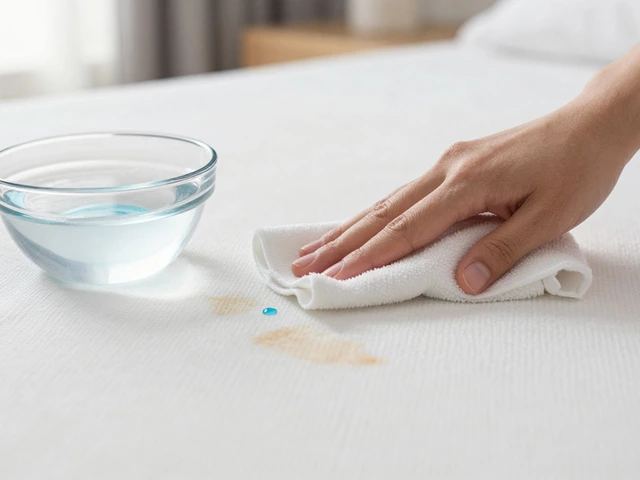
- Upholstery stains: Mix 1/2 cup vinegar, 1/2 cup water, and 1 tablespoon castile soap. Spray lightly, blot with towel. Don’t soak.
These aren’t hacks. They’re proven methods used by professional eco-cleaning services since 2018. The reason they work? They target the chemistry of dirt, not just cover it up.
Why This Matters Beyond Your Home
When you stop using chemical cleaners, you’re not just protecting your family. You’re helping the environment. Every bottle of commercial cleaner you avoid means less plastic waste, fewer toxic chemicals in waterways, and lower carbon emissions from manufacturing and shipping. The EPA estimates that household cleaners contribute to over 1 million tons of hazardous waste in the U.S. every year. Most of it ends up in landfills or drains into rivers.
Switching to natural cleaners is one of the easiest, cheapest, and most effective ways to reduce your household’s environmental footprint. And you don’t need to be perfect. Start with one room. Then another. Soon, you’ll realize you’re not just cleaning your house-you’re resetting your relationship with it.
Common Myths About Natural Cleaning
Let’s clear up a few lies you’ve been told:
- Myth: Natural cleaners don’t disinfect. Truth: Hydrogen peroxide and vinegar (used properly) kill 99% of household germs. The CDC recognizes both as effective disinfectants.
- Myth: They’re too expensive. Truth: A gallon of vinegar costs $2. A box of baking soda is $1. A bottle of castile soap lasts 6 months. Total cost per year? Under $15.
- Myth: They don’t smell good. Truth: Add a few drops of lemon, lavender, or eucalyptus essential oil. Your house will smell fresher than any synthetic fragrance.
Stop believing the hype. Start using what works.
Final Tip: Start Small, Stay Consistent
You don’t need to overhaul your whole cleaning routine overnight. Pick one surface-your kitchen sink, your bathroom mirror, your coffee maker-and clean it with vinegar and water. See how easy it is. See how clean it gets. Then do it again next week. Soon, you’ll stop reaching for the chemical spray. You’ll reach for what’s already in your cupboard. And that’s when you’ll realize: the best thing to clean your house with isn’t something you bought. It’s something you already had.
Can I use vinegar on all surfaces?
No. Avoid vinegar on stone surfaces like granite, marble, or limestone. The acid can etch and dull them over time. Use castile soap instead for these surfaces. Also, don’t use vinegar on waxed wood or unsealed grout. Always test in a small spot first.
Is baking soda abrasive enough for tough stains?
Yes, but it’s gentle. Baking soda has a Mohs hardness of about 2.5, which is soft enough not to scratch most surfaces but abrasive enough to lift grease and grime. For really stubborn stains, combine it with a little water to form a paste, let it sit for 15-30 minutes, then scrub with a brush. It’s safer than steel wool or harsh scrubbers.
How long do homemade cleaners last?
Most last 3-6 months if stored in a cool, dark place. Vinegar and castile soap are naturally shelf-stable. If you add essential oils, they may fade after a few months, but the cleaning power remains. Always label your bottles with the date you made them.
Can I use these cleaners with a steam mop?
Yes, but don’t add vinegar or soap to the water tank. Steam alone is enough to sanitize floors. Adding liquids can damage the machine. Just use plain water in the tank, and clean the mop pad with your vinegar solution afterward.
Do natural cleaners kill viruses like COVID-19?
Hydrogen peroxide (3%) is EPA-registered as a disinfectant and kills SARS-CoV-2 on surfaces within 1 minute. Vinegar alone is not effective against viruses. For high-risk areas like doorknobs or light switches, use hydrogen peroxide. Let it sit for 5-10 minutes before wiping.