Spring Cleaning vs Deep Cleaning Planner
Not sure what you need to do today? Select your goal and get a tailored checklist based on the differences between seasonal refreshes and intensive sanitation.
Your Personalized Checklist
Tasks:
There is a lot of confusion about whether spring cleaning and deep cleaning are the same thing. People often use these terms interchangeably, but they mean very different things in the world of home maintenance. One is tied to the calendar; the other is tied to the condition of your house. Understanding this difference can save you time, money, and a lot of unnecessary scrubbing.
If you have been wondering why your house still feels dusty after a "deep clean" or why a spring clean feels like it takes forever, the answer lies in the scope and intent of each task. Let’s break down exactly what each term means, when you should do them, and how to tackle them without burning out.
What Is Spring Cleaning?
Spring cleaning is a traditional seasonal deep-cleaning event that typically occurs in March or April to refresh the home after winter. The tradition dates back centuries, originally linked to the Jewish holiday of Passover and later adopted by Western cultures as a way to prepare homes for warmer weather.
The core idea behind spring cleaning is renewal. After months of keeping windows shut, wearing heavy coats indoors, and dealing with muddy boots, houses tend to accumulate grime. Spring cleaning is about resetting your living space. It is less about fixing specific problems and more about a comprehensive refresh.
Think of it as a ritual. You might not *need* to clean the inside of your fridge if it was spotless last week, but spring cleaning says, "It’s time." It involves tasks that are usually skipped during weekly routines:
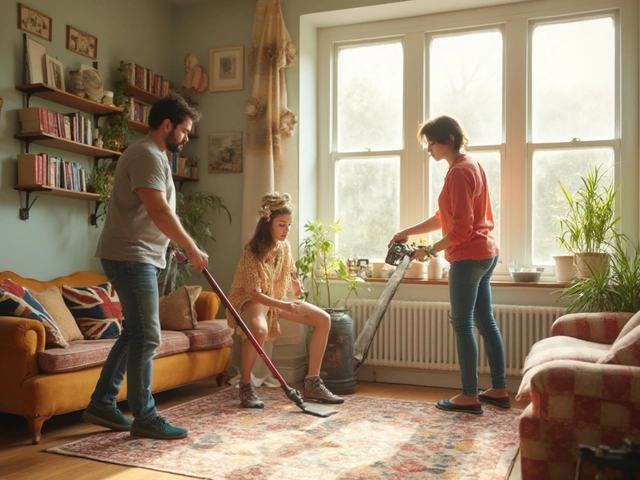
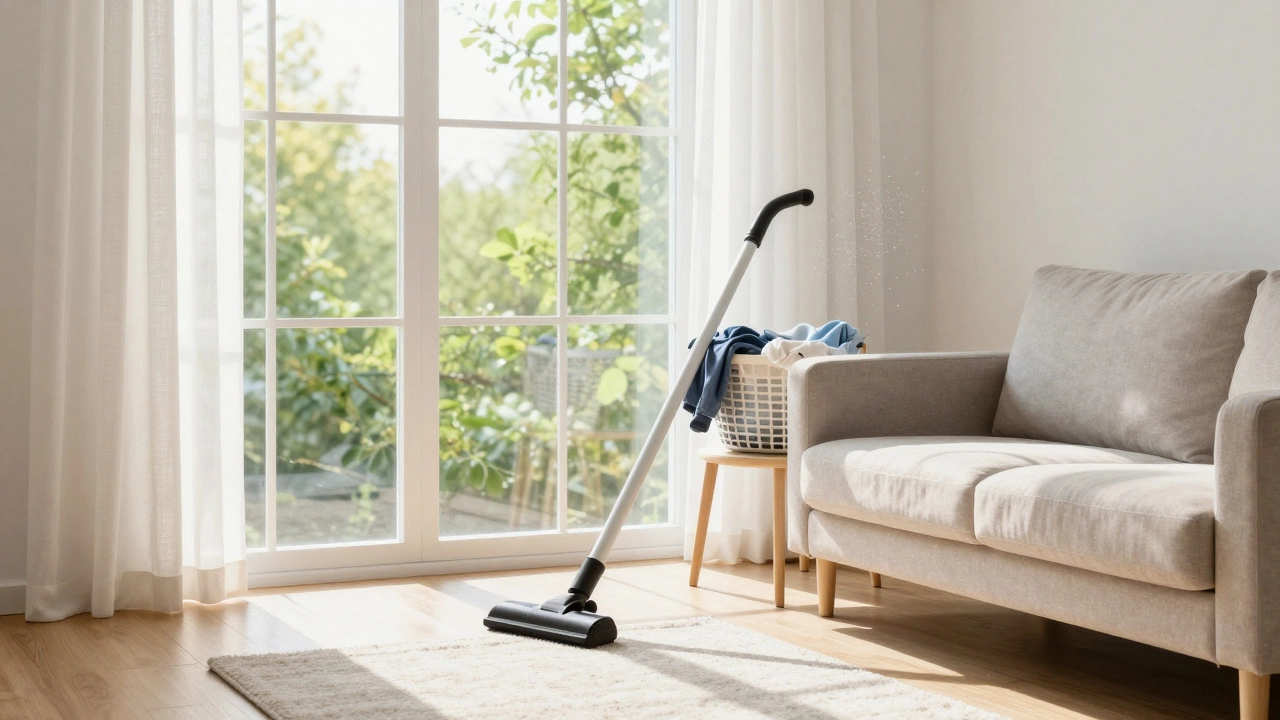
- Moving furniture to vacuum underneath
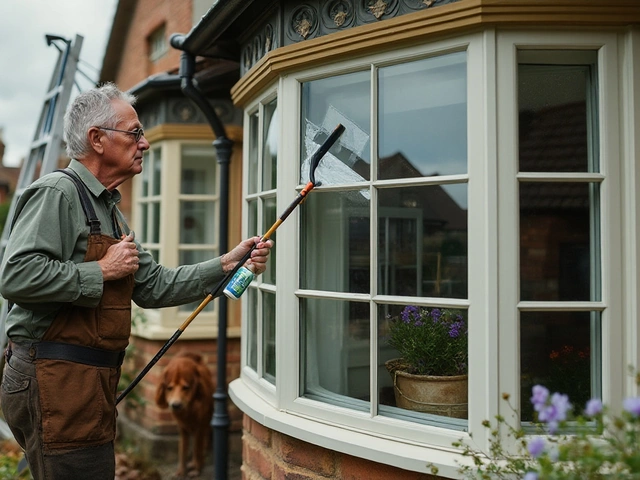
- Cleaning windows from the inside out
- Washing curtains and duvet covers
- Decluttering closets and drawers
- Dusting ceiling fans and light fixtures
In the UK, where dampness and cold winters are common, spring cleaning also has a practical purpose: airing out rooms to prevent mold and mildew. It is a proactive measure. You are preparing your home for the season ahead, regardless of its current state.
What Is Deep Cleaning?
Deep cleaning is an intensive cleaning process that targets hidden dirt, grease, and bacteria in areas often missed during regular cleaning. Unlike spring cleaning, deep cleaning is not tied to a specific time of year. It is triggered by need, not by the calendar.
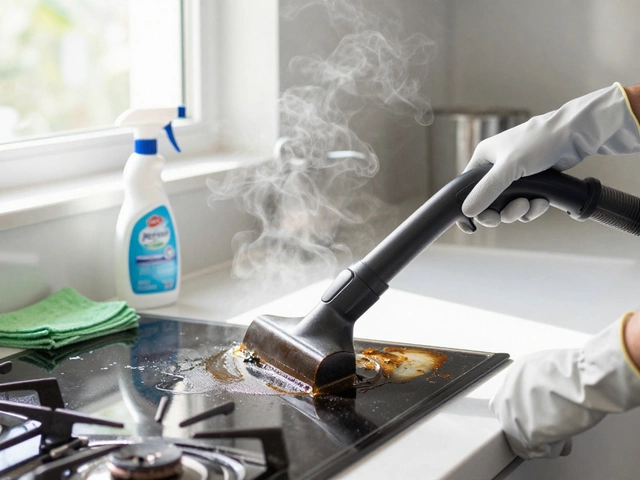
Deep cleaning focuses on sanitation and removal of built-up grime. If you have a kitchen with years of baked-on grease on the oven door, or a bathroom with limescale buildup on the showerhead, that requires deep cleaning. It is reactive. You do it because something is dirty, smelly, or unsanitary.
Common deep cleaning tasks include:
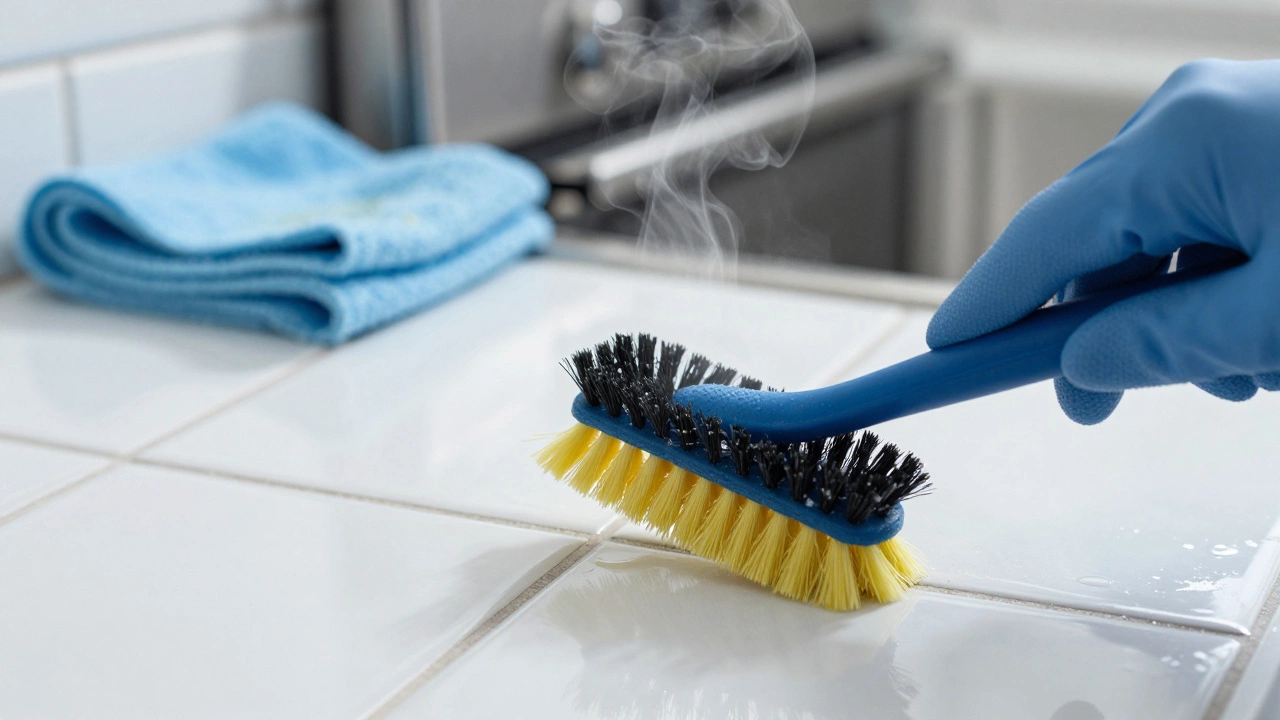
- Scrubbing tile grout with specialized cleaners
- Vacuuming upholstery and steam cleaning carpets
- Descaling kettles and coffee machines
- Cleaning behind appliances (fridge, washing machine)
- Disinfecting high-touch surfaces like door handles and switches
You might hire a professional for deep cleaning services, especially for end-of-tenancy situations or before major events. The goal here is hygiene and restoration. You want the surface to look and smell new again.
Key Differences: Scope, Timing, and Intent
To really understand the distinction, we need to look at three main factors: timing, scope, and intent. These are the pillars that separate a seasonal refresh from a targeted sanitation effort.
| Feature | Spring Cleaning | Deep Cleaning |
|---|---|---|
| Timing | Seasonal (March/April) | As needed / Periodic |
| Trigger | Calendar change | Visible dirt, odors, or events |
| Focus | Refresh and declutter | Sanitize and remove grime |
| Frequency | Once or twice a year | Every 3-6 months or as required |
| Typical Tasks | Windows, curtains, closets | Ovens, grout, carpets, appliances |
Notice how spring cleaning is broader but shallower in some ways. You might dust every shelf, but you won’t necessarily strip-clean the oven unless it’s part of your routine. Deep cleaning, however, goes deeper into specific problem areas. It is more intense but often more localized.
When Should You Do Each?
Knowing the difference helps you plan better. Here is a simple guide to when you should choose one over the other.
Choose Spring Cleaning When:
- Winter has just ended and you feel stagnant.
- You want to declutter and organize your home.
- You haven’t cleaned large surfaces like windows or blinds in months.
- You are preparing for guests who will be staying for an extended period.
Choose Deep Cleaning When:
- You are moving out of a rental property (end-of-tenancy cleaning).
- You have had a sick person in the house and need to disinfect.
- Your carpets or upholstery are stained or smelly.
- You notice persistent odors or visible mold/mildew.
- You are hosting a large party and want everything spotless.
In Sheffield, where rain is frequent, you might find yourself needing deep cleaning for floors and entryways more often than in drier parts of the country. Mud tracks in dirt quickly, requiring more frequent intensive attention than a dry climate would.
Can You Combine Them?
Absolutely. In fact, many people combine spring cleaning with deep cleaning tasks. This is often called a "seasonal deep clean." It is the most thorough approach and usually happens once or twice a year.
If you decide to combine them, prioritize based on your home’s needs. Start with the areas that get the most traffic or are hardest to clean. For example, start with the kitchen and bathrooms, then move to bedrooms and living areas. Don’t try to do everything in one day. Break it down by room or by task type.
Here is a sample schedule for a combined spring/deep clean:
- Day 1: Decluttering. Go through every room and remove items that don’t belong. Donate or trash what you no longer need.
- Day 2: Kitchen Deep Clean. Clean the oven, microwave, fridge interior, and degrease cabinets.
- Day 3: Bathroom Sanitation. Scrub tiles, descale showers, clean toilets thoroughly, and disinfect sinks.
- Day 4: Living Areas. Vacuum under furniture, dust blinds, wash windows, and clean floors.
- Day 5: Bedrooms & Laundry. Wash bedding, curtains, and upholstery. Organize wardrobes.
This approach prevents burnout. Trying to deep clean an entire house in a weekend is a recipe for stress and incomplete work.
Tools and Products You’ll Need
Whether you are doing a spring clean or a deep clean, having the right tools makes a huge difference. You don’t need expensive gadgets, but you do need effective products.
For spring cleaning, focus on tools that reach high and low places:
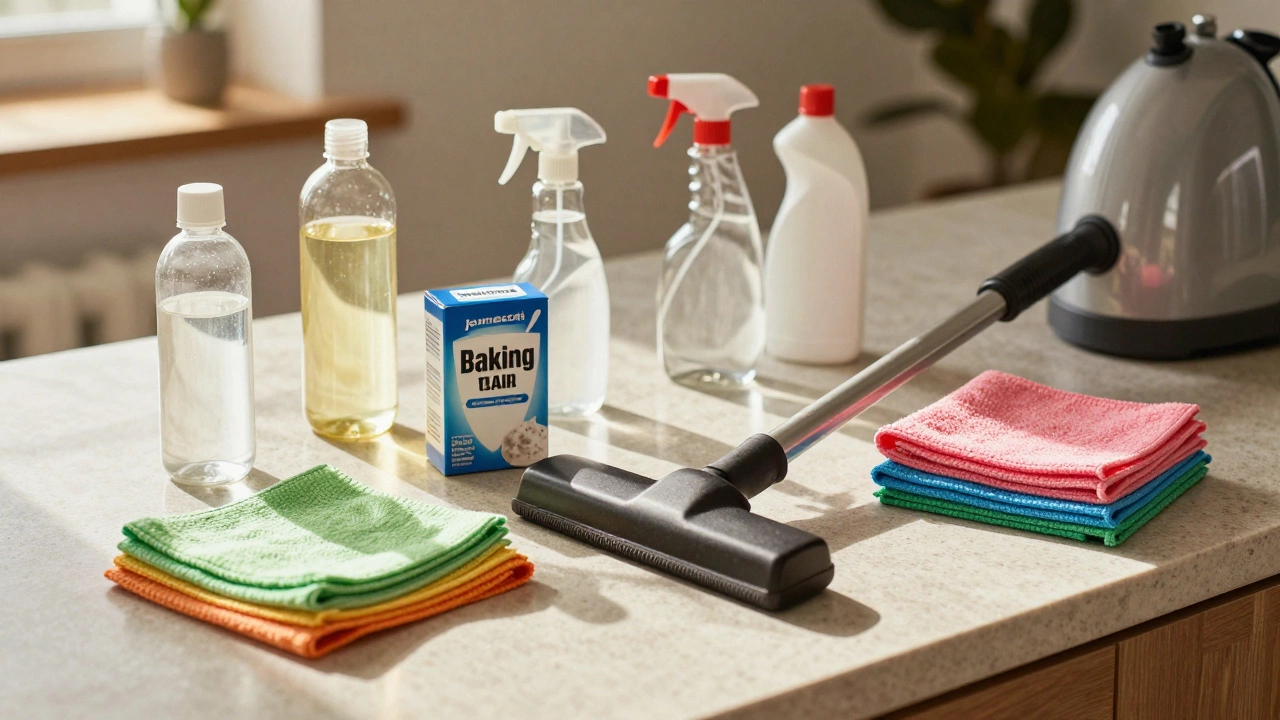
- Microfiber cloths (for dusting without leaving streaks)
- An extendable duster (for ceiling fans and top shelves)
- A good vacuum with attachments (for upholstery and crevices)
- All-purpose cleaner (for general surfaces)
For deep cleaning, you need stronger agents:
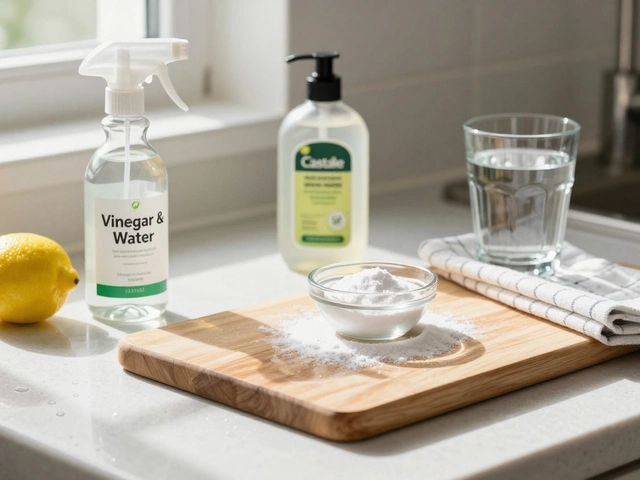
- Vinegar and baking soda (natural alternatives for descaling and deodorizing)
- Enzymatic cleaners (for pet stains and biological odors)
- Grout brush or old toothbrush (for tight spaces)
- Steam cleaner (for sanitizing without chemicals)
Always check labels before mixing products. Never mix bleach with ammonia or vinegar. It creates toxic fumes that can be dangerous. Stick to one product per task unless the manufacturer says otherwise.
DIY vs Hiring Professionals
Should you do it yourself or call in the pros? It depends on your time, budget, and the scale of the job.
DIY spring cleaning is manageable for most homeowners. It requires effort but not specialized skills. However, deep cleaning tasks like carpet extraction, oven cleaning, or window cleaning on upper floors can be risky or time-consuming. In those cases, hiring professionals in Sheffield or elsewhere in the UK can be worth the cost.
Professional cleaners bring industrial-grade equipment and expertise. They can remove stains that DIY methods miss and sanitize areas that harbor bacteria. If you have allergies, asthma, or limited mobility, outsourcing deep cleaning can significantly improve your quality of life.
Consider this: if you spend eight hours deep cleaning and still aren’t satisfied, was it worth the lost weekend? Sometimes paying for convenience and quality is the smarter choice.
Common Mistakes to Avoid
Even experienced cleaners make mistakes. Here are a few pitfalls to watch out for:
- Skipping ventilation. Always open windows when using strong cleaners. Fresh air helps dissipate fumes and speeds up drying.
- Cleaning top to bottom incorrectly. Always start from the highest point (ceilings, lights) and work down. Dust falls, so cleaning floors first means you’ll just have to clean them again.
- Using too much product. More cleaner doesn’t mean cleaner results. It often leaves residue that attracts more dirt. Follow dilution instructions.
- Neglecting small details. Light switches, door knobs, and baseboards collect germs. Don’t overlook them.
- Rushing. Deep cleaning takes time. Rushing leads to missed spots and frustration.
Maintaining Your Home Between Cleans
The best way to make spring and deep cleaning easier is to maintain your home regularly. A daily ten-minute tidy can prevent grime from building up. Wipe counters after cooking, sweep floors weekly, and dust surfaces every few days.
Also, consider your habits. Do you wipe your feet before entering? Do you take off shoes? Small changes in behavior can reduce the frequency of deep cleaning needed. In the UK, where mud is a constant companion, a doormat and shoe-free policy can keep your floors cleaner for longer.
Remember, cleaning is not a punishment. It is a way to care for your space and your health. Whether you are refreshing your home for spring or tackling a stubborn stain, the goal is the same: a comfortable, healthy environment.
Is spring cleaning necessary if I clean regularly?
Yes. Regular cleaning maintains surface cleanliness, but spring cleaning addresses areas often missed, like behind furniture, inside windows, and stored items. It provides a comprehensive reset that weekly routines don't cover.
How often should I deep clean my home?
It depends on your lifestyle. Generally, deep cleaning every 3-6 months is recommended. Homes with pets, children, or smokers may need more frequent deep cleaning. Kitchens and bathrooms should be deep cleaned more often than bedrooms.
Can I use the same products for spring and deep cleaning?
Some all-purpose cleaners work for both, but deep cleaning often requires specialized products like degreasers for kitchens or descalers for bathrooms. Spring cleaning relies more on general dusting and wiping agents.
Is it better to hire a professional for spring cleaning?
It is optional. Many people enjoy the therapeutic aspect of spring cleaning themselves. However, if you lack time or physical ability, professionals can ensure a thorough job, especially for hard-to-reach areas like high windows or large carpets.
Does spring cleaning help with allergies?
Yes. By removing dust mites, pollen, and mold spores that accumulate during winter, spring cleaning can significantly reduce allergy triggers. Washing bedding and cleaning HVAC filters are particularly effective steps.