Pressure Washer Safety & Compatibility Checker
Wider angles reduce impact force per square inch.
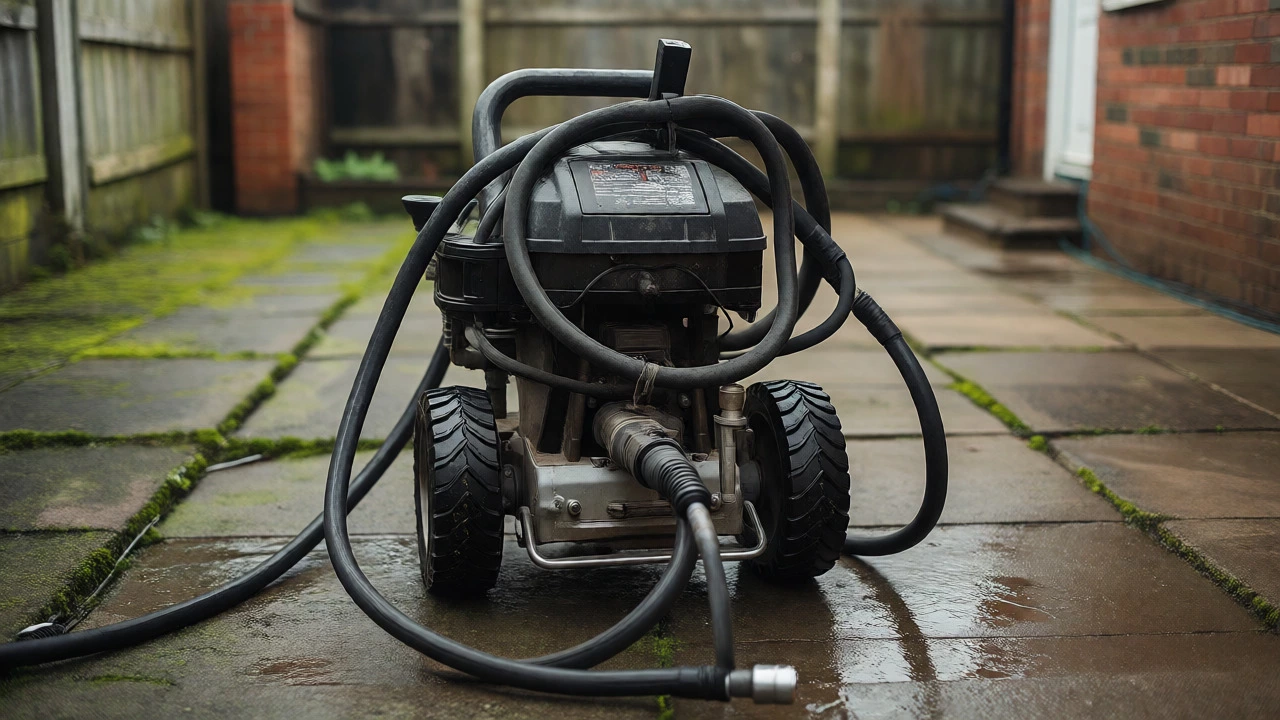
You just picked up a beast of a machine. It’s loud, it’s heavy, and the box says 4000 PSI. You’re staring at your patio slabs, your siding, or maybe that stubborn patch of moss on the roof, wondering: is this overkill? The short answer is yes-for almost everything around a typical house, 4000 PSI is dangerously high. But "dangerous" doesn't mean useless; it means you need to handle it with respect and precision.
Here in Manchester, where rain is a constant companion and algae loves to turn our driveways green, we see a lot of DIY disasters caused by excessive power. People buy commercial-grade washers thinking more pressure equals a cleaner home. They blast their brickwork until the mortar turns to dust, or they strip the paint off their fence in seconds flat. If you have a 4000 PSI unit, you aren’t just cleaning; you’re potentially eroding. Let’s break down exactly when this level of power is appropriate, when it’s a mistake, and how to use it without turning your weekend project into a renovation nightmare.
The Reality of 4000 PSI: Commercial Power in a Domestic Setting
To understand if 4000 PSI is too much, you first need to know what it actually does. Most residential electric pressure washers hover between 1500 and 2000 PSI. Gas-powered consumer models might reach 3000 PSI. When you hit 4000 PSI, you are entering the realm of professional contractors. This isn't a toy. At this pressure, water exits the nozzle at speeds exceeding 200 miles per hour. That is fast enough to cut skin, shatter glass, and etch concrete.
Think of it like using a sledgehammer to hang a picture frame. It will work, but there’s a high chance you’ll destroy the wall in the process. For delicate surfaces like vinyl siding, wooden decks, or painted fences, 4000 PSI is not just "too much"-it’s destructive. However, for stripping old paint off a metal gate or blasting mud off a tractor tire, it’s perfect. The key is matching the tool to the task. If you bought this machine for general house cleaning, you’ve likely overshot the mark by about 2000 PSI.
Surface Sensitivity: What Can Survive 4000 PSI?
Not all surfaces are created equal. Some materials are porous, some are brittle, and others are tough as nails. Here is a quick breakdown of common household items and whether they can withstand the force of a 4000 PSI jet.
| Surface Type | Risk Level | Recommended Action |
|---|---|---|
| Vinyl Siding | Critical | Too High. Will crack panels and force water behind walls. |
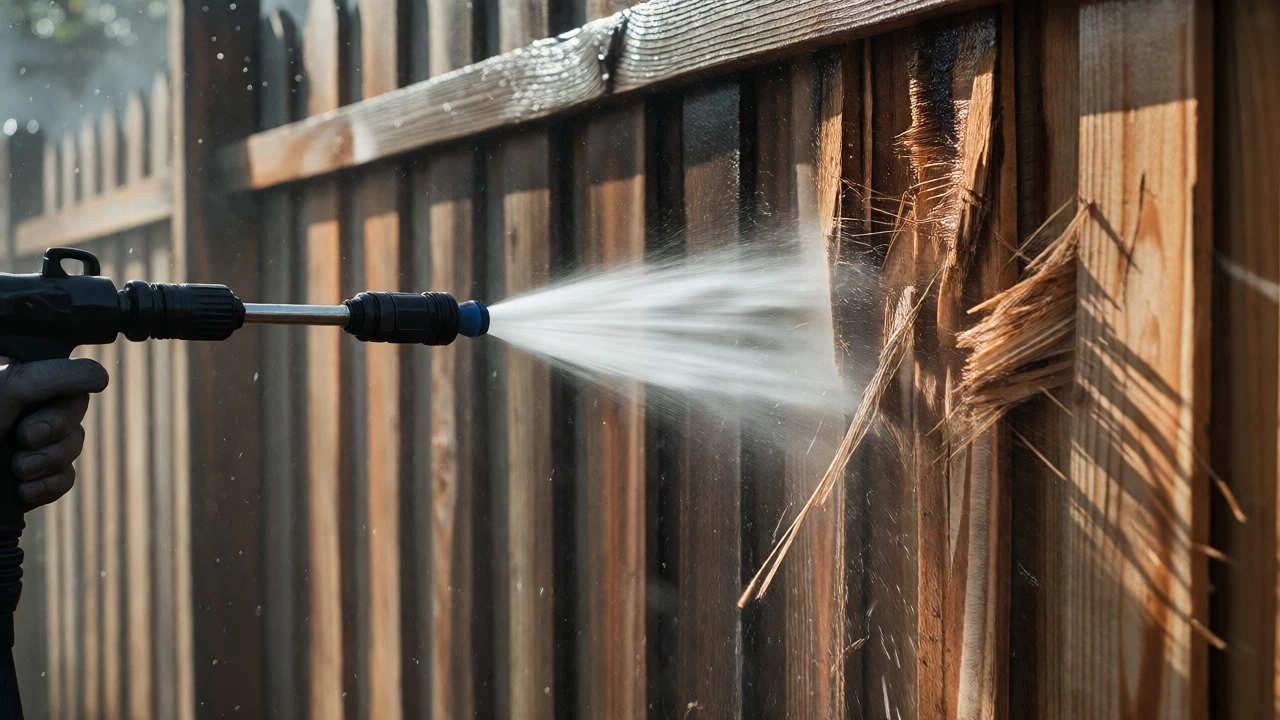
| Wooden Decking | High | Too High. Will splinter wood and remove grain texture. |
| Brick & Mortar | Medium-High | Use caution. Can erode mortar joints if held too close. |
| Concrete Driveway | Low-Medium | Acceptable. Use wide nozzle tip (25-40 degrees). |
| Asphalt Shingles | Critical | Never. Blasts granules off, shortening roof life. |
| Cast Iron Gates | Low | Ideal. Strips rust and old paint effectively. |
Notice the pattern? Anything with a finish, a sealant, or a soft material gets destroyed. Concrete and stone are your friends here, but even they have limits. If you hold a zero-degree nozzle at 4000 PSI against concrete from six inches away, you will carve a groove into it. It becomes a sculpting tool rather than a cleaning tool.
The Myth of "More Is Better": Why Higher PSI Isn't Always Cleaner
Many people confuse pressure with cleaning efficiency. They think, "If I double the pressure, I clean twice as fast." That’s not how physics works. Cleaning happens through a combination of pressure, flow rate (Gallons Per Minute or GPM), chemical action, and time.
A 4000 PSI machine often has a lower GPM compared to its total power rating. If you have 4000 PSI but only 2.5 GPM, you’re delivering a tiny, high-pressure needle of water. It cuts dirt, sure, but it doesn’t flush it away well. A 2500 PSI machine with 4.0 GPM will often clean faster because it has more volume to carry the dirt away. It’s like trying to wash a car with a fire hose versus a garden hose with a good nozzle. The fire hose has more pressure, but the garden hose moves more water, rinsing the soap off quicker.
Furthermore, higher pressure creates more aerosolized particles. When you blast dirt at 4000 PSI, you’re sending microscopic bits of mold, bacteria, and grime flying into the air. Without proper PPE, you’re breathing in a cloud of nasty stuff. Lower pressure allows the water to push dirt off gently, reducing the splashback and airborne contaminants.
How to Safely Use a 4000 PSI Washer on Residential Jobs
If you already own this monster, don’t panic. You can still use it. You just need to change your technique. The golden rule is distance and angle. You cannot get close. Start at four feet away from the surface and slowly move closer until you find the sweet spot where dirt lifts but the surface remains intact.
- Nozzle Selection: Never use the red (0-degree) or yellow (15-degree) tips for general cleaning. Stick to the white (25-degree) or green (40-degree) nozzles. These spread the water out, reducing the impact per square inch.
- Motion: Keep the wand moving. Stopping in one spot, even for a second, can create a visible line or etch mark on concrete. Sweep in overlapping strokes.
- Test Patch: Always test an inconspicuous area first. Look at the back corner of your garage or under a bush. See what happens before you tackle the front facade.
- Detergent Injection: Most high-PSI machines have a downstream injector. Use detergent to do the heavy lifting. Let the chemicals break down the grime so the water only needs to rinse it away. This allows you to lower the pressure setting if your machine has a regulator.
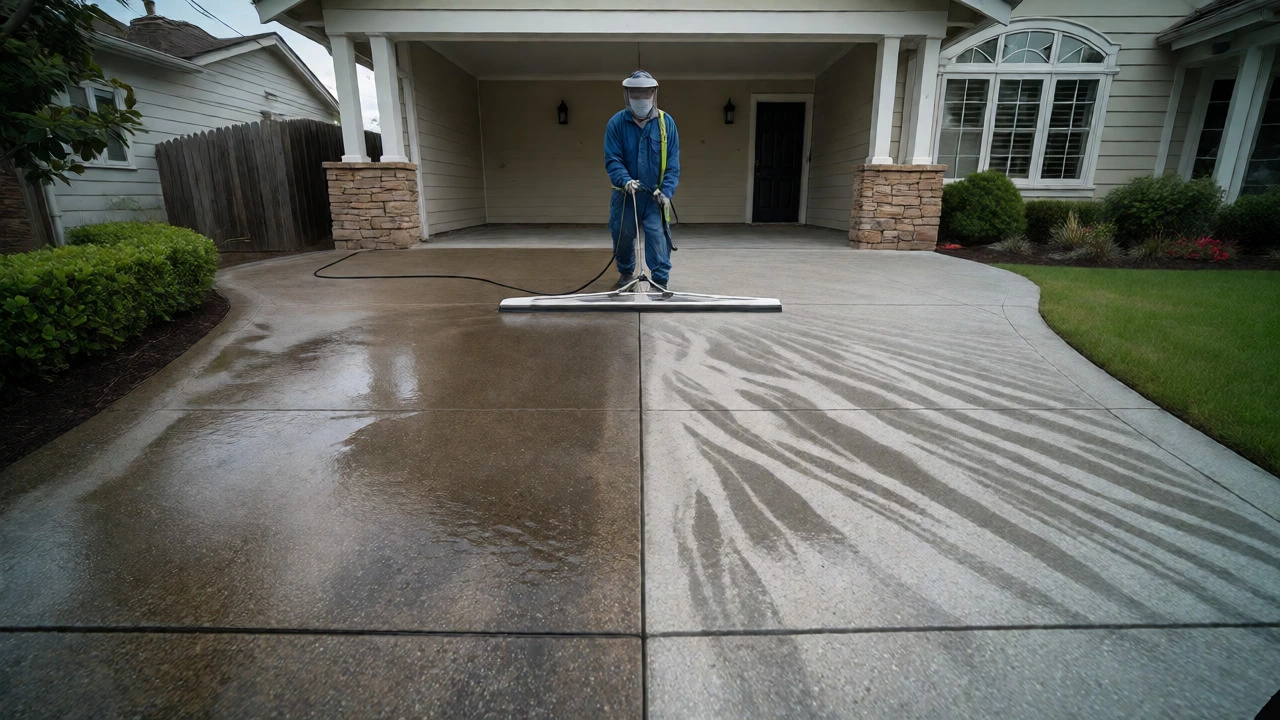
Another trick is using a surface cleaner attachment. This is a round disc that spins underneath the washer. It distributes the pressure evenly across a wider area. While it doesn’t reduce the PSI, it prevents the "tiger stripe" effect where you leave dark lines on your driveway from uneven passes.
When Should You Actually Buy a 4000 PSI Machine?
So, who is this machine really for? It’s not for the average homeowner who wants to clean their patio once a year. It’s for specific scenarios:
- Heavy Equipment: Tractors, combines, excavators. Mud caked on tires requires serious force.
- Commercial Properties: Loading docks, industrial warehouses, and large parking lots.
- Restoration Work: Stripping old lead paint (with containment) or graffiti removal from sturdy stone.
- Contractors: If you are charging clients by the hour, speed matters. A 4000 PSI unit can cover ground faster than a 2000 PSI unit, provided you have the skill to control it.
If you fit into none of these categories, you probably don’t need it. You might be better off renting a smaller, electric model for occasional jobs. Owning a 4000 PSI gas washer comes with maintenance headaches-oil changes, spark plugs, winterizing, and pump repairs-that aren’t worth it for light domestic use.
Common Mistakes That Turn High Pressure into Damage
Even pros mess up. The most common error is forgetting that water follows the path of least resistance. With 4000 PSI, water can force itself into cracks in masonry, behind siding, and under window seals. Once it’s inside, it causes rot and mold. In winter, this trapped water freezes and expands, cracking the structure further.
Another mistake is ignoring the soft parts. Lights, vents, gutters, and window screens are fragile. A direct hit from a high-pressure stream will shatter a plastic vent cover instantly. Tape them off or avoid them entirely. Also, watch out for loose bricks. If the mortar is already crumbling, high pressure will knock the brick right out of the wall.
Finally, consider the environment. Runoff from high-pressure washing contains detergents, oils, and debris. On a small residential plot, this runoff goes straight into the soil or storm drains. Ensure you’re using biodegradable soaps and that you aren’t blasting hazardous waste onto your neighbor’s lawn.
Can I use a 4000 PSI washer on my car?
Generally, no. 4000 PSI is too aggressive for automotive paint and clear coats. It can strip wax, chip paint, and force water into door seals and electrical components. For cars, stick to a maximum of 1500-2000 PSI, and keep the nozzle at least two feet away. Using a foam cannon with a lower pressure setting is much safer and effective for vehicles.
Will 4000 PSI damage my brick house?
It can, especially if the mortar is old or soft. Modern hard-fired bricks are tough, but the mortar joints are vulnerable. At 4000 PSI, you risk blowing out the mortar joints, which leads to structural issues and water ingress later. If you must use it, use a wide-angle nozzle (40 degrees), maintain a distance of at least three feet, and never aim directly at the mortar lines. Ideally, use a lower pressure setting or a soft wash method for brickwork.
Is 4000 PSI better than 3000 PSI for cleaning concrete?
Not necessarily. Cleaning effectiveness depends on both PSI and GPM (flow rate). A 3000 PSI machine with 4.0 GPM will often clean concrete faster and more thoroughly than a 4000 PSI machine with only 2.5 GPM. The higher flow rate carries away more dirt. If the 4000 PSI machine also has a high GPM (4.0+), then it will be faster, but you must be careful not to etch the concrete surface.
What happens if I use too much pressure on wood?
You will raise the grain and splinter the wood. This looks like fuzzy, rough fibers sticking out. Once this happens, the wood loses its smooth finish and becomes prone to trapping moisture and dirt. Restoring it usually requires sanding the entire deck or fence again, which undoes all the time you saved by using high pressure. For wood, keep pressure below 1500 PSI.
Do I need special gear for a 4000 PSI washer?
Yes. Standard safety glasses are not enough. At 4000 PSI, debris flies at bullet-like speeds. Wear full-face protection, sturdy closed-toe boots (preferably rubber-soled), and long pants. Gloves are essential to protect your hands from vibration and accidental spray. The recoil on a 4000 PSI gun is significant; ensure you have a firm grip and brace yourself properly.