Mattress Stain Removal Guide
Select your scenario below to get the perfect cleaning protocol.
Mattress Specific Warning:
Waking up to an unexpected stain on your bedding can be stressful, but it is far from a disaster. Sperm stains are biological residues composed primarily of proteins and enzymes that require specific cold-water treatment to break down without setting permanently into fabric fibers. The good news? These stains are actually quite easy to remove if you handle them correctly. The bad news? Using hot water or the wrong cleaner can cook the proteins into the fabric, making the mark permanent.
If you have ever tried to scrub a stain with boiling water only to watch it turn yellow and harden, you know the frustration. This guide cuts through the noise and gives you a clear, effective protocol for removing these stains from any type of mattress, whether it is memory foam, latex, or innerspring. We will cover immediate actions, DIY solutions using household items, and when to call in professional help.
The Golden Rule: Cold Water Only
Before you grab any chemicals, understand the chemistry at play. Sperm contains proteins. When proteins meet heat, they denature-essentially cooking and bonding tightly to the fibers. This is why blood stains behave similarly. If you use hot water, you are not cleaning; you are setting the stain.
- Use cold water: Always start with the coldest tap water available.
- Avoid heat sources: Do not use a hair dryer, steam cleaner, or hot iron during the initial cleaning phase.
- Blot, do not rub: Rubbing pushes the liquid deeper into the core of the mattress. Blotting lifts it out.
This rule applies regardless of how old the stain is. Even dried stains respond better to cold soaking than hot agitation.
Immediate Action Plan for Fresh Stains
If you catch the stain while it is still wet, you have the easiest path to a clean mattress. Speed matters here because as the fluid dries, it begins to oxidize and bond more strongly.
- Remove excess moisture: Use paper towels or a clean, dry cloth. Press firmly onto the stain to absorb as much liquid as possible. Do not swipe across the surface.
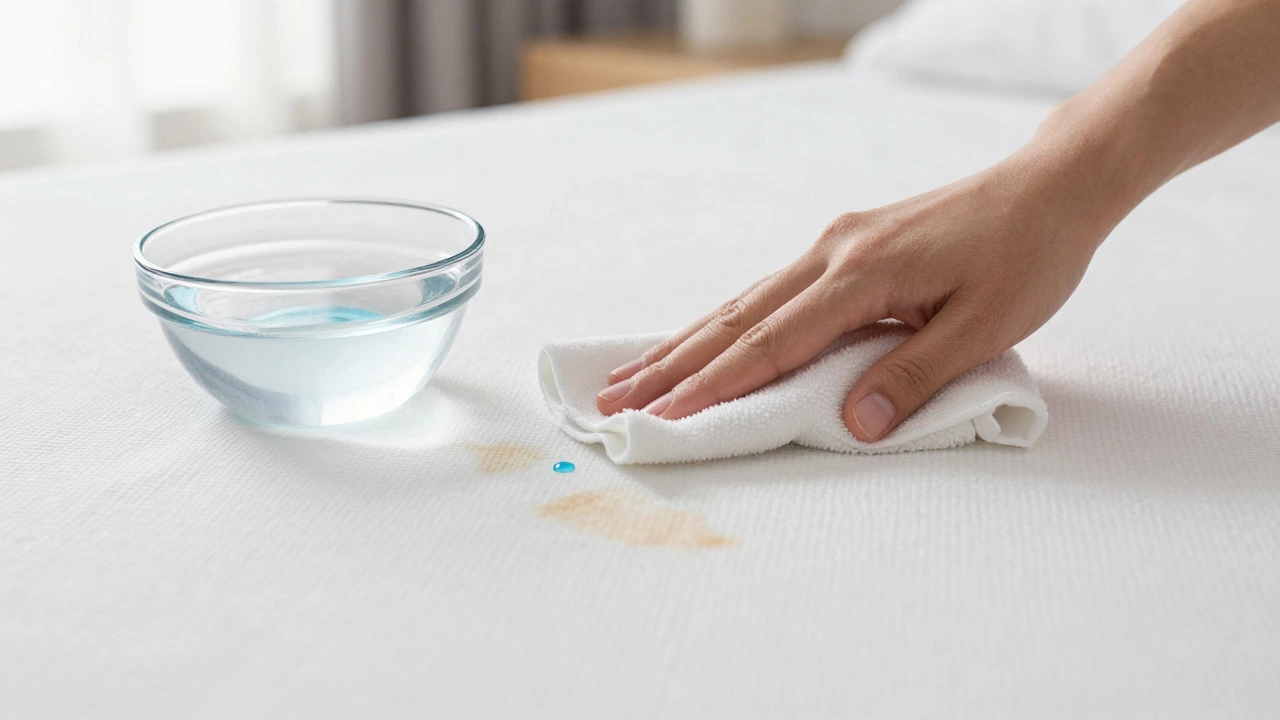
- Prepare a cleaning solution: Mix one teaspoon of mild dish soap (like Dawn or Fairy Liquid) with one cup of cold water. Dish soap is designed to cut through oils and proteins without being too harsh on fabrics.
- Apply gently: Dip a clean white cloth into the soapy water, wring it out until it is damp (not dripping), and dab the stained area. Work from the outside of the stain toward the center to prevent spreading.
- Rinse: Dampen another cloth with plain cold water and blot the area to remove soap residue. Soap left behind can attract dirt later.
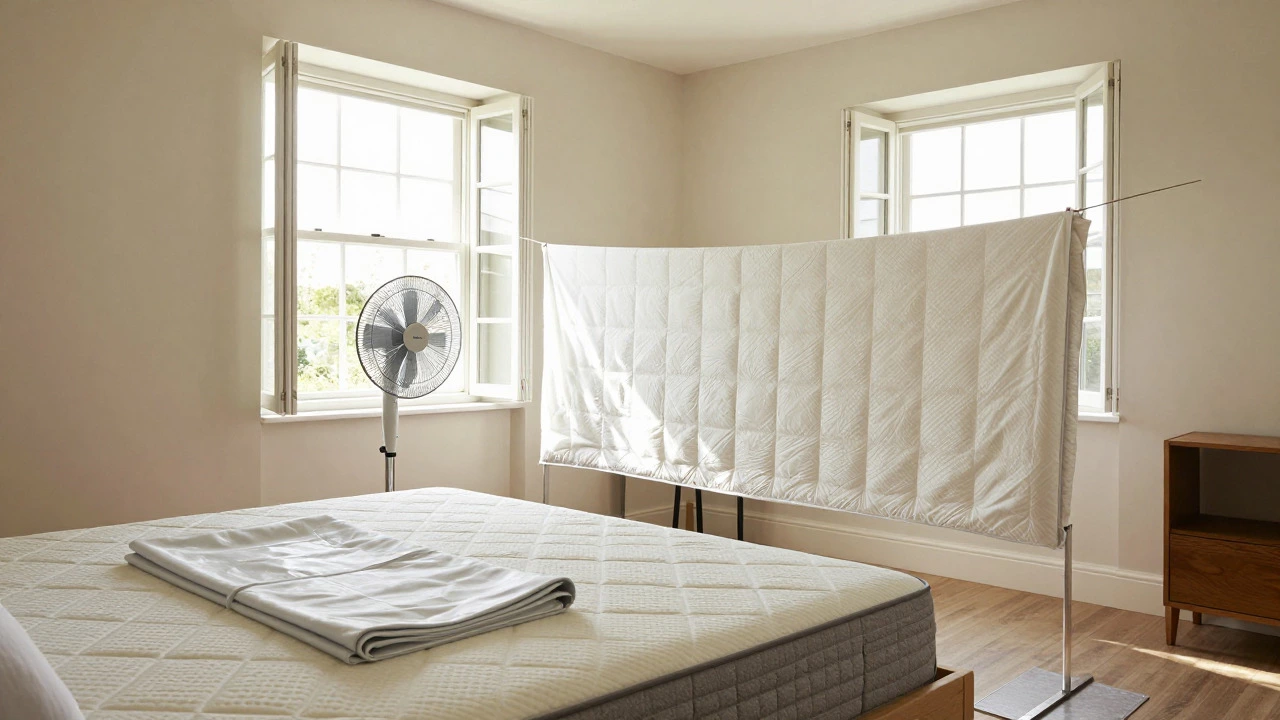
- Dry thoroughly: Pat dry with a towel. Then, place a fan nearby or open a window to air dry the spot completely before putting sheets back on.
For most fresh stains, this simple process is sufficient. You might see the discoloration fade significantly after just two or three blotting cycles.
Treating Dried or Set-In Stains
Older stains require a bit more elbow grease and stronger enzymatic action. Since the proteins have dried, you need to rehydrate and break them down chemically.
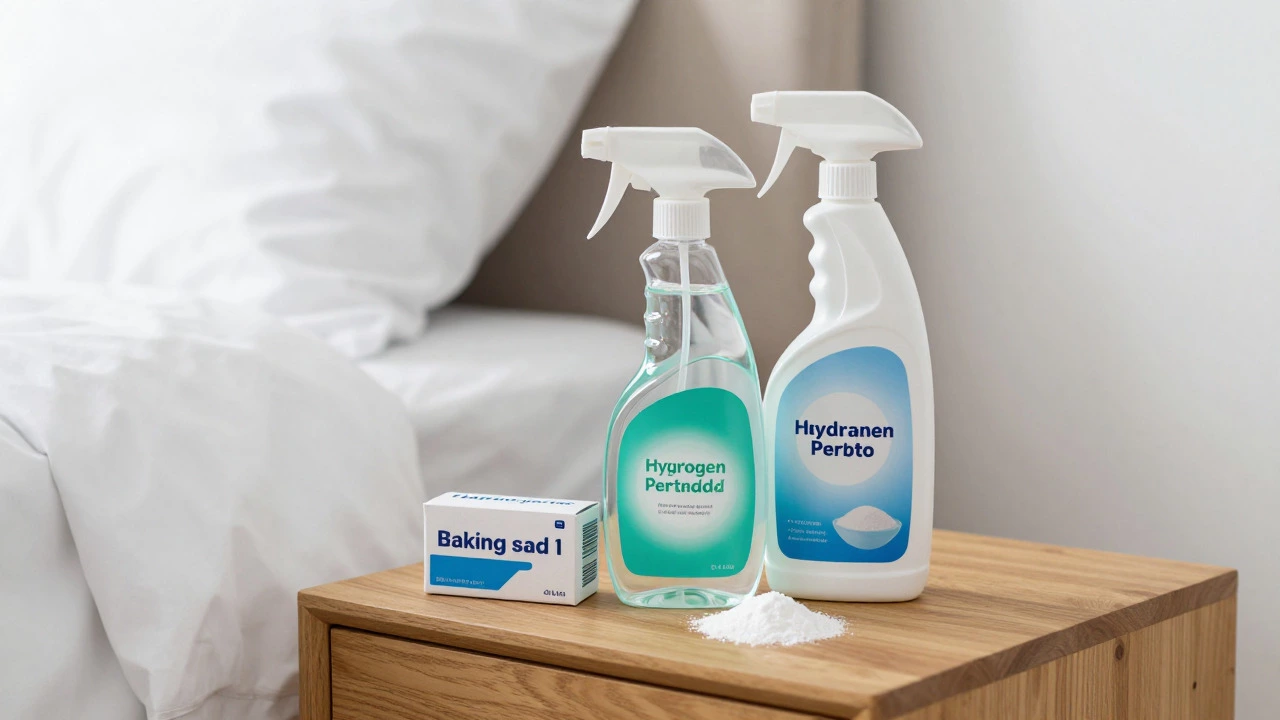
Option 1: Hydrogen Peroxide Solution Hydrogen peroxide is a powerful oxidizer that breaks down organic matter. It also acts as a mild bleach, which helps with discoloration. However, test it on a hidden corner of your mattress first to ensure it does not discolor the fabric.
- Mix one part hydrogen peroxide (3% concentration) with one part cold water.
- Add a tiny drop of dish soap to help lift the residue.
- Apply to the stain with a spray bottle or sponge.
- Let it sit for 5-10 minutes. You may see slight fizzing; this is normal.
- Blot with a cold, damp cloth until the stain lifts.
Option 2: Enzymatic Cleaners If you have pets, you likely already own an enzymatic cleaner (used for urine or vomit). These products contain bacteria-eating enzymes that specifically target proteins. They are highly effective on biological stains like sperm.
- Follow the manufacturer’s instructions on the label.
- Generally, you spray the enzyme solution directly onto the stain.
- Allow it to dwell for 10-15 minutes to let the enzymes work.
- Blot away the residue with a cold, damp cloth.
Option 3: Baking Soda Paste For stubborn discoloration, baking soda offers gentle abrasion and odor neutralization.
- Mix baking soda with a small amount of cold water to form a thick paste.
- Spread the paste over the stain.
- Let it dry completely (this may take a few hours).
- Vacuum up the dried powder. The baking soda will have absorbed some of the stain and odor as it dried.
Cleaning Different Mattress Types
Not all mattresses react the same way to moisture. Knowing your mattress type prevents damage to the internal structure.
| Mattress Type | Moisture Sensitivity | Cleaning Tips |
|---|---|---|
| Memory Foam | High | Avoid soaking. Excess water can seep into the foam core, leading to mold. Use minimal moisture and dry quickly with fans. |
| Innerspring | Medium | More forgiving. You can use slightly more water, but still avoid saturating the springs to prevent rust. |
| Latex | Low-Medium | Natural latex is durable but can degrade with harsh chemicals. Stick to mild soap and cold water. |
| Hybrid | Medium-High | Treat like memory foam. Focus on the top comfort layer and avoid deep saturation. |
For memory foam and hybrids, the biggest risk is mold growth inside the foam if it doesn’t dry properly. Always prioritize airflow after cleaning.
Preventing Odors and Future Stains
Even after the visible stain is gone, a faint odor might linger. Biological stains can leave behind trace proteins that bacteria feed on, causing smells.
To eliminate odors:
- Baking Soda Deodorizing: After the mattress is fully dry, sprinkle a thin layer of baking soda over the entire surface. Let it sit for several hours or overnight, then vacuum thoroughly. This absorbs residual odors.
- Vinegar Spray: A mixture of equal parts white vinegar and cold water can neutralize odors. Lightly mist the area (do not soak) and let it air dry. The vinegar smell dissipates as it dries.
To prevent future accidents:
- Use a Waterproof Mattress Protector: This is the single best investment for bed hygiene. Look for breathable, hypoallergenic protectors that fit snugly. They create a barrier against fluids, allergens, and dust mites.
- Change Sheets Regularly: Weekly sheet changes reduce the buildup of bodily fluids and sweat.
- Rotate Your Mattress: Rotating your mattress every 3-6 months ensures even wear and distributes any minor moisture exposure.
When to Call a Professional Cleaner
While most sperm stains can be handled at home, there are scenarios where professional intervention is worth the cost.
Contact a professional mattress cleaning service if:
- The stain has been present for weeks or months and has turned dark brown or black.
- You have tried multiple DIY methods without success.
- The mattress has a persistent, foul odor despite cleaning.
- You suspect mold growth (visible spots or musty smell) due to previous improper drying.
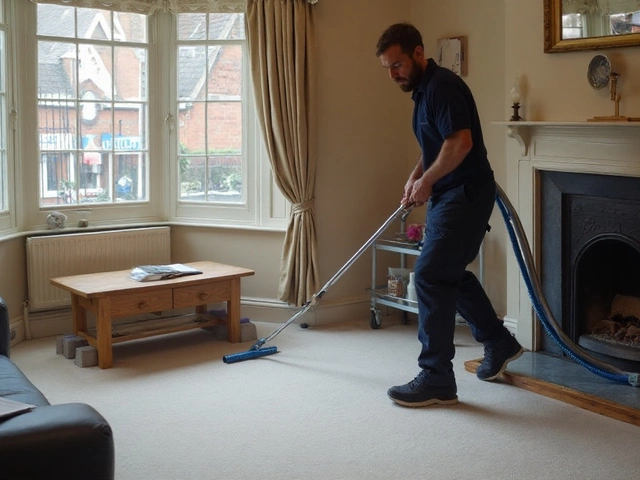
Professional cleaners use industrial-grade extractors and high-powered vacuums that pull moisture and debris from deep within the mattress layers. They also apply antimicrobial treatments to kill bacteria and allergens. In Sheffield, many local upholstery cleaners offer specialized mattress services that include sanitization and deodorizing.
Common Mistakes to Avoid
Avoid these pitfalls to ensure your cleaning efforts don’t make things worse:
- Using Hot Water: As mentioned, this sets the protein stain.
- Over-Saturating the Mattress: More water isn’t better. It leads to longer drying times and potential mold.
- Ignoring the Smell: If it smells, it’s not truly clean. Address odors with baking soda or enzymatic cleaners.
- Putting Sheets Back Too Soon: Ensure the mattress is 100% dry. Trapped moisture creates a breeding ground for bacteria.
By following these steps, you can restore your mattress to a hygienic, fresh state. Remember, patience and the right temperature are your best tools.
Can I use bleach to remove sperm stains from a mattress?
It is generally not recommended to use chlorine bleach on mattresses unless the fabric is white and colorfast. Bleach can weaken fibers, cause discoloration, and leave strong chemical odors. Hydrogen peroxide is a safer, effective alternative for lightening stains without damaging most mattress fabrics.
How long does it take for a mattress to dry after cleaning?
Drying time depends on the mattress type and humidity. Memory foam can take 6-8 hours to dry completely, while innerspring mattresses may dry in 3-4 hours. Use fans, open windows, or a dehumidifier to speed up the process. Never put sheets on a damp mattress.
Will washing machine detergent work on mattress stains?
Liquid laundry detergent can work, but it often contains enzymes and fragrances that might irritate sensitive skin or leave residues. Mild dish soap is preferred because it rinses out more easily from fabric fibers. If you use laundry detergent, dilute it heavily in cold water and rinse thoroughly.
Is it safe to use a steam cleaner on a mattress with biological stains?
Steam cleaners can sanitize mattresses, but the high heat can set protein-based stains like sperm or blood if they are not pre-treated. Always blot and clean the stain with cold water and enzymatic cleaner first. Only use steam afterward for sanitization, and ensure the mattress dries quickly to prevent mold.
How do I know if my mattress has mold inside?
Signs of mold include a musty, earthy odor, visible black or green spots, and increased allergy symptoms when sleeping. If you suspect mold, inspect the seams and underside of the mattress. Surface mold can sometimes be cleaned with vinegar, but deep-seated mold usually requires professional remediation or replacing the mattress.