Driveway Pressure Washing Safety Calculator
Select your driveway material and current condition to determine the safest cleaning method and recommended settings.
Risk Assessment
LOW RISKRecommended Max PSI
--
Recommended Nozzle
--
Best Practice Tip
--
You see a gray, stained driveway. You rent a machine, crank the nozzle to max, and blast away years of grime in an afternoon. It looks brand new. But six months later, you notice tiny cracks spreading like spiderwebs, or worse, the surface feels rough and pitted. Did you just ruin your driveway?
The short answer is: pressure washing isn't inherently bad for driveways, but it is dangerous if done incorrectly. The machine itself doesn’t destroy concrete; the operator’s technique does. When used with the right settings, nozzles, and distance, it’s one of the most effective ways to maintain curb appeal. When abused, it can strip sealants, erode aggregate, and accelerate cracking.
How Concrete Actually Works (And Why It Breaks)
To understand why pressure washing can be harmful, you need to know what your driveway is made of. Most residential driveways are poured concrete, which is a composite material composed of cement, water, sand, and gravel aggregates. Over time, the top layer-the "paste"-can become porous. This paste binds the larger stones together. If you blast this layer off, you expose the aggregate underneath, creating a rough, sandy texture that holds more dirt and stains faster than before.
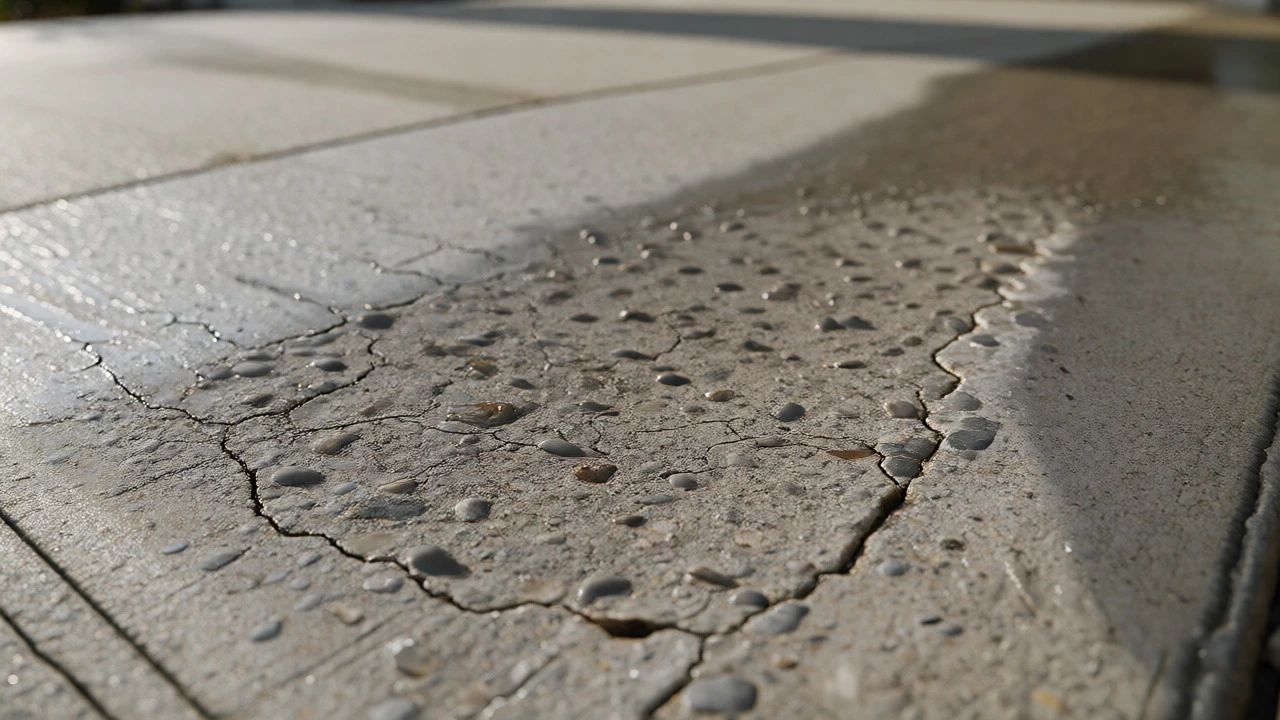
There is also the issue of micro-cracking. Concrete cures by shrinking. Tiny fissures exist in almost every slab. High-pressure water acts like a wedge. If water gets forced deep into these cracks under extreme pressure, it can expand them. In colder climates, when that trapped water freezes, it expands further, widening the crack until chunks of concrete pop out. This process, known as spalling, is often blamed on the weather, but aggressive cleaning frequently starts the cycle.
The Myth of "More Power Is Better"
Homeowners often think that because a stain is stubborn, they need more PSI (Pounds per Square Inch). This is a critical error. Residential electric pressure washers typically range from 1,500 to 2,300 PSI. Gas models can hit 3,000 to 4,000 PSI. For standard concrete, anything above 3,000 PSI applied too closely is risky.
Consider the physics. A 0-degree nozzle concentrates all that energy into a pinpoint stream. At 3,000 PSI and held two inches from the surface, you aren’t just cleaning; you’re cutting. You might remove the oil stain, but you’ve also carved a groove into the concrete. That groove becomes a permanent shadow line that never cleans evenly again.
Professional cleaners rarely use zero-degree tips on open surfaces. They rely on wider angles-typically 25-degree or 40-degree white or green tips-to spread the force over a larger area. This reduces the impact per square inch while still dislodging dirt. It takes longer, yes, but it preserves the structural integrity of the slab.
When Pressure Washing Causes Real Damage
Not all damage looks the same. Here are the three most common types of harm caused by improper technique:
- Etching: This happens when the surface layer is stripped away, leaving a dull, matte finish where there used to be a smooth sheen. Etched concrete absorbs oil and tire marks instantly. You’ll find yourself cleaning it twice as often because it grabs dirt rather than repelling it.
- Aggregate Exposure: Also called "sandblasting," this occurs when the fine cement paste is washed away, leaving only the large stones exposed. The driveway feels like coarse sandpaper. While some people prefer this look for slip resistance, it makes the surface nearly impossible to keep clean without constant re-sealing.
- Crack Propagation: As mentioned, forcing water into existing hairline fractures widens them. If your driveway has visible cracks before you start, you must be gentle. Blasting directly into a crack at close range is asking for trouble.
Material Matters: Concrete vs. Asphalt vs. Pavers
Your driveway material dictates how much abuse it can take. What works for one fails for another.
| Material | Max Recommended PSI | Risk Factor | Best Practice |
|---|---|---|---|
| Concrete | 2,500 - 3,000 PSI | Moderate | Use 25° tip, keep 12-18 inches away, sweep motion. |
| Asphalt | 1,500 - 2,000 PSI | High | Never use zero-degree tip. Avoid hot days. Re-seal after cleaning. |
| Brick/Pavers | 1,500 - 2,000 PSI | Very High | Use wide fan tip. Watch for loose sand joints. Keep distance >18 inches. |
| Stamped Concrete | 1,500 - 2,000 PSI | Extreme | Colorant sits on top. High pressure strips color permanently. |
Asphalt is particularly sensitive. It’s essentially stone bound by bitumen. Heat softens bitumen. If you pressure wash asphalt on a 90°F day, the heat from friction combined with the sun can soften the binder. Add high pressure, and you’ll gouge ruts into the surface. Always cool the asphalt with water first, then wash gently.
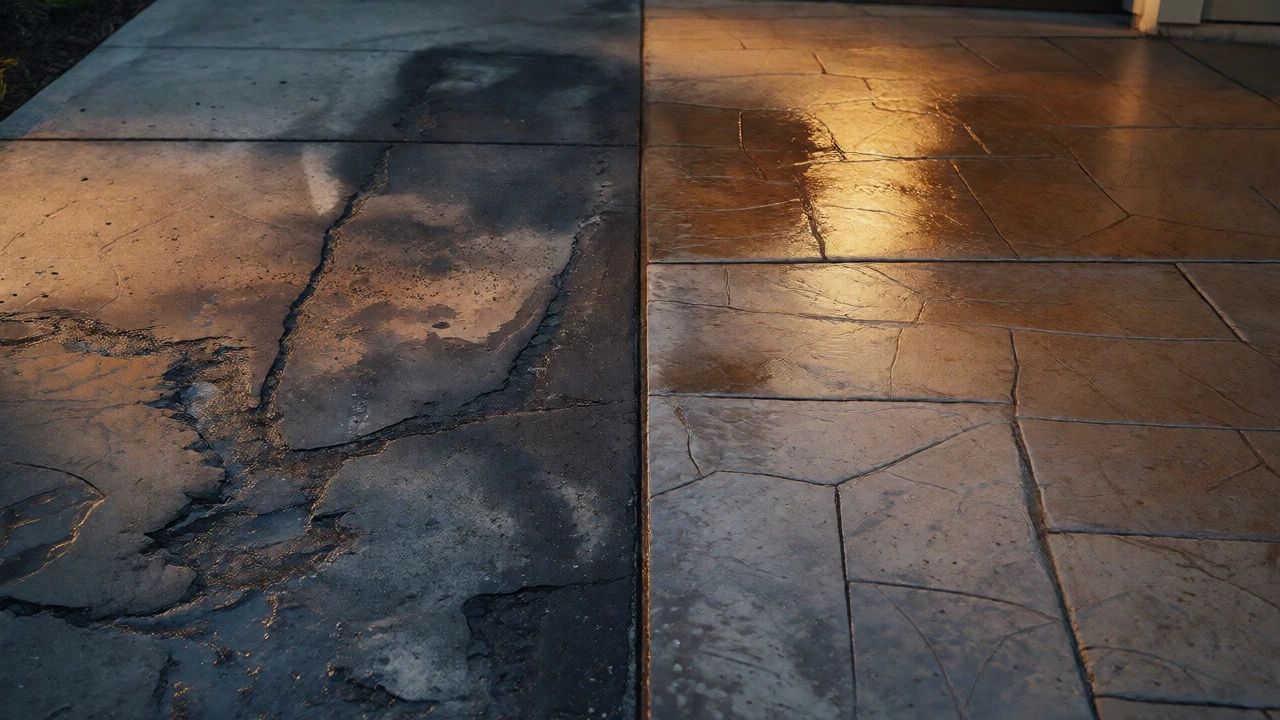
Stamped concrete is even trickier. The decorative pattern and color are often applied as a surface treatment. Blast it hard, and you erase the design. Many homeowners discover their "new" stamped driveway looks faded and patchy after a DIY power wash session. For these surfaces, chemical cleaning with low pressure is usually safer.
The Right Way to Clean Without Destroying
If you want to clean your driveway safely, follow this protocol. It prioritizes preservation over speed.
- Pre-treat with detergent: Don’t rely solely on water. Apply a dedicated concrete cleaner or a mix of oxygen bleach and water. Let it sit for 10-15 minutes. The chemicals break down the bond between the dirt and the concrete. This means you can use lower pressure to rinse it off.
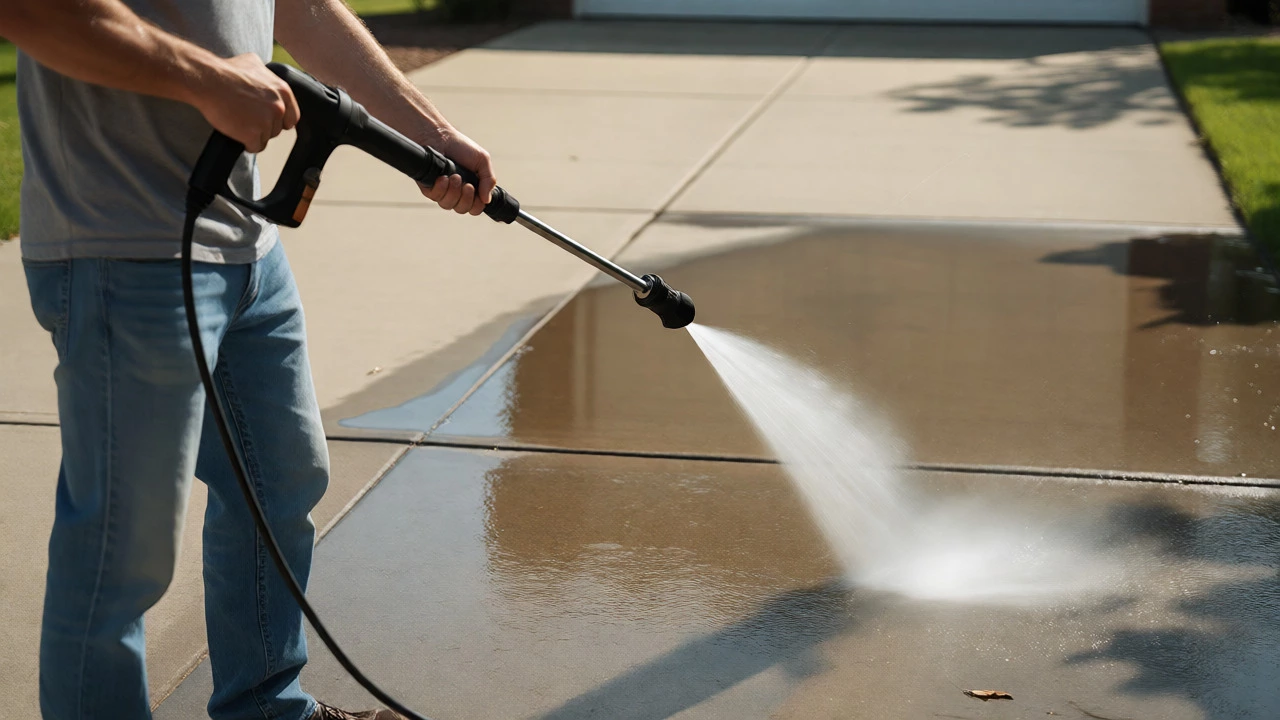
- Select the correct nozzle: Start with a 40-degree (white) or 25-degree (green) tip. Never start with red (15-degree) or black (0-degree) unless you are testing on a hidden corner.
- Maintain distance: Hold the wand at least 12 inches from the surface. Walk backward slowly. If the dirt isn’t coming up, move closer gradually, but never below 6 inches.
- Keep the wand moving: Never let the stream focus on one spot for more than a second. Constant motion prevents etching lines.
- Work in sections: Clean small areas (4x4 feet) and rinse immediately. This prevents detergent from drying and staining the surface.
This method takes longer than blasting at full throttle, but it yields a uniform result. You won’t have "clean stripes" where you passed over once versus twice.
Alternatives to High-Pressure Washing
Is pressure washing always necessary? Often, no. Soft washing-a term borrowed from roof cleaning-is increasingly popular for driveways. It uses low-pressure water (under 500 PSI) mixed with specialized biodegradable detergents to kill mold, mildew, and algae.
Soft washing is ideal for:
- Driveways with significant organic growth (green moss/black streaks).
- Aged or crumbling concrete that cannot withstand force.
- Surfaces with delicate finishes like stamped patterns or colored seals.
The trade-off is time. Soft washing requires dwell time for the chemicals to work. You might need to scrub lightly with a stiff broom. But you eliminate the risk of mechanical damage entirely. For many homeowners, this is the smarter long-term investment.
Post-Cleaning Care: Seal It or Lose It
Cleaning opens the pores of concrete. If you don’t reseal it, you’re inviting future problems. Dirt penetrates deeper into unsealed concrete, making next year’s cleaning harder. Oil spills soak in faster. Water absorption increases, raising the risk of freeze-thaw damage.
Apply a penetrating sealer within 48 hours of cleaning, once the surface is completely dry. This restores the protective barrier. It doesn’t make the driveway look plastic-like; it just keeps it hydrophobic. If you skip this step, you’ve effectively reset the clock on deterioration.
Also, consider the environmental aspect. Runoff from pressure washing contains oil, grease, heavy metals, and detergents. In many municipalities, sending this into storm drains is illegal because those drains lead directly to rivers or oceans. Use a containment kit or absorbent pads to capture runoff, especially if you use strong chemicals.
Final Verdict: Proceed with Caution
So, is pressure washing bad for your driveway? No. But it is unforgiving. Unlike wood, which shows immediate splintering when mistreated, concrete hides its damage until it’s too late. By the time you see the pitting, the surface layer is gone.
Treat your driveway with respect. Use lower pressure, wider angles, and chemical assistance. If your driveway is old, cracked, or stamped, consider hiring a professional who specializes in soft washing or low-pressure techniques. The cost of prevention is far less than the cost of resurfacing a destroyed slab.
Can I use a pressure washer on any type of concrete?
Most standard poured concrete can handle moderate pressure washing (up to 3,000 PSI). However, stamped concrete, colored concrete, or very old, brittle concrete should be cleaned with low pressure or soft washing methods to avoid stripping the surface finish or causing erosion.
What PSI is safe for a driveway?
For general cleaning, 2,500 to 3,000 PSI is usually sufficient for concrete. Always start with a wider nozzle angle (25 or 40 degrees) and test on a small, inconspicuous area first. If the surface starts to feel rough or change color, reduce the pressure immediately.
Does pressure washing remove oil stains?
Pressure washing alone often fails to remove deep oil stains and may even push them deeper. You must apply a degreaser or oil-specific cleaner first, let it dwell, and then rinse with low-to-mid pressure. Hot water pressure washers are significantly more effective on oil than cold water ones.
Should I seal my driveway after pressure washing?
Yes, absolutely. Cleaning removes existing sealants and opens the concrete's pores. Applying a fresh coat of penetrating sealer protects against future stains, water penetration, and freeze-thaw cycles. Wait until the driveway is completely dry (usually 24-48 hours) before applying sealer.
Is soft washing better than pressure washing for driveways?
Soft washing is better for removing biological growth (mold, algae) and for delicate surfaces like stamped concrete. Pressure washing is better for removing heavy sediment, mud, or loose debris. Many professionals combine both: using low-pressure chemical application followed by a gentle rinse.