Oven Tray Grease Removal Estimator
How Severe Is Your Grease?
Select the level of baked-on grease to get the best cleaning method and timing recommendations.
Recommended Cleaning Plan
Wait time and method suggestions based on your selection
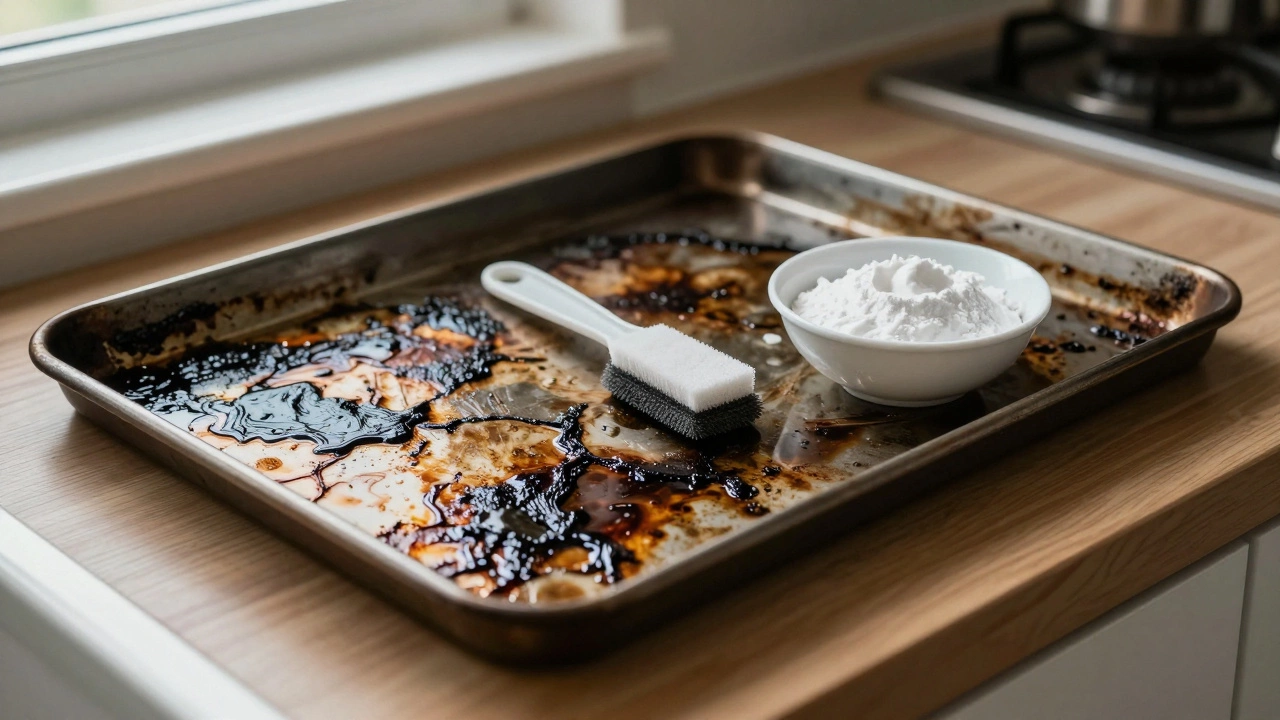
Nothing ruins a good clean faster than oven trays stuck with baked-on grease. That black, sticky crust doesn’t just look bad-it’s hard to scrub off, smells when you heat the oven, and can even affect how your food cooks. You don’t need harsh chemicals or expensive cleaners to fix this. With a few simple tools and some patience, you can get your trays looking like new again.
Why baked-on grease is so stubborn
Grease doesn’t just sit on the surface. When it heats up over time, it breaks down and bonds with the metal. That’s why wiping it off right after cooking works, but letting it sit for weeks turns it into a hardened layer. The more often you bake fatty foods-roasts, cookies, pizza-the worse it gets. Aluminum trays are especially prone to this because they’re softer and absorb grease more easily than stainless steel.
Most store-bought oven cleaners contain lye or sodium hydroxide. These work fast, but they’re dangerous. They can damage the tray’s finish, leave toxic fumes, and even eat through the metal if left too long. You don’t need them. The best solutions are things you already have in your kitchen.
What you’ll need
- Baking soda
- White vinegar
- Hot water
- A plastic scrubber or non-scratch sponge
- A spray bottle
- Plastic wrap or aluminum foil
- Old towels or paper towels
That’s it. No gloves, no masks, no special tools. Baking soda is the key. It’s mildly abrasive, breaks down grease chemically, and is safe for all types of trays-even non-stick ones.
Step-by-step: The baking soda paste method
- Take the tray out of the oven and let it cool completely. Don’t try to clean it while it’s still warm-steam can make the grease spread.
- Scrape off any loose bits with a wooden spoon or plastic spatula. Don’t use metal. It can scratch the surface.
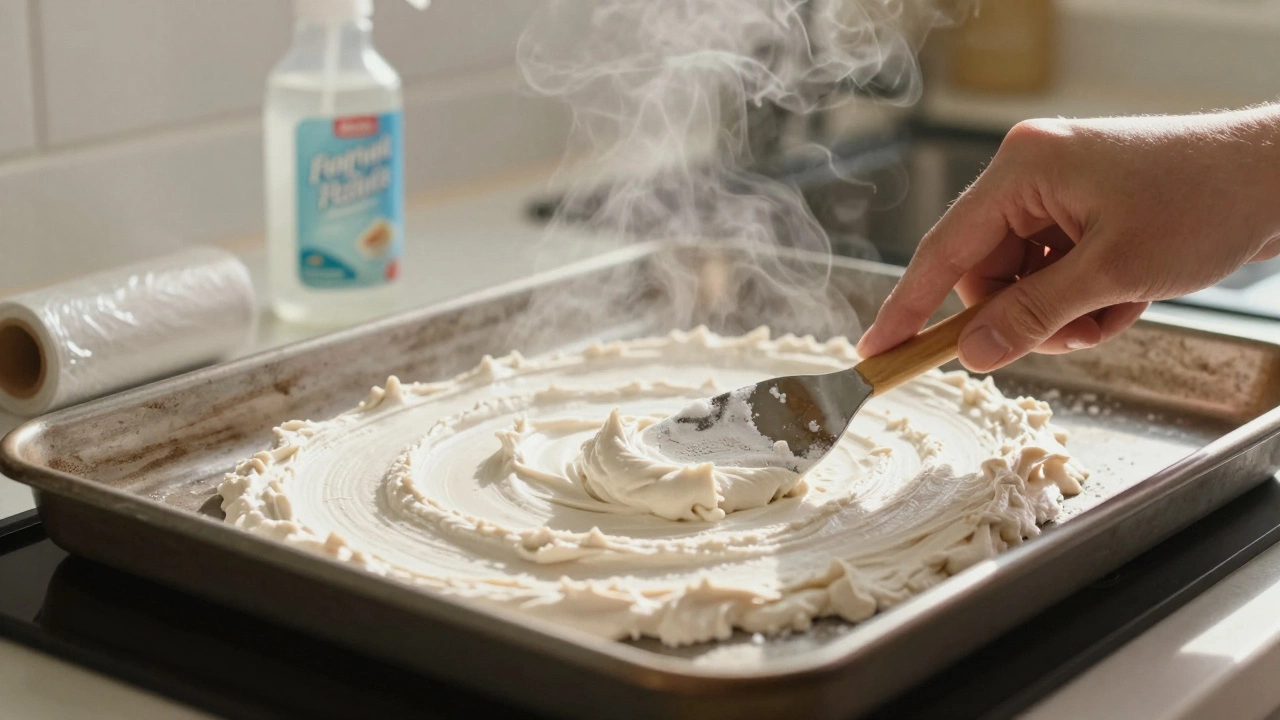
- In a bowl, mix three parts baking soda with one part water. Stir until it forms a thick paste, like toothpaste.
- Cover the entire greasy surface with the paste. Make sure you get into every corner and crevice. The thicker the layer, the better.
- Let it sit for at least 12 hours. Overnight works best. If the grease is really bad, leave it for 24 hours.
- After the waiting time, dampen a sponge and start scrubbing. The grease should lift right off. If a spot is still stubborn, spray a little vinegar on it. The fizzing reaction helps break down the last bits.
- Rinse thoroughly with hot water. Dry with a towel to prevent water spots.
This method works on even the oldest, darkest grease. One user reported cleaning a tray that hadn’t been washed in three years. After 18 hours with the paste, it came out looking brand new.
For extra tough cases: The soak-and-cover method
If your tray is too big to fit in the sink, or the grease is so thick it won’t budge with paste alone, try this:
- Place the tray in the sink or a large tub.
- Fill it with hot water-hot enough to feel uncomfortable but not boiling.
- Add half a cup of baking soda and one cup of white vinegar. The mixture will bubble up. That’s normal.
- Let it soak for 6 to 8 hours. For really bad buildup, leave it overnight.
- After soaking, drain the water and use a plastic scrubber to wipe away the loosened grease.
- For stubborn spots, spray vinegar directly and scrub again.
You can also cover the tray with plastic wrap after adding the baking soda paste to keep it moist. This prevents the paste from drying out too fast, giving it more time to work. Wrap it tightly and leave it for 24 hours. Then scrub as usual.
What NOT to do
Some people try to speed things up with steel wool or oven cleaner. Don’t. Steel wool will leave scratches that trap grease for next time. Oven cleaner can corrode aluminum trays and leave a chemical smell that lingers for weeks.
Also, avoid putting oven trays in the dishwasher. The high heat and strong detergents can warp thin metal trays and damage non-stick coatings. Even if the label says “dishwasher safe,” hand washing is always safer.
Preventing future buildup
Once your trays are clean, make it easier next time:
- Line the tray with parchment paper before baking. It catches drips and is easy to throw away.
- Use a silicone baking mat for cookies and pastries. They’re reusable and clean up in seconds.
- After each use, wipe the tray with a damp cloth while it’s still warm. Grease is much easier to remove before it hardens.
- Once a month, do a quick cleaning with baking soda paste-even if it doesn’t look dirty. Prevention beats scrubbing.
People who follow these habits say their trays stay clean for months. One home cook cleaned her trays only twice a year-and they still looked good.
When to replace oven trays
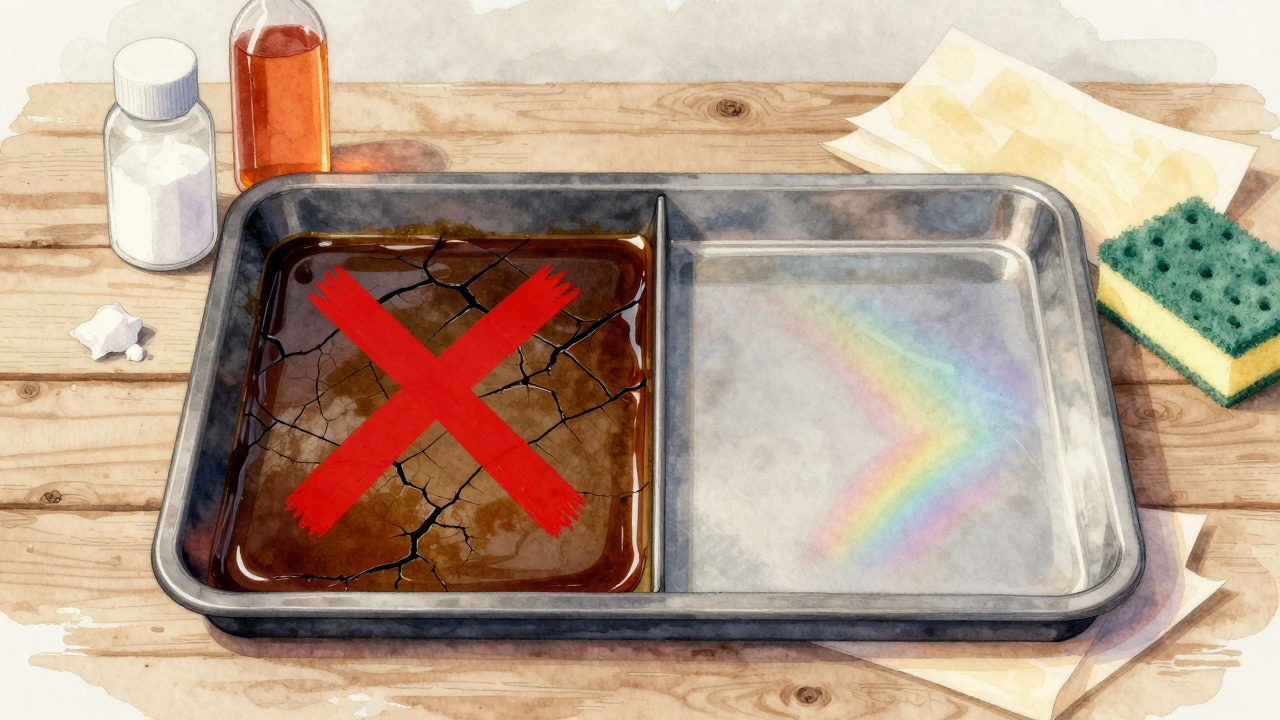
Even the best cleaning won’t fix damage. Replace your tray if:
- The surface is deeply pitted or rusted
- The non-stick coating is peeling or flaking
- The tray is warped and doesn’t sit flat in the oven
- It smells like burnt plastic or chemicals even after cleaning
Good-quality trays last 5-10 years with proper care. If yours is older than that and still in decent shape, give it one last deep clean. If not, it’s time for a new one.
Final tips
Don’t rush this. The longer you let the baking soda sit, the less scrubbing you’ll need. A 12-hour soak is better than 30 minutes of elbow grease.
Use a toothbrush for tight corners and edges. It’s small, stiff, and perfect for getting into grooves.
If you have multiple trays, clean them one at a time. That way, you can focus on each one and make sure nothing gets missed.
And remember: you don’t need to clean your oven tray after every use. But don’t wait until it’s black and crusty. A quick wipe after each bake saves hours later.
Can I use lemon juice instead of vinegar?
Yes, lemon juice works as a substitute for vinegar because it’s acidic. But it’s less effective. Vinegar has a higher acid concentration and breaks down grease faster. If you use lemon juice, you’ll need to soak the tray longer-maybe 12 to 24 hours-for the same results.
Will baking soda damage my non-stick oven tray?
No. Baking soda is gentle enough for non-stick surfaces. It won’t scratch the coating like steel wool or abrasive cleaners. Just avoid using metal scrubbers. Stick to plastic sponges or soft brushes.
How often should I clean my oven trays?
Clean them every 3 to 4 uses if you bake often. If you only use them occasionally, clean them once a month. Waiting longer than that lets grease build up and turns a 15-minute job into a 2-hour chore.
Can I clean oven trays in the dishwasher?
It’s not recommended. Dishwashers use high heat and strong detergents that can warp thin metal trays and strip non-stick coatings. Even if the manufacturer says it’s safe, hand washing with baking soda is safer and just as effective.
Why does vinegar make the baking soda fizz?
Vinegar is acetic acid. Baking soda is sodium bicarbonate. When they mix, they create carbon dioxide gas-that’s the fizz. This reaction helps lift grease and grime from the surface. It’s not just for show; it makes the cleaning more effective.
Next steps
If your trays are clean but your oven still smells greasy, clean the oven walls next. Use the same baking soda paste method-spread it on the interior, let it sit overnight, then wipe it off. The smell will disappear.
Once your trays are spotless, consider lining them before your next bake. It’s the easiest way to avoid this whole problem next time.
And if you’ve been putting off cleaning because it seems too hard-don’t anymore. This method takes almost no effort, costs nothing, and works every time. Your oven trays will thank you.