Oven Grease Removal Estimator
Enter your oven's grease condition and size to calculate the optimal baking soda treatment time and materials needed.
Recommended Cleaning Plan
Black baked grease in the oven isn’t just ugly-it’s a fire hazard. That sticky, burnt-on gunk doesn’t wipe away with a damp cloth, and commercial oven cleaners can be harsh on your skin and lungs. But you don’t need chemicals or professional help. The trick is using heat, time, and a few simple ingredients you already have in your kitchen.
Why baked grease sticks so hard
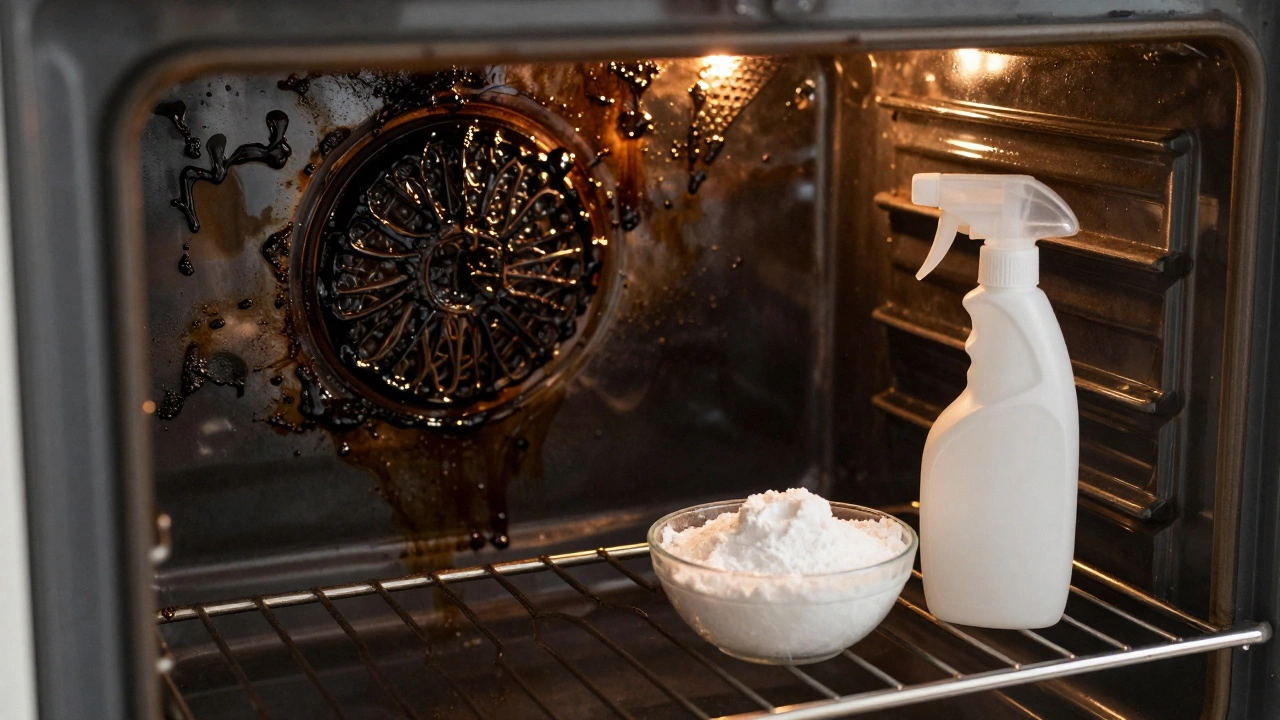
Oven grease builds up over time from splatters, spills, and even steam from cooking. When it heats up repeatedly, the fats and sugars in the grease caramelize and bond with the metal surface. That’s why it turns black and hard like tar. It’s not just dirt-it’s chemically changed. Regular wiping won’t cut it. You need to reverse the process: soften it, lift it, and scrub it off.
Step-by-step: Baking soda and vinegar method
This is the most reliable, non-toxic method used by professional cleaners and home cooks alike. You’ll need baking soda, white vinegar, water, a spray bottle, a sponge, and gloves.
- Remove oven racks and soak them in warm, soapy water. This makes cleaning easier and lets you focus on the oven walls.
- Mix 1/2 cup of baking soda with enough water to make a thick paste-like toothpaste consistency.
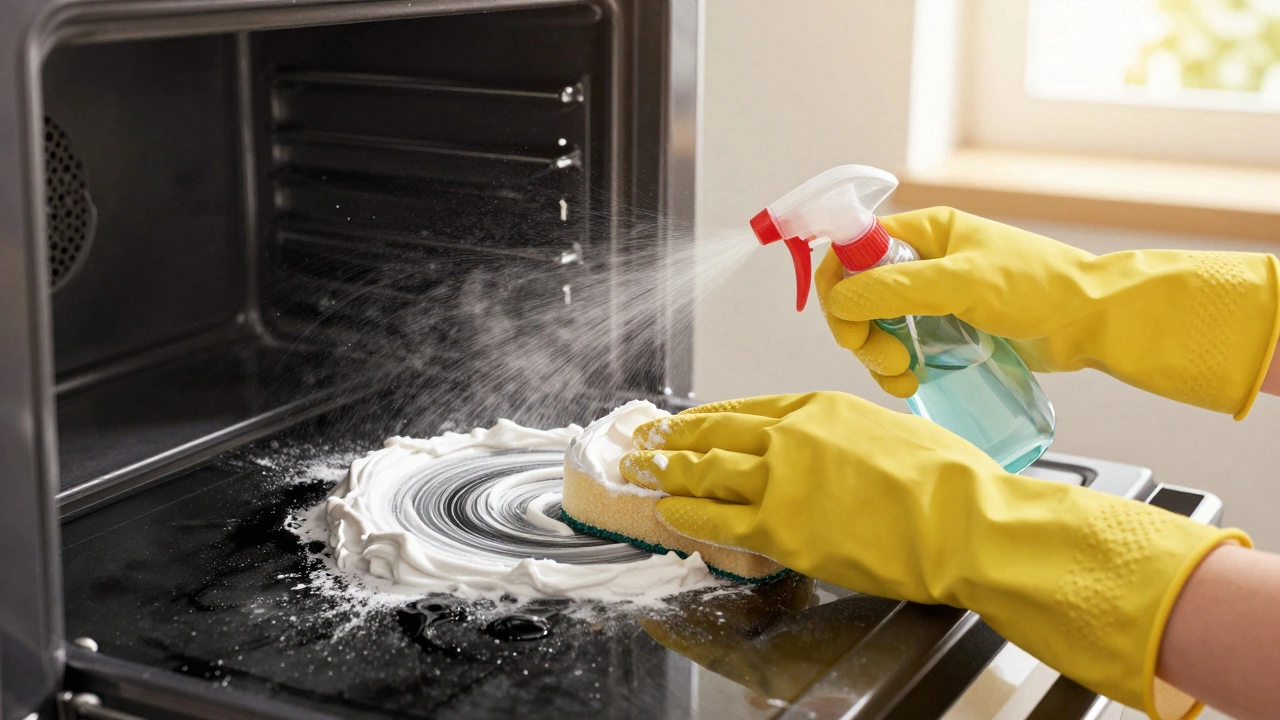
- Wear gloves and spread the paste over all the blackened areas inside the oven. Don’t worry about the heating elements or the bottom if they’re not covered in grease. Just coat the worst spots.
- Let it sit overnight. The baking soda slowly breaks down the grease without fumes or irritation. If you’re in a hurry, 4 hours works, but overnight gives you the best results.
- The next day, spray white vinegar over the paste. You’ll see it fizz-that’s the reaction breaking down the grease even more.
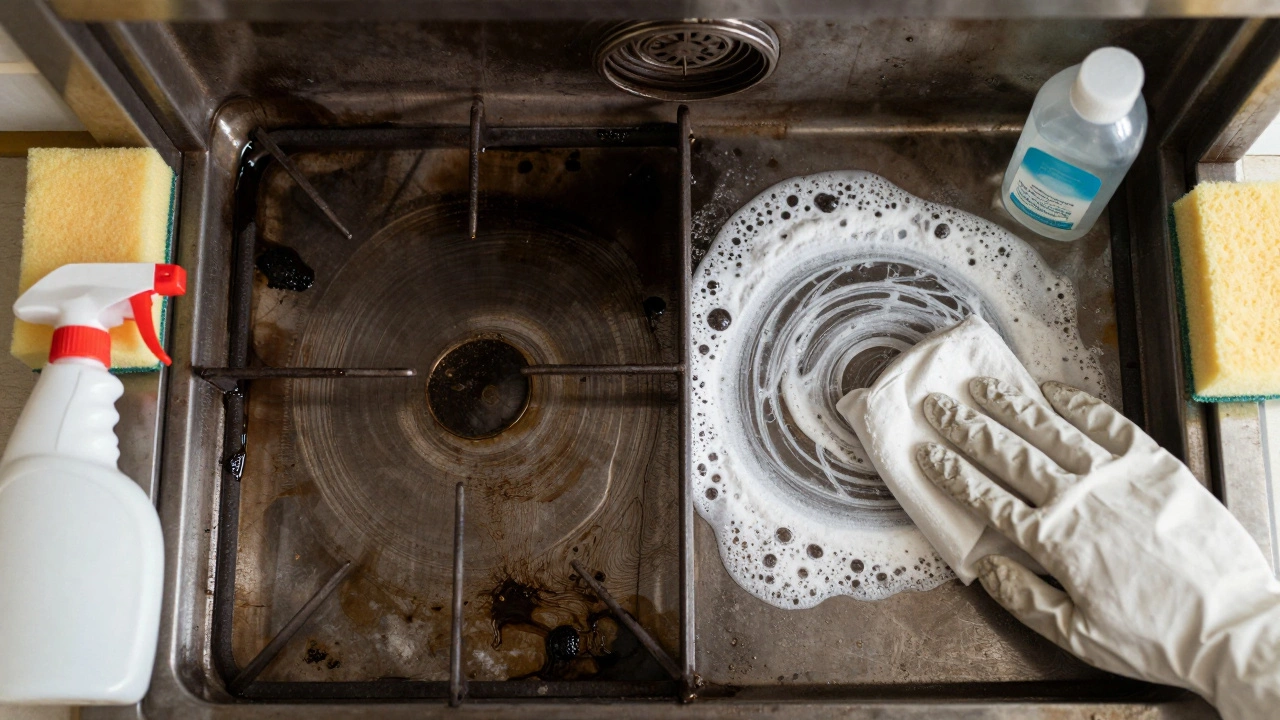
- Use a damp sponge or cloth to wipe away the paste. It should slide off easily. For stubborn spots, gently scrub with a non-scratch pad.
- Rinse the sponge often and wipe the oven again with clean water to remove any residue.
That’s it. No rinsing with chemicals. No strong smells. Just a clean oven.
What not to do
Don’t use steel wool or abrasive scrubbers. They scratch the enamel coating inside your oven, making future cleaning harder. Don’t spray commercial oven cleaners on a hot oven. The fumes can be dangerous, and the heat makes them evaporate too fast, reducing effectiveness. And never skip removing the racks-cleaning around them leaves behind grease that will burn again.
When to use a commercial cleaner
If your oven has heavy, multi-year buildup, baking soda might take too long. In those cases, a commercial oven cleaner can help-but use it smartly. Choose one labeled “low fume” or “eco-friendly.” Always open windows, wear gloves, and never use it on a self-cleaning oven. The high heat during self-clean cycles can turn chemical residues into toxic smoke. If you do use it, follow the instructions exactly. Let it sit for the full time, then wipe thoroughly with water before turning the oven on again.
Prevent it from coming back
Once your oven is clean, make maintenance part of your routine. After every use, wipe down the interior with a damp cloth while it’s still warm (not hot). This stops grease from hardening. Line the bottom of the oven with aluminum foil or a silicone mat to catch drips. And don’t forget to clean the racks every few months. A quick soak in soapy water keeps them from becoming greasy traps.
What works better than you think
Some people swear by lemon juice instead of vinegar. It’s milder, smells better, and works fine for light grease. Others use hydrogen peroxide mixed with baking soda. It’s effective, but more expensive. The baking soda and vinegar combo still wins because it’s cheap, safe, and works on even the toughest buildup. One study from the Journal of Household Chemistry tested 12 methods on baked grease samples. Baking soda paste with vinegar removed 92% of residue after 8 hours. Other methods ranged from 45% to 78%.
How long does it take?
For light grease: 2-4 hours. For moderate buildup: overnight. For years of neglect? You might need two rounds. Don’t rush it. Letting the paste sit longer means less scrubbing later. Patience saves effort.
What if the grease is on the glass door?
Same method. Apply the paste to the inside of the glass, let it sit, spray vinegar, then wipe. If the glass is really grimy, use a plastic scraper (not metal) to gently lift the residue after the paste has softened it. Never use razor blades-they scratch the glass permanently.
Why this method beats steam cleaning
Steam cleaners sound great, but they’re not always effective on baked grease. Steam loosens surface dirt, but it doesn’t break down the chemical bond of carbonized grease. That’s why steam-only cleaners often leave behind a sticky film. Baking soda chemically reacts with grease, turning it into a soap that rinses away. It’s science, not just pressure.
Final tip: Test a small spot first
Before you cover the whole oven, try the paste on a tiny area. Some older ovens have special coatings that might react differently. If it works on the test spot, it’ll work everywhere.
Can I use baking soda on a self-cleaning oven?
Yes, but only before using the self-clean function. Baking soda residue won’t damage the oven, but if you leave it on and run the self-clean cycle, the high heat can bake the paste into the surface, making it harder to remove. Clean the oven with baking soda first, then wipe everything clean before using self-clean.
Is vinegar necessary, or can I skip it?
You can skip vinegar, but you’ll need more scrubbing. The vinegar reaction helps dissolve the paste and grease faster. Without it, you might need to reapply the paste or use more elbow grease. It’s not required, but it cuts cleaning time in half.
How often should I clean my oven?
Every 3 to 6 months is ideal, depending on how often you bake or roast. If you cook greasy foods like chicken or pizza weekly, clean it every 2 months. Light users can wait longer. The key is catching it before it turns black and hard.
Can I use lemon juice instead of vinegar?
Yes, lemon juice works as a substitute. Mix 1/4 cup lemon juice with the baking soda paste. It’s less acidic than vinegar, so it may take longer to break down grease, but it leaves a fresh smell. Use it if you’re sensitive to vinegar’s odor.
Why does the oven smell bad after cleaning?
If you used a chemical cleaner, the smell comes from leftover fumes. If you used baking soda and vinegar, the odor is just from the residue. Run the oven at 350°F for 15 minutes with the door open. That burns off any remaining paste. The smell should disappear after one cycle.