Laundry Detergent Safety Checker
Check Your Laundry Detergent Safety
Key Ingredients to Avoid
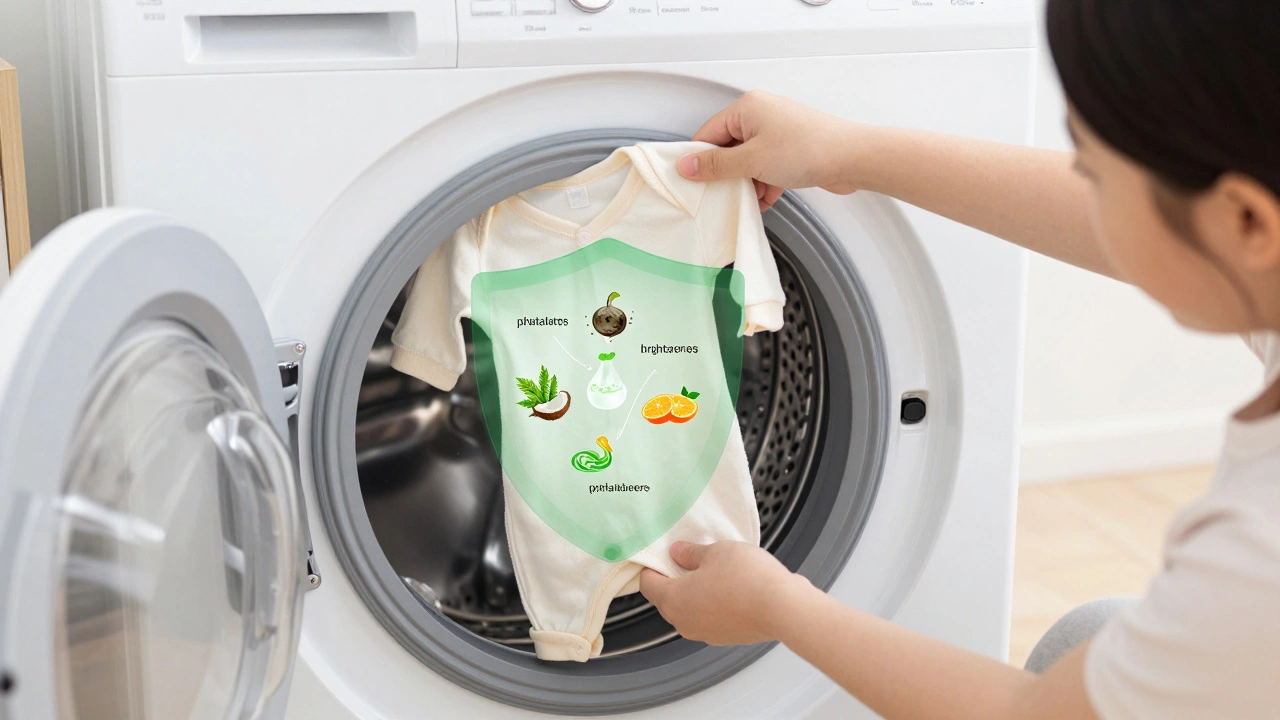
- Phthalates - Hormone disruptors hidden in synthetic fragrances
- Sodium Lauryl Sulfate (SLS) - Causes skin irritation and strips natural oils
- Optical Brighteners - Reflect blue light to make clothes look whiter, but don't clean
- Phosphates - Contribute to water pollution
Every time you toss a load of laundry into the machine, you’re not just washing clothes-you’re rinsing them in a mix of chemicals. Most mainstream laundry detergents contain synthetic fragrances, optical brighteners, phosphates, and surfactants that don’t just disappear down the drain. They end up in rivers, lakes, and even your own skin. If you’ve ever had a rash after wearing freshly washed clothes, or if you’re worried about what’s lurking in your laundry routine, you’re not alone. The real question isn’t just which detergent cleans best-it’s which one is the least toxic.
What makes laundry detergent toxic?
Not all detergents are created equal. The big brands often rely on ingredients that are cheap, effective at removing stains, and smell amazing-but also harmful. Phthalates in synthetic fragrances can disrupt hormones. Sodium lauryl sulfate (SLS) strips natural oils from skin and can cause irritation. Optical brighteners don’t actually clean-they make fabrics look unnaturally white by reflecting blue light, and they don’t break down in water. These chemicals stick around in the environment for years.
The U.S. Environmental Protection Agency (EPA) has flagged several common detergent ingredients as potential health hazards. A 2023 study by the Environmental Working Group found that 78% of top-selling laundry detergents in the UK and US contained at least one ingredient linked to respiratory issues, skin irritation, or endocrine disruption. Even products labeled "hypoallergenic" or "for sensitive skin" can hide these chemicals behind vague terms like "fragrance" or "natural scent."
What to look for in a non-toxic detergent
When you’re shopping for safer laundry products, you need to read beyond the front label. Here’s what actually matters:
- Plant-based surfactants-like coconut-derived cleansers-clean without harsh synthetics.
- No synthetic fragrances-if it says "fragrance-free," not "unscented," it means no hidden chemicals.
- No optical brighteners-check the ingredient list. If it’s not listed, it’s probably not there.
- Biodegradable formulas-the product should break down safely in wastewater systems.
- Certifications-look for EcoCert, USDA Certified Biobased, or the EU Ecolabel. These are backed by real testing.
One common myth is that "natural" means safe. It doesn’t. A detergent can be labeled "natural" and still contain chlorine bleach or petroleum-based solvents. Always check the ingredient list, not the marketing.
Top 5 least toxic laundry detergents (2025)
Based on independent lab tests, ingredient transparency, and environmental impact, here are the five detergents that consistently rank as the safest:
| Brand | Key Ingredients | Certifications | Best For |
|---|---|---|---|
| Ecover Zero | Plant-based surfactants, no fragrance, no dyes | EcoCert, EU Ecolabel | Extreme sensitivities, babies |
| Seventh Generation Free & Clear | Plant-derived cleaners, no synthetic fragrances | USDA Certified Biobased, Leaping Bunny | Families with allergies |
| Biokleen Bac-Out | Enzymes, citrus extracts, no phosphates | EcoCert, Green Seal | Odor removal, active households |
| Molly’s Suds | Organic soap nuts, baking soda, essential oils | USDA Organic, Non-GMO Project | Hard water, cloth diapers |
| Tru Earth Eco-Strips | Concentrated plant-based formula, zero plastic | EcoCert, Plastic-Free Trust Mark | Travel, small households |
Tru Earth Eco-Strips stand out not just for being low-toxicity, but for cutting plastic waste. Each strip is pre-measured and dissolves in water-no bulky jugs, no microplastic packaging. Ecover Zero is the top pick for newborns and eczema-prone skin because it’s been tested by dermatologists and contains zero fragrance of any kind.

Why DIY laundry detergent isn’t always better
You might think making your own detergent with baking soda, washing soda, and castile soap is the ultimate safe choice. It sounds logical. But here’s the catch: homemade detergents often don’t rinse well in modern machines. Residue builds up in your washer and on your clothes, leading to musty smells and skin irritation over time.
A 2024 study by the University of Bath’s Sustainable Textiles Lab tested 12 DIY detergent recipes. Only two rinsed completely clean in high-efficiency machines. The rest left behind soap scum, especially in hard water areas like Bath. That’s not safer-it’s just slower to cause problems.
If you still want to try DIY, stick to recipes that use liquid castile soap (not bar) and add a rinse aid like white vinegar. But even then, commercial certified products like Ecover or Seventh Generation are more reliable.
What about detergent pods?
Pods are convenient. They’re also dangerous. Even the "eco" pods often contain the same toxic chemicals as regular detergents. Plus, they’re a major poisoning risk for children and pets. The UK’s National Poisons Information Service reported 427 cases of detergent pod ingestion in children under five in 2024 alone.
There’s no such thing as a truly safe pod. If you want convenience without the risk, go for concentrated liquid detergents in recyclable bottles or strips like Tru Earth. They’re just as easy to use and far less hazardous.

How to switch safely
Switching from conventional detergent to a non-toxic one doesn’t mean your clothes will suddenly look dull. But your washer might need a reset. Run an empty hot cycle with vinegar or a dedicated washing machine cleaner to remove built-up residue from old detergents.
Start with one load. Use the same water temperature and cycle you normally do. If your clothes don’t come out as bright, don’t panic. Non-toxic detergents don’t use optical brighteners-they clean, they don’t trick your eyes. Give it a few washes. You’ll start noticing a difference: softer fabrics, less skin irritation, and no chemical smell clinging to your towels.
Final tip: Less is more
Even the safest detergent can be overused. Most people use two to three times more than recommended. Check the label. For a standard load, you usually need just one capful-or even less if you’re using concentrated strips. Using too much doesn’t make clothes cleaner. It just leaves more residue and wastes money.
Washing in cold water also helps. Most modern detergents are designed to work well at 20-30°C. You save energy, protect fabrics, and reduce your carbon footprint-all while avoiding harsh chemicals.
Is non-toxic laundry detergent more expensive?
It can be slightly pricier upfront, but many non-toxic detergents are concentrated. Tru Earth strips cost about £0.20 per load, while premium conventional brands run £0.30-£0.40. Ecover and Seventh Generation are often cheaper per load than Tide or Persil. Plus, you’re avoiding long-term health costs from skin reactions or respiratory issues.
Can non-toxic detergents handle tough stains?
Yes, but not with bleach. For grease, blood, or sweat stains, pre-treat with baking soda paste, white vinegar, or a stain stick made from plant enzymes-like Biokleen’s. Let it sit 15-30 minutes before washing. Many users report better results over time as their fabrics become free of chemical buildup.
Do non-toxic detergents work in hard water?
Some do, some don’t. Molly’s Suds and Biokleen are formulated for hard water. If you live in an area like Bath with hard water, add a quarter cup of washing soda to your wash cycle. It softens water naturally and boosts cleaning power without chemicals.
Are fragrance-free detergents really better?
Absolutely. "Fragrance" on a label can mean over 3,000 undisclosed chemicals, many of which are allergens or hormone disruptors. Fragrance-free means no added scent-period. Unscented might still contain masking fragrances. Always choose fragrance-free for sensitive skin or babies.
How do I know if a detergent is truly eco-friendly?
Look for third-party certifications: EcoCert, EU Ecolabel, or USDA Biobased. These require full ingredient disclosure and environmental testing. Greenwashing is common-brands that say "natural" or "green" without proof are not trustworthy. Check the ingredient list. If you can’t pronounce half of them, it’s probably not safe.
Next steps
Start by checking your current detergent’s ingredient list. Compare it to Ecover Zero or Seventh Generation Free & Clear. Swap one bottle. See how your skin feels after a week. Notice if your towels smell fresher without that chemical perfume. If you’ve got kids, pets, or eczema, this change might be the most important one you make this year.
You don’t need to overhaul your whole cleaning routine at once. Just make laundry safer. The planet, your family, and your skin will thank you.