DIY Window Cleaner Recipe Generator
Select your cleaning scenario below to get the precise measurements and tips for a streak-free shine.
Formula Name
Ingredients:
Select a scenario and click "Generate Formula" to see the exact mixture ratios.
You know that feeling when you’ve spent an hour scrubbing the bathroom mirror or the kitchen window, only to step back and see a map of stubborn streaks staring back at you? It’s frustrating. Most people assume they’re doing something wrong with their technique-maybe they aren’t wiping hard enough or they missed a spot. But usually, the problem isn’t your elbow grease; it’s the liquid in your spray bottle.
Commercial blue sprays often leave behind residue because they contain surfactants that don’t fully evaporate. If you want crystal-clear glass without paying premium prices for branded bottles, you need a simple, effective window cleaning formula. The good news? You likely have everything you need in your cupboard right now. Let’s break down exactly what works, why it works, and how to mix it so you never buy another pre-made glass cleaner again.
The Gold Standard: Vinegar and Water
If you ask professional cleaners what their go-to mixture is, about half will tell you it’s white vinegar and water. This isn’t just an old wives’ tale; it’s chemistry. White distilled vinegar contains acetic acid, which cuts through grease, grime, and mineral deposits from tap water. When diluted correctly, it evaporates quickly, leaving no sticky film behind.
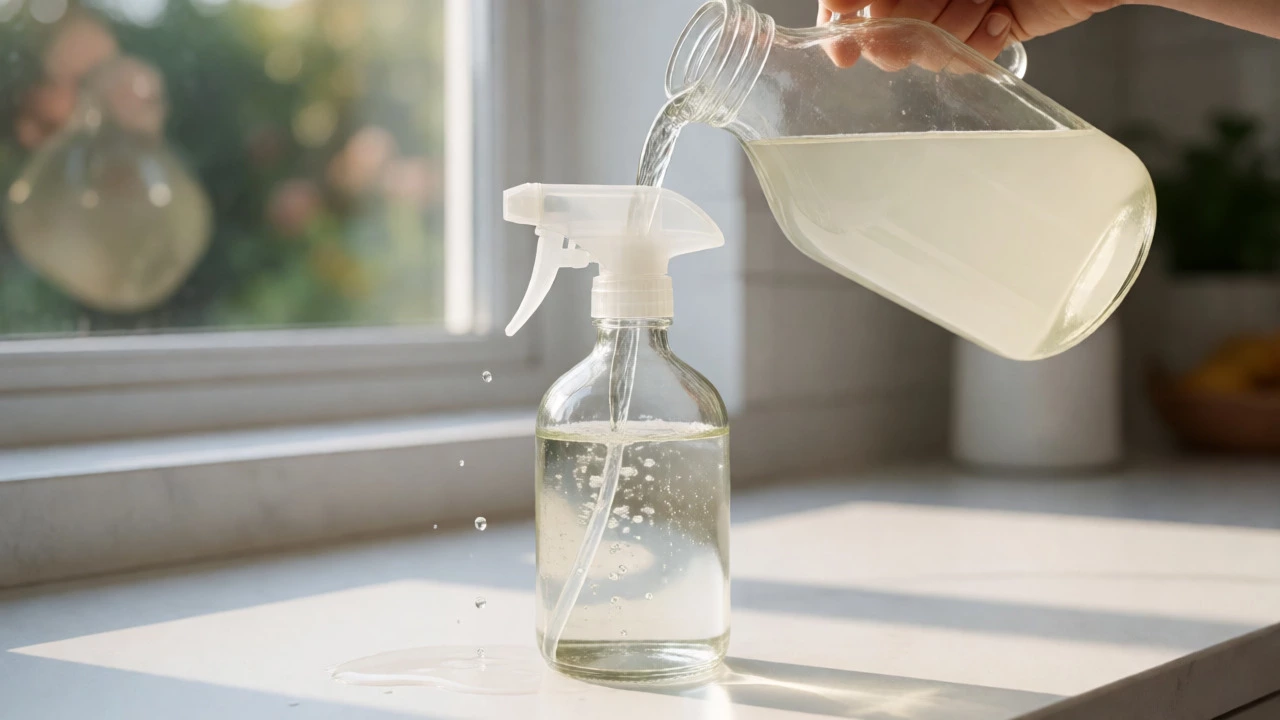
For most standard household windows, a 1:1 ratio is perfect. Mix equal parts white distilled vinegar and warm water in a spray bottle. Warm water helps dissolve dirt faster than cold water, but don’t use boiling water-it can crack certain types of glass if applied too aggressively on a hot day.
White Distilled Vinegar is a clear liquid consisting of approximately 4-8% acetic acid in water, commonly used as a natural cleaning agent due to its ability to dissolve mineral deposits and cut through grease.
Why does this work better than plain soap? Soap leaves residues. Even "clear" dish soaps contain additives that dry into a haze. Vinegar, being acidic, neutralizes alkaline soils (like hard water spots) and dries completely clear. Just remember: keep the lid tight. The smell dissipates within minutes, but while you’re working, it’s potent.
The Streak-Free Secret: Adding Isopropyl Alcohol
Vinegar is great, but if you live in a humid area or have large panes of glass that take a long time to dry, you might still get edges where the moisture lingers. Enter isopropyl alcohol (rubbing alcohol). Adding a small amount of 70% or 90% isopropyl alcohol to your vinegar-water mix dramatically speeds up evaporation.
Try this upgraded recipe:
- 1 cup white distilled vinegar
- 1 cup warm water
- 1 tablespoon isopropyl alcohol
The alcohol lowers the surface tension of the water, allowing it to sheet off the glass rather than bead up. It also acts as a disinfectant, killing bacteria on high-touch areas like bathroom mirrors. If you’re sensitive to smells, skip the alcohol, but for sheer performance, it’s a game-changer. Note that isopropyl alcohol is flammable, so store your bottle away from open flames or heat sources.
The Heavy-Duty Option: Dish Soap for Grime
Sometimes, windows aren’t just dusty-they’re coated in cooking oil splatter, pollen glue, or exterior pollution. In these cases, a purely acidic solution might not lift the heavy particulate matter. Here, you need a tiny bit of surfactant to lift the dirt so it can be wiped away.
The key word here is tiny. One drop of blue Dawn dish soap per gallon of water is plenty. More than that, and you’re back to streaks. Use this formula for exterior windows or heavily soiled interior glass:
- Fill a bucket with two gallons of warm water.
- Add one teaspoon of white vinegar (to help with minerals).
- Add just one drop of liquid dish soap.
- Mix gently to avoid creating foam.
Foam is your enemy. Foam traps dirt and makes it harder to squeegee cleanly. If your bucket looks like a bubble bath, you added too much soap. Dump it out and start over.
What About Commercial Products?
Are expensive brands worth it? Generally, no. Most commercial glass cleaners are essentially diluted versions of the recipes above, plus fragrances and dyes. Some premium options include ammonia, which cuts grease well but has a harsh odor and can irritate eyes and lungs. Ammonia-based cleaners are effective but require ventilation.
Avoid anything labeled "anti-fog" or "glass polish" unless you specifically need those features. For routine cleaning, simplicity wins. If you do prefer buying a product, look for ones with low VOC (volatile organic compound) content to protect indoor air quality.
| Solution Type | Best For | Cost | Streak Risk | Odor Level |
|---|---|---|---|---|
| Vinegar & Water (1:1) | Daily maintenance, mirrors | $ | Low | Moderate (dissipates) |
| Vinegar + Alcohol | Humid climates, fast drying | $$ | Very Low | Moderate |
| Soap + Water + Vinegar | Greasy kitchens, exteriors | $ | Medium (if too much soap) | Low |
| Commercial Spray | Convenience seekers | $$$ | Variable | High (fragrance) |
Technique Matters More Than Chemistry
Even the best formula fails if your tools are wrong. Stop using paper towels. They shed lint and push dirt around instead of lifting it. Instead, invest in a microfiber cloth or a professional-grade squeegee.
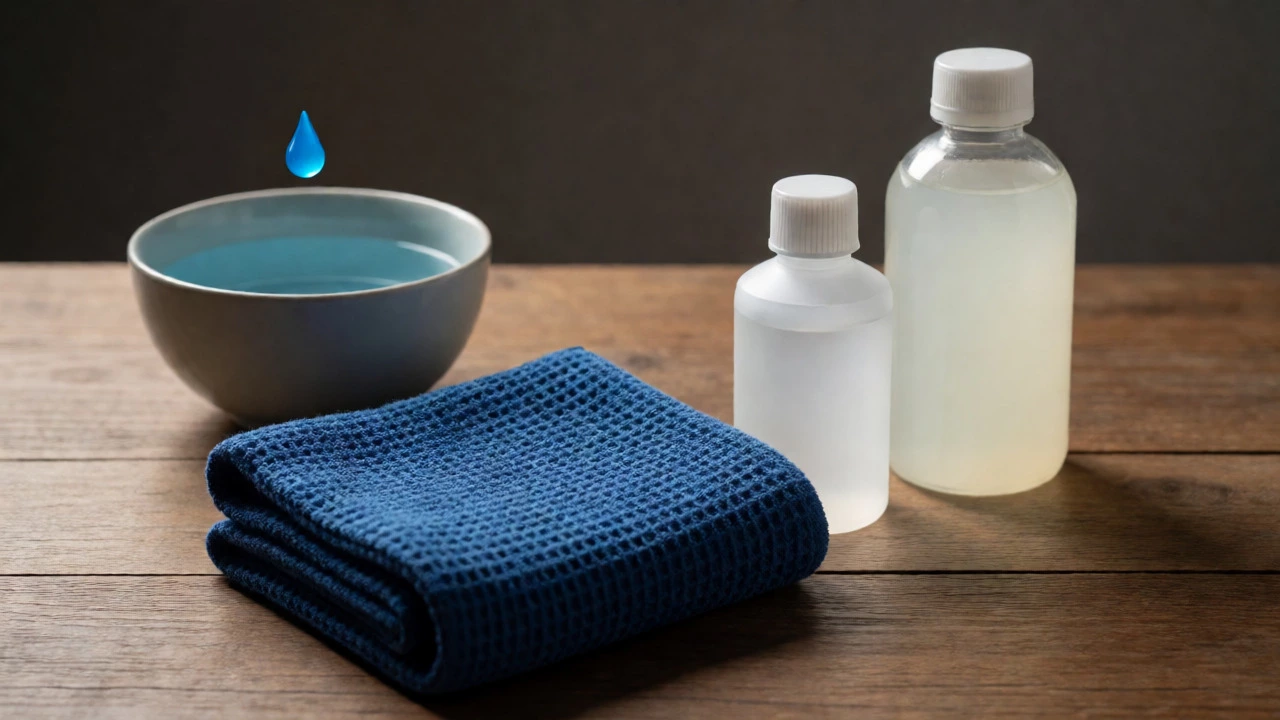
Microfiber cloths are designed to trap particles within their fibers. Look for waffle-weave microfiber towels specifically made for glass. They absorb more liquid and leave fewer marks than terry cloth. If you’re using a spray bottle, mist the glass lightly. Don’t soak it. Over-saturating causes drips that re-deposit dirt as they run down.
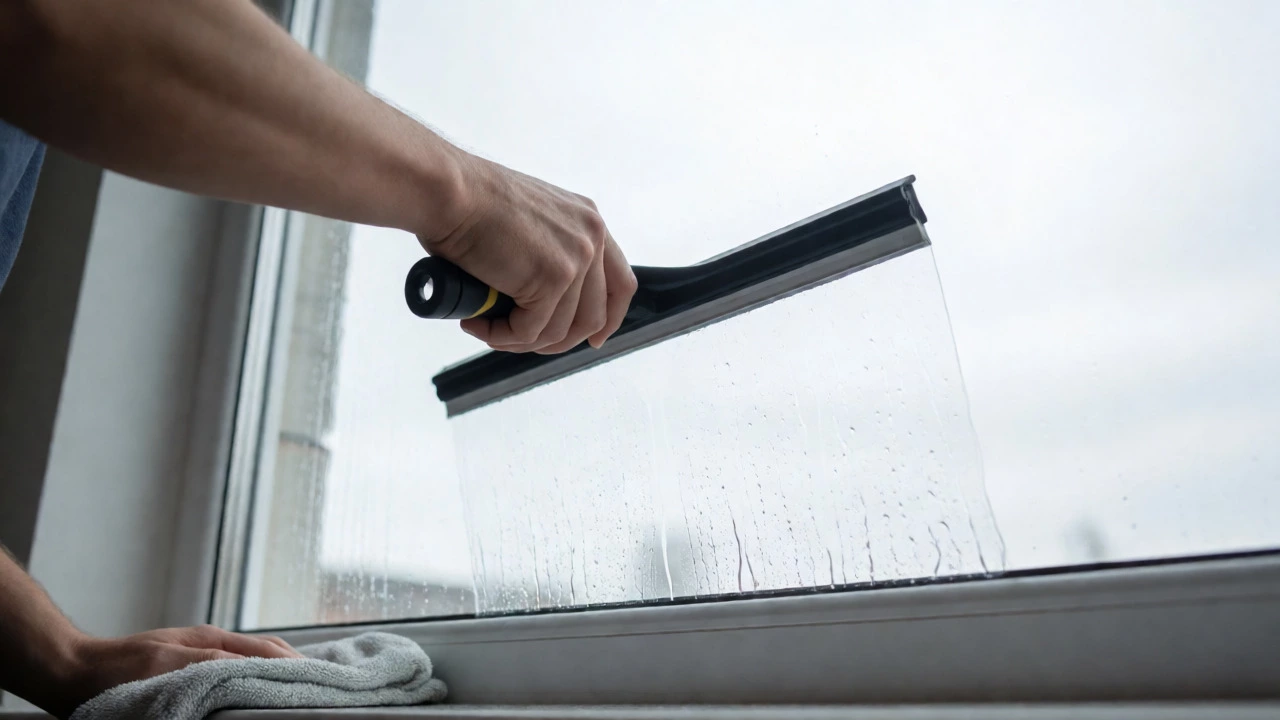
For larger windows, a squeegee is non-negotiable. Wipe the blade clean with a damp cloth after every stroke. Start at the top corner, pull straight down, then wipe the blade. Repeat. Finish by wiping the edges with a dry microfiber towel to catch any remaining droplets.
Pitfalls to Avoid
Don’t clean windows on a sunny day. Heat causes the cleaner to dry before you can wipe it off, resulting in instant streaks. Choose an overcast day or clean early in the morning/late in the evening. Also, never use abrasive pads or steel wool on glass; they create microscopic scratches that scatter light, making the glass look permanently hazy.
Another common mistake: mixing bleach with vinegar. Never do this. Combining chlorine bleach and acetic acid releases toxic chlorine gas. Stick to one family of cleaners at a time. If you need to disinfect, use hydrogen peroxide separately, rinse thoroughly, then apply your glass cleaner.
Special Cases: Hard Water and Tinted Glass
If you live in an area with hard water, you’ll notice white calcium rings near the bottom of shower doors or windows. Vinegar alone might not remove established scale. Soak a paper towel in undiluted white vinegar and press it against the affected area for 15 minutes. Let the acid do the work, then scrub gently with a soft brush.
For tinted car windows or home windows with film, avoid ammonia entirely. Ammonia breaks down the adhesive holding the tint, causing it to bubble or peel over time. Use a mild soap-and-water solution or a dedicated tint-safe cleaner. Always test a small, inconspicuous area first.
Can I use apple cider vinegar instead of white vinegar?
You can, but it's not recommended. Apple cider vinegar contains sugars and pigments that can leave a sticky residue or slight discoloration on glass. White distilled vinegar is pure acetic acid and water, ensuring a clear finish.
Does rubbing alcohol damage window seals?
Occasional use of diluted isopropyl alcohol is generally safe for modern rubber and silicone seals. However, frequent exposure to high concentrations can dry out older seals over many years. Keep the concentration low (less than 10% of the total volume) and ensure proper ventilation.
Why do my windows streak even with a good formula?
Streaks are usually caused by dirty tools, not the solution. Ensure your microfiber cloths are washed without fabric softener (which coats the fibers) and that your squeegee blade is free of nicks. Also, cleaning in direct sunlight causes rapid drying, leading to streaks.
Is this formula safe for double-glazed windows?
Yes, vinegar and water solutions are safe for double and triple-glazed units. Avoid high-pressure washing on the seals themselves, but gentle hand cleaning with a soft cloth poses no risk to the insulation properties of the glass.
How often should I wash my microfiber cloths?
Wash them after every few uses, or immediately if they become saturated with grease. Use hot water and no fabric softener or dryer sheets, as these clog the microscopic fibers that trap dirt.