Mattress Health Checker
Is Your Mattress Safe to Use?
Answer these simple questions to determine if your mattress needs replacement based on health and safety guidelines.
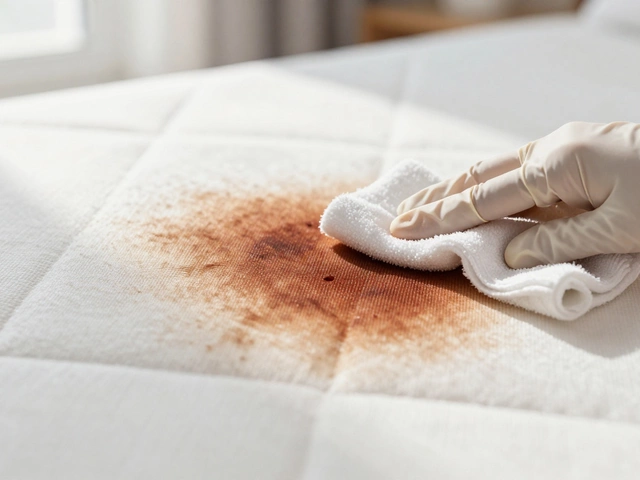
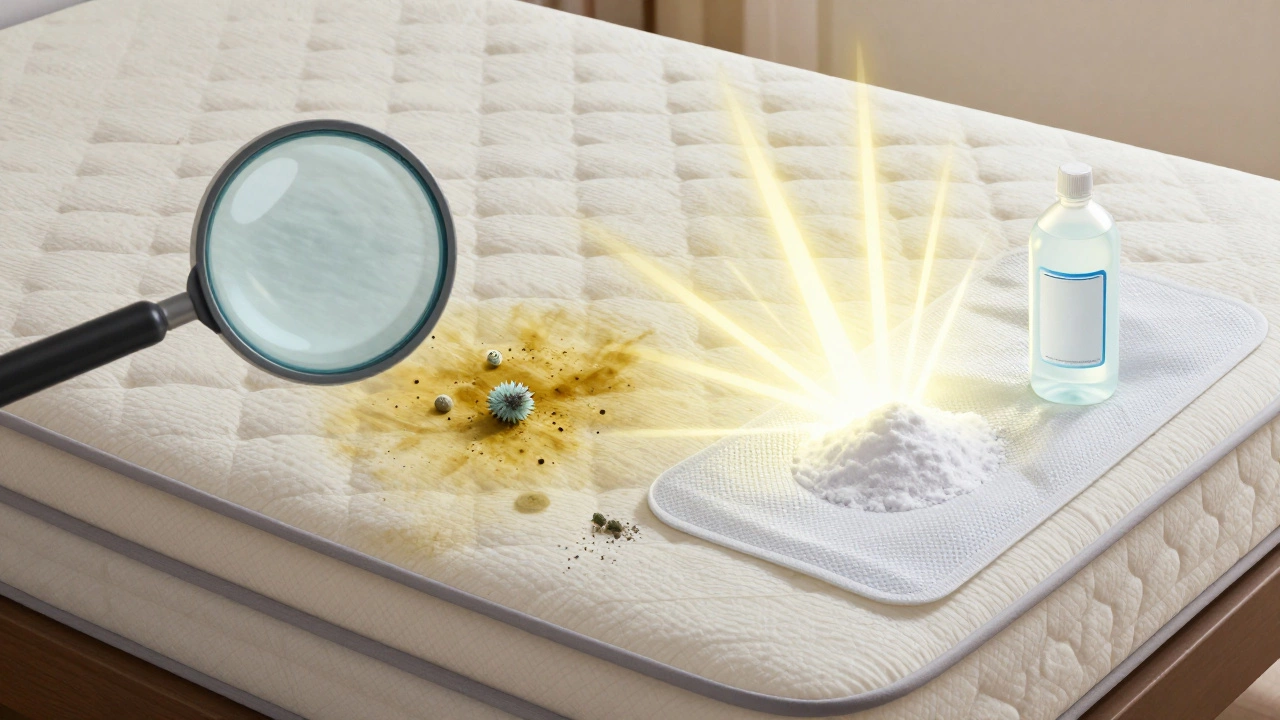
Yellow stains on a mattress aren’t just ugly-they’re a sign something’s been building up for months, maybe years. Sweat, body oils, urine, or even spilled drinks seep into the fabric and turn yellow over time. If you’ve ever lain down and felt that damp, musty smell, you know it’s not just discomfort. It’s a health issue. Dust mites thrive in those moist, sticky spots. Allergies flare up. Sleep quality drops. But the good news? You don’t need expensive cleaners or a new mattress. With a few household items and some elbow grease, you can bring your mattress back to life.
Why Mattresses Turn Yellow
Yellow stains don’t appear out of nowhere. They’re the result of long-term moisture buildup. Sweat is the biggest culprit. Every night, your body releases about half a litre of moisture through your skin. That moisture soaks into the mattress, mixes with body oils and dead skin cells, and starts to break down. Over time, this creates a yellowish residue that’s hard to remove with just water. Urine, even from occasional accidents, leaves behind urea and ammonia compounds that oxidize into yellow-brown stains. Kids, pets, or nighttime incontinence can all contribute. And if you’ve ever slept on the mattress with wet hair or after a sweaty workout, you’ve added to the problem.
These stains aren’t just cosmetic. They create a breeding ground for mold, bacteria, and dust mites. The NHS estimates that up to 70% of homes in the UK have dust mite populations high enough to trigger allergies. A stained mattress is one of the top offenders.
What You’ll Need
You don’t need to buy a special cleaning kit. Most of what you need is already in your kitchen or laundry cupboard:
- White vinegar
- Baking soda
- Hydrogen peroxide (3%)
- Liquid dish soap (mild, like Dawn)
- A spray bottle
- Clean, absorbent towels (microfiber works best)
- A vacuum cleaner with upholstery attachment
Why these? Vinegar breaks down organic residue. Baking soda lifts odors and absorbs moisture. Hydrogen peroxide is a gentle bleach that kills bacteria without damaging fabric. Dish soap cuts through oils. Together, they’re more effective than most store-bought cleaners-and cheaper too.
Step-by-Step: Removing Yellow Stains
Follow these steps in order. Skipping steps or rushing leads to incomplete results.
- Strip the bed. Remove all sheets, pillowcases, and mattress protectors. Wash them in hot water (at least 60°C) to kill dust mites and remove any residue that might re-stain the mattress.
- Vacuum the mattress. Use the upholstery attachment to go over the entire surface. Pay extra attention to seams, edges, and corners where dirt and dead skin collect. This removes surface debris so your cleaning solution can actually reach the stain.
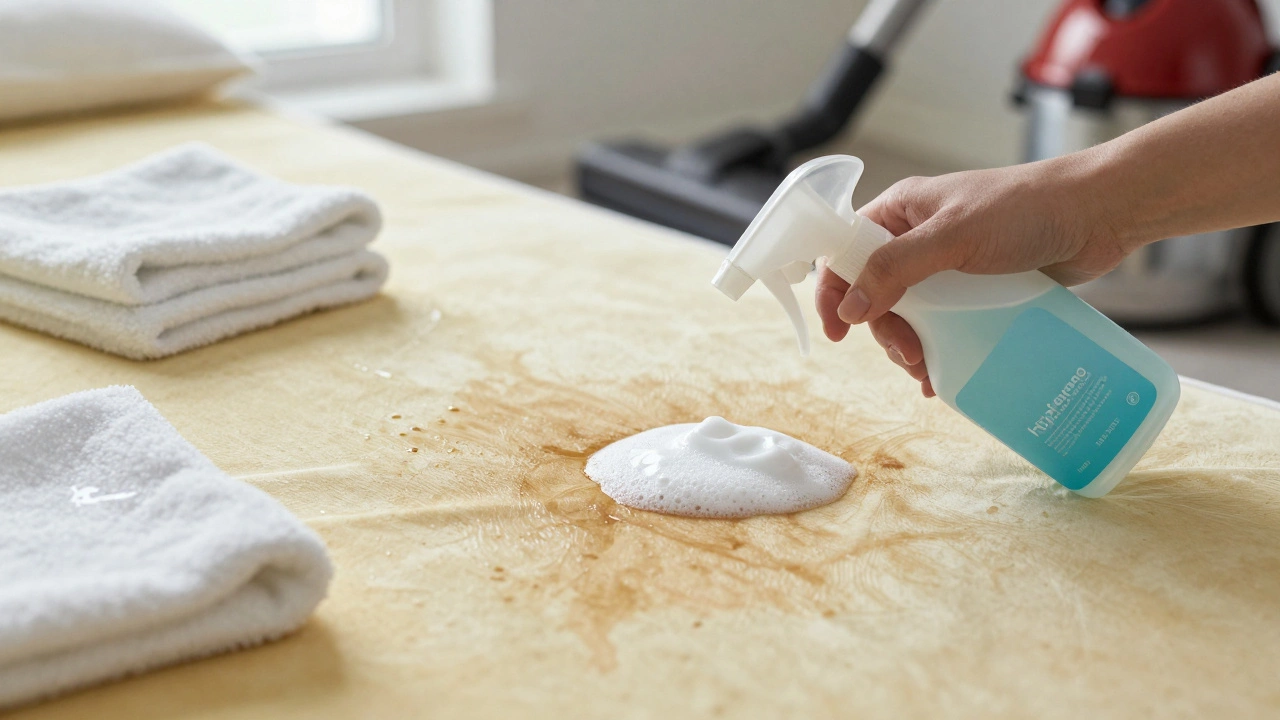
- Mix your cleaning solution. In a spray bottle, combine 1 cup of hydrogen peroxide, 1 tablespoon of liquid dish soap, and 2 tablespoons of baking soda. Shake gently until the baking soda dissolves. This creates a foaming agent that lifts stains without harsh chemicals.
- Apply the solution. Spray the stained area lightly but thoroughly. Don’t soak it-you’re not trying to flood the mattress. Just dampen the surface. Let it sit for 10-15 minutes. You’ll see the foam start to break down the stain. If the stain is old or thick, gently scrub with a soft-bristled brush or an old toothbrush. Don’t scrub hard; you’re not trying to wear out the fabric.
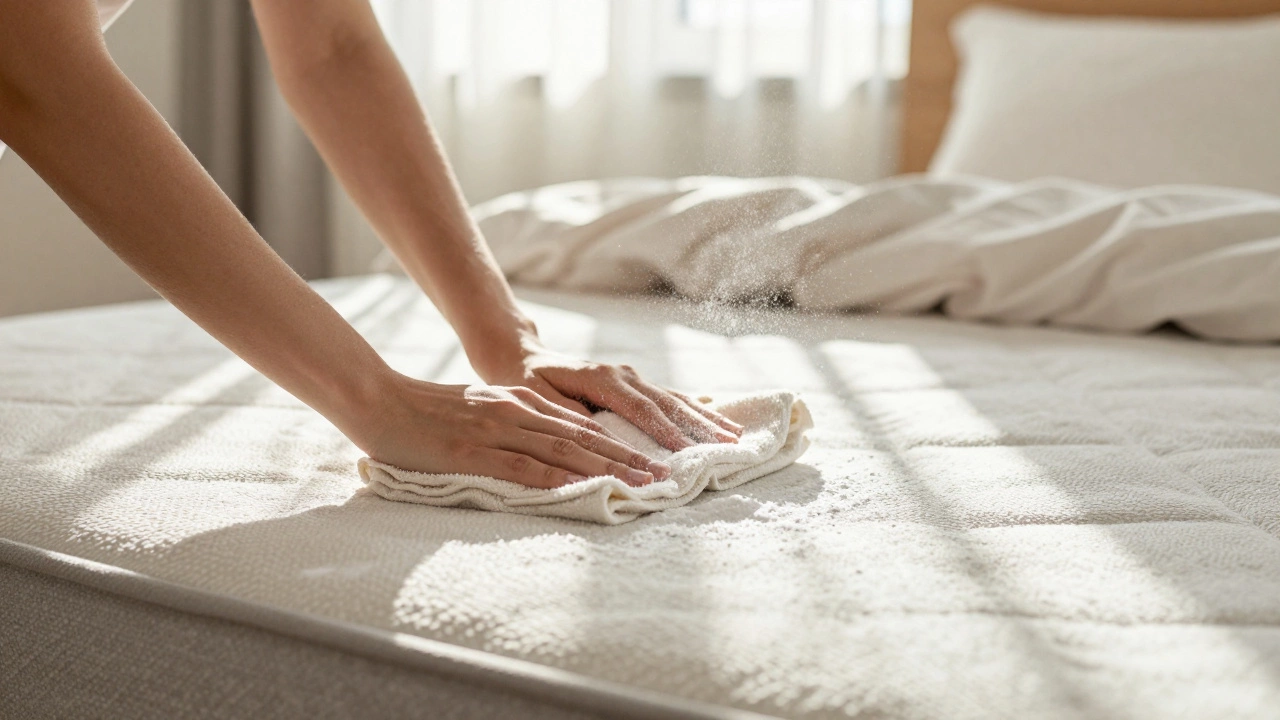
- Blot, don’t rub. Take a clean, dry towel and press it firmly onto the wet area. Press down, lift, repeat. Rubbing spreads the stain and pushes moisture deeper into the mattress. Blotting pulls it out.
- Sprinkle baking soda. Once the area is mostly dry, cover the entire mattress with a thick layer of baking soda. This soaks up any remaining moisture and neutralizes odors. Let it sit for at least 4 hours, or overnight if you can.
- Vacuum again. Go over the mattress one more time with the vacuum. Make sure you get every bit of baking soda. Leftover powder can attract dust and make the mattress feel gritty.
What Not to Do
There are plenty of online hacks that sound smart but make things worse.
- Don’t use bleach. It can damage the mattress fabric and release toxic fumes when mixed with ammonia (which is in sweat and urine).
- Don’t use a steam cleaner. High heat and moisture can warp the internal springs or foam, create mold inside the mattress, and take days to dry. You’ll end up with a wet, smelly mess.
- Don’t just spray and walk away. If you don’t blot or vacuum afterward, you’re leaving moisture behind. That’s how mildew grows.
- Don’t rely on air fresheners. They mask odors but don’t remove the source. The stain and bacteria are still there.
Preventing Future Stains
Once your mattress is clean, the goal is to keep it that way.
- Use a waterproof, breathable mattress protector. Look for ones made with cotton and a polyurethane backing-they let air through but block liquids. Replace it every 6-12 months.
- Wash your sheets weekly. Sweat and oils build up fast.
- Let your mattress breathe. Pull back the covers in the morning and leave the bed unmade for 30 minutes. This lets moisture evaporate.
- Flip or rotate your mattress every 3-6 months. Even if it’s not labeled as flippable, rotating helps distribute wear and prevents localized moisture buildup.
- Avoid eating or drinking in bed. Spills are inevitable. The sooner you clean them, the less chance they have to stain.
When to Call a Professional
If you’ve tried these steps and the stain is still there, or if the mattress smells strongly of urine or mildew even after cleaning, it might be time to consider professional help. Mattress cleaning services use industrial-grade extractors and antimicrobial treatments that reach deeper than home methods. In the UK, expect to pay between £60 and £120 for a double mattress. It’s worth it if you’ve got allergies, kids, or a mattress you’re emotionally attached to.
But if the mattress is over 8 years old, sags in the middle, or still smells after cleaning, it’s not worth saving. The NHS recommends replacing mattresses every 7-10 years. A clean, new mattress will improve your sleep more than any cleaning product ever could.
Quick Check: Is Your Mattress Still Safe to Use?
Here’s a simple test:
- Does it smell musty even after cleaning? → Replace it.
- Do you wake up with itchy skin or a runny nose? → Likely dust mites or mold.
- Can you see deep stains that won’t budge? → Cleaning won’t fix structural damage.
- Does it sag when you lie down? → Support is gone.
If you answered yes to two or more of these, it’s time for a new one. Don’t risk your health for a few more months of use.
Can I use vinegar alone to remove yellow stains from a mattress?
Vinegar helps break down organic stains and neutralizes odors, but it won’t lift deep yellow stains on its own. It works best when mixed with baking soda and hydrogen peroxide. Alone, it can leave a damp smell and doesn’t have the cleaning power to remove oils and sweat residue fully.
How long should I let baking soda sit on the mattress?
At least 4 hours, but overnight is ideal. Baking soda needs time to absorb moisture and odors. If you vacuum it off too soon, you’ll leave behind lingering smells and dampness.
Is hydrogen peroxide safe for all mattress fabrics?
Yes, 3% hydrogen peroxide is safe for most mattress materials, including cotton, polyester, and memory foam. It’s a mild oxidizer that breaks down stains without bleaching fabric. Always test it on a hidden area first, like under the edge, to check for colour fading.
Why does my mattress still smell after cleaning?
If the smell persists, the moisture has likely soaked into the core of the mattress. Baking soda only treats the surface. You may need to use a dehumidifier in the room, leave the mattress uncovered for 24-48 hours, or consider professional extraction. Persistent odors often mean mold or bacteria are growing inside.
Can I clean a memory foam mattress the same way?
Yes, but be extra careful. Memory foam absorbs water faster than spring mattresses. Use less liquid, blot gently, and don’t let any solution pool. After cleaning, prop the mattress up vertically near a fan or open window to dry completely. Never place it back on the bed until it’s 100% dry.
Final Tip: Make It a Habit
Cleaning your mattress every 6 months should be as normal as changing your sheets. It takes 30 minutes. You don’t need special tools. Just vinegar, baking soda, and a little patience. Your back, your allergies, and your sleep will thank you.