Mattress Urine Removal Planner & Guide
Step-by-Step Cleaning Process
Click on each step to reveal detailed instructions. Complete all steps for best results.
Initial Blotting & Assessment
Remove excess moisture and assess the damage
What you need: Clean towels or paper towels
- Press firmly with dry towels to absorb as much liquid as possible
- Replace towels frequently until they come away mostly dry
- Do not rub – this pushes urine deeper into the foam
- Assess the size and depth of the affected area
Vinegar Solution Treatment
Neutralize pH and begin breaking down proteins
What you need: White vinegar, cold water, spray bottle, microfiber cloths
- Mix equal parts white vinegar and cold water in a spray bottle
- Spray lightly onto the stained area (don't soak)
- Let sit for 5-10 minutes to neutralize ammonia
- Blot aggressively with clean microfiber towels
- Repeat until no more discoloration transfers to towels
- Allow to air dry slightly before next step
Apply Your Chosen Agent
Select and apply the appropriate cleaning agent below
Choose your primary cleaning agent based on your situation:
Vacuum & Extraction
Remove dried powders and dissolved residues
What you need: Vacuum cleaner with HEPA filter (wet/dry vacuum ideal)
- If using wet/dry vacuum: Extract remaining moisture directly from foam
- For dry powders: Use strong suction to remove all residue
- Move nozzle slowly over treated area
- Use brush roll to agitate fibers and release trapped particles
- Vacuum multiple times in different directions
- The cleaned area should feel noticeably drier and fluffier
Complete Drying
Ensure mattress is bone-dry to prevent mold
What you need: Good ventilation, fans, dehumidifier (optional), sunlight (if possible)
- Open windows and turn on fans for maximum airflow
- Run a dehumidifier if humidity levels are high
- Place mattress near sunny window if possible (natural disinfection)
- Wait 24 hours minimum before replacing sheets
- Touch test: Mattress must be completely dry, not cool or damp
Choose Your Primary Agent
Select the best option for your situation:
Baking Soda
Best for fresh spills & light odors
Absorption Odor ControlEnzymatic Cleaner
Best for old stains & persistent smells
Protein Breakdown Deep CleanCornstarch
Budget-friendly moisture absorption
Moisture Absorbent Low CostClay-Based Absorbent
Professional-grade deep extraction
High Absorption Deep PenetrationQuick Reference Table
| Agent | Function | Limitation |
|---|---|---|
| Baking Soda | Absorption | Poor penetration |
| Enzymatic | Breaks proteins | Long dwell time |
| Vinegar | pH neutralization | No pigment removal |
| H₂O₂ | Bleaching | Weakens fabric |
Excellent Work!
Your mattress cleaning process is complete. Remember to keep the room ventilated and wait until the mattress is completely bone-dry before replacing bedding. Consider investing in a waterproof mattress protector to prevent future accidents.
There is nothing quite as panic-inducing as waking up to the smell of stale urine or finding a damp spot on your sheets. You’ve already done the first part: you blotted up the excess liquid with towels. But now you’re staring at that dark patch, wondering how to get the rest of it out before it sets permanently. The truth is, water alone won’t do the trick. In fact, adding more water can sometimes push the mess deeper into the foam layers.
To truly remove urine from a mattress, which is a complex structure of foam, springs, and fabric designed for sleep support, you need agents that actively pull moisture and break down proteins. This isn't just about surface cleaning; it’s about extraction. Here is exactly what draws pee out of a mattress and how to use those materials effectively.
The Power of Absorbent Powders
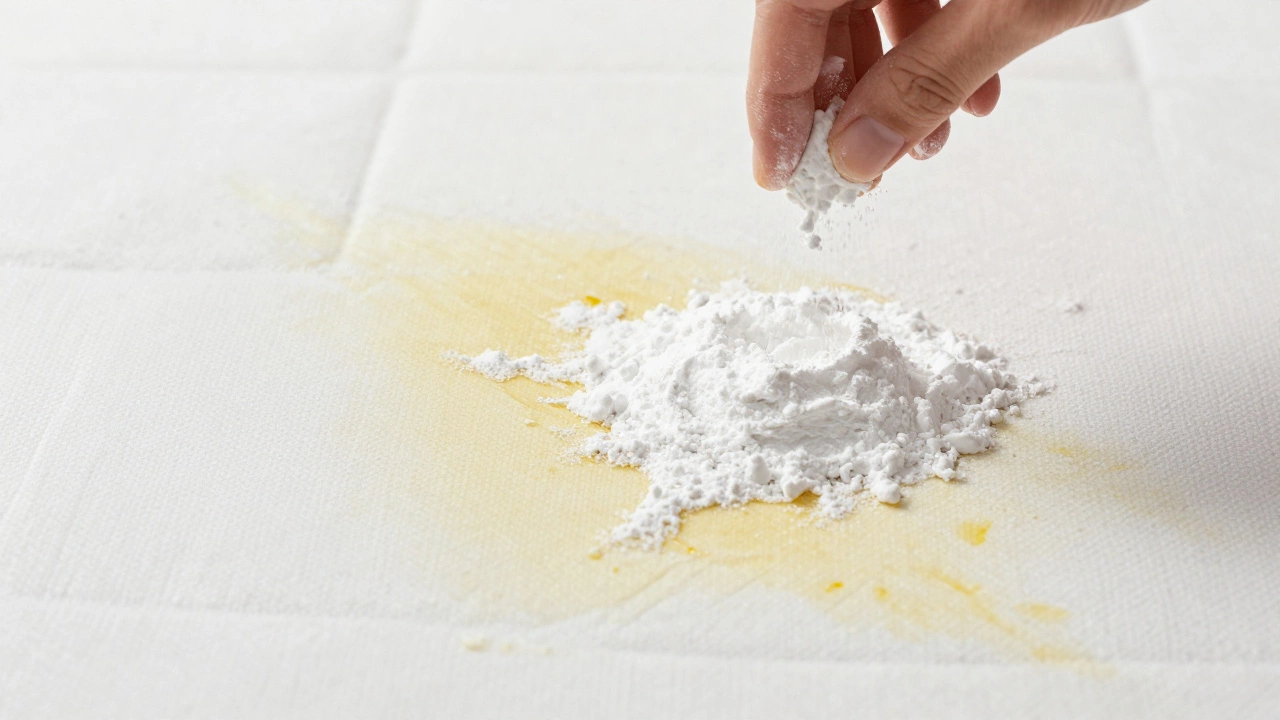
If you are looking for something physical to draw liquid out of deep fibers, your best friend is an absorbent powder. When urine seeps into the inner layers of a mattress, gravity and capillary action keep it trapped there. To reverse this, you need a material with high porosity and adsorption capabilities.
Baking soda, also known as sodium bicarbonate, is the most common household option. It works by absorbing both moisture and odors. However, for heavy saturation, baking soda alone might not be enough. Many professionals recommend mixing it with other agents or using dedicated absorbent powders designed for pet accidents.
- Baking Soda: Great for light stains and odor neutralization. It absorbs surface moisture but has limited depth penetration.
- Cornstarch: A cheaper alternative to baking soda. It absorbs oil and moisture well but doesn't neutralize odors as effectively.
- Clay-Based Absorbents: Products like Fuller's Earth or specific cat litter clays have superior absorption rates compared to kitchen staples.
The process is simple but requires patience. Sprinkle a thick layer-about half an inch deep-over the affected area. Let it sit for several hours, or ideally overnight. The powder will dry out as it pulls the moisture from the mattress foam. Once dry, vacuum it up thoroughly. You might need to repeat this process two or three times for older stains.
Breaking Down Proteins with Enzymes
Absorbents handle the water, but they don't always handle the source of the problem: uric acid crystals. Urine contains urea, which breaks down into ammonia and uric acid. While ammonia dissipates over time, uric acid forms stubborn crystals that bond to fabric fibers. These crystals are what cause that distinct, lingering smell even after the stain looks dry.
This is where Enzymatic cleaners, which are biological solutions containing enzymes that digest organic matter come in. Unlike standard detergents that mask odors with perfume, enzymatic cleaners actually eat the bacteria and proteins causing the smell. They contain specific enzymes like protease, which targets proteins, and urease, which breaks down urea.
When applying an enzymatic cleaner, you must follow the instructions carefully. Do not rinse it off immediately. The enzymes need time-usually 15 to 30 minutes-to penetrate the stain and break down the molecular bonds. If you wipe it away too soon, you’re just moving the dirt around. After the dwell time, blot the area with clean, damp cloths to lift the dissolved residue.
The Role of Vinegar and Water
Before applying powders or expensive enzymes, many experts recommend a preliminary step using white vinegar. White vinegar, primarily composed of acetic acid diluted in water, serves two purposes. First, its acidity helps neutralize the alkaline nature of urine. Second, it acts as a mild disinfectant, killing some of the bacteria that thrive in wet environments.
Create a solution of equal parts white vinegar and cold water. Never use hot water, as heat can set the protein bonds in urine, making them permanent. Spray this mixture lightly onto the stained area. Don’t soak it; you want to clean, not flood. Blot aggressively with clean microfiber towels. You’ll see the brownish tint transfer to the towel. Repeat until no more color comes up. Then, let the area air dry slightly before applying your absorbent powder or enzymatic treatment.
Vacuuming and Extraction Techniques
Once the chemical and physical agents have done their work, you need to physically remove the debris. A standard upright vacuum might struggle with wet spots or fine powders embedded in deep foam. This is why having a good Vacuum cleaner, specifically one with a HEPA filter and strong suction power is crucial.
If you have access to a wet/dry vacuum, this is the gold standard for mattress cleaning. Wet vacuums can suck up liquid directly from the foam layers, preventing mold growth. For dry powders, ensure your vacuum has a brush roll that can agitate the fibers slightly to release the trapped particles. Move the nozzle slowly over the treated area. You should feel the difference in texture-the cleaned area will feel drier and fluffier than the surrounding fabric.
| Agent | Primary Function | Best Used For | Limitations |
|---|---|---|---|
| Baking Soda | Absorption & Odor Neutralization | Fresh spills, light odors | Poor penetration for deep stains |
| Enzymatic Cleaner | Protein Breakdown | Old stains, persistent smells | Requires long dwell time |
| White Vinegar | pH Neutralization & Disinfection | Initial blotting stage | Does not remove pigment |
| Hydrogen Peroxide | Bleaching & Oxidation | Visible yellow stains | Can weaken fabrics if used frequently |
Drying: The Final Step
You can pull all the urine out you want, but if you leave the mattress damp, you invite mold and mildew. Moisture is the enemy of a healthy sleeping environment. Ensure the room is well-ventilated. Open windows, turn on fans, or run a dehumidifier. Sunlight is also excellent for natural disinfection, so if possible, place the mattress near a sunny window for a few hours.
Never put sheets back on a mattress that feels even slightly cool or damp to the touch. Wait until it is completely bone-dry. This might take 24 hours depending on humidity levels. Rushing this step can lead to health issues and a musty smell that is much harder to fix than urine.
Preventing Future Accidents
Once you’ve gone through the trouble of cleaning, protect your investment. A waterproof mattress protector is essential. Look for ones made with breathable membranes rather than plastic-like covers that trap heat. These protectors create a barrier that prevents urine from reaching the foam in the first place, making cleanup as simple as washing the cover.
Can I use bleach to clean urine from my mattress?
It is generally not recommended to use chlorine bleach on mattresses. Bleach can damage the fabric fibers, cause discoloration, and release harmful fumes when mixed with ammonia (which is present in urine). Instead, opt for hydrogen peroxide for whitening or enzymatic cleaners for odor removal.
How long does it take for urine smell to go away?
With proper treatment using enzymatic cleaners and thorough drying, the smell should disappear within 24 to 48 hours. If the odor persists, the urine may have penetrated deep into the spring unit or base, requiring professional steam cleaning or replacement.
Is it safe to sleep on a mattress after cleaning urine?
Only if it is completely dry and free of chemical residues. Sleeping on a damp mattress promotes bacterial growth and mold. Ensure all cleaning agents have been rinsed or evaporated and the foam is fully dry before replacing bedding.
What if the urine stain is old and set-in?
Old stains require stronger intervention. Start with an enzymatic cleaner designed for old accidents. Apply generously and let it sit longer than usual. Follow up with a thick layer of baking soda or clay absorbent left overnight. Repeat the process if necessary. If the smell remains, the stain may be irreversible without professional help.
Can I use a steam cleaner on a mattress?
Steam cleaning can be effective for sanitizing, but it adds significant moisture. Only use a steam cleaner if you are certain the mattress can dry quickly and completely. High heat can also set protein stains if they haven't been pre-treated with an enzyme cleaner. Proceed with caution and ensure rapid drying afterwards.