Pressure Washer Business Calculator
Equipment Specs
Analysis Result
Enter your machine specs to see its performance rating.
You’ve got the van, you’ve got the insurance, and you’re ready to start your own pressure washing business. But there’s one piece of equipment that makes or breaks your profit margin: the machine itself. Buy too small, and you’ll spend three days on a job that should take half a day. Buy too big, and you’ll burn through fuel, break driveways, and bleed money on repairs before you even sign your first client.
The short answer? You don’t just need "big." You need the right balance of power, flow, and durability. For most startups in residential cleaning, a commercial-grade gas pressure washer between 3,000 and 4,000 PSI with at least 2.5 GPM is the sweet spot. But let’s break down exactly why those numbers matter and how to pick the machine that actually pays for itself.
Why PSI Alone Doesn't Tell the Whole Story
If you walk into any hardware store, the salesperson will ask, "How many PSI do you want?" It’s a trap. PSI (Pounds per Square Inch) measures force, but it doesn’t measure volume. Think of it like this: a garden hose has low PSI, but if you leave it running for an hour, it delivers a lot of water. A fire hose has high PSI and high volume. A needle has insane PSI but almost zero volume.
In the pressure washing world, volume is king. That volume is measured in GPM (Gallons Per Minute). The real metric that determines how fast you clean is Cleaning Units (CU). The formula is simple:
- Cleaning Units = PSI × GPM
A consumer-grade unit might offer 3,000 PSI but only 1.5 GPM. That gives you 4,500 CU. A commercial starter unit might offer 2,800 PSI but 3.0 GPM. That gives you 8,400 CU. The second machine cleans nearly twice as fast, even though the PSI number looks lower. If you are pricing by the square foot or by the hour, speed is your revenue driver. Low GPM means you are trading your time for pennies.
The Three Tiers of Commercial Pressure Washers
Not all machines built for business are created equal. Manufacturers categorize them by duty cycle and construction. Understanding these tiers prevents you from buying a machine that overheats after two hours of use.
| Tier | PSI Range | GPM Range | Pump Type | Best For |
|---|---|---|---|---|
| Light Commercial | 2,500 - 3,000 | 2.5 - 3.0 | Aluminum/Plastic | Driveways, patios, light graffiti |
| Mid-Range Commercial | 3,000 - 4,000 | 3.0 - 4.0 | All-Aluminum | Houses, fences, decks, regular daily use |
| Heavy Duty Industrial | 4,000+ | 4.0+ | All-Metal/Crankshaft | Concrete stripping, heavy oil, fleet maintenance |
For a new business owner, the Mid-Range Commercial tier is usually the safest bet. It handles 90% of residential jobs without breaking the bank on upfront costs. Light commercial units often have plastic components that fail under heat stress, while heavy-duty industrial units are overkill for washing siding and can easily damage softer surfaces if you aren’t careful.
Gas vs. Electric: The Power Source Debate
This is where location and job type dictate your choice. In Brisbane, where we have plenty of outdoor work and reliable access to fuel stations, gas engines dominate the professional scene. Here is why:
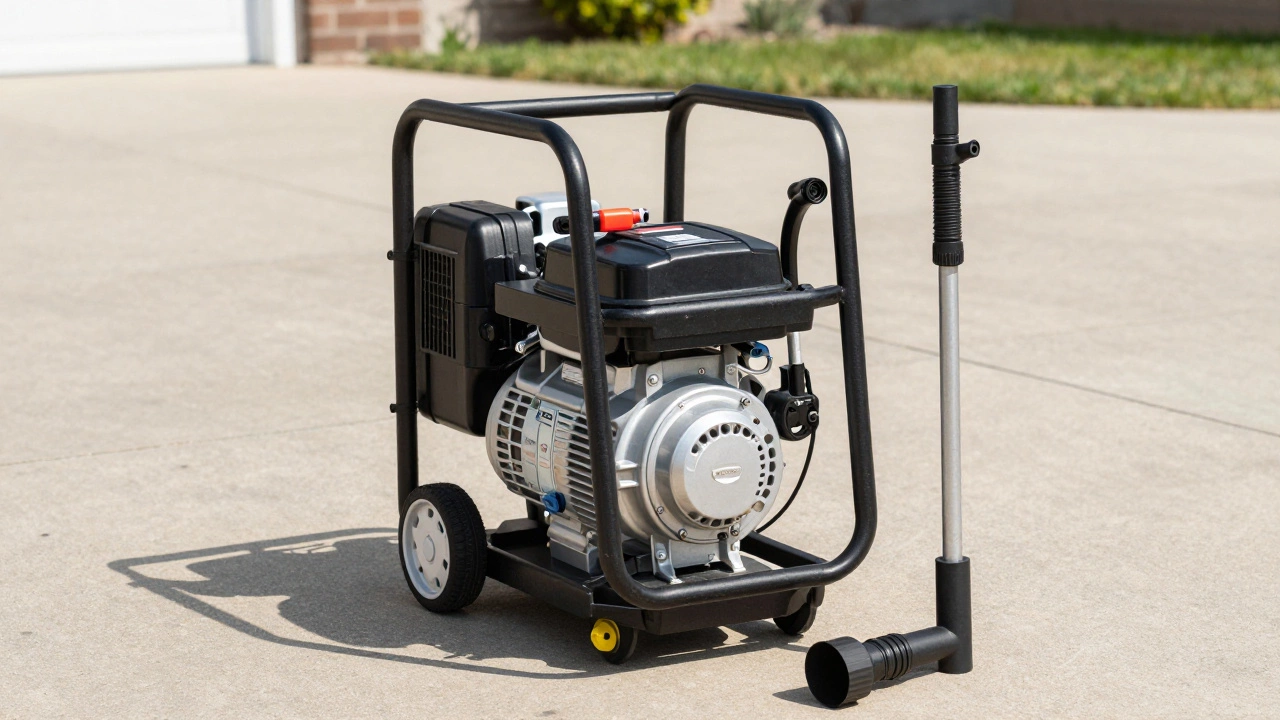
Gas Pressure Washers give you unlimited runtime and portability. You aren’t tethered to a generator or an extension cord that trips a breaker every time you hit the trigger. Most commercial gas units run on Honda or Briggs & Stratton engines, which are known for longevity. However, they require maintenance-oil changes, air filter checks, and winterizing if you live in colder climates. They are also louder and produce emissions.
Electric Pressure Washers are quieter, lighter, and require zero engine maintenance. They are perfect for tight spaces, urban environments with noise ordinances, or indoor applications like warehouse floors. But here is the catch: most electric models cap out around 3,000 PSI and 2.5 GPM. If you are tackling thick mold on north-facing walls or baked-on grease in a restaurant kitchen, electric units will struggle. Also, you need to manage your power source. Running a heavy-duty electric washer requires a dedicated circuit; plugging it into a standard outlet with other tools can cause voltage drops that kill the motor.
If you are starting solo and focusing on residential driveways and house washing, gas is generally more efficient because you can move quickly from job to job without hunting for outlets.
Pump Quality: The Heart of the Machine
The pump is the most expensive part of a pressure washer. When it fails, the machine is dead until it’s replaced. There are two main types of pumps you will encounter:
- Plunger Pumps (Axial Cam): These are common in entry-level commercial units. They are cheaper but have a shorter lifespan. They rely on seals that wear out faster under continuous use.
- Crankshaft Pumps (Triplex Plunger): This is the gold standard for professionals. The crankshaft design reduces friction and heat buildup. Look for pumps made by brands like Cat Pumps, Lavey, or Honda. An all-aluminum triplex pump can last for thousands of hours with proper care.
When shopping, check the material of the pump head. Aluminum dissipates heat better than plastic. If you see plastic fittings on a machine marketed as "commercial," be skeptical. Heat is the enemy of pressure washers. Every time you idle the machine (trigger gun closed), the water inside heats up rapidly, damaging seals. Always buy a machine with a bypass valve that allows water to circulate safely during idling.
Essential Accessories That Save Time
Buying the machine is only step one. Your workflow efficiency depends on your attachments. Don’t skimp here.
- Surface Cleaner: This is non-negotiable for driveways and patios. A wand leaves streaks and takes forever. A surface cleaner rotates nozzles under a shield, providing even coverage and finishing concrete jobs in minutes rather than hours. Get a diameter that matches your stride width, usually 20 to 24 inches.
- Extension Wands: For house washing, you need reach. A 10-foot extension wand allows you to keep your feet on the ground while cleaning second-story siding. This reduces fatigue and liability risks from ladders.
- Variable Nozzles: Instead of swapping tips, use a rotary nozzle. You can dial in the spray pattern from 0 degrees (pinpoint, for tough stains) to 40 degrees (wide fan, for delicate siding). This saves time changing parts mid-job.
- Chemical Injector: Many modern machines have built-in soap injectors, but a standalone foam cannon is superior for pre-treating organic growth like algae and moss. Pre-soaking breaks down dirt so the pressure does less work, saving wear on your pump.
Budgeting for Your First Machine
How much should you spend? A decent entry-level commercial setup typically ranges from $1,500 to $3,000 AUD. Spending less than $1,000 usually lands you in consumer territory, where breakdowns are frequent. Spending more than $5,000 early on ties up cash that could go toward marketing or insurance.
Consider buying used. Many contractors upgrade their fleets annually. A well-maintained three-year-old unit from a reputable brand can save you 30-40% off retail. Just inspect the pump for leaks and test the engine under load before handing over cash.
Remember, the goal isn’t to own the fanciest toy. It’s to own a tool that works reliably when you’re on a client’s driveway. Reliability builds reputation. Reputation brings referrals. Referrals pay the bills.
Can I use a consumer pressure washer for my business?
Technically yes, but financially no. Consumer units are designed for intermittent use, like cleaning a deck once a month. They lack the cooling systems and durable seals needed for daily operation. You will likely face downtime due to seal failures or overheating, costing you more in lost jobs than the savings on the initial purchase.
Is higher PSI always better for cleaning?
No. Higher PSI increases the risk of damaging surfaces like wood siding, vinyl, or soft concrete. For most residential jobs, 3,000 PSI is plenty. Beyond that, you gain little cleaning power but significantly increase the chance of etching stone or stripping paint. Focus on GPM (flow rate) instead, as moving more water removes dirt faster without aggressive force.
How important is the warranty on a commercial pressure washer?
Very important. Look for warranties that cover the pump for at least 2-3 years. Some manufacturers offer lifetime warranties on the frame but only 90 days on the pump. Since the pump is the most likely component to fail, a longer warranty protects your investment. Keep records of all maintenance, such as oil changes and filter replacements, to ensure warranty claims are honored.
Do I need a hot water pressure washer to start?
What maintenance tasks are critical for longevity?
Change the engine oil every 50-100 hours of use. Clean or replace the air filter regularly, especially if working in dusty areas. Flush the system with fresh water after every job to prevent detergent residue from corroding internal parts. Never let the machine sit with dirty water in the tank. Finally, use a pump protector fluid during storage periods to prevent freezing and corrosion.