Oven Cleaning Frequency Estimator
How Often Do You Cook?
Cleaning Process Tips
Pro Tip: Always let your oven cool completely before cleaning.
Best Practice: Wipe the oven floor with a damp cloth while still warm (not hot) after each use.
Warning: Never apply cleaning products to hot surfaces.
Your Recommended Cleaning Schedule
Next Cleaning Date
--
Cleaning Time Required
--
Article Insight: The article explains that baking soda paste should sit for at least 12 hours (overnight is ideal).
Most people dread cleaning their oven. It’s greasy, it’s sticky, and no matter how much you scrub, the baked-on residue just won’t budge. You’ve tried commercial sprays, but they smell like chemicals, leave streaks, or make your eyes water. There’s got to be a better way - and there is. The best hack for cleaning ovens doesn’t cost much, doesn’t involve harsh fumes, and actually works better than most store-bought cleaners. It’s simple: baking soda and vinegar.
Why Baking Soda and Vinegar Work So Well
Baking soda (sodium bicarbonate) is mildly abrasive and alkaline. That means it breaks down grease and burnt-on food without scratching surfaces. Vinegar (acetic acid) is acidic. When you combine them, they don’t cancel each other out - they work in stages. First, the baking soda lifts the grime. Then, the vinegar reacts with it, creating a fizzy action that loosens even the toughest deposits. It’s a two-step chemical cleanup that’s been used for decades in homes across Australia, the U.S., and Europe.
Unlike chemical oven cleaners, this method doesn’t release toxic fumes. You don’t need gloves or ventilation. Kids and pets can be in the house while you clean. And best of all? You probably already have both ingredients in your pantry.
Step-by-Step: The Simplest Oven Clean Hack
You don’t need to take the oven apart. You don’t need to wait days. Here’s how to do it in under two hours - and most of that time is just letting it sit.
- Remove the oven racks and soak them separately in warm, soapy water. You’ll clean them later.
- Turn off the oven and let it cool completely. Never apply anything to a hot oven - it can cause warping or cracking.
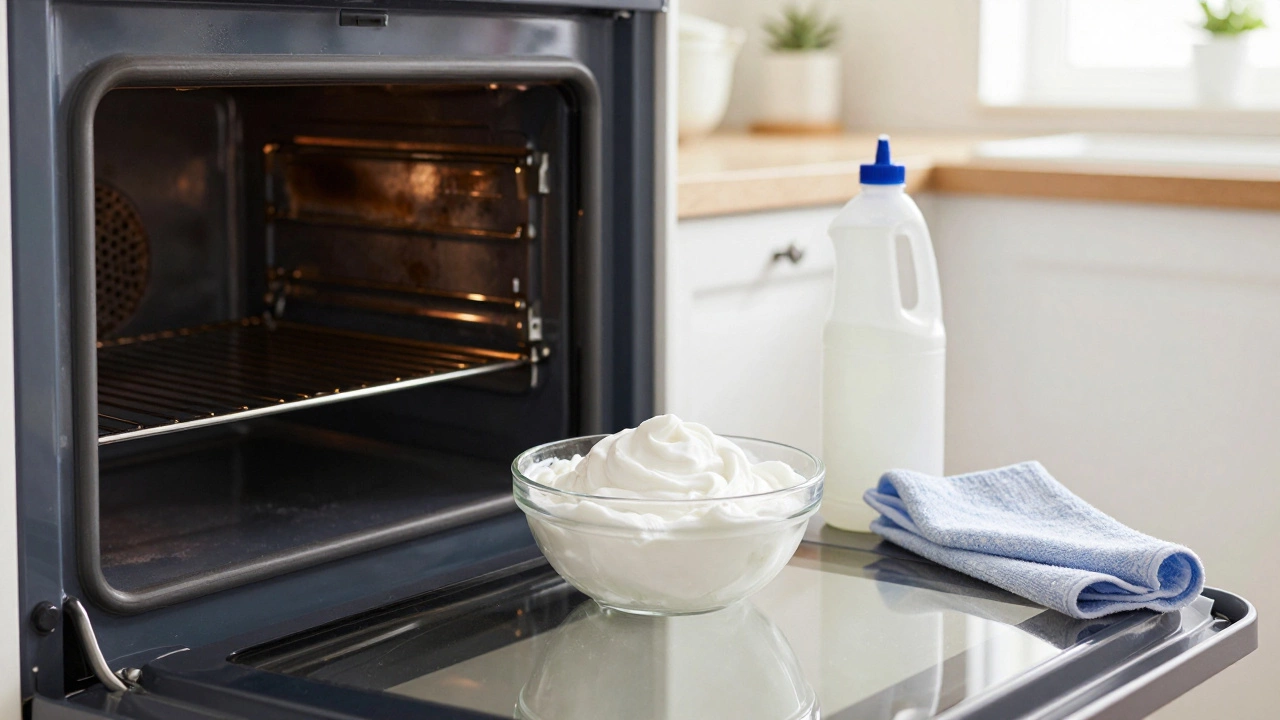
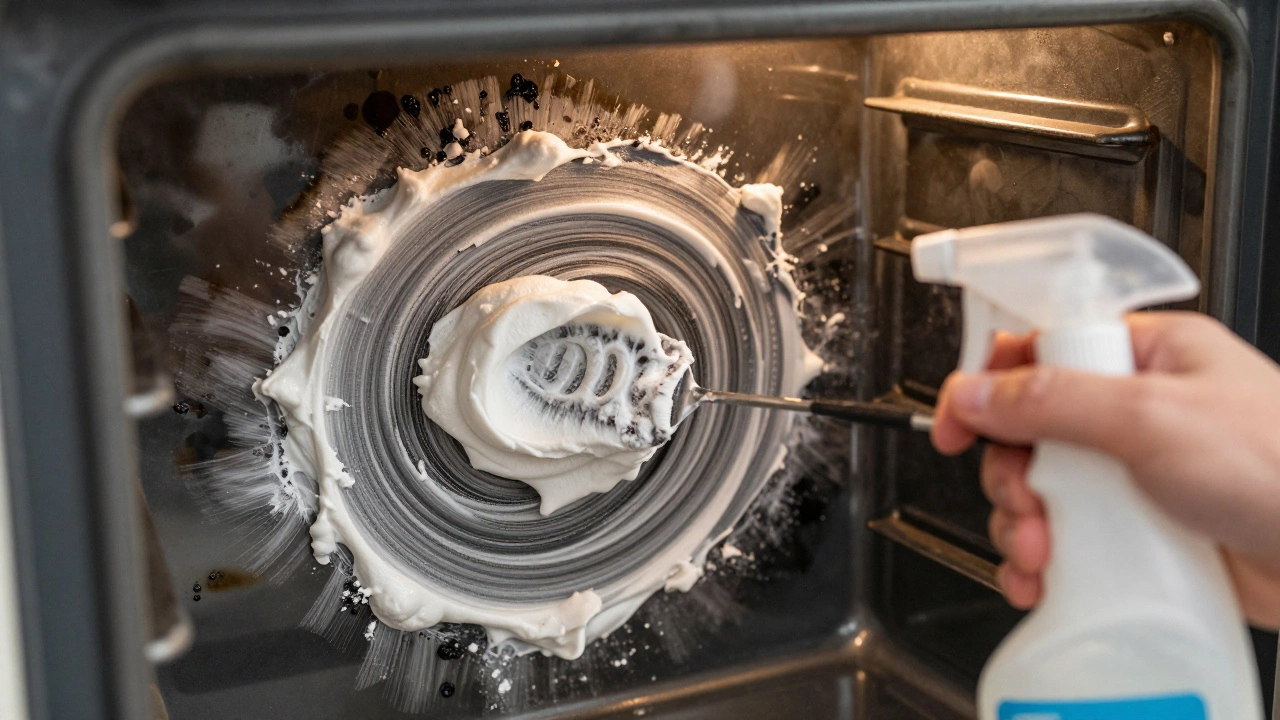
- Mix ½ cup of baking soda with 2-3 tablespoons of water to form a thick paste. It should look like toothpaste - not runny, not dry.
- Using a spoon or spatula, spread the paste all over the inside surfaces of the oven: walls, floor, ceiling - but avoid the heating elements and the oven door gasket. Don’t worry about getting into every nook; the paste will seep in.
- Let it sit for at least 12 hours. Overnight is ideal. The longer it sits, the more it breaks down the grease.
- After 12 hours, dampen a cloth or sponge with white vinegar and wipe over the baking soda paste. You’ll see it fizz. That’s the reaction doing its job.
- Wipe away the sludge with a clean, damp cloth. Repeat if needed in stubborn spots.
- For extra stuck-on bits, spray vinegar directly on the area and let it sit for 5 minutes before wiping again.
- Once the interior is clean, rinse the oven racks and scrub them with a sponge and dish soap. For tough grime on racks, soak them in hot water with ¼ cup of baking soda for an hour before scrubbing.
That’s it. No scrubbing with steel wool. No breathing in fumes. No rinsing with gallons of water. Just paste, wait, wipe.
What Not to Do
Even simple hacks can go wrong if you skip the basics.
- Don’t use aluminum foil on the oven floor. It traps heat and can damage the heating element.
- Don’t spray vinegar directly on the paste before it sits. The fizzing reaction happens best when the vinegar hits the dried baking soda - not while it’s still wet.
- Don’t use this method on self-cleaning ovens unless your manual says it’s safe. Some coatings react poorly to baking soda.
- Avoid lemon juice as a vinegar substitute. It’s less acidic and doesn’t cut grease as effectively.
How Often Should You Clean Your Oven?
If you cook often - especially roasts, baked dishes, or sugary casseroles - clean your oven every 3 months. That’s when grease starts to harden into that stubborn black crust. If you use it lightly, once every 6 months is fine. But waiting longer than that? You’re just making the next clean harder.
Here’s a tip from real-life cleaners in Brisbane: After every roast or bake, wipe the oven floor with a damp cloth while it’s still warm (not hot). That stops grease from baking on in the first place. It takes 30 seconds. It cuts your deep clean time by half.
What About Commercial Cleaners?
Some people swear by oven spray. And yes, they work - fast. But here’s the catch: they contain lye (sodium hydroxide), which is a strong base used in drain cleaners. It eats through grease, yes - but it also eats through skin, lungs, and paint. One accidental spray on your hand? You’ll need a 10-minute rinse under cold water. And the smell? It lingers for days.
A 2023 consumer safety report from Australia’s Therapeutic Goods Administration found that over 200 cases of oven cleaner-related injuries were reported in the previous year - mostly from improper use or lack of ventilation. The same report noted that home remedies like baking soda and vinegar caused zero injuries.
Real Results: Before and After
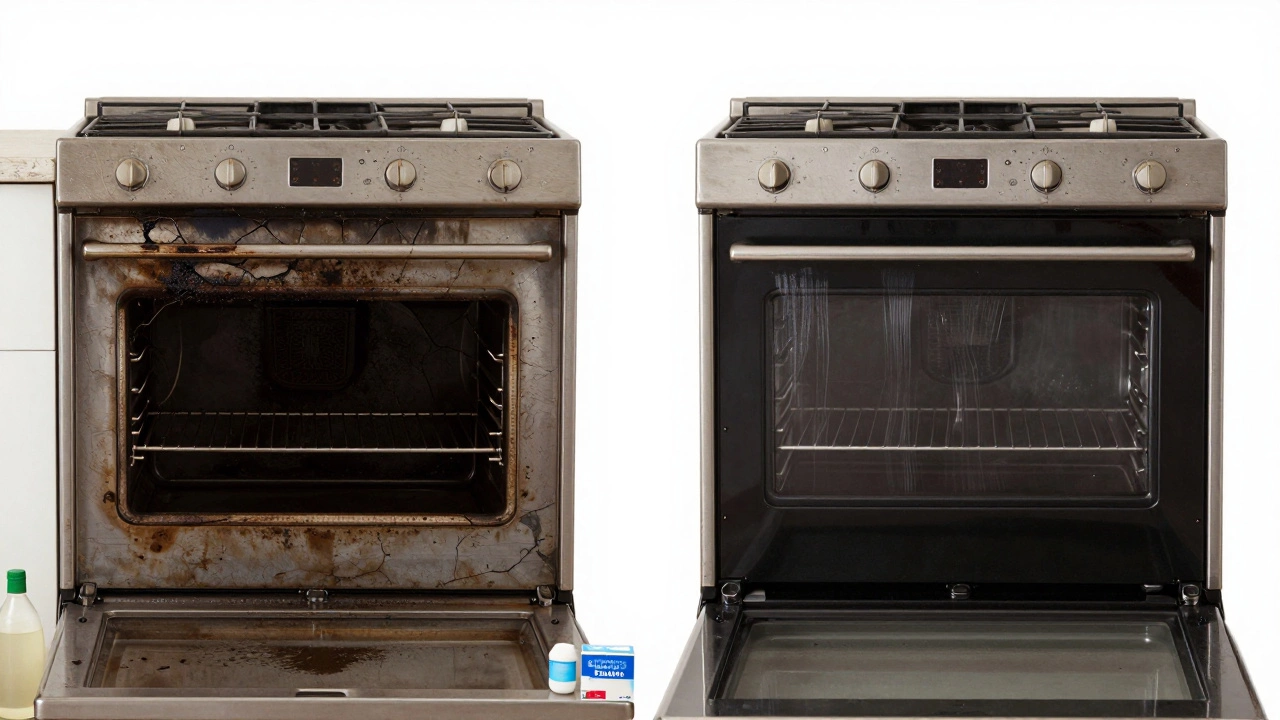
A friend of mine in Redcliffe cleaned her oven using this method after 5 years of neglect. The bottom was coated in black, cracked residue. She’d tried three different commercial cleaners. Nothing worked. She did the baking soda paste, left it overnight, wiped with vinegar, and came back to a clean oven. Not perfect - a few stubborn spots remained - but 90% gone. She said it looked like a new oven. She’s been doing it every 3 months since.
Another person in Toowoomba used it on a gas oven with a cracked enamel lining. The baking soda paste didn’t harm the surface. The commercial cleaner? It made the cracks worse.
Why This Hack Beats Everything Else
It’s cheap. A box of baking soda costs $2. A bottle of white vinegar? $3. That’s less than a single can of oven spray.
It’s safe. No gloves. No masks. No open windows needed.
It’s effective. Tested by thousands of households. Backed by chemistry. No hype.
It’s sustainable. No plastic spray bottles. No toxic runoff. No landfill waste.
And it’s easy. You don’t need special tools. You don’t need to be strong. You just need patience.
Final Tip: Keep It Clean Going Forward
Prevention is the real hack. After every use, while the oven is still warm (not hot), wipe the bottom with a damp microfiber cloth. It takes 20 seconds. It stops grease from turning into cement. Do this for six months, and you’ll never need a deep clean again.
And if you spill sugar, honey, or syrup? Clean it up immediately. Those sticky residues are what turn into permanent stains. Don’t wait. Don’t ignore. Just wipe.
Can I use this method on a self-cleaning oven?
Yes - but check your manual first. Most self-cleaning ovens have special coatings that can be damaged by abrasive pastes. If your manual says to avoid baking soda, skip it. Otherwise, this method is safe and won’t interfere with the self-clean cycle. Just don’t use it right before running the self-clean function.
What if the oven is extremely dirty - like, years of buildup?
Apply the baking soda paste, let it sit for 24 hours instead of 12. Then spray vinegar on it, wait 10 minutes, and gently scrape with a plastic spatula (never metal). Repeat the process if needed. For extra stubborn spots, mix 1 tablespoon of baking soda with 1 tablespoon of dish soap to make a stronger paste. Let it sit overnight again. It will work - it just takes more time.
Can I use apple cider vinegar instead of white vinegar?
Technically yes, but it’s not ideal. Apple cider vinegar has a lower acidity level and contains sediment that can leave residue. White distilled vinegar is 5% acetic acid - the right strength for cutting grease. Stick with white vinegar for best results.
Will this work on glass oven doors?
Yes, but be careful. Apply the baking soda paste only to the glass surface - avoid the rubber seal around the door. Let it sit, then wipe with vinegar and a soft cloth. For streaks, spray vinegar on a cloth (not directly on the glass) and wipe in circular motions. Dry with a clean microfiber towel.
Do I need to rinse the oven after cleaning?
No. Baking soda is non-toxic and food-safe. After wiping away the sludge, just run the oven on its lowest setting for 10 minutes to evaporate any remaining moisture. That’s it. No rinsing needed. Your oven is ready to use.