Natural Disinfectant Finder
Select your cleaning scenario below to find the most effective natural solution from common household staples.
You probably have a cabinet under your sink that looks like a small chemical factory. Bleach, ammonia, quaternary ammonium compounds-it’s all there, promising to kill every germ in sight. But here is the thing: most of those harsh chemicals are overkill for daily life, and they can actually make your indoor air quality worse. If you are looking for a natural disinfectant that actually works without leaving behind toxic residue or triggering allergies, you don’t need a degree in chemistry. You just need to know which household staples pack a real antimicrobial punch.
The problem with many "green" cleaners on the shelf is that they smell nice but do very little to stop pathogens. True disinfection means reducing microorganisms to safe levels, not just wiping away dust. So, what actually kills bacteria and viruses naturally? It comes down to acidity, oxidation, and specific plant compounds. Let’s break down the top contenders, how to use them safely, and when you might still need to reach for the heavy-duty stuff.
Vinegar: The Acidic Workhorse
White Vinegar is likely already in your kitchen cupboard. It is a solution of acetic acid, usually at a concentration of 5%. This acidity is what gives it its power. While it isn’t a broad-spectrum sterilizer like bleach, it is highly effective against common household bacteria like E. coli and Salmonella, as well as certain molds.
Here is the catch: standard grocery store vinegar is great for cleaning surfaces, removing limescale, and cutting grease, but it doesn’t kill everything. For example, it struggles against hardy viruses like norovirus. However, for routine kitchen counters, bathroom tiles, and glass, it is fantastic. It leaves no sticky residue and evaporates quickly. If you want to boost its scent and add mild antifungal properties, you can infuse it with citrus peels for a week before straining. Just remember, never mix vinegar with bleach-that creates chlorine gas, which is nasty stuff.
Hydrogen Peroxide: The Oxidizer
If vinegar is the gentle cleaner, Hydrogen Peroxide (3% solution) is the heavier hitter. It works by oxidizing the cell walls of bacteria and viruses, effectively breaking them apart. Unlike alcohol, which needs to stay wet for a while to work, hydrogen peroxide starts killing germs on contact, though letting it sit for a minute ensures better coverage.
This is one of the few natural options that is genuinely registered as a disinfectant by health authorities because it breaks down into water and oxygen after use. It is excellent for cutting boards, sponges, and areas where raw meat has been prepared. One tip: keep it in an opaque bottle. Light degrades hydrogen peroxide rapidly, turning it back into plain old water within weeks if left in a clear jug on your counter. Also, test it on colored fabrics first; it can act as a mild bleach.
Essential Oils: Nature’s Antimicrobials
Not all essential oils are created equal. When people talk about natural disinfecting, they are usually referring to oils rich in thymol, carvacrol, or eugenol. Thyme Oil is particularly potent. Studies have shown that thymol, the active compound in thyme, is effective against a wide range of pathogens, including some antibiotic-resistant strains. Tea tree oil is another popular choice, known for its antifungal and antibacterial properties.
However, using essential oils requires care. They are volatile organic compounds (VOCs). In a poorly ventilated bathroom, spraying strong tea tree oil can trigger headaches or asthma attacks. Always dilute them properly-typically 10-15 drops per cup of water or carrier liquid-and ensure good airflow. Never apply undiluted oils directly to skin or pets, especially cats, who lack the liver enzyme to process certain terpenes found in these oils.
| Cleaner | Active Agent | Best For | Limitations |
|---|---|---|---|
| White Vinegar | Acetic Acid (5%) | Glass, hard water stains, light bacterial loads | Does not kill all viruses; smells strong initially |
| Hydrogen Peroxide | H₂O₂ (3%) | Kitchen surfaces, cutting boards, mold spots | Bleaches fabrics; degrades in light |
| Isopropyl Alcohol | Alcohol (70%) | Electronics, door handles, quick-dry surfaces | Flammable; dries out rubber/plastic over time |
| Thyme/Tea Tree Oil | Thymol/Terpines | Laundry, soft furnishings, air freshening | Potential allergen; toxic to pets if ingested |
Alcohol: The Quick Dry Option
We often forget that Isopropyl Alcohol (rubbing alcohol) is a natural product, derived from fermentation processes. At a concentration of 70%, it is incredibly effective at denaturing proteins in microbes. Why 70% and not 90%? Counterintuitively, the lower concentration contains enough water to help penetrate the cell wall before the alcohol destroys it. Pure alcohol evaporates too fast to kill stubborn bugs.
Alcohol is perfect for things you touch constantly but can’t wash in the machine: phone screens, remote controls, light switches, and door handles. It dries instantly, so there is no slippery mess. Just be cautious with acrylic plastics or painted wood finishes, as repeated exposure can cause clouding or cracking over time.
When Natural Isn’t Enough
Let’s be honest: nature is powerful, but it has limits. If someone in your house has a contagious illness like the flu, norovirus, or a staph infection, relying solely on vinegar might leave you exposed. In these scenarios, you need something with proven virucidal activity against non-enveloped viruses. Hydrogen peroxide is your best bet here, but even then, mechanical cleaning matters more than chemical perfection.
Also, consider the surface material. Natural acids like vinegar can etch marble, granite, and limestone. If you have stone countertops, stick to pH-neutral soap and warm water, followed by a quick wipe with diluted alcohol if disinfection is needed. Using vinegar on stone will dull the finish permanently, costing you hundreds in refinishing later.
How to Make Your Own Effective Blend
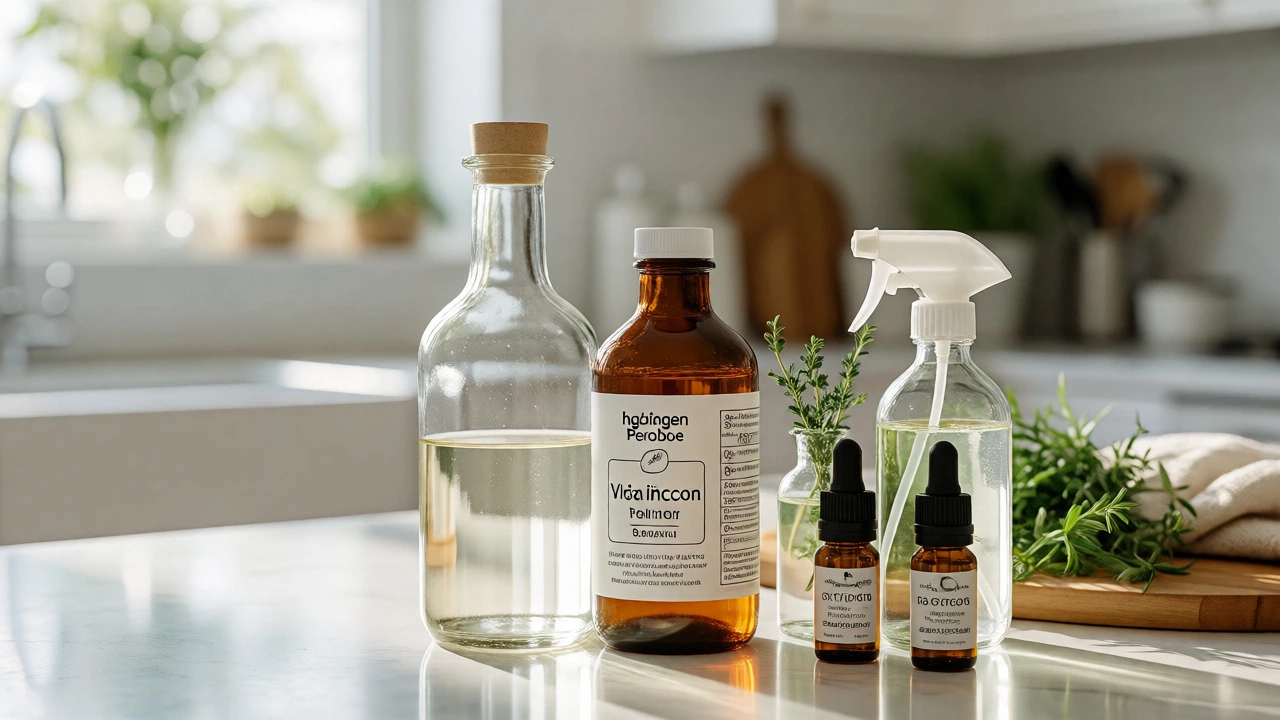
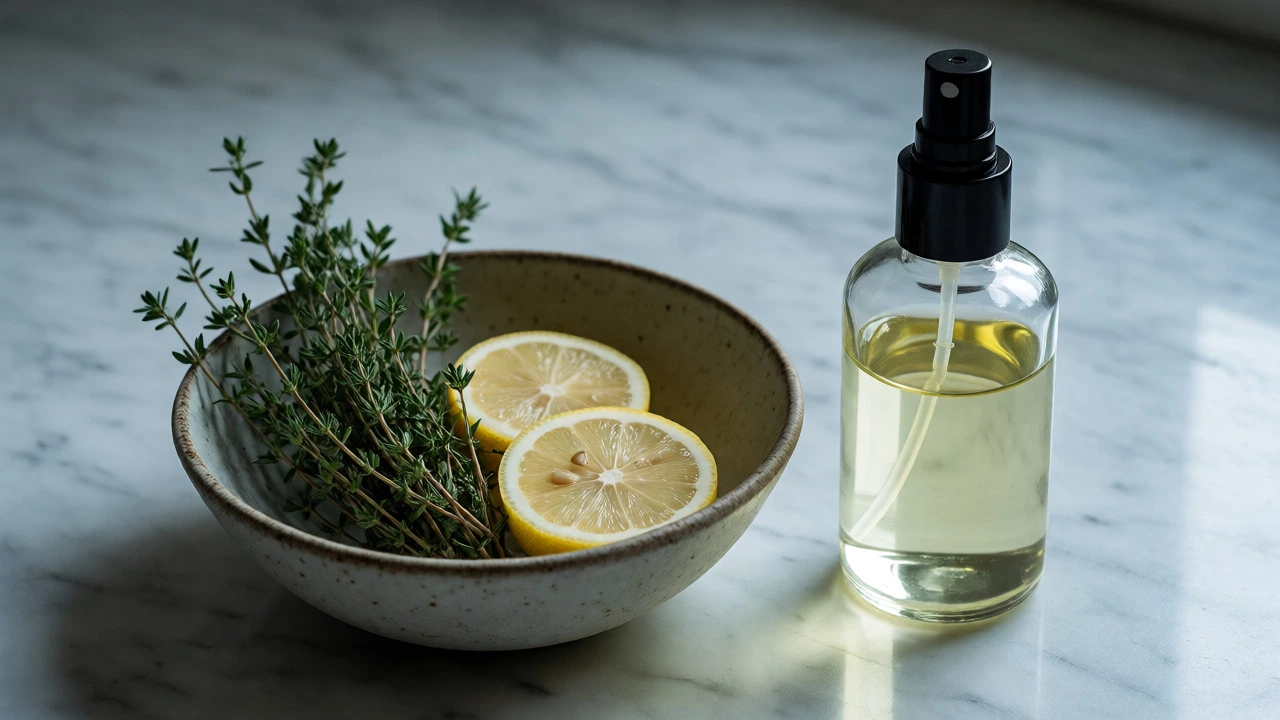
You don’t need to buy ten different bottles. A simple, versatile spray can handle 80% of your home. Here is a recipe that balances efficacy with safety:
- Base: 1 cup distilled water (prevents mineral buildup).
- Disinfectant: 1/4 cup white vinegar OR 1/4 cup hydrogen peroxide (do not mix these two together in storage; they neutralize each other).
- Scent/Boost: 10-15 drops of lavender or lemon essential oil.
- Surfactant: 1 teaspoon of castile soap (helps lift dirt and grime so the disinfectant can reach the surface).
Shake gently before each use. Spray onto the surface, let it sit for at least 60 seconds, then wipe clean. That dwell time is crucial. Wiping immediately removes the agent before it has done its job.
Common Mistakes to Avoid
One major error is assuming "natural" means "safe." Essential oils are concentrated chemicals. Another mistake is using dirty rags. If you use a microfiber cloth that hasn’t been washed in hot water, you are just spreading bacteria around instead of removing them. Wash your cloths regularly at high temperatures.
Finally, don’t ignore ventilation. Even natural products release vapors. Opening a window or running an extractor fan during cleaning reduces moisture buildup and prevents respiratory irritation. It also helps the cleaning agents dry properly, preventing mold growth in damp corners.
Does vinegar really kill germs?
Vinegar kills many common bacteria and molds due to its acetic acid content, but it is not effective against all viruses, particularly hardy ones like norovirus. It is best used for general cleaning and light disinfection rather than sterilization during outbreaks.
Can I mix hydrogen peroxide and vinegar?
You can use them sequentially (one after the other), but do not mix them in the same bottle. Combining them creates peracetic acid, which can be corrosive and irritating to the skin, eyes, and lungs in higher concentrations.
Are essential oils safe for pets?
Many essential oils, such as tea tree, peppermint, and citrus, are toxic to cats and dogs if ingested or applied undiluted. Always research specific oils before using them in homes with pets, and ensure good ventilation to minimize inhalation risks.
What is the best natural disinfectant for bathrooms?
For bathrooms, a combination of baking soda (for scrubbing) and white vinegar (for dissolving lime scale and killing mold) works well. For disinfecting surfaces, 3% hydrogen peroxide is often more effective than vinegar against bathroom pathogens.
How long should natural disinfectants sit on a surface?
To be effective, most natural disinfectants need a "dwell time" of at least 60 seconds. This allows the active ingredients enough time to break down microbial cell walls before you wipe the surface clean.