Quick Wins for Greener Laundry
- Prioritize plant-based surfactants over petroleum-based ones.
- Avoid phosphates and optical brighteners that harm aquatic life.
- Choose concentrated strips or powders to cut down on plastic waste.
- Wash in cold water to reduce energy consumption and chemical leaching.
What Actually Makes a Detergent "Harmful"?
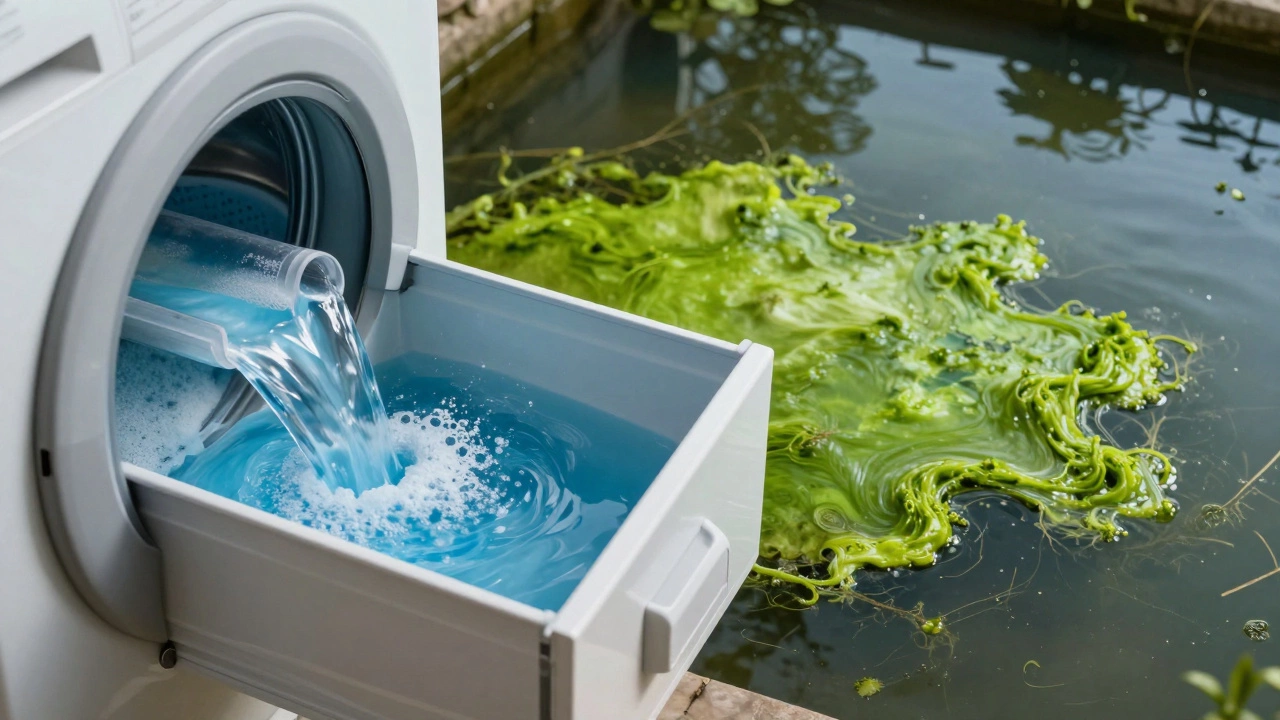
To find a safe option, you first need to know the villains. Many standard soaps use Phosphates is chemical compounds used to soften hard water and improve cleaning efficiency . While they make clothes look bright, they cause eutrophication-basically, they over-feed algae in ponds, which sucks all the oxygen out of the water and kills the fish. Then there are Optical Brighteners is chemical dyes that stay on the fabric to trick the eye into seeing whites as brighter . These aren't biodegradable and can irritate your skin and the environment.
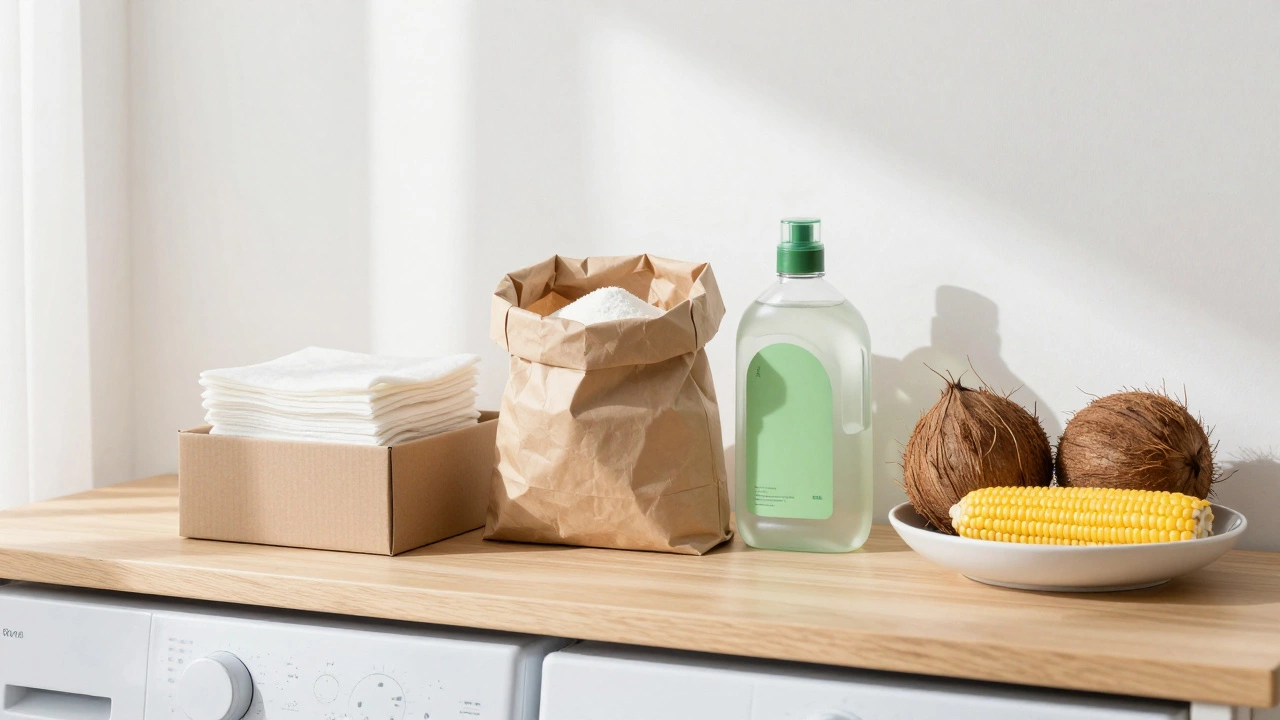
Another big issue is Surfactants is surface-active agents that break up grease and dirt . When these are derived from petroleum, they leave a toxic trail. The goal is to find detergents using plant-derived surfactants, like those made from coconut or corn, which break down naturally without leaving a chemical footprint.
The Best Types of Eco-Friendly Detergents
Not all green soaps are created equal. Depending on your skin sensitivity and how dirty your clothes get, you might want different formats. Eco-friendly laundry detergent usually falls into three main categories: liquids, powders, and strips.
Laundry Sheets is dehydrated detergent strips that dissolve completely in water are the gold standard for plastic reduction. They replace the giant plastic jugs that often end up in landfills. If you have a high-efficiency (HE) machine, these are a great choice because they don't create the excess suds that can damage the pump.
Plant-based powders are often more sustainable because they don't require the heavy water weight of liquids, meaning lower carbon emissions during shipping. However, make sure they are phosphate-free. Liquid detergents are the most convenient, but only if they come in compostable packaging or concentrated refills.
| Feature | Laundry Sheets | Plant-Based Powder | Eco-Liquid Concentrate |
|---|---|---|---|
| Plastic Waste | Very Low | Low (Cardboard) | Moderate |
| Biodegradability | High | High | Moderate to High |
| Cleaning Power | Good | Excellent (Deep Clean) | Great (Stains) |
| Carbon Footprint | Lowest | Low | Higher (Water Weight) |
Decoding the Label: What to Look For
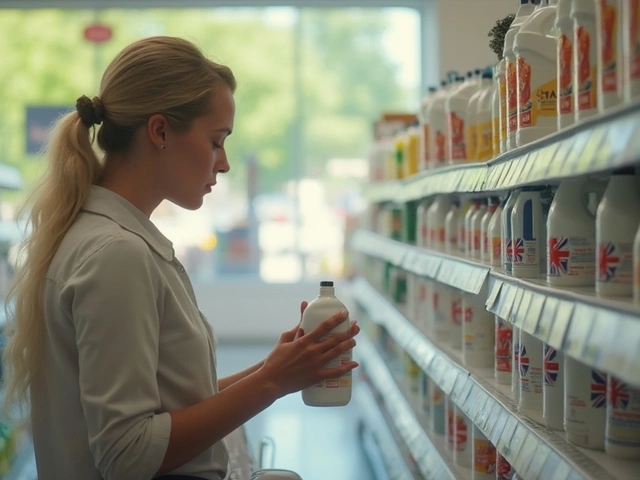
Marketing teams love the word "natural," but that doesn't mean anything legally. You need to look for certifications. Look for the EPA Safer Choice is a certification by the U.S. Environmental Protection Agency that verifies a product contains safer ingredients label. This means the ingredients have been vetted for human health and environmental impact.
Another great marker is the Ecolabel is a voluntary method of environmental certification common in Europe . If you see these, you can trust that the product is biodegradable and the packaging is minimized. Avoid anything that lists "fragrance" or "parfum" without specifying what it is, as these are often hiding phthalates, which are endocrine disruptors that linger in the soil and water.
DIY Options: The Old-School Approach
If you really want to cut the cord with big corporations, you can make your own. A simple mix of Castile Soap is a vegetable-oil based soap made from olive oil and Baking Soda is sodium bicarbonate used to neutralize odors and boost cleaning power can work wonders. Washing soda (sodium carbonate) is also a powerful addition to cut through grease.
The trick here is not to overdo it. If you use too much homemade soap in a modern machine, you might get soap scum buildup in your pipes. Stick to small amounts and run a monthly cleaning cycle with white vinegar to keep the machine fresh.
Common Pitfalls and Pro Tips
One of the biggest mistakes people make is using too much detergent. Whether it's eco-friendly or not, more soap doesn't mean cleaner clothes. In fact, using too much can leave a residue on your fabrics that actually attracts more dirt over time. Use a measuring cup or stick to the recommended strips.
Also, consider your water temperature. Most of the energy used in laundry comes from heating the water. Switching to cold water doesn't just save electricity; it also prevents the chemicals in your detergent from breaking down too quickly or leaching into the environment more aggressively. Modern enzymes in plant-based detergents are designed to work perfectly well at 30°C (86°F).
Do eco-friendly detergents actually clean as well as chemical ones?
Yes, for about 90% of daily laundry. Modern plant-based detergents use enzymes that specifically target proteins and fats. For extremely heavy grease or industrial stains, you might need a pre-treatment, but for standard clothing, you won't notice a difference in cleanliness.
Are laundry sheets safe for all washing machines?
Absolutely. Because they dissolve completely and don't create excessive suds, they are actually safer for High-Efficiency (HE) and front-loading machines than traditional heavy-duty liquids.
What is the most sustainable packaging for detergent?
Cardboard boxes (for powders) and compostable paper envelopes (for sheets) are the best. Avoid "recyclable" plastic jugs, as the reality is that very few of them actually get recycled into new bottles.
Can I mix different eco-friendly brands together?
Generally, yes. However, avoid mixing vinegar (as a softener) directly into the detergent drawer with the soap, as the acid in the vinegar can neutralize the alkaline soap, making both less effective. Use vinegar during the rinse cycle instead.
Why are some eco-detergents more expensive?
Plant-based ingredients like coconut or palm-oil derivatives (sustainably sourced) often cost more to produce than petroleum-based chemicals. Additionally, sustainable packaging research and certifications add to the cost.
Next Steps for Your Green Routine
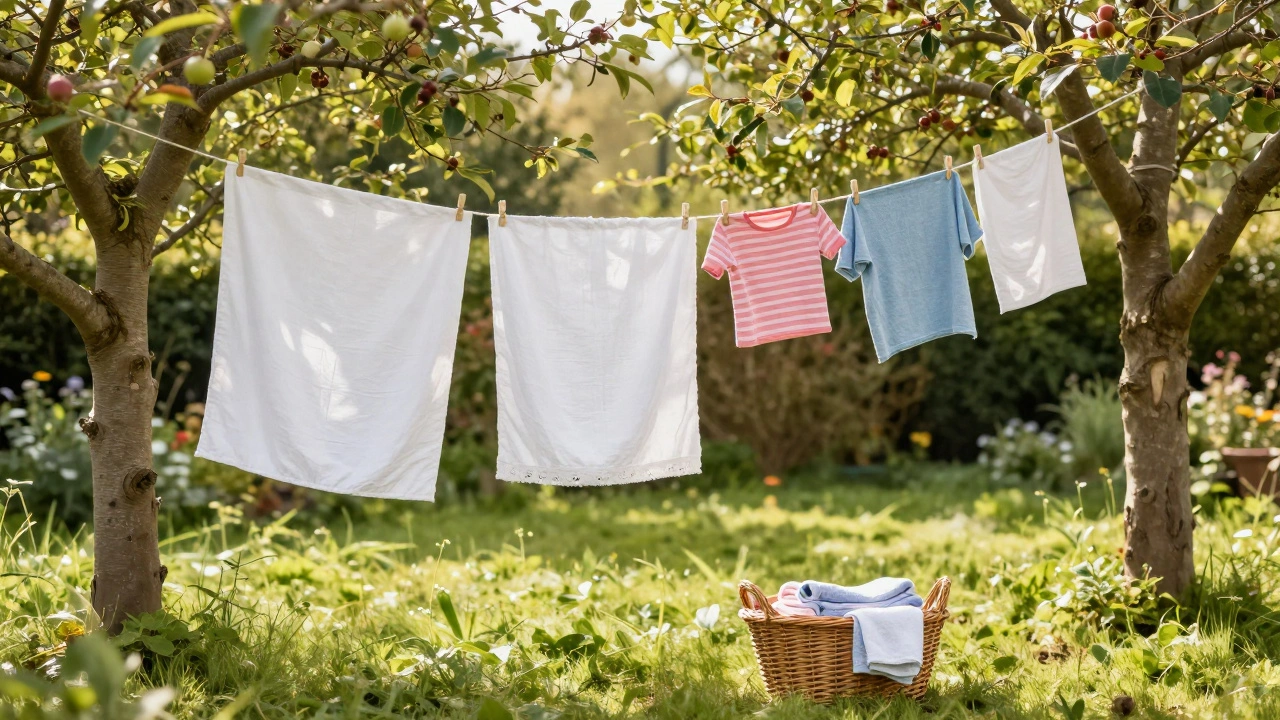
If you're just starting, don't throw away your current jug of detergent-that just creates more waste. Finish what you have, then transition to laundry sheets or a powder. Next, look into your drying habits. Air-drying your clothes on a rack or line not only saves energy but also makes your clothes last longer, reducing the amount of textile waste that ends up in landfills.