Oven Cleaning Mixture Calculator
Clean Your Oven Naturally
Calculate your perfect cleaning mixture using the article's proven method. Baking soda is the real cleaning agent—vinegar activates it but doesn't clean alone.
Your Custom Recipe
Enter your oven details above to see your personalized mixture
Baking Soda:
Water:
Vinegar (for activation):
Optional Salt:
Old baked-on grease, burnt food bits, and sticky residue in your oven don’t disappear with a quick wipe. Most commercial oven cleaners are harsh, smell awful, and leave behind toxic fumes. If you’ve ever stood in front of your oven wondering what to mix with vinegar to clean it without buying a chemical-heavy product, you’re not alone. The good news? Vinegar alone won’t cut it-but when paired with the right ingredients, it becomes a powerful, safe, and cheap cleaning tool.
Why Vinegar Alone Doesn’t Work for Oven Cleaning
Vinegar is acidic, which makes it great for cutting through mineral deposits and light grease. But oven grime? That’s not just grease-it’s carbonized food, sugars, and fats that have been baked at high temperatures for hours. These gunk layers are sticky, hardened, and chemically stable. Vinegar’s pH of around 2.5 isn’t strong enough to break them down on its own. You need something that can lift, soften, and dissolve that crust. That’s where baking soda comes in.
The Classic Combo: Vinegar and Baking Soda
This is the most trusted recipe for natural oven cleaning. It’s not magic-it’s chemistry. Baking soda (sodium bicarbonate) is alkaline. When it meets vinegar (acetic acid), they react to create carbon dioxide gas and water. The fizzing action helps lift grime off surfaces. But the real cleaning power comes from the baking soda paste left behind after the fizz dies down.
Here’s how to do it right:
- Remove oven racks and soak them in warm soapy water.
- Spread a thick paste of ½ cup baking soda and 2-3 tablespoons of water across the bottom and sides of the cold oven. Avoid the heating elements.
- Let it sit overnight. The longer it sits, the better it works.
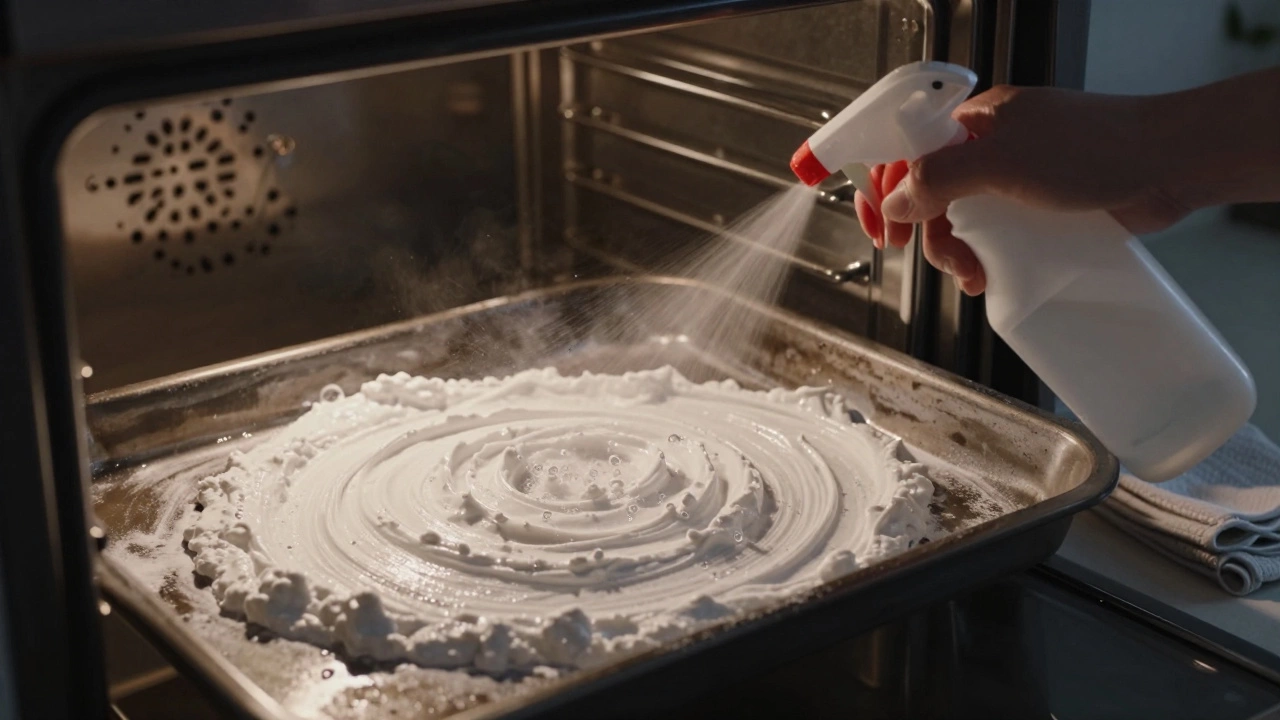
- The next day, spray white vinegar directly onto the baking soda paste. You’ll see it bubble-this loosens the grime.
- Wipe everything out with a damp cloth or sponge. For stubborn spots, scrub gently with a non-scratch pad.
- Rinse with a clean, damp cloth to remove any residue.
This method works because baking soda acts like a gentle abrasive and a grease breaker. The vinegar doesn’t clean-it activates the baking soda’s lifting power. You don’t need to scrub hard. Just let the reaction do the work.
Adding Salt for Extra Scrubbing Power
If your oven is especially grimy-think years of neglect or heavy roasting-baking soda and vinegar might not be enough. That’s where fine sea salt comes in. Salt adds physical abrasion without scratching enamel or stainless steel surfaces.
Make a paste with:
- ½ cup baking soda
- 2 tablespoons fine sea salt
- 2-3 tablespoons water
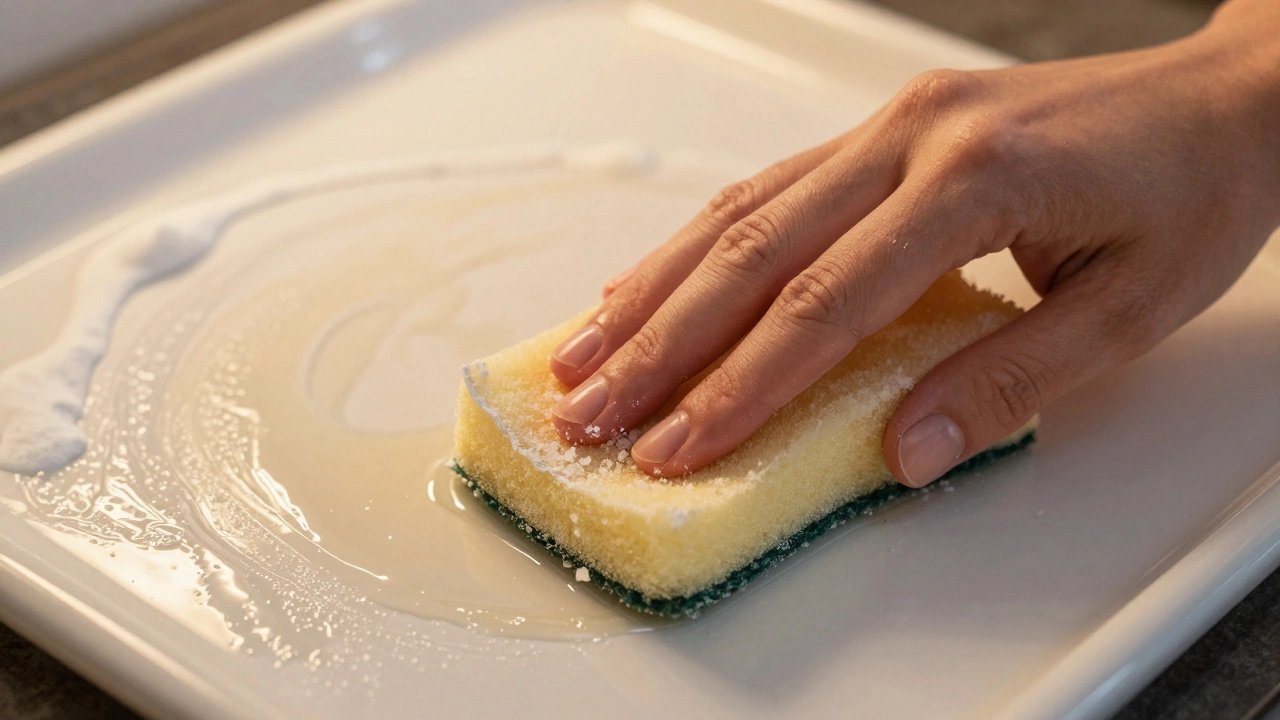
Apply it thickly, let it sit for 8-12 hours, then spray vinegar over it. The salt grains help scrape away hardened grease as you wipe. This combo is especially useful for the oven door glass, where grease builds up in thick rings.
Why Not Use Lemon Juice Instead of Vinegar?
Some people suggest swapping vinegar for lemon juice. It sounds natural, and lemon smells better. But lemon juice is weaker-its acidity is lower than vinegar’s. It won’t react as strongly with baking soda, and it doesn’t cut through grease as effectively. Plus, lemon juice can leave behind sticky sugar residues that attract dust. Stick with white distilled vinegar. It’s cheap, consistent, and doesn’t leave behind anything but clean surfaces.
What About Essential Oils?
You might see recipes that add a few drops of tea tree, lavender, or orange essential oil. These smell nice and have mild antibacterial properties. But they don’t help clean. In fact, oils can leave a faint film on oven surfaces. If you want your oven to smell fresh, open a window after cleaning. Or wipe the inside with a cloth dampened with water and a drop of vinegar. Don’t rely on essential oils for cleaning power-they’re decoration, not detergent.
What Not to Mix With Vinegar in Your Oven
Some DIY cleaners go wrong because people mix things they shouldn’t. Here’s what to avoid:
- Hydrogen peroxide - It can react unpredictably with baking soda and may damage oven coatings.
- Ammonia - Even though it’s sometimes used in oven cleaners, mixing it with vinegar creates toxic chloramine vapors. Never combine them.
- Clorox or bleach - Bleach and vinegar create chlorine gas. This is dangerous to breathe and can damage your oven’s interior.
- Dish soap alone - It’s great for dishes, but not for baked-on oven grime. It just smears grease around.
Stick to the proven combo: baking soda, vinegar, and optionally salt. That’s all you need.
How Often Should You Clean Your Oven This Way?
For most households, a deep clean every 3-4 months is enough. But if you roast or bake frequently-especially with sugary or fatty foods like cookies, roasts, or casseroles-clean every 6-8 weeks. The key is to catch the buildup early. A quick wipe after each use with a damp cloth prevents gunk from hardening. That makes your monthly vinegar-and-baking-soda clean much easier.
What If the Grime Won’t Budge?
Even with the best DIY methods, some ovens have crust so thick it feels like concrete. If your oven still looks dirty after the vinegar-baking soda treatment:
- Repeat the process. Sometimes two rounds are needed.
- Use a plastic scraper (not metal) to gently lift off flakes. Hold it at a low angle to avoid scratching.
- For the oven door, remove the glass panel (if your model allows) and soak it in warm water with baking soda overnight.
- If you’re still struggling, consider a steam clean cycle if your oven has one. It won’t replace a deep clean, but it helps loosen surface grime.
Don’t use steel wool, wire brushes, or oven cleaner sprays unless you’re prepared to deal with chemical fumes and residue. Natural methods may take longer, but they’re safer for your lungs, your kids, and your pets.
Final Tip: Keep It Clean Between Deep Cleans
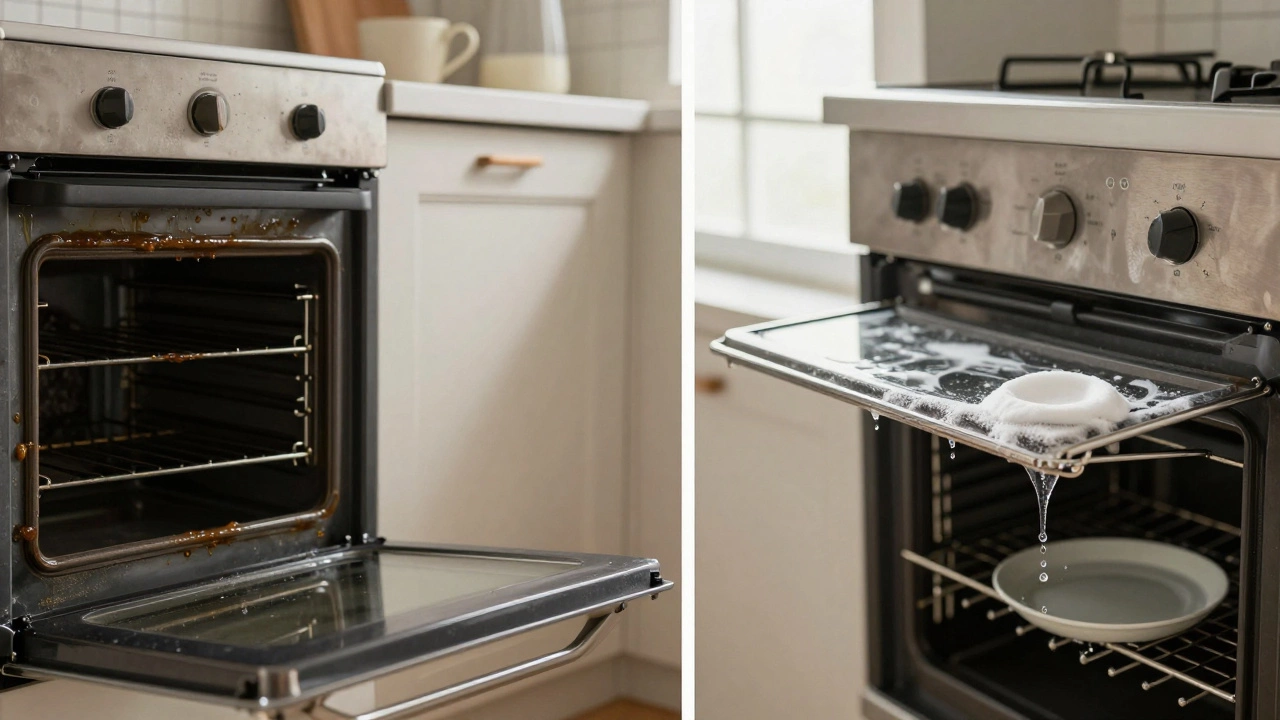
After your oven is spotless, place a small, shallow dish of water on the bottom rack while you bake. It catches drips and prevents them from burning on. Or lay a silicone baking mat on the rack below your food. Both are cheap, reusable, and stop messes before they start. A little prevention saves hours of scrubbing later.
Cleaning your oven with vinegar and baking soda isn’t just about removing dirt. It’s about choosing a method that doesn’t poison your home. You’re not just cleaning an appliance-you’re protecting your air, your family, and your peace of mind.
Can I use apple cider vinegar instead of white vinegar to clean my oven?
No. Apple cider vinegar has a lower acidity level than white distilled vinegar and contains sugars and particles that can leave behind sticky residue. White vinegar is clear, consistent, and evaporates cleanly-making it the only vinegar type recommended for oven cleaning.
Will vinegar damage my oven’s enamel coating?
No. White vinegar is safe for enamel, stainless steel, and most oven interiors when used as directed. Avoid leaving vinegar sitting for days, but a few hours during cleaning won’t harm the surface. Always rinse thoroughly after cleaning.
How long should I let the baking soda and vinegar sit in the oven?
At least 8 hours, preferably overnight. The longer it sits, the more time the baking soda has to break down grease and the vinegar has to activate it. Rushing the process means more scrubbing later.
Can I use this method on self-cleaning ovens?
Yes. In fact, using vinegar and baking soda before running the self-clean cycle reduces smoke and odor. The natural cleaner loosens grime so the high heat doesn’t have to burn it off as aggressively. Just make sure the oven is cool and dry before starting the self-clean function.
Is it safe to clean the oven while it’s still warm?
No. Always let the oven cool completely. Cleaning a warm oven can cause the cleaning solution to evaporate too quickly, reducing its effectiveness. It also increases the risk of burns or steam burns when spraying vinegar.