Window Cleaning Value Calculator
Enter your details below to see if the money saved by doing it yourself outweighs the value of your time and safety.
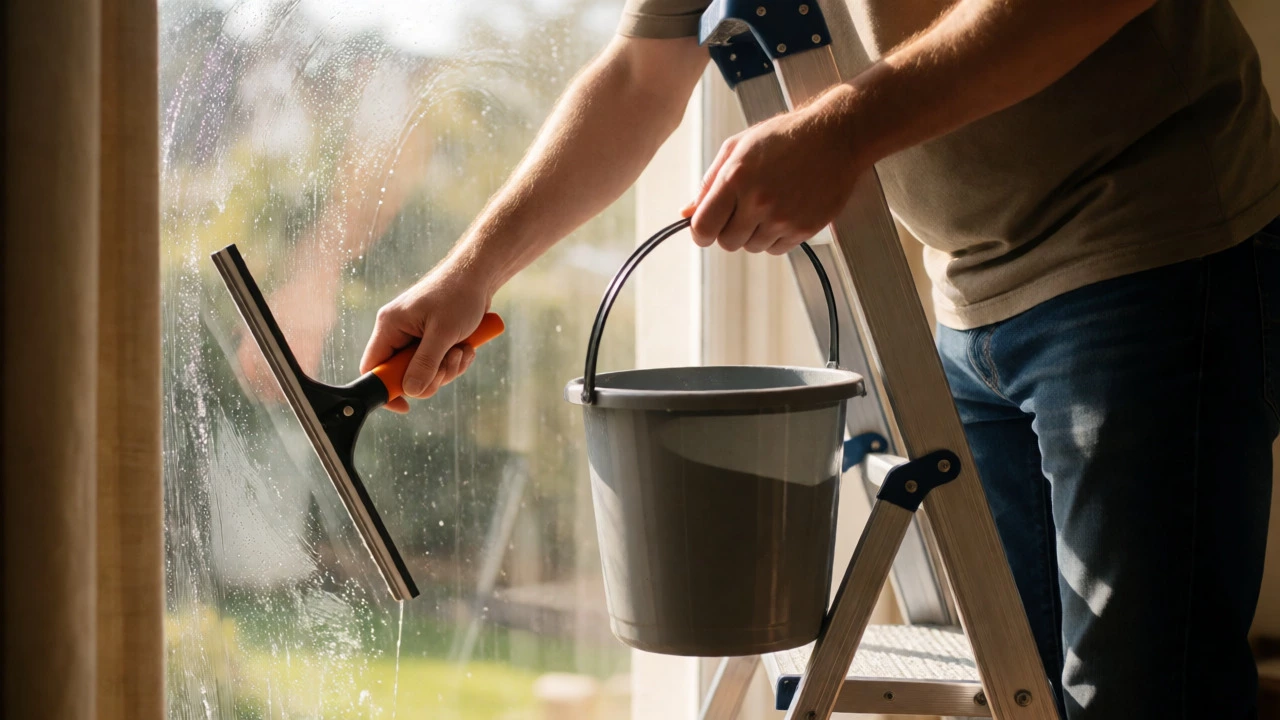
You’re standing on a wobbly step ladder, holding a squeegee in one hand and a bucket of soapy water in the other. Your arms are burning, your shirt is soaked, and you just realized you missed a spot behind the curtain rail. Sound familiar? For many homeowners, cleaning windows feels like a necessary evil-a chore that eats up an entire Saturday morning for results that look great for about two days before rain or pollen ruins them again. The question isn’t whether clean windows look nice; they obviously do. The real question is whether handing over cash to a professional window cleaner is actually worth it, or if you’re just throwing money away.
The answer depends entirely on your situation. If you live in a single-story bungalow with easy access, maybe you don’t need help. But if you have a three-story Victorian terrace, gutters full of moss, or simply hate the risk of falling off a roof, the math changes quickly. Let’s break down the costs, the risks, and the hidden benefits so you can decide if hiring a pro makes sense for your home.
The Real Cost of DIY Window Cleaning
Before you dismiss professional services as too expensive, let’s look at what DIY actually costs you. It’s not just the price of the spray bottle. When you buy a decent squeegee, a high-quality tool used to remove liquid from glass surfaces, a microfiber cloth set, and a specialized glass cleaner, you’re looking at £30-£50 upfront. That seems cheap until you realize those tools wear out. Squeegee blades degrade after a few uses, leaving streaks. Microfibers lose their absorbency if washed incorrectly.
Then there’s the time factor. Cleaning all the windows in a standard three-bedroom semi-detached house takes the average person about 3-4 hours. Do you value your weekend time at zero? Probably not. If you charge yourself even £15 an hour for your labor, that’s £60 worth of effort. Add in the physical toll-shoulder strain, back pain from reaching high panes, and the mental fatigue of focusing on streaks-and the "free" option starts looking pricey.
And let’s be honest: most people aren’t good at it. We’ve all seen those horrible swirl marks left by paper towels or the lint stuck to the corners. Achieving that crystal-clear, invisible finish requires technique and the right equipment. Without training, you’re likely spending twice as long trying to fix mistakes than it would take a pro to do it right the first time.
Safety First: Why Ladders Are Dangerous
This is the biggest reason to hire someone else. According to Health and Safety Executive (HSE) data in the UK, falls from ladders account for thousands of injuries every year. Many of these happen during routine household tasks like painting or cleaning windows. People tend to underestimate how slippery wet glass frames become or how unstable a ladder feels when you’re stretching for that top pane.
Professional cleaners use specific gear designed for safety. They often employ water-fed pole systems, long telescopic poles connected to a purified water tank that allow cleaners to reach high windows from the ground. This means they never leave the ground for second-story windows. No climbing, no balancing acts, no risk of breaking your neck while trying to get into the corner of a dormer window.
If you have a multi-story home, the risk profile shifts dramatically. Climbing a ladder against a sloped roof or navigating a narrow alleyway between houses is hazardous. A professional has insurance. If they drop a bucket on your car or slip, they’re covered. If you fall off your own ladder, that’s on you. For peace of mind alone, many people find the service fee justified.
The Technology Behind Streak-Free Glass
You might wonder why professionals get such perfect results compared to your store-bought cleaner. It comes down to chemistry and physics. Most tap water contains minerals like calcium and magnesium. When this water dries on glass, it leaves behind white spots or streaks known as hard water deposits. Even if you dry the glass perfectly, microscopic mineral residues remain.
Pros solve this using purified water, water that has been filtered through reverse osmosis or deionization to remove impurities. Because this water has virtually no dissolved solids, it doesn’t leave any residue when it evaporates. They scrub the glass with pure water, then rinse it off with more pure water. As it dries naturally, it leaves nothing behind. No wiping, no drying, no streaks.
This method also cleans better. Pure water acts as a natural solvent, lifting dirt and grime more effectively than chemical detergents mixed with hard water. Plus, because there’s no soap film left behind, the glass stays cleaner longer. Dirt doesn’t stick to it as easily because there’s no sticky residue attracting dust particles. This is a key advantage over DIY methods that often leave a thin film of detergent.
| Feature | DIY Approach | Professional Service |
|---|---|---|
| Equipment Cost | £30-£50 initial + replacements | Included in service fee |
| Time Investment | 3-5 hours per session | 30-60 minutes (you do nothing) |
| Safety Risk | High (ladder falls) | Low (ground-based poles) |
| Cleanliness Level | Good (with practice) | Excellent (streak-free guarantee) |
| Longevity | Streaks return quickly | Stays clean longer (no residue) |
| Additional Services | Limited | Gutters, frames, screens included |

Beyond the Glass: Frames, Gutters, and Screens
Here’s something most people forget: windows aren’t just the glass. They include frames, sills, tracks, and insect screens. Over time, these parts accumulate grime, mold, and dead insects. Cleaning frames is tedious work that involves crawling around with old toothbrushes and vinegar solutions. Professionals handle this automatically.
Many window cleaning services now bundle gutter cleaning, the removal of debris such as leaves and twigs from rain gutters into their packages. Since they’re already outside with water and tools, clearing your gutters adds minimal extra time but provides huge value. Clogged gutters cause water damage, ice dams in winter, and attract pests. Doing this yourself requires another set of ladders and a lot of scooping. Hiring a pro who does both saves you from buying separate equipment and tackling another dangerous job.
Insect screens are another hassle. Removing them, washing them, drying them, and reinstalling them without tearing the mesh is tricky. Pros have dedicated brushes and pressure settings that clean screens thoroughly without damaging them. If you have sliding doors or large patio windows, keeping the tracks free of grit prevents the mechanism from jamming. This maintenance extends the life of your windows, potentially saving you replacement costs down the line.
When Is It Definitely Worth It?
Not everyone needs a pro. If you live in a flat with accessible windows, DIY might suffice. But certain scenarios make hiring a professional a no-brainer:
- Multi-Story Homes: Anything above two stories becomes significantly harder and riskier to clean safely.
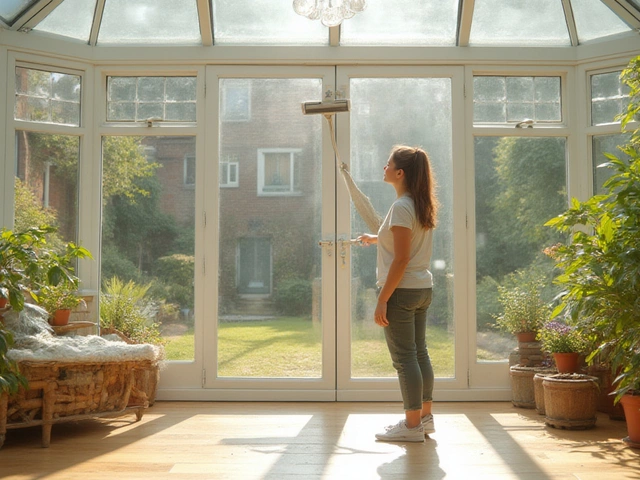
- Large Glass Areas: Floor-to-ceiling windows or conservatories require significant effort and specialized tools to avoid streaks.
- Hard Water Areas: If you live in a region with very hard water (like much of the UK), DIY streaks will appear within days. Purified water is the only reliable fix.
- Busy Schedules: If you work long hours, reclaiming four hours of weekend time is valuable enough to justify the cost.
- Physical Limitations: Arthritis, back problems, or vertigo make ladder work impractical or dangerous.
Consider the frequency too. You don’t need weekly visits. Most homes benefit from quarterly or bi-annual cleaning. Spreading the cost over six months makes it negligible. Think of it as maintenance, similar to servicing your boiler. It keeps the property looking sharp and protects the materials.
How to Choose the Right Cleaner
Not all window cleaners are created equal. Some still use traditional buckets and chamois leather, which works but isn’t as efficient as modern techniques. Look for companies that advertise "pure water" or "RO system" services. These indicate they use the advanced technology mentioned earlier.
Check for insurance. Reputable cleaners carry public liability insurance. Ask to see proof if you’re unsure. Also, check reviews specifically mentioning "streaks" or "damage." A good cleaner will protect your flower beds and patios from runoff. If they’re careless with the surroundings, they’ll likely be careless with your windows.
Pricing varies by location and property size. In Leeds, for example, a typical three-bedroom semi might cost £40-£60 for external windows and frames. Internal windows usually cost extra. Get quotes from local providers and ask what’s included. Does it cover gutter clearance? Frame cleaning? Screens? Clarifying this upfront avoids surprises.
Frequently Asked Questions
How often should I have my windows professionally cleaned?
For most residential properties, twice a year is sufficient-once in spring to remove winter grime and once in autumn before the holidays. Homes near busy roads, construction sites, or trees may need quarterly cleaning due to increased dust and sap buildup.
Do professional window cleaners use chemicals?
Most modern professionals use pure water systems that require no harsh chemicals. They rely on filtration to remove impurities, allowing the water itself to clean and dry streak-free. Some may use mild eco-friendly detergents for heavy grease or bird droppings, but generally, it’s a chemical-light process.
Is it cheaper to clean windows myself?
Initially, yes, because you don’t pay a service fee. However, when you factor in equipment costs, replacement parts, your time, and the likelihood of needing to redo the job due to streaks, the difference shrinks. For larger or higher properties, professional cleaning is often more cost-effective overall.
What happens if it rains after cleaning?
Rain won’t ruin professionally cleaned windows. Because pure water leaves no residue, raindrops simply run off cleanly. Unlike DIY jobs where detergent films attract dirt, professionally cleaned glass sheds water naturally. If anything, light rain can help keep them looking fresh longer.
Can they clean inside and outside?
Yes, but this is usually charged separately. External cleaning is standard. Internal cleaning requires access to the home and careful handling of furniture. Many people opt for external-only cleaning regularly and schedule internal cleaning less frequently, perhaps once a year.
Final Verdict
So, are they worth it? If you have single-story, easy-access windows and enjoy the satisfaction of a job well done, stick with DIY. But if you want guaranteed clarity, safety, and time back in your life, hiring a professional is a smart investment. The combination of purified water technology, ground-based safety systems, and comprehensive care for frames and gutters offers a level of quality and convenience that DIY rarely matches. For most homeowners, especially those with multi-story properties, the small monthly cost translates into big returns in comfort and curb appeal.