Oven Rack Cleaning Safety Quiz
How much do you know about oven rack cleaning?
Test your knowledge about safe cleaning methods and avoid costly mistakes
Question 1: Why won't dishwasher pods effectively clean oven racks?
Question 2: What dangerous chemical is released when dishwasher pods melt in an oven?
Question 3: What is the recommended safe method for cleaning oven racks?
Your Results
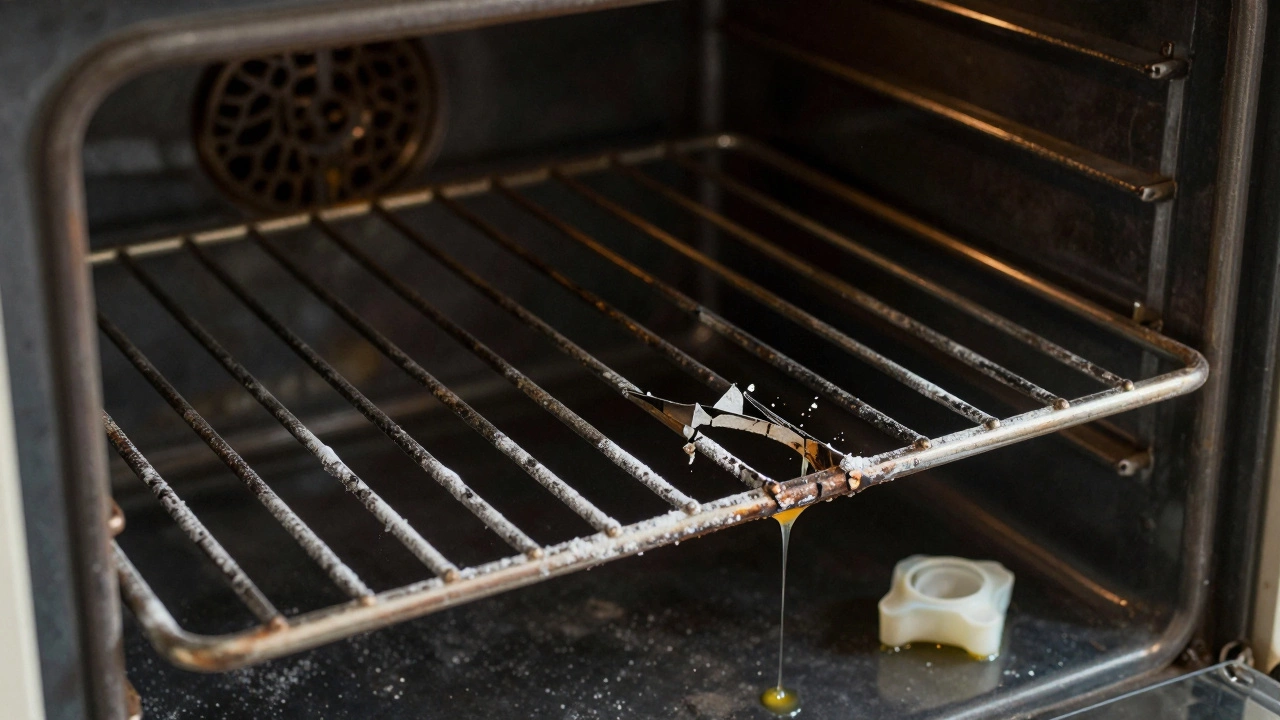
Ever tossed a dishwasher pod into the oven hoping it would magically clean those greasy, baked-on racks? You’re not alone. Many people try this shortcut because dishwasher pods are powerful, cheap, and easy to find. But here’s the truth: dishwasher pods won’t safely or effectively clean oven racks-and using them this way could damage your oven, your racks, or even your home.
Why People Think Dishwasher Pods Work on Oven Racks
Dishwasher pods pack a punch. They contain strong alkalis like sodium hydroxide, enzymes that break down grease, and surfactants that lift grime. Oven racks? They’re coated in years of baked-on food, grease, and carbonized residue. It’s easy to assume: if it works on plates and glasses, why not on metal racks? The logic seems solid. But ovens and dishwashers operate in completely different environments. Dishwashers use hot water (130°F-160°F), high-pressure sprays, and a rinse cycle that flushes away residue. Ovens? They’re dry, enclosed spaces with no water flow. A dishwasher pod sitting on a rack won’t dissolve properly. It’ll just sit there, melting into a sticky, corrosive sludge.The Real Risk: Corrosion and Damage
Dishwasher pods are designed for stainless steel and porcelain, not the bare metal of oven racks. Most oven racks are coated with a thin layer of enamel or chrome to resist heat and rust. When you leave a pod on the rack and turn on the oven-even at low heat-the pod melts and releases sodium hydroxide, a caustic chemical that eats through metal. Real-world damage? People have reported:- Peeling enamel on oven racks
- Deep pitting and rust spots
- White, chalky residue that won’t wipe off
- Smells so bad the oven smells like a chemical spill for weeks
What Actually Works to Clean Oven Racks
Forget the pod. Here’s what works-without risking damage:- Remove the racks from the oven.
- Fill your bathtub or a large plastic bin with hot water and 1/2 cup of dish soap (like Dawn or Ajax).
- Soak the racks overnight. Grease loosens slowly-don’t rush it.
- The next day, scrub with a non-scratch sponge or nylon brush. Baking soda paste (1/4 cup baking soda + 2 tbsp water) helps lift stubborn spots.
- Rinse thoroughly, dry with a towel, and put them back.

What About Commercial Oven Cleaners?
Spray-on oven cleaners (like Easy-Off) are stronger than dish soap, but they’re made for ovens-not dishwashers. They contain lye or other caustic agents that work in enclosed, dry heat. But even these require ventilation, gloves, and careful rinsing. And they’re not meant for soaking racks. Stick to the bathtub soak method. It’s gentler, just as effective, and won’t leave toxic fumes in your kitchen.Why the Dishwasher Pod Hack Is a Bad Idea
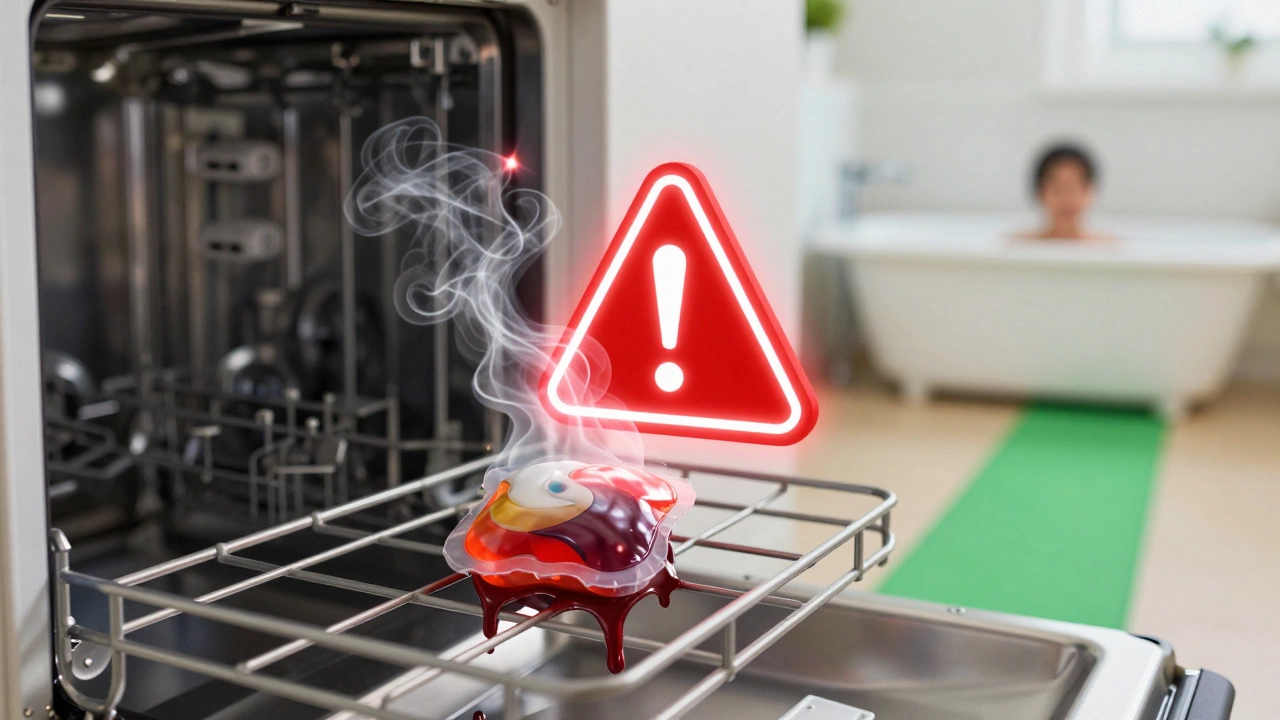
It’s not just ineffective-it’s dangerous. Dishwasher pods are concentrated. One pod has enough cleaning power to damage porcelain, plastic, or metal if misused. When you heat it inside an oven, you’re not activating a cleaning cycle. You’re triggering a chemical reaction that can:- Release toxic fumes
- Melt plastic parts near the rack
- Set off smoke alarms
- Leave behind residue that contaminates food
What to Do If You Already Tried It
If you’ve already placed a pod on your rack and turned on the oven:- Turn off the oven immediately.
- Open windows and turn on the exhaust fan.
- Let the oven cool completely.
- Wear gloves and goggles. Use paper towels to scrape off the melted residue.
- Wipe the rack with white vinegar (it neutralizes alkali). Rinse with water.
- If the rack looks pitted, discolored, or warped, replace it. It’s not worth the risk.