Oven Cleaning Calculator
Get Your Custom Cleaning Plan
Calculate the exact amounts of baking soda, water, and vinegar needed for your oven cleaning.
Your Cleaning Plan
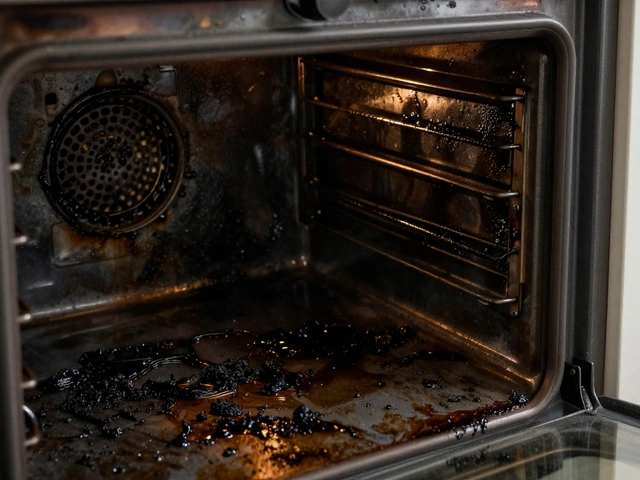
There’s no getting around it-oven grease builds up fast. Burnt-on food, splattered grease, and caramelized sugar turn your oven into a sticky, smelly mess. If you’re staring at a blackened interior and wondering how to clean it without spending hours scrubbing, you’re not alone. The fastest way to clean the inside of an oven isn’t about buying the strongest chemical spray or waiting days for a self-cleaning cycle. It’s about using the right method that cuts through grime in under an hour, with stuff you probably already have in your cupboard.
Why the self-cleaning cycle isn’t the fastest option
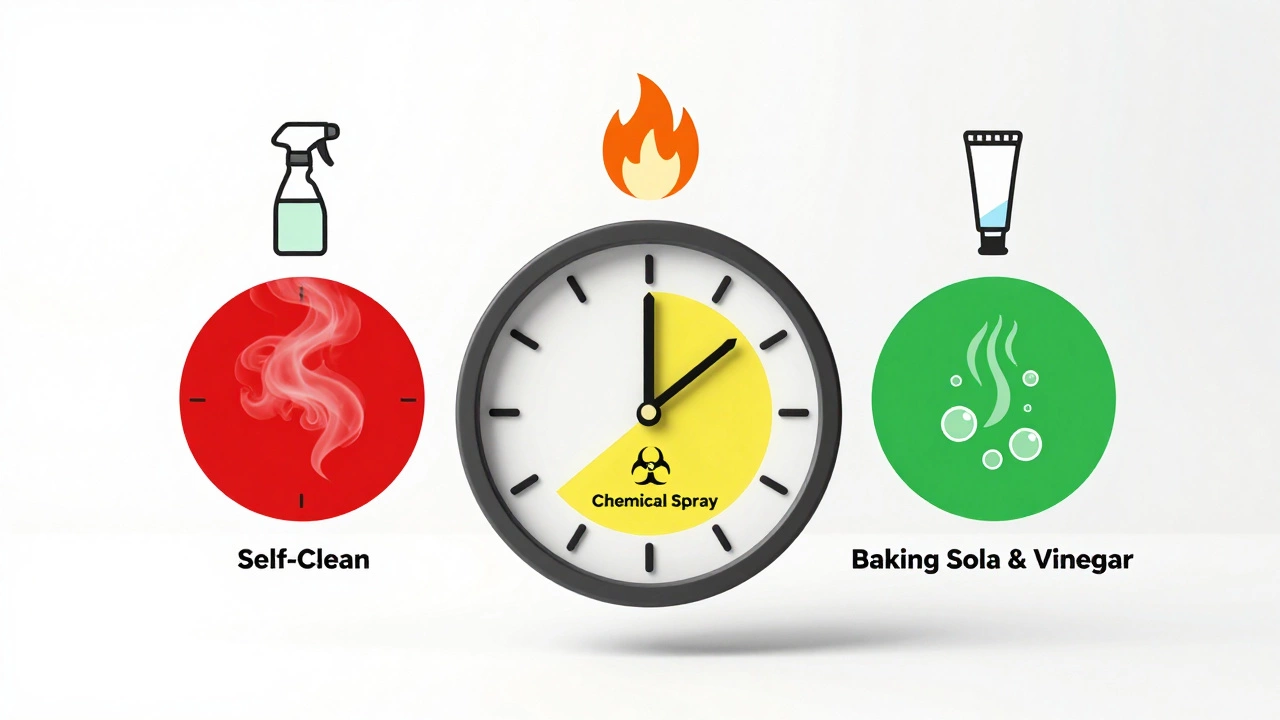
Most modern ovens have a self-cleaning mode. Sounds perfect, right? You press a button and walk away. But here’s the catch: it takes 2 to 4 hours. Plus, it burns off grease at temperatures over 900°F, which fills your kitchen with smoke and smells like a fire drill. If you’ve got kids, pets, or a sensitive respiratory system, you’re better off skipping it. And if you’re in a hurry? That’s not fast. That’s a full afternoon lost.
The baking soda and vinegar method: proven, fast, and safe
The fastest, most effective way to clean an oven without harsh chemicals is a paste made from baking soda and water. It’s cheap, non-toxic, and works better than most store-bought sprays. Here’s how to do it in under 60 minutes:
- Remove oven racks and soak them in warm soapy water. You’ll clean them separately.
- Mix 1/2 cup of baking soda with 2-3 tablespoons of water to make a thick paste. It should hold its shape like toothpaste.
- Wear gloves and spread the paste evenly over the interior surfaces-walls, floor, door. Avoid the heating elements and the oven light. Don’t worry about the glass door; you’ll clean that later.
- Let it sit for at least 30 minutes. For heavy buildup, leave it overnight. But even 30 minutes is enough to loosen most grime.
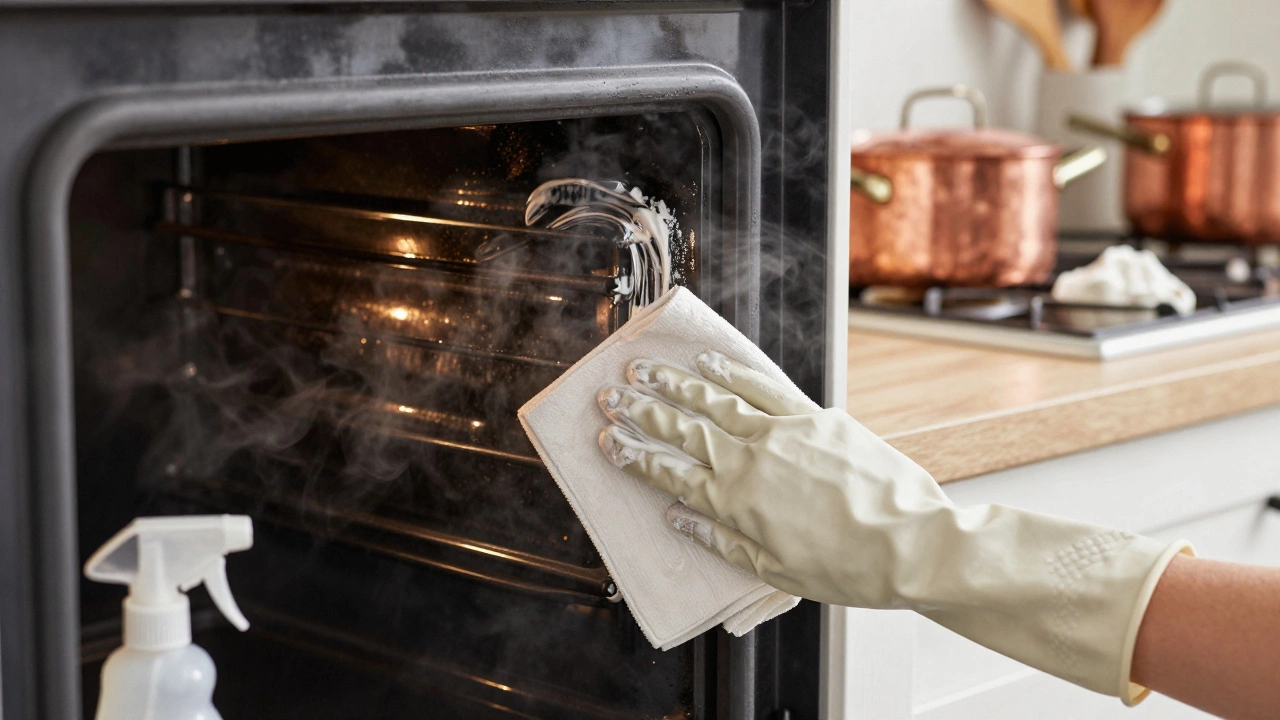
- After the waiting time, wipe away the paste with a damp microfiber cloth. The grime should lift off easily. For stubborn spots, spray a little white vinegar on the area. It fizzes and breaks down the remaining residue.
- Wipe everything down again with clean water and dry with a towel.
This method takes about 15 minutes of active work. The rest is waiting. And unlike chemical cleaners, there’s no toxic fumes, no plastic packaging, and no risk of damaging the oven’s finish.
What about oven cleaner sprays?
Commercial oven cleaners like Easy-Off or Mr. Muscle work fast-sometimes in 10-15 minutes. But they come with big downsides. They contain lye (sodium hydroxide), which can burn skin and damage the oven’s enamel if left too long. You’ll need to ventilate the room, wear goggles, and rinse thoroughly. One misstep and you’re left with a corroded interior or a lingering chemical smell that won’t go away.
If you’re in a real rush and you’ve got a lightly soiled oven, a spray might work. But for anything beyond light grease, baking soda beats it. It’s safer, cheaper, and just as effective when given a little time.
Cleaning the oven door and glass
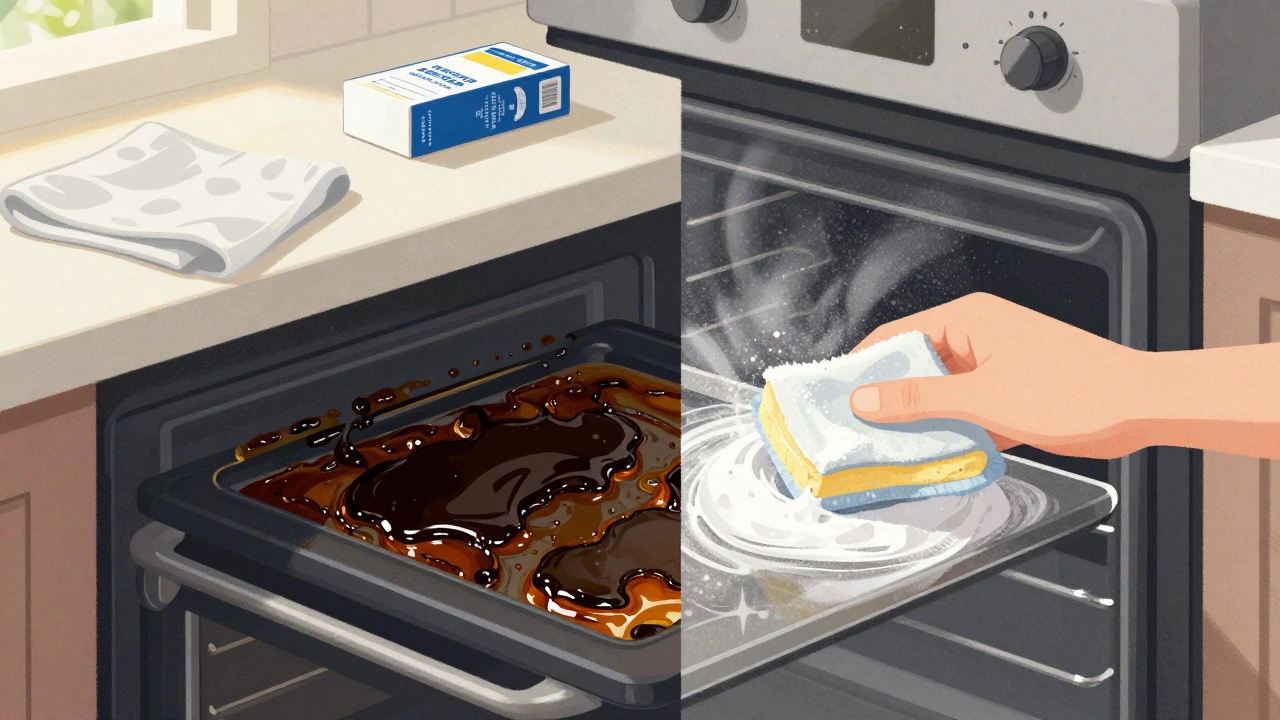
The oven door is often the worst offender. Grease splatters bake onto the glass and turn into a hazy, sticky film. To clean it:
- Make a paste of baking soda and water, just like before.
- Apply it to the inside of the glass door.
- Let it sit for 15-20 minutes.
- Wipe with a damp cloth, then spray vinegar on any streaks.
- Buff dry with a clean microfiber towel.
For extra stubborn spots, use a plastic scraper (not metal!) to gently lift off baked-on bits. You’ll be surprised how much comes off without scratching.
Don’t forget the racks
Oven racks collect the same gunk as the interior. After soaking them in hot, soapy water for 30 minutes, scrub with a non-scratch sponge. For heavy grease, dip a cloth in baking soda paste and rub it on the racks. Rinse well and dry completely before putting them back. Wet racks can cause rust and leave marks on the oven floor.
Prevention: stop the mess before it starts
The fastest way to clean your oven is to avoid needing to clean it in the first place. Here’s how:
- Line the bottom of your oven with aluminum foil to catch drips. Replace it every few weeks.
- Use baking trays under casseroles, roasts, and anything that might bubble over.
- Wipe spills as soon as the oven cools. A quick wipe with a damp cloth prevents them from hardening.
- Run the oven’s fan during cooking to reduce smoke and grease buildup.
These small habits cut cleaning time by 70%. A quick wipe after cooking takes 30 seconds. A deep clean takes an hour. Which sounds better?
What to avoid
Some shortcuts sound good but ruin your oven:
- Don’t use steel wool or metal scrapers on enamel surfaces. They scratch permanently.
- Avoid bleach. It reacts with oven residues and creates toxic fumes.
- Never use abrasive powders like Comet on the inside. They dull the finish.
- Don’t spray cleaner on heating elements or sensors. It can fry the electronics.
Stick to baking soda, vinegar, and microfiber cloths. They’re gentle, effective, and won’t cost you a fortune.
How often should you clean your oven?
If you cook regularly-say, 3-4 times a week-clean the inside every 3 months. For light use, once every 6 months is fine. But if you notice smoke when heating the oven, or a strong smell when you turn it on, that’s your cue. Don’t wait until it’s black.
Think of it like brushing your teeth. A quick wipe after each use keeps the deep clean from becoming a chore.
Can I use vinegar alone to clean my oven?
No, vinegar alone won’t cut through heavy grease. It’s great for rinsing and deodorizing, but it lacks the abrasive power to lift baked-on food. Always pair it with baking soda paste for best results.
Is baking soda safe for self-cleaning ovens?
Yes. Baking soda is non-corrosive and won’t damage the enamel coating used in self-cleaning ovens. In fact, many manufacturers recommend it for spot cleaning between cycles. Just avoid getting it on the heating elements.
How long does the baking soda method take?
About 60 minutes total. You spend 15 minutes applying the paste, then wait 30-60 minutes for it to work, then 15 minutes wiping it off. You can leave the paste overnight if you’re not in a rush-it makes scrubbing even easier.
Why does vinegar fizz when I spray it on baking soda?
The fizzing is a chemical reaction between the acid in vinegar and the alkaline baking soda. It breaks down grease and lifts residue without scrubbing. It’s not just noise-it’s cleaning power.
Can I use this method on a gas oven?
Yes. The same baking soda paste works on gas, electric, and induction ovens. Just make sure to cover or avoid the burner ports and igniters. Don’t let paste get into the gas lines or electrical components.
Final tip: keep it clean, keep it easy
You don’t need fancy tools or expensive cleaners to keep your oven spotless. The fastest way to clean it is the simplest: baking soda, water, vinegar, and a little patience. Do it regularly, and you’ll never face another nightmare scrub session again. Your kitchen will smell better, your oven will last longer, and you’ll save money on cleaning products. That’s not just cleaning-that’s smart living.