Window Cleaning Method Estimator
Estimate the difference in service time and safety profile for your property based on the number of windows and floor height.
Property Details
Method Comparison
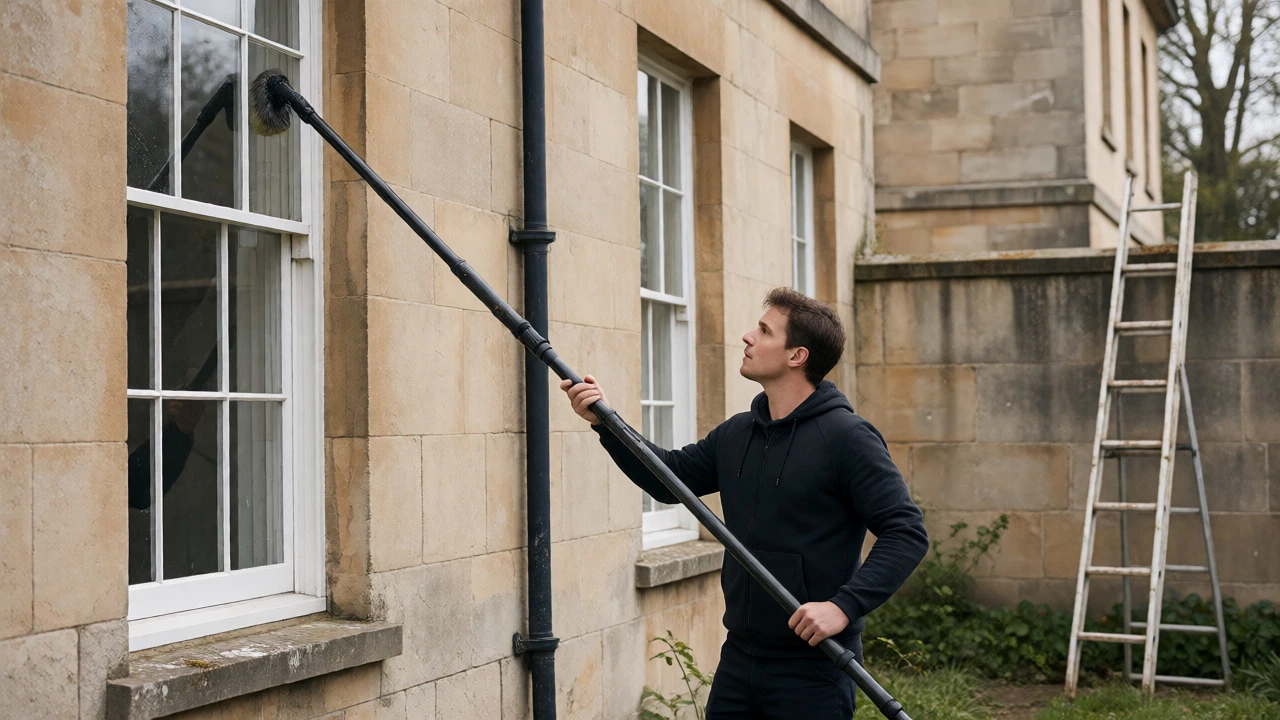
Live EstimateYou’re standing in your garden in Bath, watching a cleaner work on your third-floor sash windows. They aren’t balancing precariously on an aluminum extension ladder. They aren’t even touching the glass with a sponge. Instead, they’re holding a long, carbon-fiber pole that looks like it belongs to a fishing enthusiast. You might wonder: why don't window cleaners use ladders anymore?
The short answer is efficiency and safety. The longer answer involves a shift in industry standards driven by health regulations, insurance costs, and a piece of tech called the water-fed pole system. It’s not just about avoiding falls; it’s about delivering a streak-free shine using nothing but purified water. Let’s break down exactly how this works, why the ladder became obsolete for most residential jobs, and what you should expect from a modern service.
The Rise of the Water-Fed Pole System
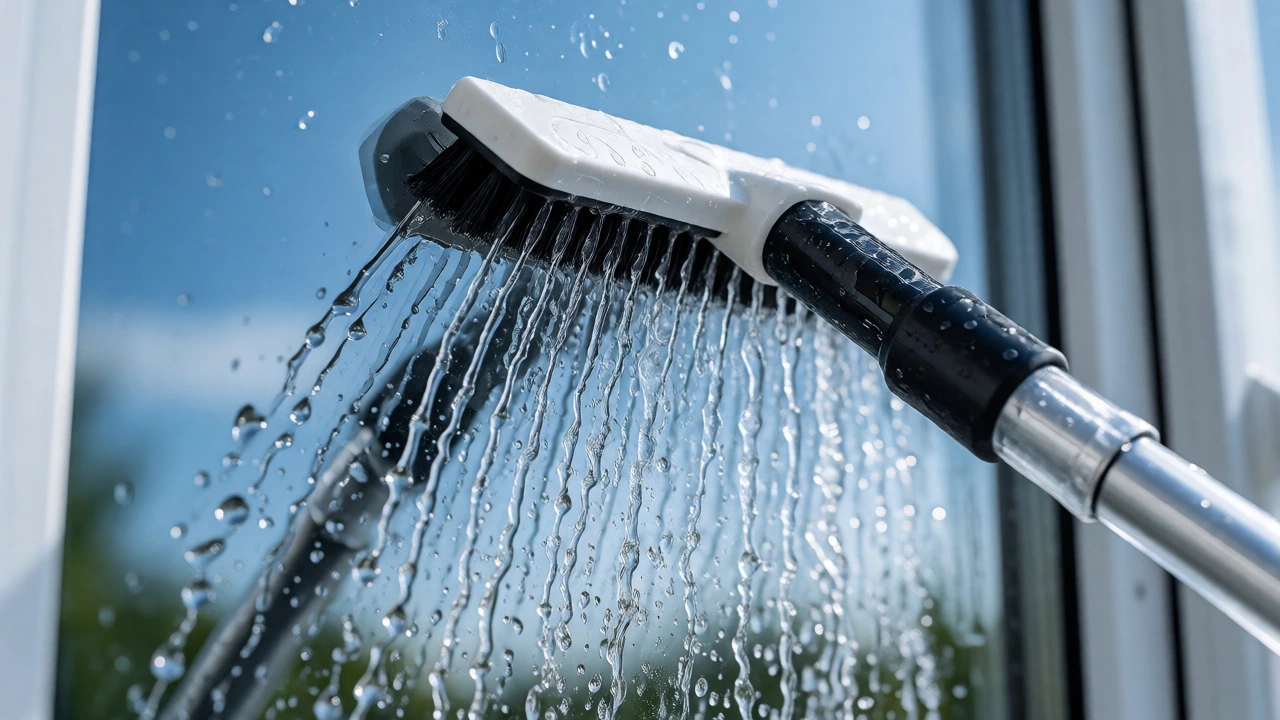
For decades, the standard toolkit was simple: a bucket, a chamois leather, a squeegee, and a ladder. If the window was high, you climbed up. If it was higher, you got nervous. Today, the primary tool is the water-fed pole, also known as a reach-and-wash system. This is a telescopic pole connected to a hose that delivers de-ionized water directly to a brush head at the tip.
How does water clean without soap? That’s the part that confuses people. Tap water contains minerals like calcium and magnesium. When tap water dries on glass, those minerals are left behind as white spots or streaks. To fix this, traditional cleaners had to dry the glass manually with a cloth or squeegee. The water-fed system uses a filtration unit (usually reverse osmosis or resin tanks) to strip these minerals out before the water hits the glass. Because the water is "pure," it acts as a magnet for dirt and dust. As it evaporates, it leaves absolutely no residue behind. No drying required. No streaks. Just clear glass.
Safety Regulations Changed the Game
If you live in the UK, you’ve likely heard of the Working at Height Regulations 2005. Before this law came into force, using a ladder was common practice, even if it felt risky. After 2005, the hierarchy of control changed. Employers must avoid working at height where possible. If they can’t avoid it, they must use equipment that prevents falls. A ladder is considered the last resort because it offers no fall protection.
For professional cleaners, this meant a massive operational headache. Setting up a ladder takes time. Securing it takes more time. Inspecting it for defects is mandatory. And if a cleaner slips, the insurance claim is a nightmare. By switching to poles, professionals eliminate the risk of falling entirely. They stand firmly on the ground. This isn’t just about compliance; it’s about longevity. A cleaner who spends eight hours climbing ladders every day will eventually suffer back issues or knee problems. Standing on the ground is sustainable for a career.
Speed and Efficiency: The Business Case
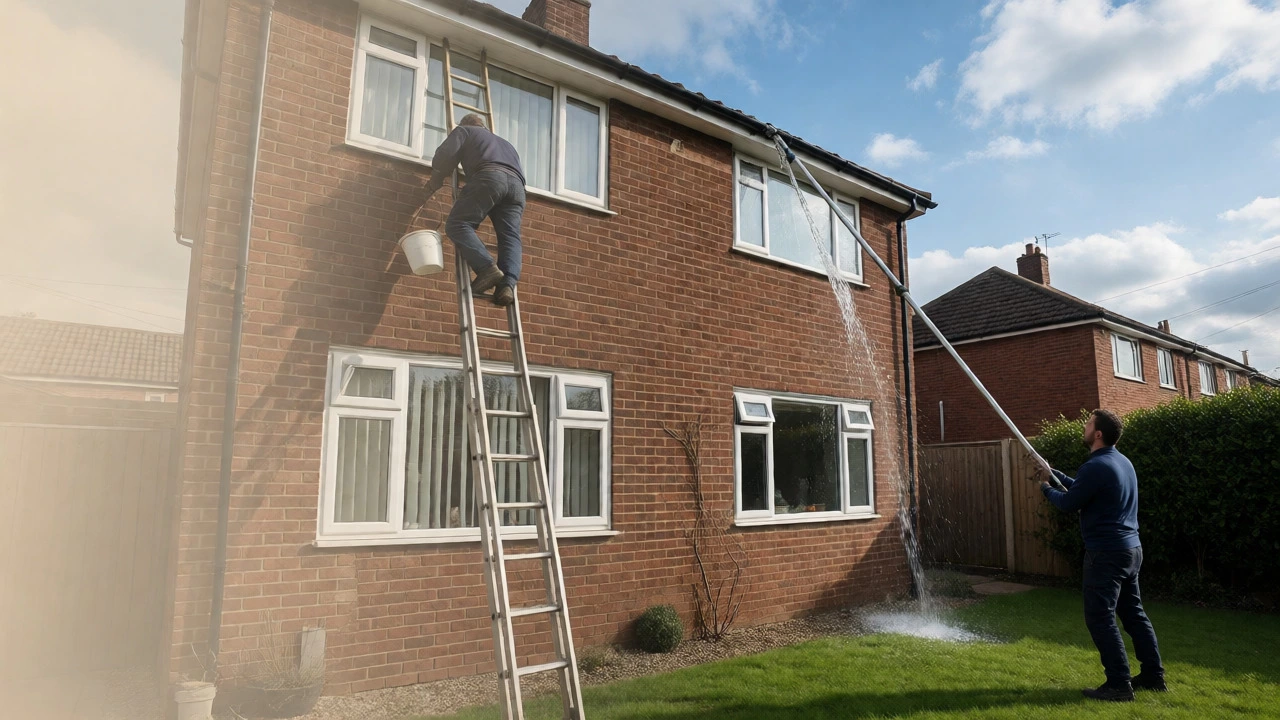
Time is money. Think about the logistics of a ladder job. You drive to the house, unload the van, set up the ladder, climb up, clean one pane, climb down, move the ladder, climb up again. For a typical semi-detached house with six upstairs windows, that’s a lot of vertical movement.
With a water-fed pole, the process is streamlined. The cleaner sets up the filtration tank once. They extend the pole to the required length-some poles reach up to 70 feet-and start scrubbing. They can clean multiple windows in a row without moving their feet. Once the dirt is agitated, they rinse it off. The water runs off the glass, taking the grime with it. There’s no second pass with a squeegee. There’s no waiting for the ladder to be repositioned. What used to take an hour now takes fifteen minutes.
This speed allows cleaners to visit more properties per day. It also means they can offer competitive pricing while maintaining high margins. If you’re paying for a service, you’re benefiting from this efficiency. You get a better result faster, often for less than the old-school method would have cost when factoring in labor hours.
When Do We Still Need Ladders?
Does this mean ladders are extinct? Not quite. There are specific scenarios where a pole simply won’t cut it. If you have very narrow alleys or tight courtyards where the angle of approach is blocked, a pole might not reach effectively. In these cases, a technician might still need to climb to access awkward angles or internal frames that require manual manipulation.
Also, consider heritage buildings or listed structures in cities like Bath. Sometimes, the stone mullions or intricate leaded lights require careful hand-cleaning that a stiff brush head might damage. Here, a skilled cleaner might use a small step ladder to reach the lower panes and use a traditional method for delicate sections, while using the pole for the main glass surfaces. But for 90% of modern domestic homes, the ladder is gathering dust in the garage.
Comparing Old vs. New Methods
To visualize why the shift happened, let’s look at the key differences between traditional cleaning and the modern water-fed approach. This table highlights the practical implications for both the worker and the homeowner.
| Feature | Traditional Method (Ladder & Squeegee) | Modern Method (Water-Fed Pole) |
|---|---|---|
| Safety Risk | High - Fall hazard from height | Low - Work performed from ground level |
| Cleaning Agent | Detergent + Tap Water | Pure De-Ionized Water |
| Drying Process | Manual wiping/squeegeeing required | Air dry (No residue left) |
| Reach Limit | Limited by ladder height (approx. 2-3 stories) | Up to 4-5 stories (with specialized gear) |
| Setup Time | Slow - Moving and securing ladders | Fast - One-time setup of filtration |
| Streak-Free Guarantee | Dependent on skill and weather | Guaranteed by chemistry (no minerals) |
What Should You Look for in a Cleaner?
Now that you know the tech, how do you hire the right person? Not everyone has upgraded their kit. Some older operators still cling to the bucket-and-squeegee method because it’s familiar. While they can still do a good job, they lack the speed and safety advantages of the modern approach.
- Ask about the water source: A reputable pro will mention "pure water" or "de-ionized water." If they only talk about "special detergent," they might still be using tap water and risking streaks.
- Check for insurance: Ensure they have public liability insurance that covers work at height, even if they use poles. Accidents happen, and you want to be covered.
- Look for certification: Membership in bodies like the Federation of Master Builders or local trade associations often indicates adherence to current safety standards.
- Observe the technique: Watch them work. Are they struggling with a heavy ladder? Or are they smoothly extending a lightweight carbon fiber pole? The latter suggests they are invested in modern, efficient tools.
Another red flag is poor maintenance of the filtration system. Pure water systems rely on filters that need regular changing. If the filters are clogged, the water isn’t actually pure, and you’ll end up with spots anyway. Ask how often they change their resin beds. A serious operator changes them based on usage metrics, not just whenever they remember.
The Environmental Angle
Beyond safety and speed, there’s an eco-friendly bonus here. Traditional cleaning requires detergents. These chemicals run off the windows, flow into gutters, and eventually enter the soil or waterways. While modern biodegradable soaps exist, they still add chemical load to the environment.
The water-fed system uses zero chemicals. It relies entirely on physical agitation (the brush) and the chemical property of pure water (its ability to absorb ions). For homeowners in sensitive ecological areas or those trying to reduce their household chemical footprint, this is a significant selling point. It’s a cleaner way to clean, literally and figuratively.
Furthermore, the energy consumption is lower. You don’t need to heat water for buckets. You don’t need fuel for a generator if you’re using battery-powered pumps (which many modern vans now carry). The carbon footprint of a pole-based job is significantly smaller than a traditional one.
Troubleshooting Common Concerns
Some homeowners worry that poles might scratch the glass. Modern brush heads are made from soft, non-abrasive bristles designed specifically for glazing. Unless the cleaner is dragging grit across the pane with excessive force, scratches are rare. In fact, because they don’t press hard against the glass (unlike a squeegee which requires firm pressure), the risk of accidental impact damage is arguably lower.
Another concern is water runoff. Yes, the water runs down the wall. However, since it’s pure water, it doesn’t leave soap scum marks on brickwork or render. It just evaporates. If you have very porous stone that stains easily, mention this to your cleaner beforehand. They can adjust the pressure or use a drip tray, though usually, pure water is gentle enough for most exterior finishes.
Finally, what about winter? Can you clean windows when it’s freezing? With traditional methods, no-the water freezes instantly, creating ice hazards. With water-fed poles, you can often still work in cold conditions because the water is applied under pressure and rinses away quickly. However, if temperatures drop below -5°C, most pros will pause operations to prevent freezing in the hoses and pumps.
Do water-fed poles really clean better than squeegees?
Yes, primarily because they eliminate mineral deposits. Tap water contains calcium and magnesium which cause streaks when dried. Pure water from a filtration system leaves no residue. Additionally, the agitation from the brush head lifts dirt from the frame and glass more thoroughly than a squeegee alone, which mostly wipes the surface.
Is it safe to use a water-fed pole near electrical wires?
Generally, yes, provided the pole is made of fiberglass or carbon fiber, which are non-conductive. However, cleaners are trained to maintain a safe distance from overhead lines. Always inform your cleaner if there are low-hanging wires or fixtures near the windows so they can plan their approach carefully.
Can water-fed poles clean inside windows too?
Typically, no. Water-fed poles are designed for external cleaning where runoff is acceptable. Inside, you don’t want water running down the walls or onto carpets. Interior windows are usually cleaned with traditional methods or specialized handheld microfiber kits that use minimal liquid.
Why do some cleaners still use ladders?
Some situations require direct access, such as cleaning complex architectural details, accessing internal ledges, or working in tight spaces where a pole cannot maneuver effectively. Additionally, some older technicians may prefer traditional methods due to familiarity or specific client requests for detailed hand-polishing.
Does pure water cleaning remove salt spray or sea air residue?
Yes, pure water is highly effective at removing salt and pollution residues because it lacks minerals that compete with the dirt particles. The pure water attracts and holds the contaminants until they are rinsed away. For coastal properties, this method is particularly beneficial as it prevents the salty buildup that causes etching over time.