Driveway Pre-Treatment Selector
Select your primary driveway issue below to get the recommended spray solution, required dwell time, and essential safety tips.
You’ve got the pressure washer ready in the garage, hose connected, and you’re itching to blast away years of grime from your driveway. But if you just point that wand at the concrete and pull the trigger, you’re likely wasting time and water. Why? Because high-pressure water alone often fails to lift deep-seated stains like oil, tire marks, or black algae. It pushes dirt around rather than removing it. The secret to a pristine, professional-looking driveway isn’t just power-it’s chemistry. Knowing exactly what to spray on your driveway before pressure washing transforms a two-hour struggle into a satisfying thirty-minute job.
| Stain Type | Recommended Spray | Dwell Time | Safety Note |
|---|---|---|---|
| General Grime/Dirt | Mixed Detergent (Soap) | 5-10 mins | Low risk; safe for most surfaces. |
| Black Algae/Mold | Sodium Hypochlorite (Bleach) Mix | 10-15 mins | Kills roots; rinse thoroughly near plants. |
| Oil/Grease | Specialized Degreaser | 15-20 mins | Agitate with brush for best results. |
| Rust/Iron Oxide | Oxalic Acid or Iron Remover | 5-10 mins | Do not let dry; neutralize after rinsing. |
| Green Moss | Iron Sulfate or Moss Killer | 24-48 hours | Best applied when rain is expected. |
Why Pre-Treating Your Driveway Matters
Think of pressure washing as the muscle, but the pre-treatment spray as the brain. Without the right chemical agent, you are essentially trying to scrub a greasy pan with just hot water and elbow grease. You might get some of it off, but the stubborn residue stays put. When you apply a proper surface cleaner solution before hitting the concrete with water, you break down the molecular bonds holding the dirt to the surface. This allows the water jet to lift the debris away effortlessly. Furthermore, using the correct spray protects your driveway’s integrity. Blasting hard enough to remove stains without chemicals can erode the top layer of concrete or damage pavers. A gentle chemical reaction followed by moderate pressure preserves the lifespan of your hardscaping. It also saves you money on fuel and water bills because you spend less time hovering over the same spot. In Sheffield, where damp weather encourages moss and algae growth, skipping this step often means the green stuff returns within weeks because the spores weren’t killed, only washed away.
The All-Purpose Hero: Household Detergent Mix
For routine maintenance-say, once or twice a year-you don’t need expensive industrial chemicals. A simple mix of household detergent and water works wonders on general road film and dust. Most homeowners already have what they need in their kitchen cupboard. Aim for a ratio of about one part detergent to ten parts water if you are using a standard garden sprayer. If your pressure washer has a downstream injector (which draws soap in after the pump), follow the manufacturer’s dilution instructions, usually closer to 1:20. When choosing a detergent, look for pH-neutral cleaners. Harsh acids or alkalis can etch certain types of stone or discolor colored concrete. For plain grey concrete, a slightly alkaline degreasing soap helps cut through traffic film. Apply this mixture evenly across the driveway, starting from the bottom and working up so you don’t walk through wet soap. Let it sit for five to ten minutes. Do not let it dry out completely. If it dries, it becomes sticky and harder to rinse. Keep the surface damp with a light mist of water if the sun is beating down.
Killing Black Streaks: The Bleach Solution
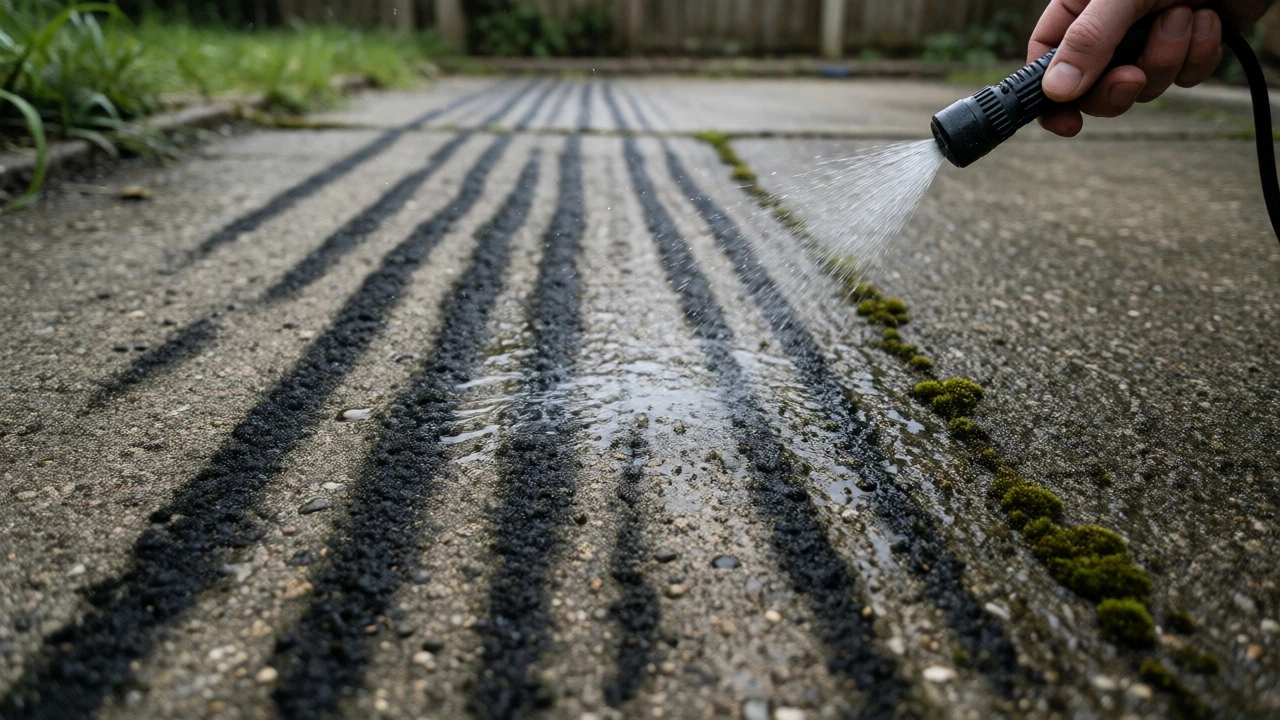
If your driveway looks like it has zebra stripes running down it, you are dealing with Gloeocapsa magma , a type of cyanobacteria commonly known as black streaks. These organisms feed on limestone fillers in asphalt shingles and concrete, leaving behind dark, unsightly trails. Water pressure alone rarely removes them because they are embedded in the surface pores. To kill them, you need sodium hypochlorite, commonly found in household bleach. A common DIY recipe involves mixing three parts water with one part bleach. Add a small amount of surfactant (like dish soap) to help the solution stick to the vertical or angled surfaces. Spray this generously on the affected areas. The key here is dwell time. Unlike detergent, bleach needs time to penetrate the cell walls of the algae. Give it ten to fifteen minutes. You will notice the black streaks turning brown or fading as the organisms die. Rinse thoroughly with low pressure first to avoid splashing bleach onto nearby lawns or flower beds. High pressure can atomize the bleach, drifting it onto sensitive plants. Always wear gloves and eye protection when handling chlorine-based solutions.
Tackling Oil Spots: Specialized Degreasers
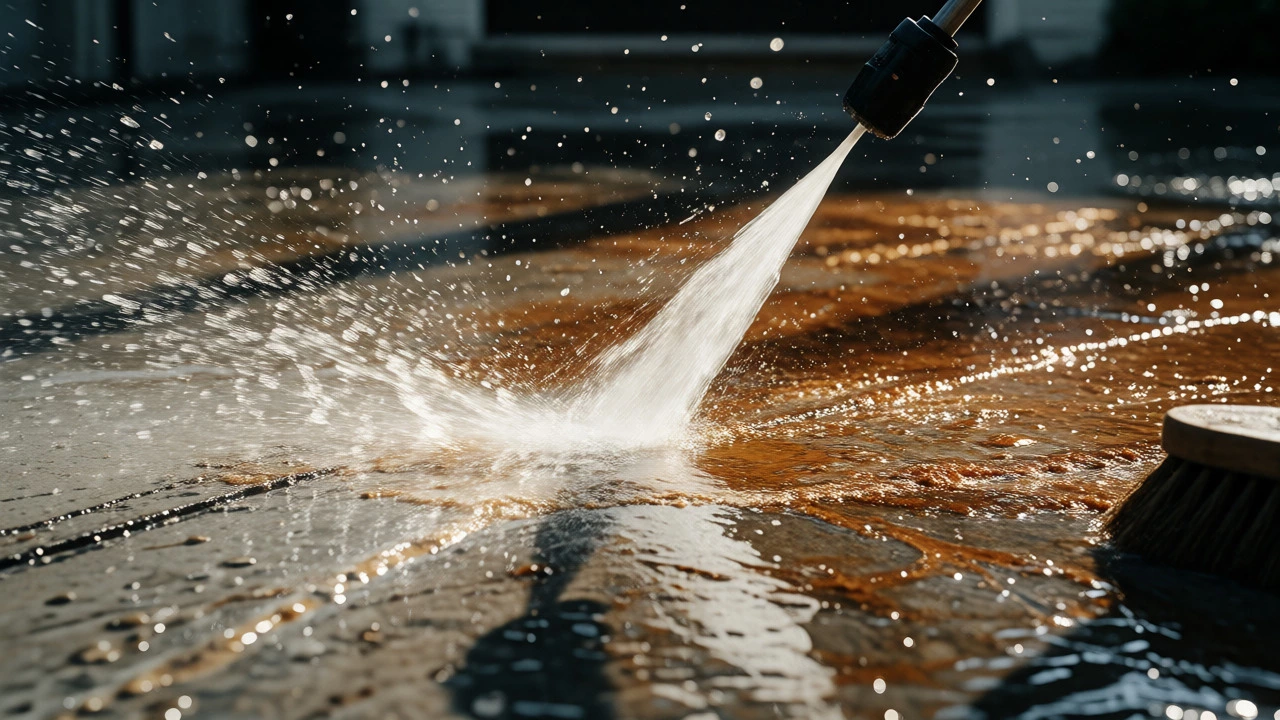
Nothing ruins the look of a clean driveway like a fresh oil stain from a leaking car seal. These spots are hydrophobic, meaning they repel water. That’s why water beads up on them during washing. To tackle oil, you need a solvent-based or strong alkaline degreaser specifically designed for concrete. Products containing trisodium phosphate (TSP) or modern eco-friendly alternatives work well. Apply the degreaser directly to the stain. Use a stiff-bristled push broom or a handheld deck brush to agitate the area. This mechanical action helps the cleaner penetrate deep into the concrete pores where the oil has soaked in. Let it sit for at least fifteen minutes. For old, set-in stains, you might need to repeat this process twice. After agitation and dwelling, use a hot water rinse if your machine supports it, as heat helps emulsify the oil. If you don’t have a heated washer, regular warm water mixed with the degreaser still does a decent job. Avoid using gasoline or kerosene as cleaners; they are messy, flammable, and bad for the environment.
Dealing with Rust and Iron Stains
Reddish-brown spots on your driveway usually come from iron-rich fertilizers or rusting metal objects left on the ground. Standard detergents won’t touch these because they are mineral deposits, not organic matter. You need an acidic cleaner, such as oxalic acid or a dedicated iron remover. Be careful here: acid reacts with calcium carbonate, which is present in many concrete mixes and natural stones like limestone. Test a small, inconspicuous area first. If the stone fizzes heavily, it may be too sensitive for strong acids. Apply the iron remover carefully, keeping it wet for the recommended time, usually five to ten minutes. Never let acid-based cleaners dry on the surface, as they can leave permanent white scars. Once the rust lifts, rinse extensively with water. Some professionals recommend following up with a neutralizing agent, like baking soda dissolved in water, to stop the acid reaction and protect the concrete matrix.
Moss and Green Growth: Iron Sulfate vs. Bleach
In the UK, moss is a persistent enemy. While bleach kills moss quickly, it doesn’t always prevent regrowth effectively and can harm surrounding vegetation. An alternative is iron sulfate, often sold as moss killer granules or liquid concentrates. Iron sulfate works by drying out the moss cells, causing them to turn yellow and die. It is slower acting than bleach, taking days to show full results, but it is generally safer for the soil ecosystem around your driveway edges. If you choose iron sulfate, apply it when the weather is cool and damp. Rain helps activate the product. Wait until the moss turns brown before pressure washing. Trying to wash live, green moss just smears it around and spreads spores. Another option is a zinc sulfate solution, which inhibits future growth. Whichever you choose, remember that prevention is easier than cure. Trimming overhanging branches reduces shade, allowing the driveway to dry faster between rains, making it less hospitable to moss.
Step-by-Step Application Process
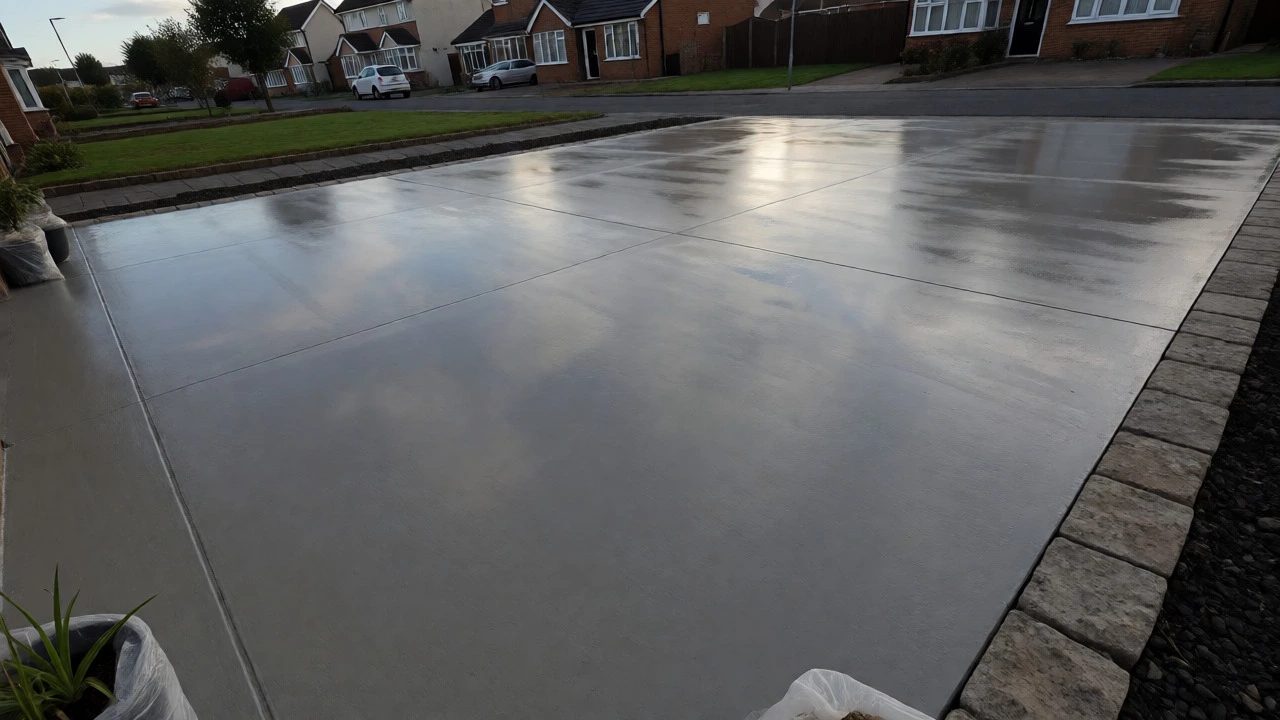
Now that you know what to spray, here is how to do it correctly to maximize efficiency and safety.
- Clear the Area: Remove cars, bikes, and furniture. Sweep away loose leaves and twigs. Debris clogs nozzles and scratches the surface.
- Protect Surroundings: Cover nearby plants with plastic sheeting. Wetting the lawn beforehand helps dilute any runoff that hits the grass.
- Pre-Rinse: Lightly spray the entire driveway with plain water. This opens up the pores of the concrete and prepares it to absorb the cleaning solution.
- Apply Cleaner: Start from the lowest point and work upward. This prevents streaks from dripping down onto cleaned areas. Ensure even coverage.
- Agitate if Needed: For heavy stains, scrub with a brush while the solution is wet.
- Wait: Observe the recommended dwell time. Keep the surface moist.
- Rinse: Switch to your pressure washer. Start with a wide fan tip (40-degree angle) and move closer to the surface gradually. Work in sections.
- Final Rinse: Go over the whole area with clean water to ensure no chemical residue remains.
Common Mistakes to Avoid
One major error is applying cleaners in direct sunlight on a hot day. The solution evaporates before it can work, leaving behind a crusty residue that is hard to remove. Early morning or late afternoon is ideal. Another mistake is using too high a pressure setting. For concrete, 3000 PSI is usually sufficient. Higher pressures can pit the surface, creating rough patches that trap dirt faster in the future. For pavers or brick, drop the pressure significantly and increase the nozzle angle to spread the force. Also, never mix chemicals unless you are sure they are compatible. Mixing bleach and ammonia creates toxic chloramine gas. Stick to one product per task. Finally, don’t forget to check local regulations regarding runoff. In some areas, wastewater containing oil or harsh chemicals cannot enter storm drains. Collecting runoff with a vacuum or directing it to a sanitary sewer line might be required.
Frequently Asked Questions
Can I use vinegar instead of commercial cleaners?
Yes, distilled white vinegar is a mild acid that can help remove light mold and mineral deposits. However, it is much weaker than commercial products. For heavy oil stains or thick algae, vinegar may require multiple applications and extensive scrubbing. It is a good eco-friendly option for light maintenance but less effective for severe cases.
How long should I let the cleaner sit on my driveway?
It depends on the product. General detergents usually need 5-10 minutes. Bleach solutions for algae need 10-15 minutes to kill the organism. Degreasers for oil may need 15-20 minutes plus agitation. Crucially, never let the cleaner dry out on the surface. If it starts to dry, mist it with water to reactivate it.
Will pressure washing damage my concrete?
If used incorrectly, yes. Too high pressure or holding the nozzle too close can erode the cement paste, exposing aggregate and creating a rough texture. Always start with a wider nozzle angle and lower pressure, testing on a hidden corner first. Proper pre-treatment reduces the need for excessive pressure.
Is it safe to spray bleach on my lawn?
Diluted bleach can burn grass and kill plants. To minimize damage, thoroughly wet the lawn with plain water before spraying the driveway. This saturates the grass blades and soil, helping to dilute any accidental overspray. Immediately rinse the lawn with fresh water after finishing the driveway section.
What is the best way to remove tire marks?
Tire marks are rubber residues. They respond well to degreasers or specific rubber removers. Apply the cleaner, let it dwell, and then use a stiff brush to agitate. Hot water pressure washing helps soften the rubber, making it easier to lift. Repeated applications may be necessary for older marks.
Can I pressure wash pavers?
Yes, but be cautious. Pavers often have sand joints that can be washed out by high pressure. Use a lower PSI and a wider fan tip. Consider re-sanding the joints after the pavers dry if the pressure removed some of the sand. Pre-treating with a paver-safe cleaner is highly recommended to avoid damaging the color sealants.