Builder's Clean Snagging Checklist
Use this tool during your final walk-through. Check off items as you verify them with a flashlight and white cloth.
Kitchen
Bathrooms
Living Areas & Bedrooms
Windows & Glazing
General & Hard-to-Reach Areas
Inspection Tips
- Flashlight: Use at angles to reveal dust shadows in corners.
- White Cloth: Wipe sills/cabinet tops. If it turns grey, it's not done.
- Floors: Look for tiny white dots (abrasive residue) under light.
- Documentation: Photograph all missed items immediately.
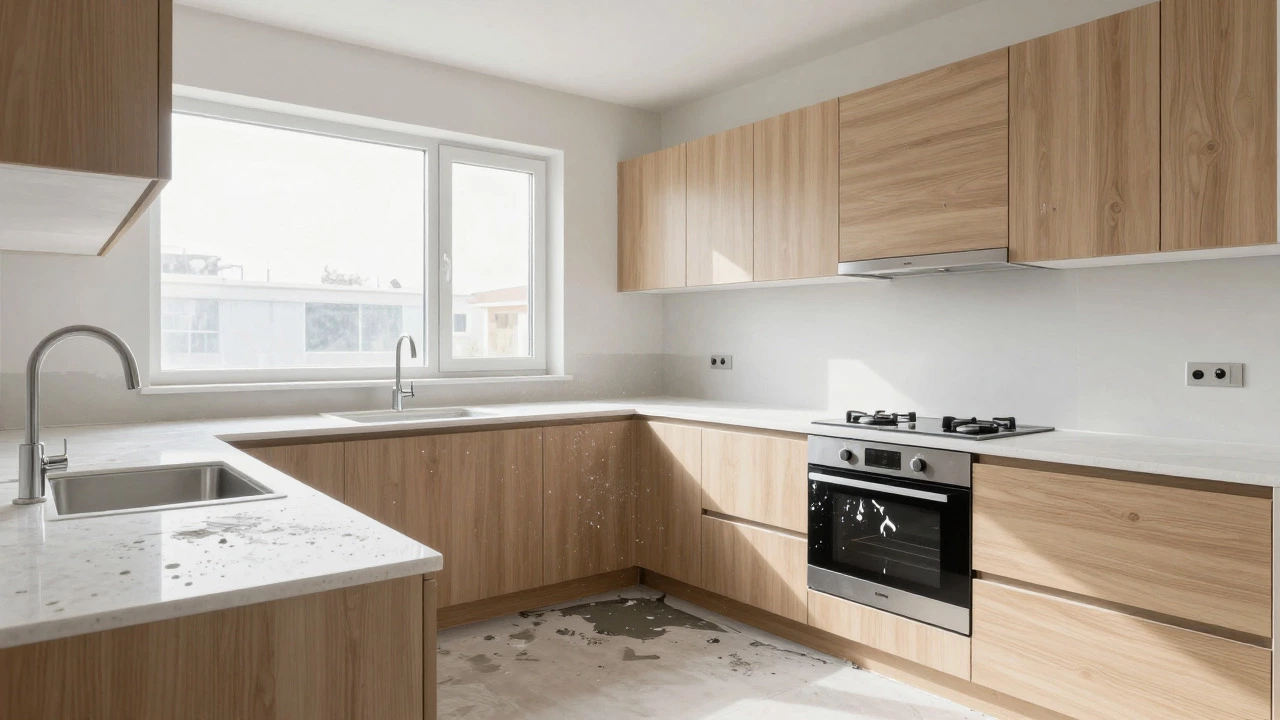
Imagine walking into a brand-new kitchen only to find fine white dust on the worktops and plaster smears on the floor. It feels wrong, doesn't it? That’s exactly what happens when a builder's clean is rushed or misunderstood. Many homeowners assume that once the builders leave, the house is ready for their belongings. But in reality, there is a significant gap between "construction finished" and "move-in ready." Understanding what is actually expected from this specific type of cleaning saves you from headaches, failed snagging inspections, and costly disputes with contractors.
A builder's clean is distinct from standard domestic cleaning. It isn't about making the place smell like lavender; it is about removing construction debris, curing materials, and heavy dust that settles deep into porous surfaces. If you are buying off-plan or renovating, knowing the baseline expectations helps you hold the project to account. Let’s break down exactly what should be spotless before you hand over your keys.
The Difference Between Rough and Final Cleans
Confusion often arises because people mix up two different stages: the rough clean and the final clean. A rough clean typically happens while some trades are still on site. It involves sweeping floors, taking out large rubble, and wiping down walls to make the space habitable for the next trade. However, the final builder's clean is the critical step before completion. This is where the property must meet the standard agreed upon in your contract. In the UK, this usually aligns with the requirements for a snagging survey, where defects and cleanliness issues are logged against the developer or main contractor.
If you think the cleaner will just vacuum and mop, you might be disappointed. Construction dust is microscopic and sticky. It penetrates grout lines, window tracks, and even behind skirting boards. A proper final clean requires industrial-grade vacuums with HEPA filters to prevent this dust from recirculating into the air. Without this level of detail, the house may look okay at first glance but will feel gritty underfoot within days.
Room-by-Room Expectations
To judge whether a clean is adequate, you need to check specific areas. Here is what you should expect in each major zone of the property:
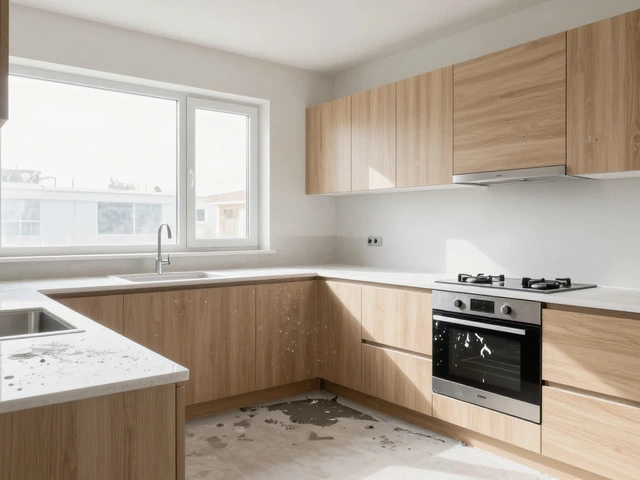
- Kitchen: All cabinets (inside and out) must be free of paint splatters and adhesive residue. Worktops should have no etching or scratches from dropped tools. The oven and hob should be wiped down, though they don't need to be polished to a mirror shine yet. Most importantly, the sink area must be completely clear of cement slurry.
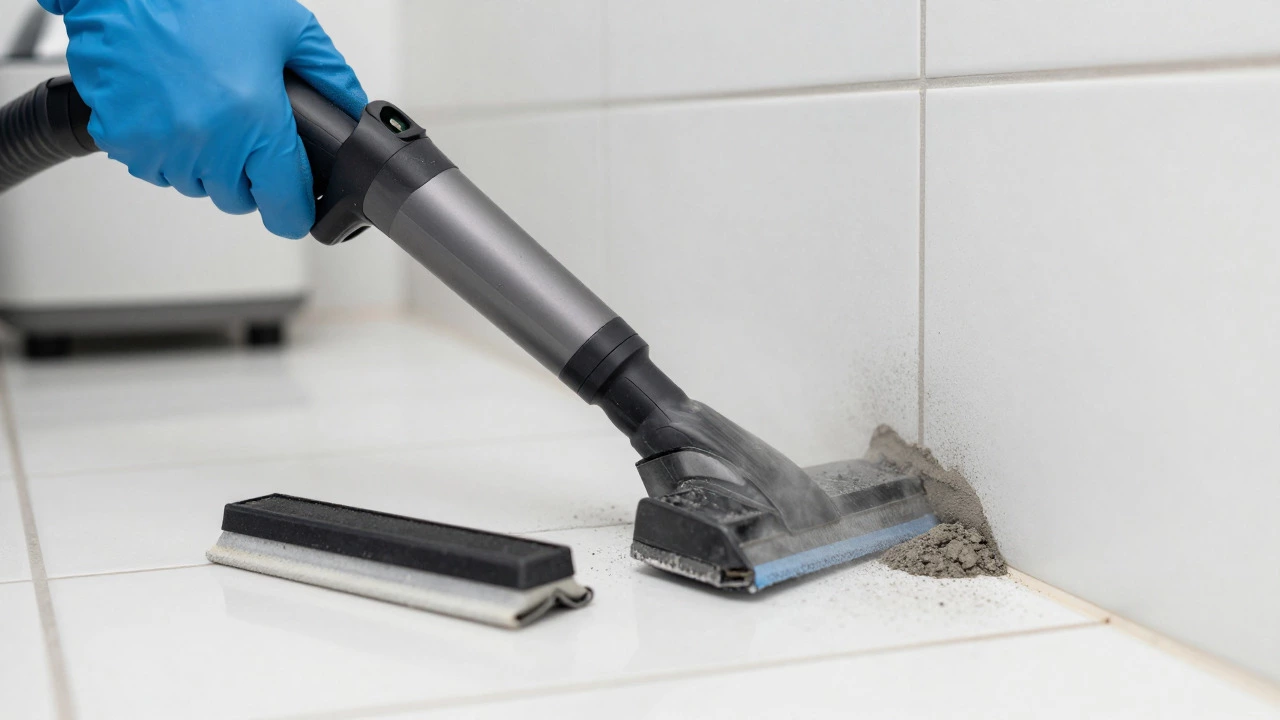
- Bathrooms: Tiles and grout lines are the biggest pain point here. Grout should be sealed if specified, and any excess mortar must be scraped away without damaging the tile surface. Shower screens should be installed and cleaned of water spots and silicone drips. Vanity units must be checked for wood stains caused by wet cement.
- Living Areas and Bedrooms: Walls should be smooth. Any nail holes, filler marks, or brush strokes left by painters should be minimal or non-existent depending on the finish level. Floors (whether hardwood, laminate, or carpet) must be free of sandpaper grit, which can permanently scratch surfaces if not removed. Skirting boards and door frames need to be wiped down as dust accumulates heavily along these edges.
- Windows and Glazing: This is often the most overlooked area. Windows should be streak-free on both sides. Tracks must be swept and vacuumed, as trapped grit prevents windows from sliding smoothly. Sills inside and out need to be degreased and dusted.
Common Snagging Issues Related to Cleaning
When you conduct a snagging inspection, cleanliness is rarely listed as a structural defect, but it is a vital part of the handover process. Developers sometimes try to pass a "dirty" house as "clean" to save time. Here are the red flags to watch for:
- Residue on Fixtures: If there is paint on light switches, door handles, or tapware, it indicates the clean was done before these fixtures were fully protected or cleaned properly. Removing cured paint is difficult and can damage finishes.
- Dust in Hard-to-Reach Places: Check above cupboards, inside airing cupboards, and behind radiators. If there is a layer of grey dust here, the whole house likely hasn't been thoroughly cleaned. Surface-level cleaning hides these issues.
- Unsealed Grout: In bathrooms and kitchens, unsealed grout absorbs moisture and dirt quickly. If the grout looks dark or powdery, ask if sealing was included in the scope. Often, it is an extra cost that gets forgotten until after move-in.
- Floor Damage: Look closely at hard flooring. If you see tiny white dots or scratches, it could be residual abrasive material from sanding or polishing. This needs to be addressed immediately, as it becomes permanent once the floor is walked on regularly.
Tools and Methods Used in Professional Post-Construction Cleaning
You wouldn't use a household broom to clean a construction site, right? Similarly, a professional team uses specialized equipment to achieve the required standard. Understanding these methods helps you verify that the job was done correctly.
| Task | Standard Domestic Tool | Builder's Clean Tool | Why the Difference Matters |
|---|---|---|---|
| Dust Removal | Handheld Vacuum | Industrial HEPA Vacuum | HEPA filters trap microscopic construction dust that regular vacuums blow back into the air. |
| Tile Grouting | Sponge | Rubber Scraper & Steam Cleaner | Scrapers remove excess mortar without scratching tiles; steam sanitizes without harsh chemicals. |
| Window Cleaning | Squeegee Bucket | Telescopic Pole & Deionized Water | Deionized water leaves zero mineral deposits or streaks, crucial for new glass. |
| Floor Finishing | Mop | Buffer Machine & Specific Polishes | Buffers restore the factory finish on stone or hardwood that may have been dulled by construction traffic. |
Chemicals also play a role. Builders' cleans require pH-neutral cleaners for sensitive surfaces like natural stone or engineered wood. Using acidic bathroom cleaners on marble countertops can cause dull patches that never come back. A reputable cleaning company will bring their own products tailored to the specific materials in your home.
How to Verify the Quality Before Handover
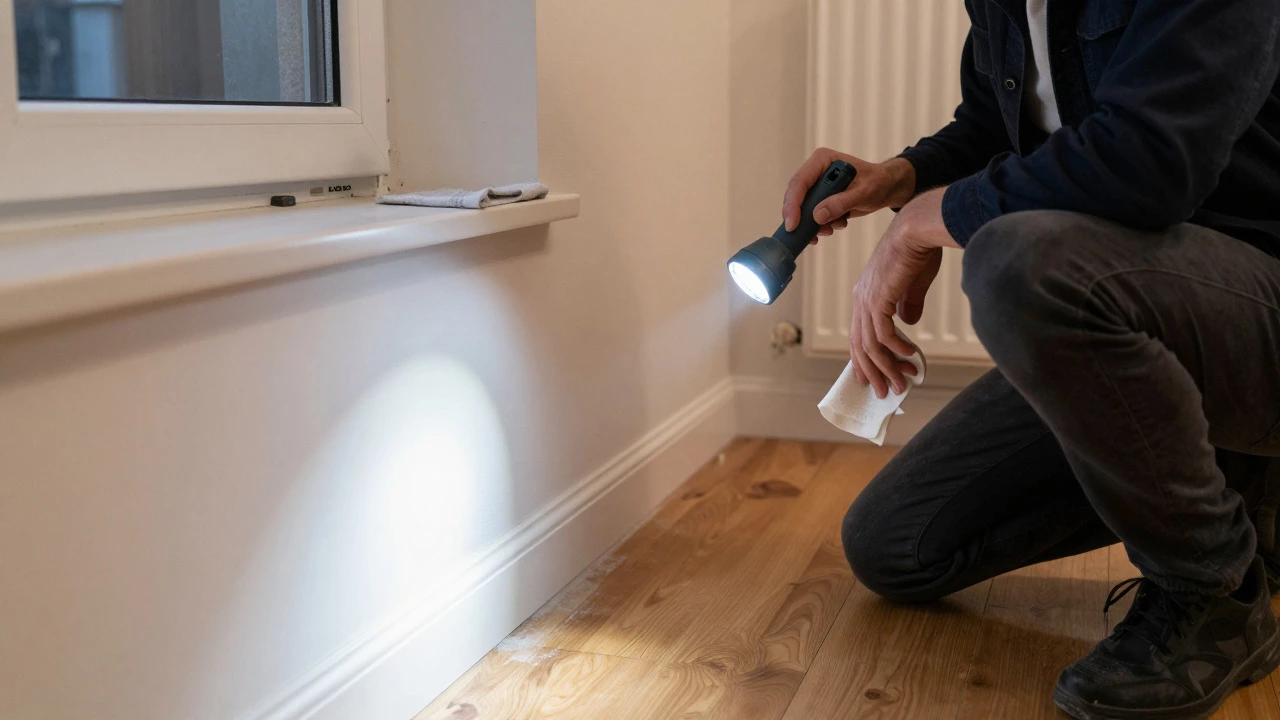
Don’t rely solely on the contractor's word. When you visit the property for the final walk-through, bring a flashlight and a piece of white cloth. Use the flashlight to inspect corners and high areas for dust shadows. Wipe the white cloth across flat surfaces like window sills or cabinet tops. If the cloth comes away grey, the clean isn't finished.
Check the ventilation systems too. Air vents and filter covers should be removed and cleaned. Dust in the ductwork can affect indoor air quality for months. While you don't need to clean the ducts yourself, ensuring the visible parts are spotless is a good indicator of overall thoroughness.
Finally, document everything. Take photos of any remaining issues. Whether it's a smear of paint on a door frame or a dirty track on a sliding door, having visual evidence makes it easier to request rectification without arguments. Most developers allow a reasonable period after handover for minor cosmetic fixes, but the clock starts ticking the moment you accept the keys.
FAQ
Is a builder's clean the same as an end-of-tenancy clean?
No, they are quite different. An end-of-tenancy clean focuses on removing dirt and wear from a lived-in property to return it to its original condition. A builder's clean deals with fresh construction debris, curing materials, and heavy industrial dust. The builder's clean is generally more intensive regarding dust extraction and surface protection, whereas end-of-tenancy cleaning focuses more on degreasing kitchens and descaling bathrooms.
Who is responsible for paying for the builder's clean?
This depends on your contract. For new builds, it is usually included in the purchase price as part of the "practical completion" criteria. For renovations, it is often a line item in the builder's quote. Always clarify this in writing before work begins. If it wasn't specified, it is common practice for the homeowner to arrange it, but you should negotiate who pays based on whose oversight failed to include it.
How long does a full builder's clean take?
For an average three-bedroom house, expect a team of three to four cleaners to spend between eight and twelve hours. Larger properties or those with complex features like conservatories or multiple bathrooms can take up to two days. Rushing this process is the number one cause of missed spots, so ensure the schedule allows for thorough work rather than speed.
Do I need to be present during the final clean?
It is highly recommended. Being present allows you to point out specific concerns in real-time, such as a particular stain on the wall or a dirty fixture. If you aren't there, you might miss small issues that are harder to notice later. Plus, seeing the transformation firsthand gives you confidence that the standard has been met before you sign off.
What if the clean isn't up to standard?
If you are dealing with a developer, raise it during the snagging process. They are legally obligated to fix defects, and poor cleaning is often categorized under "finish quality." If you hired a private builder, refer to your contract's warranty clause. You can withhold final payment if a retention sum is agreed upon, or request a re-clean at the builder's expense. Keep all communication in writing to protect your position.