Commercial vs Office Cleaning Selector
Determine whether your facility requires heavy-duty commercial cleaning or specialized office cleaning based on its primary characteristics.
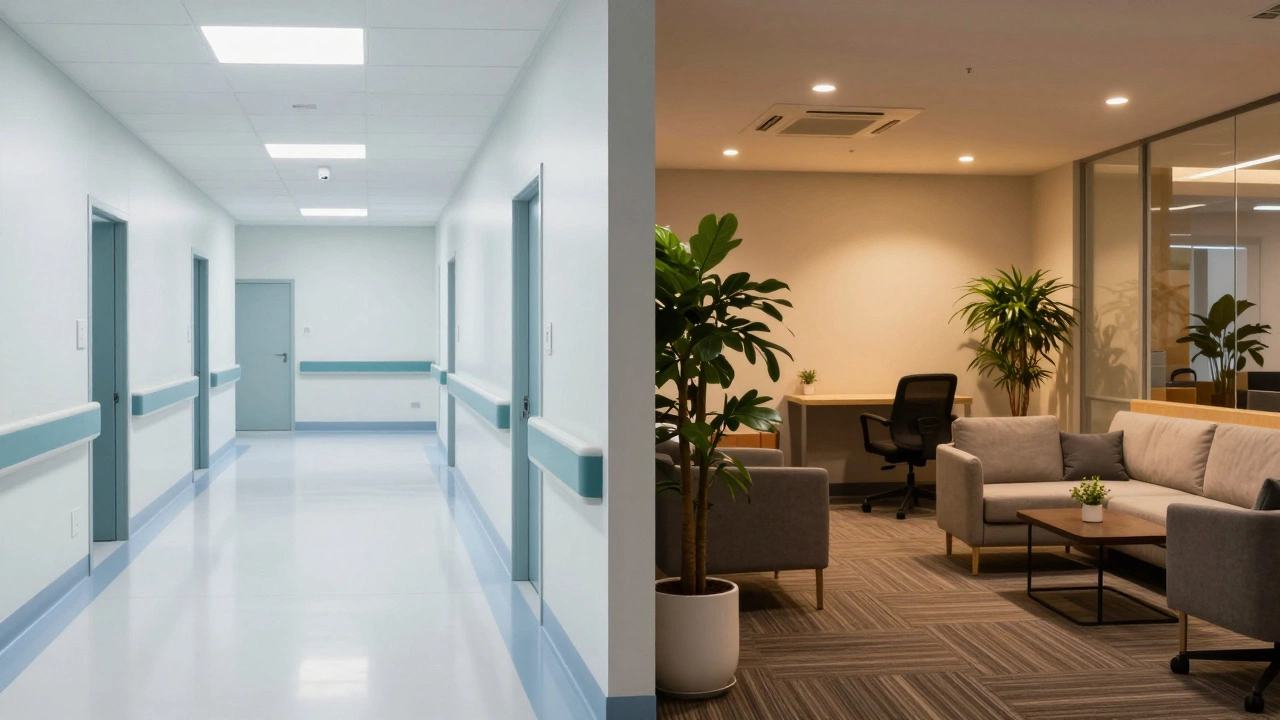
You walk into a hospital lobby. It smells faintly of bleach and antiseptic. The floors are polished to a mirror shine, but they look hard, industrial, and sterile. Now, imagine walking into a tech startup’s open-plan workspace. There is coffee aroma in the air. The carpets are plush, the breakroom looks cozy, and the lighting is warm. Both spaces are clean, yet the approach to getting them there is completely different. This is the core confusion for many business owners: what exactly separates commercial cleaning from office cleaning? While the terms are often used interchangeably in casual conversation, they represent two distinct branches of the janitorial industry with different goals, methods, and standards.
Understanding this difference isn't just about semantics; it impacts your budget, your employee health, and even your legal compliance. If you hire the wrong type of service for your specific space, you might end up with a floor that looks great but harbors bacteria, or a desk that is sanitized but lacks the aesthetic polish your clients expect. Let's break down exactly where these services diverge so you can make an informed decision for your property.
The Scope: Industrial Strength vs. Professional Polish
At its heart, commercial cleaning is a broad umbrella term. It covers any non-residential building. Think factories, warehouses, retail stores, hospitals, schools, and gyms. These environments face heavy wear and tear. A factory floor deals with oil, grease, and heavy machinery debris. A retail store handles foot traffic from hundreds of strangers daily. The goal here is durability and sanitation above all else.
Office cleaning, on the other hand, is a specialized subset of commercial cleaning focused specifically on professional workspaces. It targets areas where people sit, think, and collaborate for eight hours a day. The focus shifts from heavy-duty industrial scrubbing to maintaining a pristine, welcoming environment that supports productivity and client impressions. You aren't just removing dirt; you are curating an atmosphere.
Commercial Cleaning is a comprehensive service covering all non-residential properties including industrial, retail, and healthcare facilities, prioritizing safety and heavy-duty sanitation. In contrast, Office Cleaning is a tailored service designed for corporate environments, focusing on aesthetics, employee comfort, and high-touch surface hygiene.
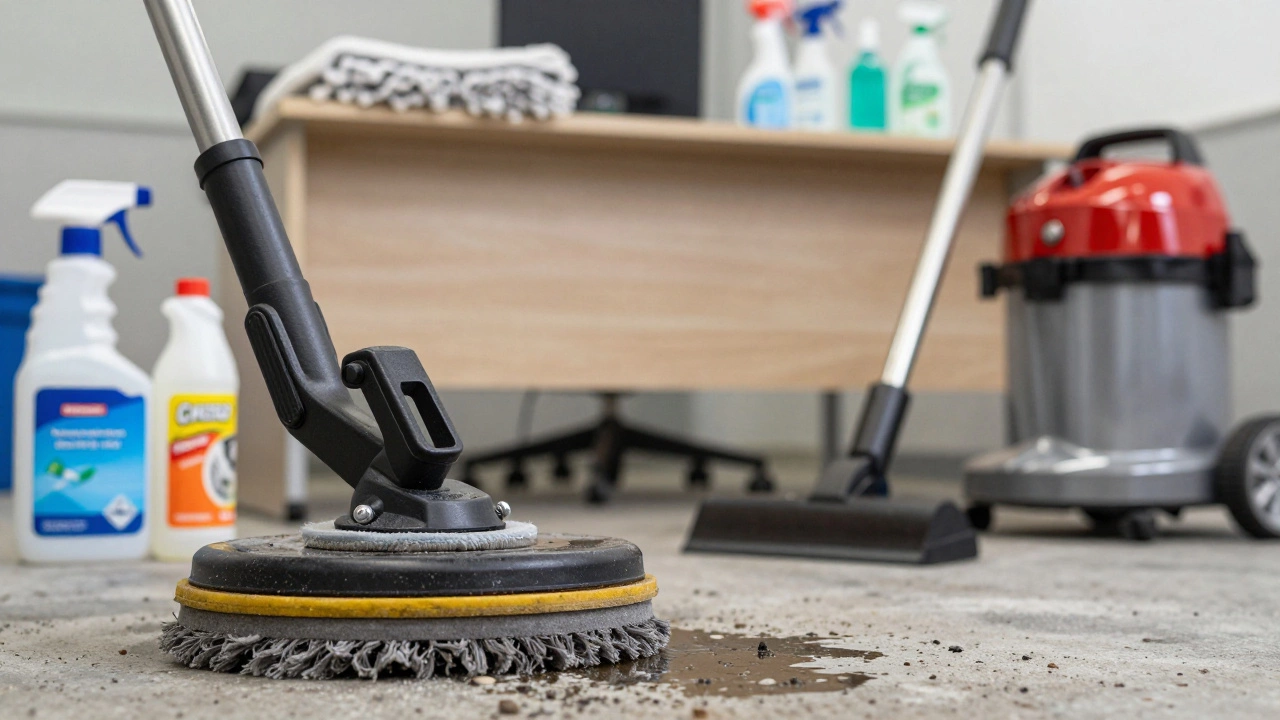
When you look at the tools used, the difference becomes obvious. Commercial cleaners often bring industrial-grade floor buffers, steam cleaners for large surfaces, and chemical agents capable of breaking down grease or biological hazards. Office cleaners typically use microfiber mops, HEPA-filter vacuums, and eco-friendly disinfectants that won't leave strong odors interfering with meetings. The equipment reflects the intent: one is built to survive abuse, the other is built to enhance experience.
Frequency and Timing: Night Shifts vs. Daily Touch-Ups
Timing is another major divider. Most commercial cleaning operations run on a strict schedule dictated by when the building closes. A restaurant kitchen needs a deep clean every night after service ends. A warehouse might only need a weekly sweep because it operates on a different cycle. The work is often intensive, loud, and disruptive if done during business hours.
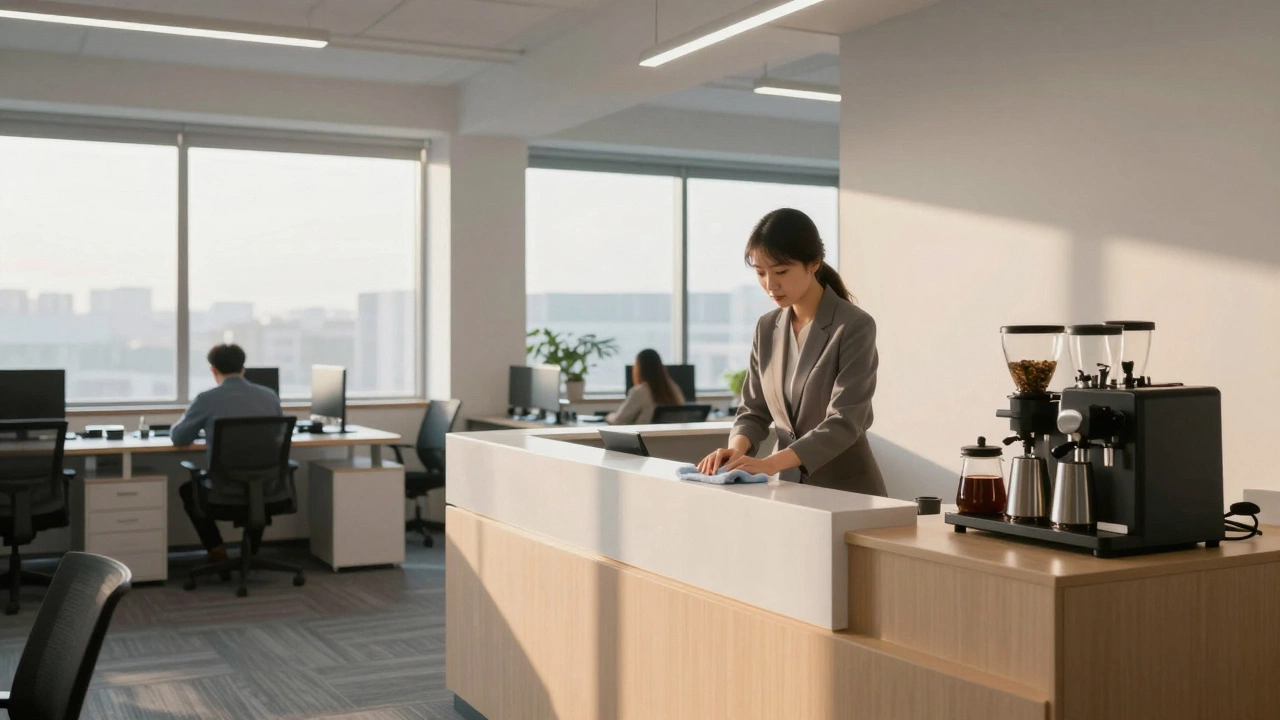
Office cleaning usually follows a "night shift" model for deep cleaning-emptying bins, vacuuming carpets, and sanitizing restrooms happens after everyone goes home. However, modern office cleaning also includes "daily touch-ups." This means someone checks the reception area, refreshes the coffee station, and wipes down high-traffic zones during the day without disturbing staff. This hybrid approach ensures the space looks fresh at 9 AM and stays tidy until 5 PM.
If you are managing a mixed-use building, you might find yourself needing both. The lobby (commercial/public facing) gets a different treatment than the private executive suites (office/professional). Recognizing these zones helps you negotiate better contracts with cleaning providers.
Health Standards and Compliance Risks
This is where things get serious. Commercial cleaning in certain sectors, like healthcare or food processing, is governed by strict regulations. OSHA (Occupational Safety and Health Administration) guidelines dictate how hazardous materials must be handled. Hospitals require infection control protocols that go far beyond wiping counters. Failure to comply can result in massive fines or shutdowns.
Office cleaning has fewer regulatory hurdles but higher reputational risks. Employees are sensitive to indoor air quality and allergens. If your carpet smells musty or your AC vents are clogged with dust, morale drops. Sick building syndrome-a condition where occupants experience acute health effects related to time spent indoors-is a real concern. Proper office cleaning involves regular HVAC filter changes and moisture control to prevent mold, not just sweeping floors.
In Brisbane, where humidity can spike during summer, moisture management is critical for office environments. A standard commercial cleaner might miss the subtle signs of dampness in ceiling tiles, while a specialist office cleaner will prioritize ventilation checks alongside their routine duties.
Cost Structures: What Are You Actually Paying For?
Pricing models differ significantly between the two. Commercial cleaning is often priced per square meter or per hour, based on the intensity of labor required. A gym with rubber flooring and sweat exposure costs more to maintain than a dry storage unit. You pay for the chemicals, the heavy machinery depreciation, and the labor intensity.
Office cleaning is frequently bundled into a monthly retainer. Clients pay for consistency and reliability rather than just raw output. The price includes administrative overhead, such as scheduling coordination, key management, and quality assurance inspections. You are paying for peace of mind that your brand image remains intact when clients visit.
| Attribute | Commercial Cleaning | Office Cleaning |
|---|---|---|
| Primary Focus | Sanitation & Safety | Aesthetics & Comfort |
| Typical Locations | Factories, Retail, Hospitals | Cubicles, Meeting Rooms, Lobbies |
| Equipment Used | Industrial Buffers, Steam Cleaners | HEPA Vacuums, Microfiber Tools |
| Chemicals | Strong Degreasers, Disinfectants | Eco-Friendly, Low-Odor Solutions |
| Regulatory Pressure | High (OSHA, Health Codes) | Low (Internal Policies) |
| Staff Interaction | Minimal (After Hours) | Moderate (Daily Touch-Ups) |
It is worth noting that some businesses operate in grey areas. A co-working space, for instance, blends retail-like public access with private office needs. In such cases, you need a provider who understands both disciplines. They should offer the robust sanitation of commercial cleaning for shared kitchens and bathrooms, combined with the delicate care of office cleaning for individual desks and presentation rooms.
For those looking into specialized services in other regions, understanding local market nuances is key. For example, if you ever find yourself managing properties abroad, resources like this directory can provide insights into how service industries organize themselves in markets like Dubai, though obviously, the context differs vastly from Australian janitorial standards. Back home, the focus remains strictly on domestic and commercial facility management.
Choosing the Right Provider for Your Space
So, how do you decide? Start by auditing your space. Ask yourself: Do I have heavy machinery or industrial waste? If yes, you need commercial cleaning specialists. Do I have high-end furniture, sensitive electronics, and a need for quiet professionalism? Then office cleaning is your path.
Look for certifications. In Australia, reputable cleaners should adhere to Green Star ratings for sustainability and hold appropriate insurance for liability. Ask for references from similar businesses. A cleaner who excels in a noisy construction site might struggle with the quiet precision needed in a law firm.
Don't forget to check their supply chain. Are they bringing their own eco-friendly products, or are they relying on harsh chemicals that could damage your expensive leather chairs? The best office cleaning providers act as partners in your brand image, not just vendors completing a checklist.
The Future of Workplace Hygiene
Post-pandemic, the lines between commercial and office cleaning have blurred slightly due to increased emphasis on hygiene everywhere. Touchless faucets, UV-C light robots, and antimicrobial coatings are now common in both sectors. However, the core distinction remains: commercial cleaning protects assets and ensures safety compliance, while office cleaning enhances human performance and well-being.
As remote work continues to reshape office layouts, the demand for flexible cleaning services grows. Hot-desking environments require more frequent sanitization of keyboards and phones. Breakouts areas see higher turnover. Your cleaning strategy must adapt to these behavioral shifts. Static schedules no longer cut it; dynamic, responsive cleaning is the new standard.
Can I use the same company for both commercial and office cleaning?
Yes, many large janitorial firms offer both services. However, ensure they assign different teams or protocols for each. Using industrial-grade chemicals in an office setting can damage furnishings and irritate employees. Look for providers with specialized divisions for corporate clients versus industrial sites.
How often should office cleaning occur?
Standard practice is daily trash removal and restroom sanitization, with full vacuuming and dusting occurring three to five times a week depending on occupancy. High-touch areas like door handles and light switches should be disinfected daily. Deep cleaning, including carpet extraction, should happen quarterly or biannually.
What is the biggest risk of confusing these two services?
The primary risk is either over-sanitizing (wasting money on unnecessary industrial processes) or under-sanitizing (missing critical health hazards). Using office-only cleaning in a manufacturing plant can lead to slip-and-fall accidents due to inadequate grease removal. Conversely, using commercial cleaning in an office can ruin delicate electronics and upholstery.
Do office cleaners handle window washing?
Interior windows are usually part of standard office cleaning packages. Exterior windows, especially for multi-story buildings, often require separate specialized contractors due to safety regulations and equipment needs like water-fed poles or scaffolding. Check your contract details carefully.
Is eco-friendly cleaning more expensive?
Initially, green cleaning products may cost slightly more, but they often reduce long-term maintenance costs by preventing material degradation. Additionally, they improve indoor air quality, potentially reducing sick days among staff. Many modern office cleaning providers now include eco-friendly options as standard rather than premium add-ons.