Streak-Free Window Cleaning Assistant
Diagnose Your Streak Problem
Select the issues you are experiencing with your current cleaning method:
Recommendation:
Calculate Your Solution
Get the exact measurements for your DIY window cleaner.
Your Custom Recipe:
Tip:
Pro Technique Checklist
Follow these steps for guaranteed streak-free results. Check them off as you clean!
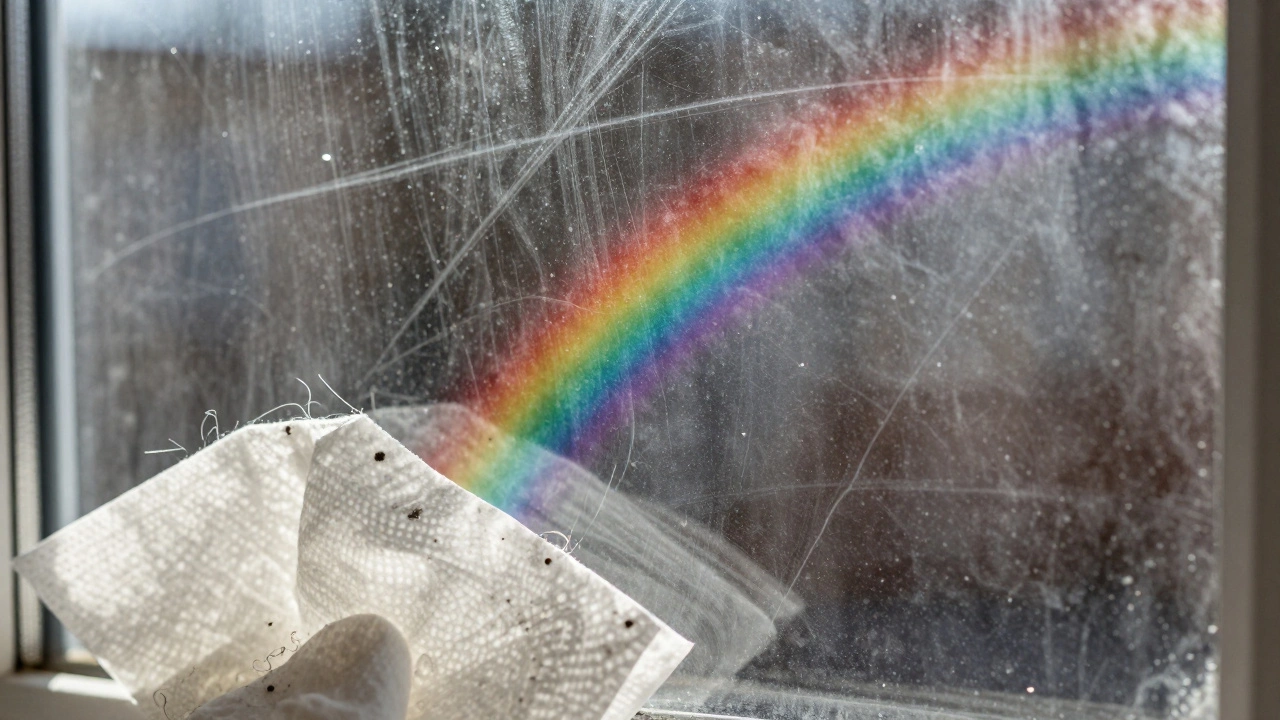
There is nothing more frustrating than spending an hour scrubbing your windows only to step back and see a rainbow of smudges, dust trails, and sticky residue. You know you cleaned them, but they look worse than before. If you are tired of the endless cycle of wiping and re-wiping, you are not alone. The struggle for crystal clear glass is real, but it usually comes down to three things: using the wrong tools, applying too much product, or missing the drying step entirely.
The best solution for streak-free windows isn't a secret chemical formula sold in fancy bottles. It is a combination of the right mechanical tools and a simple, effective liquid mixture. By switching from paper towels to high-quality microfiber and mastering the squeegee method, you can cut your cleaning time in half while getting professional results every single time.
Why Your Current Method Creates Streaks
Before buying new supplies, it helps to understand why streaks happen in the first place. Most people reach for a spray bottle of blue liquid and a roll of paper towels. This approach is flawed for several reasons. Paper towels disintegrate when wet, leaving behind tiny fibers that stick to the glass. These fibers trap dirt and create those annoying lines you see when the sun hits the window at an angle.
Another common culprit is over-saturation. When you soak the glass with cleaner, the water runs down the pane and evaporates slowly. As it dries, it leaves behind minerals from the water and residues from the cleaner itself. This is especially true if you live in an area with hard water. The calcium and magnesium in hard water bond to the glass, creating white spots that look like streaks but are actually mineral deposits.
Temperature also plays a huge role. Cleaning windows in direct sunlight is a mistake many homeowners make. The heat causes the cleaning solution to evaporate almost instantly. Before you can wipe it away, it has dried on the surface, locking in dirt and creating a film. Always clean windows on a cloudy day or in the shade to give yourself enough time to work the solution into the dirt and remove it properly.
The Ultimate Tool Kit for Clear Glass
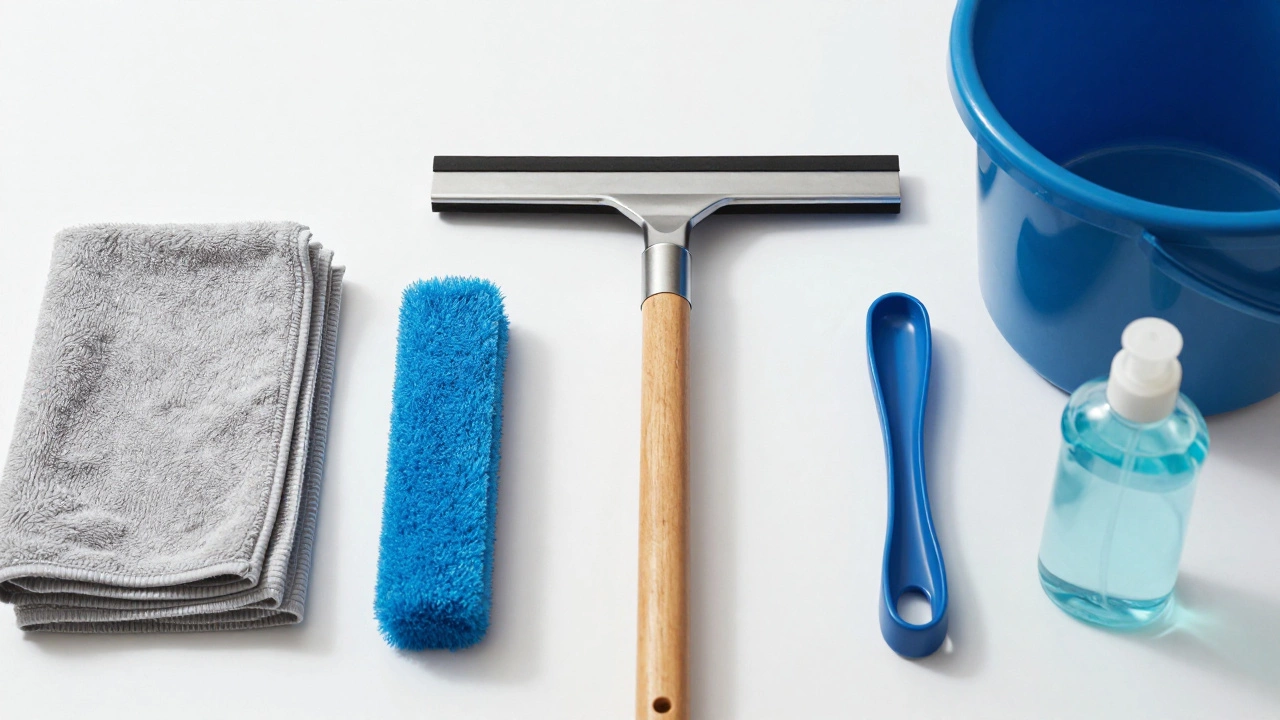
To get truly streak-free results, you need to upgrade your toolkit. You don't need expensive professional equipment, but you do need items designed specifically for glass surfaces.
- Microfiber Cloths are synthetic fabrics with extremely fine fibers that trap dust and moisture without leaving lint. Look for cloths with a high GSM (grams per square meter) rating, ideally between 300 and 500 GSM. They should feel soft but dense. Avoid cheap, thin microfiber that pills easily.
- A Squeegee is a handheld tool with a rubber blade used to remove water and cleaning solution from glass surfaces. A 10-inch squeegee is perfect for most residential windows. Make sure the rubber blade is flexible and free of nicks. A worn-out blade will leave water behind, which leads to streaks.
- A Scrubber or T-Bar is a flat frame with a absorbent sleeve attached to a handle, used to apply soap and loosen dirt. This allows you to wash the entire window quickly without touching the glass with your hands.
- A Bucket with a Grit Guard is a container that holds cleaning solution and includes a mesh insert to keep dirt off the bottom. The grit guard ensures that when you dip your scrubber back into the bucket, you aren't picking up sand or grime that could scratch the glass.
The Best DIY Window Cleaning Solution
You likely already have the ingredients for the best window cleaning solution in your kitchen. Commercial cleaners often contain ammonia or alcohol, which can damage tinted windows or leave a film if not rinsed properly. A simple homemade mix is safer, cheaper, and highly effective.
Mix one gallon of warm water with one tablespoon of white vinegar and one tablespoon of dish soap. The vinegar acts as a natural degreaser and cuts through mineral deposits, while the dish soap provides lubrication to help lift dirt without scratching. Do not use too much soap, as excess suds will require more rinsing and increase the chance of streaks.
If you deal with heavy bird droppings or tree sap, add a small amount of rubbing alcohol to the mix. Alcohol helps break down organic matter quickly. For exterior windows, this mixture works wonders. For interior windows, you can skip the vinegar if you prefer a neutral scent, relying solely on the mild soap and water.
| Solution Type | Best For | Risks | Drying Speed |
|---|---|---|---|
| Vinegar & Water | Mineral deposits, general grime | None (safe for most surfaces) | Moderate |
| Ammonia-Based | Grease, heavy soil | Can damage tinted glass, harsh fumes | Fast |
| Dish Soap & Water | Dust, light dirt | Residue if too concentrated | Slow |
| Isopropyl Alcohol | Stickers, sap, fingerprints | Dries too fast in sun | Very Fast |
Step-by-Step: The Professional Squeegee Technique
Having the right solution is only half the battle. How you apply and remove it determines whether you end up with clarity or chaos. The squeegee technique is the gold standard for a reason. It removes the dirty water rather than pushing it around.
- Wash the Frame First: Use a dry microfiber cloth to wipe down the window frame and sill. Dust and dirt here will fall onto the wet glass later if ignored.
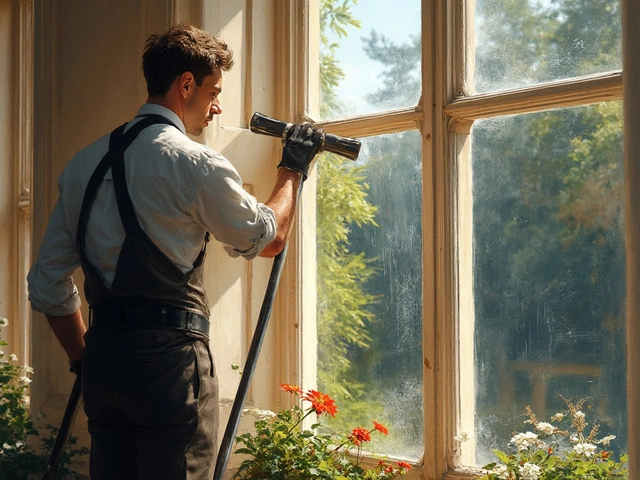
- Apply the Solution: Dip your scrubber into the bucket and wring it out slightly so it is damp, not dripping. Wash the entire window in overlapping horizontal strokes. Work from top to bottom to ensure you cover every inch.
- Start the Squeegee: Place the squeegee at the top corner of the window. Pull it across horizontally to the other side. Wipe the rubber blade with a dry microfiber cloth after each stroke. This is crucial; a wet blade will drip and streak.
- Continue Downward: Start the next stroke just below where you finished the previous one. Overlap by about half an inch to ensure no water is left behind. Continue until you reach the bottom of the window.
- Detail the Edges: After squeegeeing, there will be a thin line of water along the edges. Use a dry, lint-free microfiber cloth to wipe these edges clean. Also, check for any missed spots or drips and buff them out.
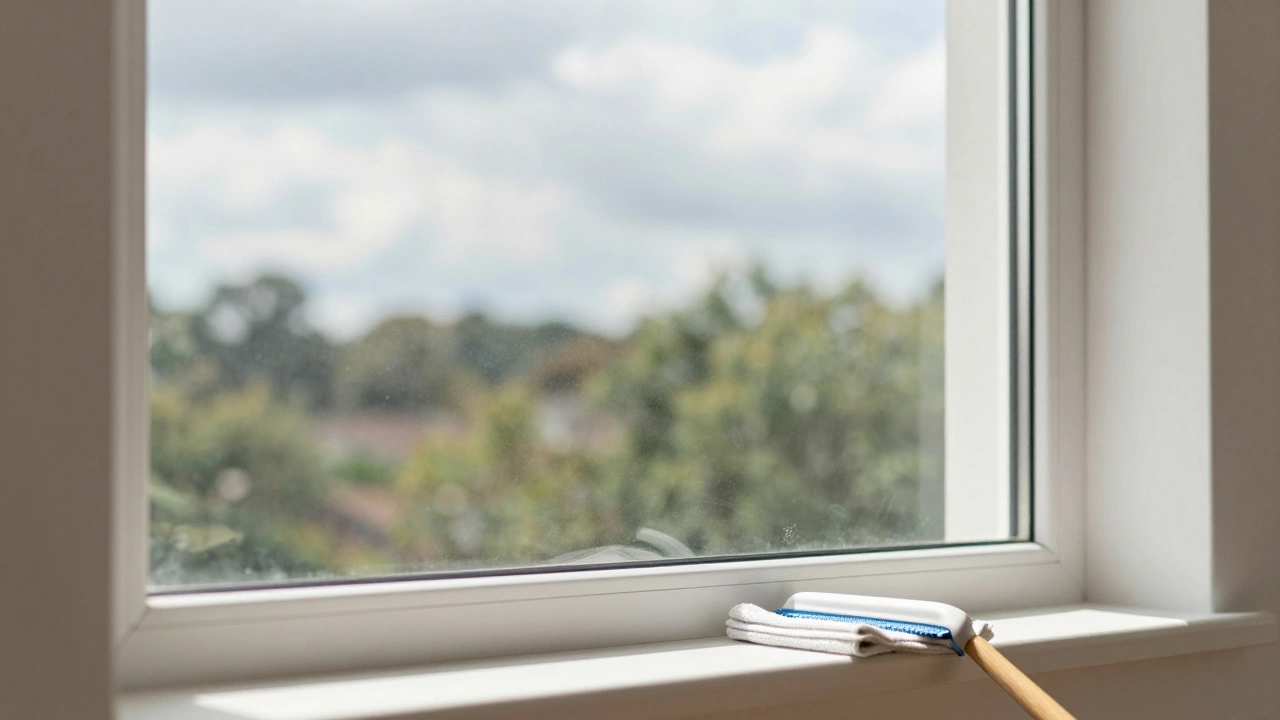
If you do not own a squeegee, you can achieve similar results with two microfiber cloths. Wet the window with your solution, then immediately follow with a dry microfiber cloth. Wipe in an 'S' pattern, keeping the cloth dry by flipping it frequently. However, the squeegee is still superior because it physically removes the water rather than absorbing it into a cloth that can become saturated and messy.
Troubleshooting Common Streak Issues
Even with the best tools, mistakes happen. Here is how to fix the most common problems.
White Spots: These are usually mineral deposits from hard water. Regular cleaners won't remove them. You need an acid-based cleaner. Apply a paste of baking soda and water, let it sit for ten minutes, and gently scrub with a non-abrasive pad. Rinse thoroughly and squeegee dry. For persistent spots, consider a commercial calcium remover.
Film or Haze: This often indicates that you are using too much soap or a cleaner with silicones. Switch to a plain vinegar and water mix. Ensure your microfiber cloths are washed separately from laundry detergent sheets, which contain softeners that coat the fabric and transfer to the glass.
Dust Attraction: If your windows get dusty again within hours, static electricity might be pulling dust to the glass. Wipe the dry glass with a newspaper or a dedicated anti-static cloth. The slight acidity in newsprint helps reduce static, though modern microfiber treated with anti-static agents works just as well without the mess of ink.
Maintaining Clarity Between Cleanings
To keep your windows looking great longer, address the source of the dirt. Exterior windows collect pollen, car exhaust, and rain splatter. Interior windows accumulate cooking grease, pet hair, and indoor dust. Installing screens on exterior windows reduces the amount of debris that reaches the glass directly. Using a dehumidifier indoors can reduce condensation, which prevents water spots from forming on the inside of the glass.
Clean your tools regularly. Microfiber cloths lose their effectiveness when clogged with dirt or coated in dryer sheet residue. Wash them in hot water without fabric softener. Inspect your squeegee blade monthly; if it looks cracked or stiff, replace it. A fresh blade makes all the difference in achieving that final, pristine shine.
Can I use Windex for streak-free windows?
Yes, you can, but it is not always the best choice. Windex contains ammonia, which can damage tinted windows and leave a residue if not wiped correctly. For a safer, more versatile option, a vinegar and water mixture is recommended. It is less likely to cause streaks and is safe for all glass types.
Why do my windows streak when I use paper towels?
Paper towels are made from wood pulp and break down when wet, leaving behind tiny fibers on the glass. These fibers trap dirt and moisture, creating visible lines. Microfiber cloths are synthetic and designed to trap particles without shedding, making them far superior for glass cleaning.
Should I clean windows in the sun or shade?
Always clean windows in the shade. Direct sunlight causes the cleaning solution to evaporate too quickly, leaving behind residue and streaks before you can wipe it away. Cloudy days or early mornings are ideal times for window cleaning.
How do I remove hard water stains from windows?
Hard water stains are mineral deposits that require an acid to dissolve. Mix equal parts white vinegar and water, spray it on the stained areas, and let it sit for five to ten minutes. Scrub gently with a non-abrasive pad and rinse with clean water. For tough stains, a specialized calcium remover may be necessary.
Is a squeegee better than a cloth for cleaning windows?
Yes, a squeegee is generally better. It removes the dirty water from the glass rather than spreading it around or absorbing it into a cloth that can become saturated. This method significantly reduces the risk of streaks and speeds up the drying process, resulting in a clearer finish.