Couch Fabric Cleaning Guide
What's Your Couch Made Of?
Identify your fabric to learn safe cleaning methods and avoid costly damage.
Your Couch Cleaning Guide
Select your fabric type to see safe cleaning methods.
You sit on it every day. Your kids jump on it. Your dog sleeps on it. And you’ve probably spilled coffee, dropped snacks, or tracked in dirt without thinking twice. Now, the fabric looks dull, smells a little off, and you’re wondering: couch cleaning-is it worth it?
What’s Actually On Your Couch
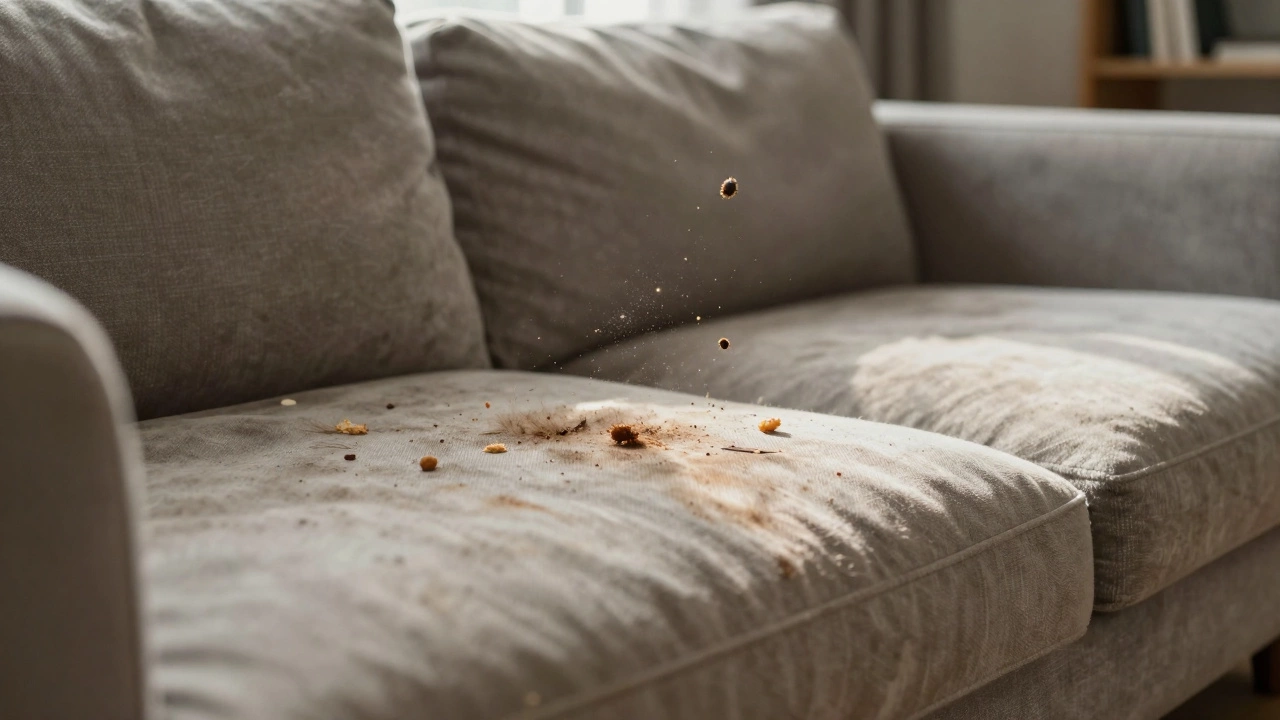
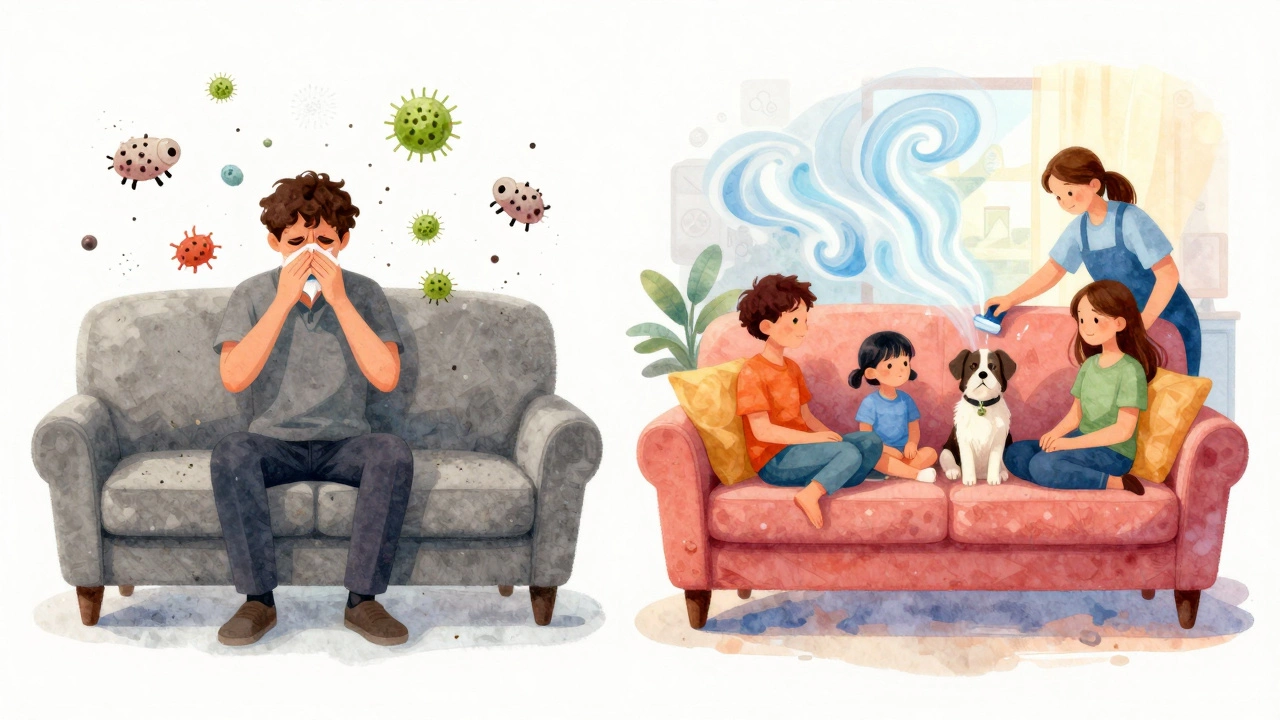
Your couch isn’t just fabric and foam. It’s a magnet for dust mites, pet dander, skin cells, and bacteria. A 2023 study by the University of Arizona found that sofas harbor up to 200,000 bacteria per square inch-more than a toilet seat. That’s not a scare tactic. That’s science. And it’s not just germs. Dust mites feed on dead skin. Their waste triggers allergies. If you or someone in your home has asthma, eczema, or seasonal allergies, a dirty couch isn’t just unpleasant-it’s a health risk.Can You Clean It Yourself?
You’ve probably tried vacuuming with the upholstery attachment. Maybe you sprayed a store-bought cleaner and scrubbed with a brush. It looked better for a day. Then the smell came back. Or the stain reappeared. Here’s why DIY rarely works: most over-the-counter cleaners are designed for light surface dirt. They don’t reach deep into the fibers where 80% of the grime lives. And if you use the wrong product? You can damage the fabric, leave sticky residue, or even cause permanent color fading. Wool, microfiber, velvet, and leather each need different care. Using a general cleaner on silk-blend upholstery? That’s a recipe for a ruined couch.What Professional Cleaning Actually Does
Professional upholstery cleaning isn’t just a fancy vacuum. It’s a multi-step process designed to remove what you can’t see-and what you can’t fix yourself. First, they inspect the fabric. Every couch has a tag with a code: W (water-based cleaner), S (solvent-based), SW (either), or X (professional clean only). A pro knows what each means. They test a hidden spot first to avoid damage. Then they use industrial-grade equipment. Hot water extraction-often called steam cleaning-is the gold standard. It uses high-pressure water to loosen dirt, then powerful suction to pull it out. No residue. No over-wetting. No mold risk. They also use specialized deodorizers that neutralize odors at the molecular level, not just cover them up with perfume. And yes, they remove stains you thought were permanent. Red wine? Pet accidents? Ink? Oil from your skin? Professionals have targeted solutions for each. One technician in Chicago told me he once removed a five-year-old coffee stain from a cream-colored sectional using a pH-balanced enzyme treatment. It looked brand new.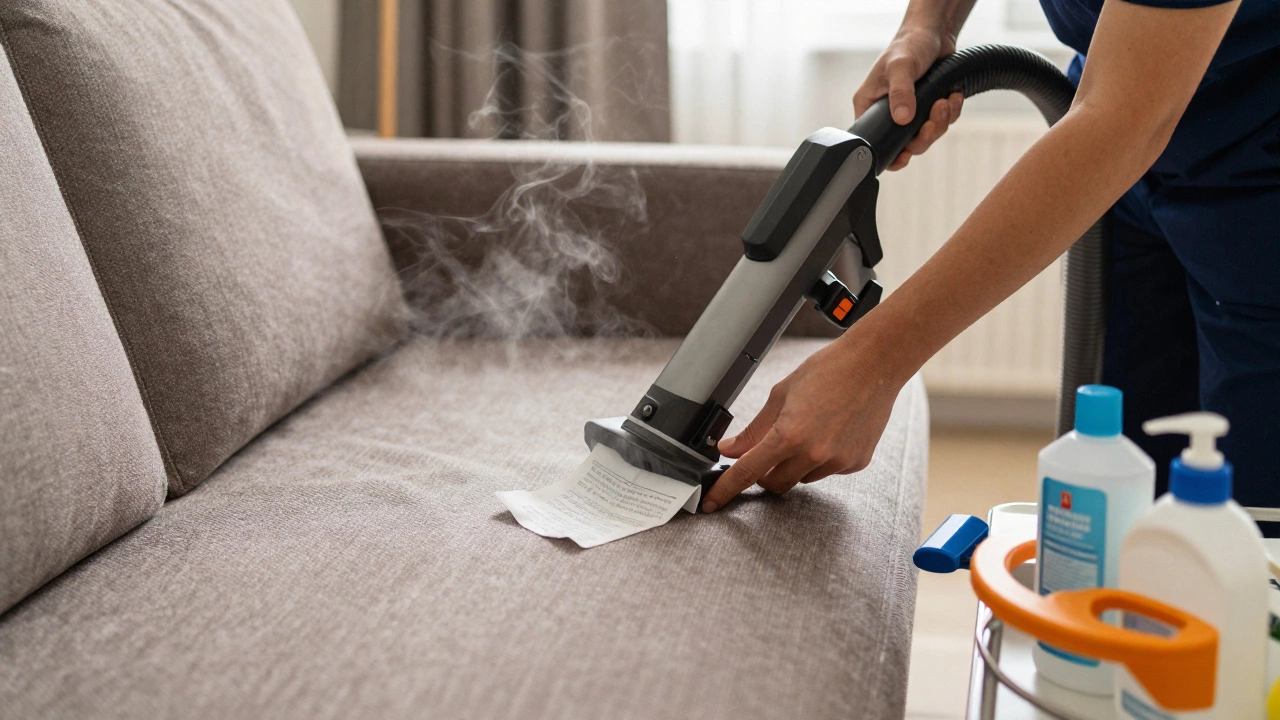
How Often Should You Clean It?
There’s no one-size-fits-all answer, but here’s a simple rule: clean your couch every 12 to 18 months if you have pets or kids. Every 2 to 3 years if you live alone and don’t eat on the sofa. But don’t wait for it to look dirty. If you notice:- A musty smell even after airing it out
- Visible darkening or graying of the fabric
- Allergy symptoms get worse when you sit on it
- Stains that won’t budge with a damp cloth
Cost vs. Value
A professional couch cleaning usually costs between $100 and $300, depending on size, fabric, and location. That’s less than a new throw blanket. But here’s what you’re really buying:- Extended lifespan-cleaning can add 3 to 5 years to your couch’s life
- Healthier home-reduced allergens mean fewer sneezes, better sleep, less asthma flare-ups
- Restored appearance-your couch looks like new again, without the $1,500 replacement cost
- Odor elimination-not just masking, but removing the source
When It’s Not Worth It
There are exceptions. If your couch is already worn out-frayed seams, sagging cushions, broken frame-cleaning won’t fix that. If the fabric is severely faded or torn, you’re better off replacing it. Also, avoid companies that offer “$49 for a 3-seater.” That’s a trap. They’ll upsell you on unnecessary services, use cheap chemicals, or leave your couch soaking wet. Always check reviews. Look for certified technicians (IICRC or CRI certified). Ask if they use truck-mounted equipment. That’s the real deal.What Happens After Cleaning?
Most couches dry in 4 to 8 hours. Some fabrics take longer. You’ll notice the difference right away:- The fabric feels softer, not stiff or gritty
- The color looks brighter, not grayed out
- The smell is neutral-clean, not chemical
- You can sit on it without checking for damp spots
Final Verdict
Yes, it’s worth it. Not because your couch looks dirty. Not because you feel guilty. But because your health, your wallet, and your comfort all benefit. A clean couch isn’t a luxury. It’s a smart home maintenance habit-like changing your air filter or cleaning your gutters. You don’t wait until the system breaks. You do it before it gets worse. If you’ve been putting it off, now’s the time. Pick a reputable company. Schedule it. And sit back-on a couch that’s truly clean.How long does couch cleaning take?
Most professional couch cleanings take 1 to 2 hours, depending on size and how dirty it is. Drying time varies-usually 4 to 8 hours. Some fabrics like velvet or leather may take longer, up to 12 hours. Technicians will tell you when it’s safe to sit on it.
Can professional cleaning remove pet odors completely?
Yes, if it’s done right. Not all cleaners handle pet odors well. Look for services that use enzyme-based deodorizers. These break down urine and organic matter at the source, not just cover the smell. One technician in Seattle told me he once eliminated a year-old cat urine smell from a couch using a two-step enzyme treatment followed by hot water extraction. The owner hadn’t even noticed the smell anymore after three weeks.
Is steam cleaning safe for all fabrics?
Not all fabrics. Some, like silk or antique upholstery, can be damaged by water. That’s why professionals check the fabric code before starting. If your couch has an X code, it means only dry cleaning is safe. A reputable company will never use steam on those materials. Always ask what method they’ll use before booking.
Do I need to move furniture before cleaning?
You don’t have to move everything, but clearing the area helps. Remove small items like lamps, books, or blankets. Technicians will move the couch slightly to clean underneath, but they won’t move heavy pieces like entertainment centers or pianos. If you want those cleaned too, ask ahead of time.
Will cleaning make my couch fade or shrink?
Not if it’s done by a trained professional. They test colors first and control moisture levels carefully. DIY cleaners often cause fading because they’re too harsh or leave residue. Professionals use pH-balanced solutions and extract water thoroughly to prevent shrinkage. Ask if they do a pre-cleaning test-it’s a sign they know what they’re doing.