Office Cleanliness Impact Calculator
Calculate Your Office Cleanliness Impact
How would improving office cleanliness impact your team's health and productivity? Enter your current metrics to see potential benefits.
Keeping an office clean isn’t just about looks-it’s about health, productivity, and respect. A cluttered desk, sticky coffee rings, or overflowing trash bins don’t just annoy people; they create germs, distractions, and a culture of neglect. But telling someone to clean up? That’s where most managers freeze. Say it too harshly, and you risk resentment. Say it too softly, and nothing changes. So how do you actually get people to keep the office clean without sounding like a drill sergeant?
Start with the why, not the what
Don’t lead with "Your desk is messy." Lead with "We’ve had three people sick this month from shared surfaces." People respond better to facts than frustration. Studies from the University of Arizona show that office workers share more than 1,000 germs per square inch on common surfaces like door handles and microwaves. That’s not a myth-it’s science. When employees understand that cleaning isn’t about perfection, it’s about preventing sick days, they care more.
Try this: send a quick email before the next team meeting. Say something like: "Last week, the kitchen sink was clogged because someone poured grease down it. We lost 2 hours of work fixing it. Let’s keep the space working for everyone. Here’s how." Then list three simple rules: no food in desks, wipe down microwaves after use, take out trash before you leave. No blame. Just clarity.
Make it easy, not perfect
Most people want to do the right thing. They just don’t know how, or it’s too much effort. If you’re asking someone to clean, you’ve got to remove the friction.
- Put a small bin next to every desk-not just in the corner.
- Keep disinfectant wipes on every desk and near the coffee machine.
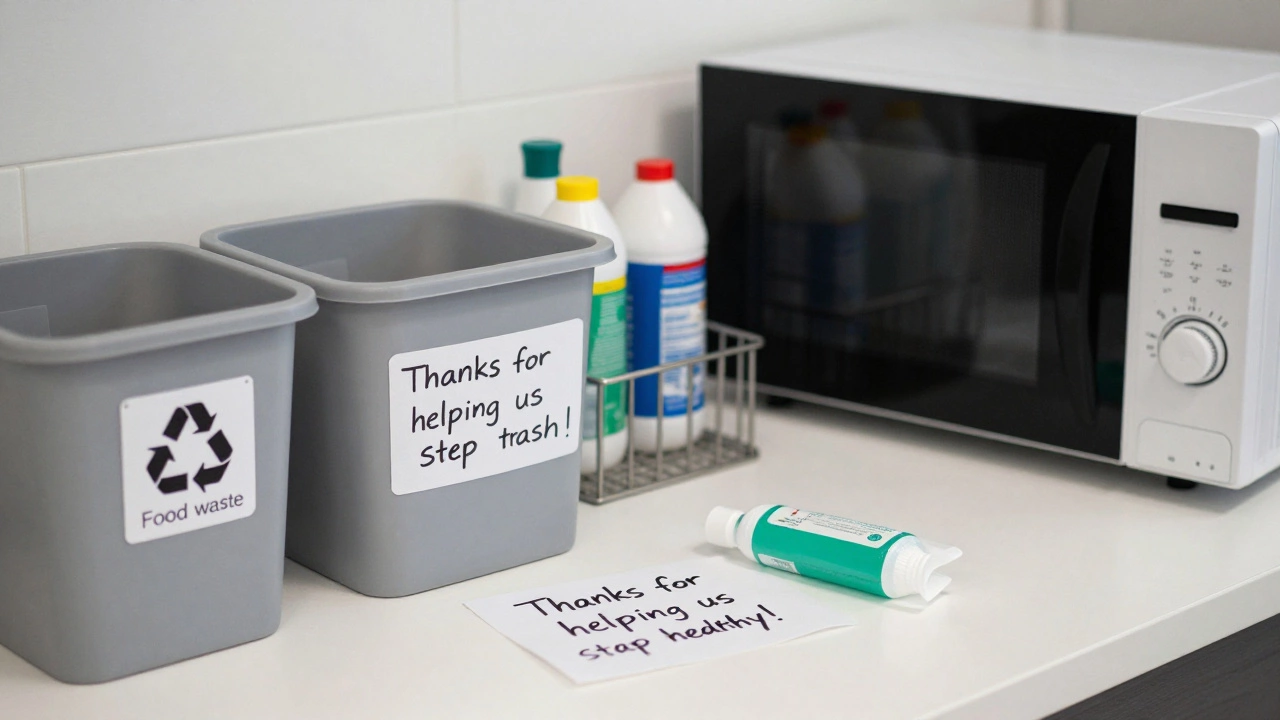
- Label bins: "Recycling," "Food Waste," "General Trash."
- Have a cleaning caddy with gloves, spray, and paper towels in the kitchen.
One company in Manchester started doing this after a survey showed 78% of staff didn’t clean up because "there’s no easy way." Within two weeks, kitchen cleanliness improved by 60%. The fix wasn’t a lecture-it was a wipe and a bin.
Lead by example-not by shouting
If you leave your coffee cup on the desk for three days, don’t yell at someone else for doing the same. People notice. They remember. And they copy.
Managers who clean up after themselves, take out the trash when it’s full, or wipe the printer when they’re done? Their teams follow. It’s not about being perfect. It’s about showing that cleaning isn’t "someone else’s job." It’s part of being a team member.
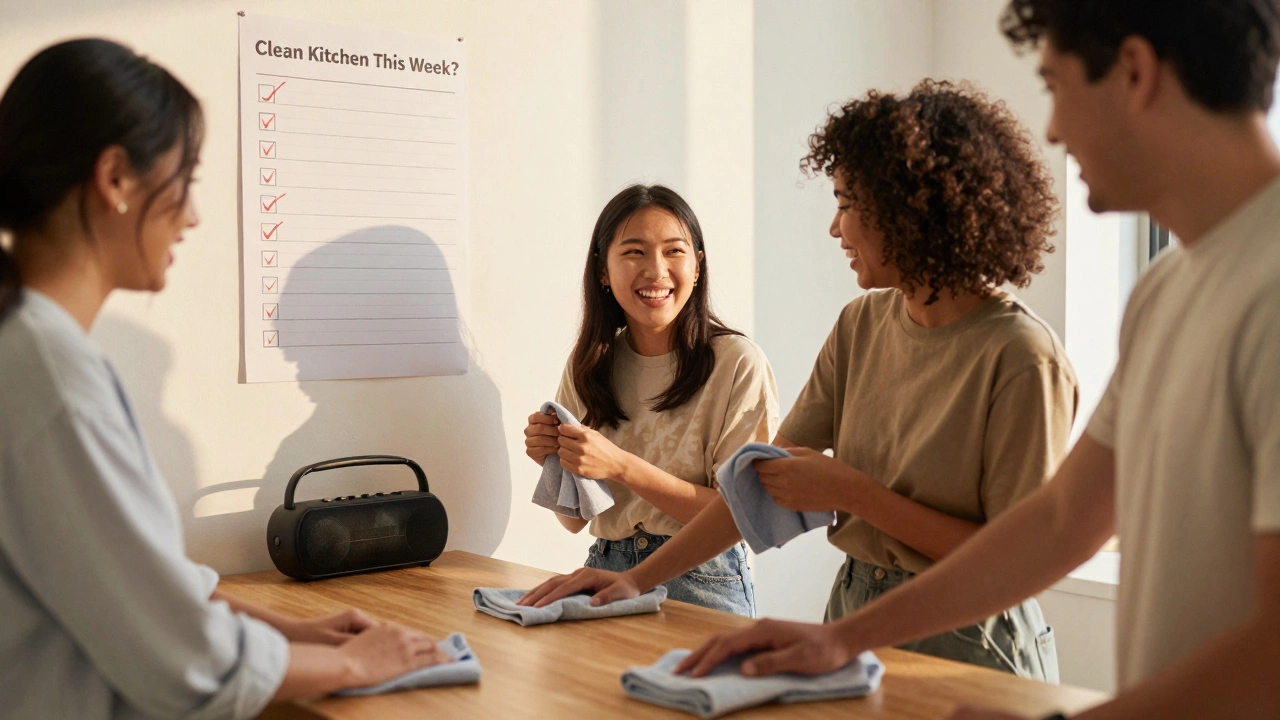
Try this: every Friday, spend 10 minutes with your team cleaning up. Not as punishment. As a habit. Put on a playlist, grab a cloth, and do it together. You’ll be surprised how much more people care when you’re in it with them.
Use signs-not scolding
Post-it notes with "Please clean up!" don’t work. But a well-designed sign does.
One office in Leeds put up a simple, friendly sign next to the microwave: "Thanks for wiping this down! 92% of us do. You’re one of them." Guess what? The number of people who cleaned up jumped to 97%. Positive reinforcement works better than guilt.
Use humor, not shame. Try:
- "Your coffee deserves a better home than my desk. Clean the microwave!"
- "We’re not a zoo. Please don’t leave your lunch here."
- "This sink is a hero. Help it stay one."
Visuals help too. Put up a chart: "Clean Kitchen This Week? Yes/No." Let people mark it. Friendly competition beats rules.
Turn it into a policy-not a personal request
If you’re still having problems, it’s time to make it official. Not as a punishment. As a standard.
Add a short section to your employee handbook: "Office Cleanliness Policy." Keep it under 100 words. Say something like:
"We all share this space. To keep it healthy and pleasant, please: wipe down shared surfaces after use, take out your trash, and don’t leave food in common areas overnight. Cleaning supplies are available in the kitchen. We trust you to do your part."
Then, have everyone read it during onboarding. And yes-include it in your annual review checklist. Not to punish. To reinforce.
What not to do
Don’t:
- Send anonymous emails calling out names.
- Leave sticky notes on someone’s desk.
- Make it a public shaming thing in meetings.
- Only clean up yourself while others get away with it.
These tactics breed resentment. They don’t change behavior. They make people feel attacked, not supported.
What works every time
Here’s the pattern that works in real offices:
- Explain why cleanliness matters (health, efficiency, respect).
- Make cleaning easy (supplies, bins, labels).
- Lead by example (you do it first).
- Use positive, clear signs-not guilt trips.
- Turn it into a written policy, not a one-off request.
It’s not about control. It’s about culture. When people feel respected and included in the rules, they follow them. Not because they’re scared. Because they care.
What if someone still won’t clean up?
If someone keeps ignoring the rules after you’ve done all of the above? Have a private chat. Not a lecture. A conversation.
Say: "I’ve noticed the kitchen’s been messy lately. I know you’re busy, but it’s affecting the team. Can we figure out a way to make this easier for you?"
Listen. Maybe they’re overwhelmed. Maybe they don’t know where the bins are. Maybe they think someone else is supposed to clean it. You might be surprised what you hear.
Most of the time, it’s not defiance. It’s confusion. Fix the system, not the person.
Can I just hire a cleaner and forget about it?
Hiring a cleaner helps, but it’s not a fix. Professional cleaners can handle deep cleaning-floors, windows, restrooms-but they can’t manage daily clutter. If employees leave coffee cups, food, or papers everywhere, the cleaner can’t keep up. The real solution is building personal responsibility. A cleaner supports good habits-not replaces them.
What if my team thinks this is too strict?
If people think it’s too strict, you’re probably not explaining the why. Focus on health and productivity, not rules. Share stats: "Teams with clean offices report 15% fewer sick days." Or: "We lost 4 hours last month fixing a clogged sink." People care more about results than rules. And if you’re consistent, fair, and lead by example, they’ll adjust.
How often should we clean the office?
Daily habits matter most: wipe counters, take out trash, clean microwaves. A professional cleaner should come once a week for deep cleaning-floors, restrooms, windows. But daily upkeep? That’s everyone’s job. Think of it like brushing your teeth. You don’t wait for a dentist to do it for you.
Is it okay to fine employees for not cleaning up?
No. Fines damage trust. They turn a shared responsibility into a punishment system. In the UK, workplace rules must be reasonable and non-punitive. Instead of fines, focus on education, support, and positive reinforcement. If someone keeps breaking the rules after clear communication and support, then HR may need to step in-but not with money.
What supplies should I keep in the office?
At minimum: disinfectant wipes, paper towels, trash bins with lids, hand soap, and a small bottle of all-purpose cleaner. Keep them in the kitchen, near printers, and at each desk. Bonus: add a small recycling bin and a bin for coffee grounds. People are more likely to clean up if the tools are right there.