Oven Cleaning Time Calculator
Find the perfect cleaning time for your oven based on grime level, oven type, and how often you bake.
Your Cleaning Situation
Important Notes
Recommended Cleaning Time
For best results, apply baking soda paste and let it sit for this duration before wiping and rinsing with vinegar.
Most people think cleaning an oven with baking soda and vinegar is simple-sprinkle, spray, wait, wipe. But if you leave it too short, you’re wasting time. Leave it too long, and you might not gain anything extra. So how long should you really leave baking soda and vinegar in the oven? The answer isn’t one-size-fits-all. It depends on how grimy your oven is, what kind of oven you have, and whether you’re using this method as a deep clean or a quick refresh.
Why Baking Soda and Vinegar Work Together
Baking soda (sodium bicarbonate) is a mild abrasive and a weak base. It breaks down grease and baked-on food by lifting them off surfaces. Vinegar (acetic acid) is a natural degreaser and disinfectant. When you combine them, they fizz. That fizz isn’t magic-it’s a chemical reaction that helps loosen grime. But here’s the thing: the fizz doesn’t clean. The real cleaning happens when baking soda sits for hours and softens the buildup. Vinegar’s job is to rinse it away cleanly, not to do the heavy lifting.
Many people make the mistake of spraying vinegar right after sprinkling baking soda, thinking the reaction does the work. In reality, that reaction only lasts a few seconds. You’re better off letting the baking soda sit alone, then using vinegar later to rinse and neutralize.
How Long to Let Baking Soda Sit
For a light layer of grease and food splatters, leave baking soda in the oven for 4 to 6 hours. That’s enough to soften most everyday grime. But if your oven hasn’t been cleaned in over a year, or if you’ve had spills that baked on during roasting, you need more time. In those cases, leave it overnight-8 to 12 hours-or even up to 24 hours.
Why so long? Baking soda works slowly. It doesn’t dissolve grease like chemical cleaners. It absorbs moisture and slowly breaks down the carbonized residue. The longer it sits, the more it penetrates. Think of it like soaking a stained shirt before washing. You wouldn’t scrub it after 10 minutes and expect it to come clean.
One trick I’ve seen work well in Manchester homes: apply the paste before bed, let it sit overnight, and clean it in the morning. The oven cools down, the paste dries slightly, and the grime lifts away easier. No need to heat the oven. In fact, heating it can make the paste harden and stick worse.
When to Add Vinegar
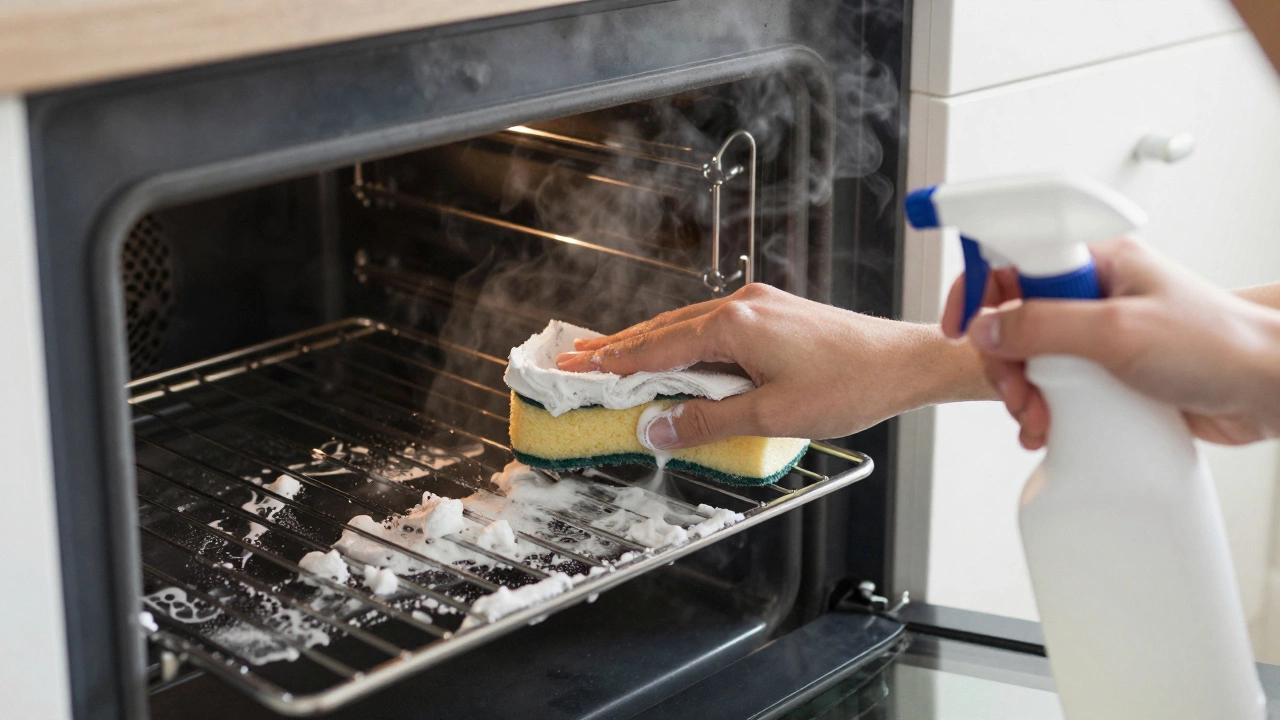
Don’t add vinegar until you’re ready to wipe. Spraying vinegar too early kills the effectiveness of the baking soda paste. The fizzing reaction uses up the baking soda’s cleaning power before it even gets a chance to work. Instead, wait until you’ve scrubbed gently with a damp sponge or cloth.
Then, spray undiluted white vinegar over the baking soda residue. The vinegar will react with the remaining baking soda, turning it into a foamy slurry that’s easy to wipe. This step also neutralizes any lingering alkaline residue, leaving no sticky film behind. It’s not about cleaning-it’s about rinsing.
If you skip the vinegar rinse, you might notice a chalky residue after wiping. That’s leftover baking soda. A quick spray of vinegar solves it. No need for scrubbing again. Just wipe.
What Happens If You Leave It Too Long?
Can you leave baking soda in the oven for 48 hours? Yes. And it won’t damage your oven. Baking soda is non-corrosive. It won’t scratch enamel or harm heating elements. But after 24 hours, you’re not getting better results-you’re just waiting longer. The paste dries out, becomes harder to remove, and may require more elbow grease to wipe off.
There’s no benefit to leaving it longer than 24 hours. If your oven is still dirty after 24 hours, you likely need to reapply the paste or consider a different method. Maybe your oven has heavy carbon buildup from burnt sugar or grease fires. In those cases, baking soda alone might not be enough. A scraper (plastic, never metal) and a little more patience help.
Special Cases: Self-Cleaning Ovens and Steam Ovens
If you have a self-cleaning oven, don’t use this method right before a cleaning cycle. The high heat will harden the paste and make it stick worse. Wait until after the cycle. Same goes for steam ovens. The steam can react with the baking soda and create a sticky mess. Stick to manual cleaning for these models.
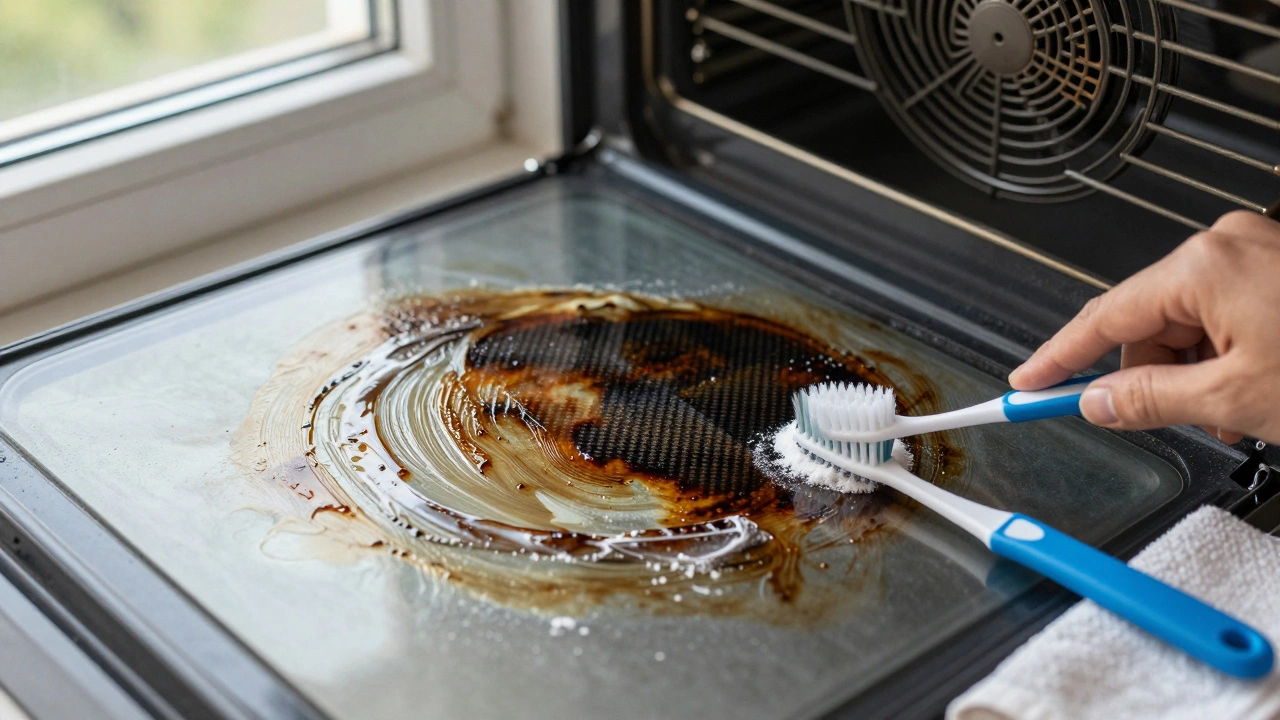
For convection ovens with fans, make sure you clean the fan guard too. Baking soda paste can reach most areas, but the fan housing is tricky. Use a toothbrush dipped in the paste to scrub around the blades. Vinegar rinse works here too.
Step-by-Step: The Right Way to Do It
- Remove racks and soak them in warm, soapy water. They don’t need the paste.
- Turn off the oven and let it cool completely. Never apply paste to a warm oven.
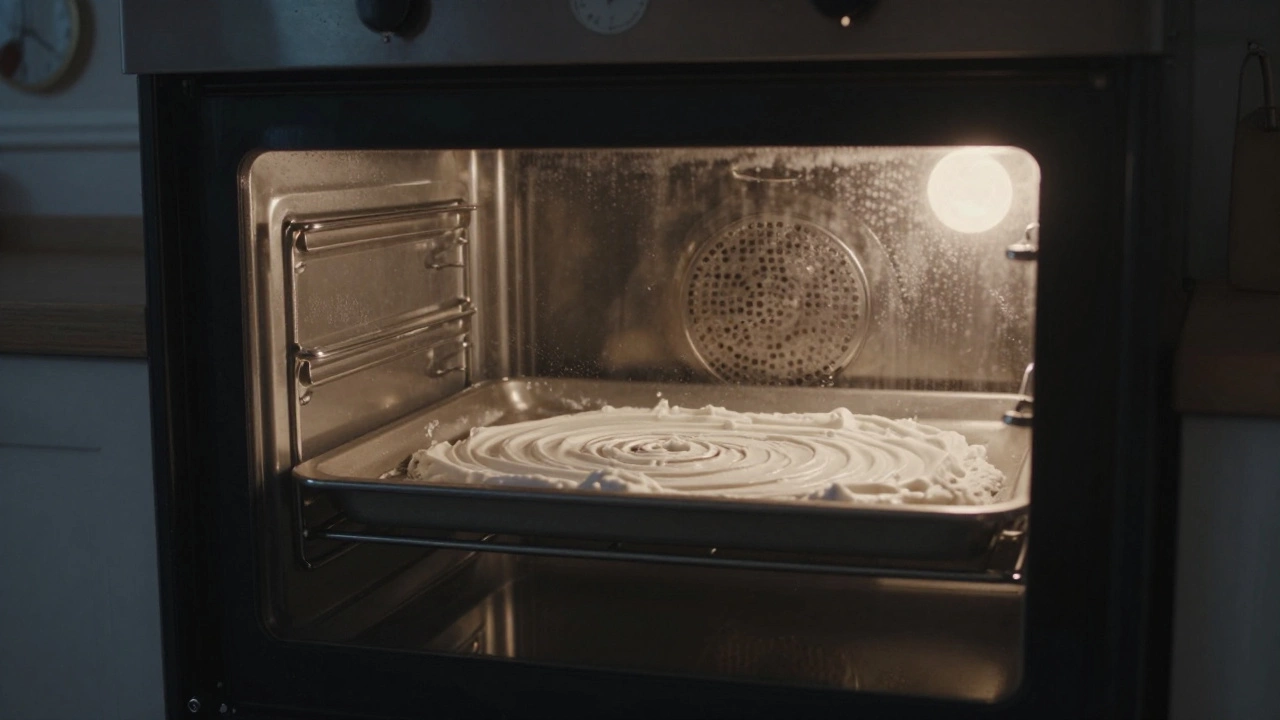
- Mix ½ cup baking soda with 2-3 tablespoons of water. Stir until it forms a thick, spreadable paste. Add a drop of dish soap if you want extra grease-cutting power.
- Use a brush or sponge to spread the paste on the oven interior-avoid heating elements and the oven door seal.
- Let it sit for at least 4 hours. For tough grime, leave it overnight (8-12 hours).
- After the waiting period, use a damp cloth or sponge to wipe away the paste. It should lift easily.
- Spray white vinegar over any stubborn spots. Let it fizz for 30 seconds, then wipe again.
- Rinse with a clean, damp cloth. Dry with a towel.
What Not to Do
- Don’t use metal scrubbers. They scratch enamel coatings.
- Don’t spray vinegar before baking soda sits. You’ll waste the cleaning power.
- Don’t use this method right before a self-clean cycle. Wait until after.
- Don’t forget the door. Grime builds up along the glass seal. Use a cotton swab dipped in paste for tight spots.
- Don’t expect instant results. This isn’t a magic spray. It’s a slow, safe soak.
How Often Should You Do This?
For most households, cleaning the oven every 3 to 4 months keeps it manageable. If you bake often-say, weekly pies or roasted meats-aim for every 2 months. If you only use the oven for reheating, once every 6 months is fine.
Try to wipe up spills while the oven is still warm (but not hot). A quick wipe with a damp cloth prevents baked-on messes. That cuts your deep clean time in half.
Alternative: Baking Soda Paste Only (No Vinegar)
You don’t need vinegar at all. Many people skip it. Baking soda alone works fine. Just rinse thoroughly with water afterward. Vinegar just makes the job easier and leaves a fresher smell. If you’re sensitive to vinegar’s smell, use lemon juice instead. It’s milder and leaves a citrus scent.
Some people add a few drops of essential oil (like tea tree or lavender) to the paste for fragrance. That’s fine-just make sure it’s food-safe and not too oily. Too much oil can leave a residue.
Final Tip: Test One Spot First
If your oven is old, has chipped enamel, or you’re unsure about the finish, test the paste on a small corner first. Wait 2 hours. If the surface looks fine, proceed. If it dulls or changes color, stop. Some older ovens have coatings that react poorly to alkaline cleaners. In that case, stick to warm soapy water and a soft cloth.