Pressure Washing Stain Checker
Analyze Your Surface
Recommendation
Select a stain and surface to see our recommendation.
Grabbing the hose and aiming for that stubborn patch of black algae on your driveway feels like a battle you’re destined to lose. You crank up the nozzle, but the grime just sits there, mocking you. It’s tempting to reach for the chemical bottles-the bright green degreasers or the harsh bleach mixes promising instant results. But what if you didn’t need them? What if plain old H2O, moving at high speed, was actually enough to get the job done?
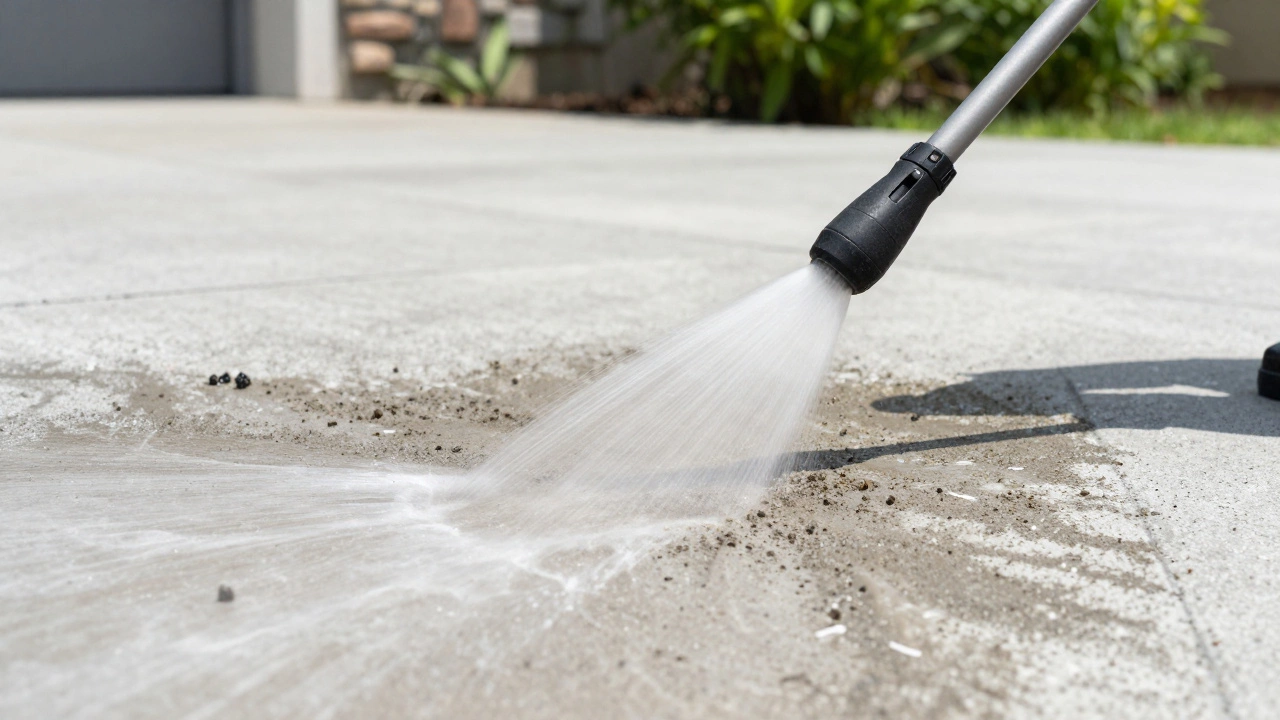
The short answer is yes. You absolutely can pressure wash with just water. In fact, for many surfaces and types of dirt, chemicals are unnecessary overkill. They add cost, create runoff issues, and complicate the cleanup process. However, relying solely on water requires understanding the physics behind the spray. It’s not just about pointing a wand; it’s about managing pressure (PSI) and flow rate (GPM) to do the heavy lifting that soap usually handles.
The Physics of Pure Water Cleaning
To understand why water alone works, we have to look at how pressure washing actually removes dirt. Most people think heat or chemicals are the primary cleaners, but in reality, mechanical force is king. When water hits a surface at thousands of pounds per square inch, it physically breaks the bond between the dirt and the material.
Think of it like knocking over a row of dominoes. If you push gently, they stay standing. If you hit them hard enough, they fall. The "push" here comes from two factors: PSI (Pounds Per Square Inch) and GPM (Gallons Per Minute). PSI provides the piercing power to break the seal of the dirt, while GPM provides the volume to rinse it away. Without sufficient GPM, even high-pressure water will just bounce off the dirt without carrying it away. This is why a cheap consumer-grade washer often fails where a professional machine succeeds-even if both claim similar PSI numbers. The pro unit moves more water, flushing the debris effectively.
Does higher PSI always mean better cleaning?
Not necessarily. High PSI is great for breaking tough bonds, but if your GPM is low, the dirt won't be rinsed away efficiently. For pure water cleaning, a balance of both is crucial. Too much PSI on delicate surfaces can cause damage, stripping paint or etching wood.
When Plain Water Is All You Need
There are specific scenarios where adding chemicals is not just unnecessary, but potentially harmful. Identifying these situations saves you money and protects your local ecosystem. Here is where cold water pressure washing shines:
- Fresh Dirt and Mud: If your car, patio furniture, or siding has just been splashed with mud, the dirt hasn't had time to bond deeply. High-pressure water lifts this loose particulate matter instantly.
- Pollen and Dust Buildup: During spring, homes accumulate layers of pollen. This is dry, lightweight debris. A standard fan tip nozzle blasts it away without needing any surfactants.
- Pre-Rinsing Before Chemical Application: Even when you do use chemicals, you should always pre-rinse with water first. This removes loose dirt so the cleaner can penetrate the actual stain rather than sitting on top of dust.
- Sensitive Landscapes: If you are washing near delicate plants, avoiding chemicals prevents root burn and soil contamination. Water runoff is far less toxic than detergent runoff.
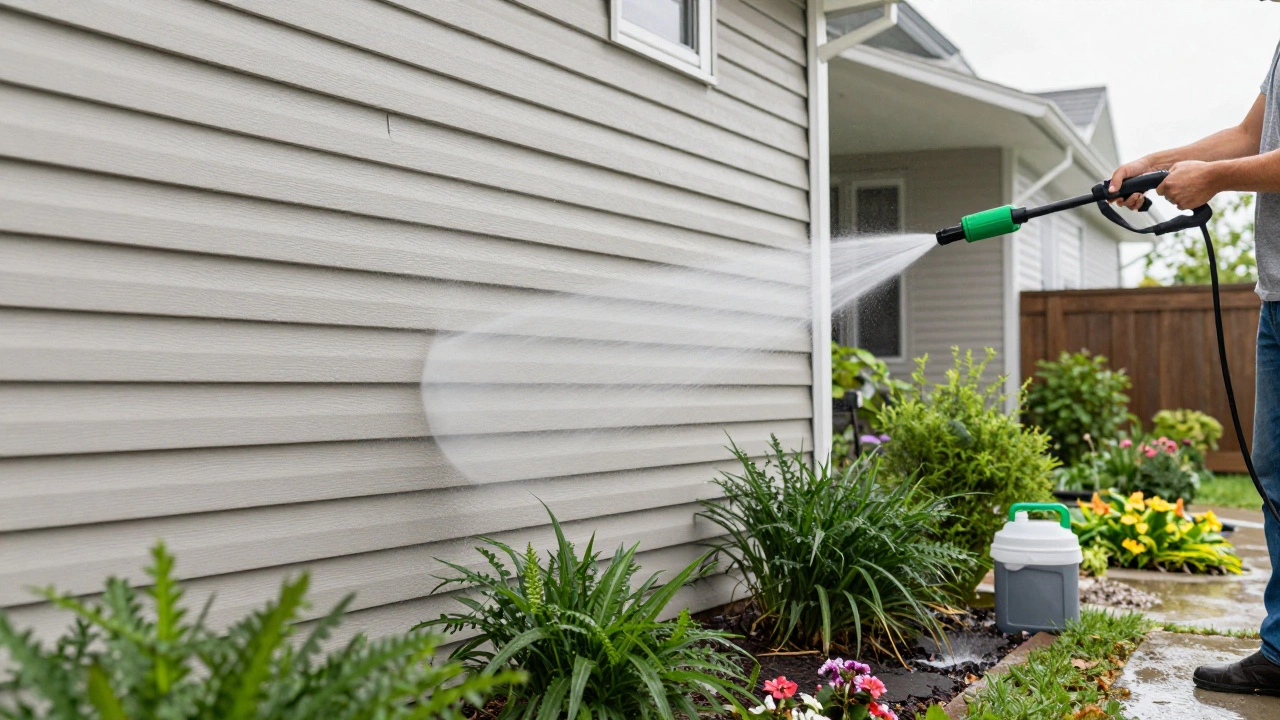
For example, washing down vinyl siding after a windy storm is a perfect candidate for water-only cleaning. The wind blows dirt onto the house, but it doesn't chemically bond with the vinyl. A quick pass with a 25-degree nozzle tip clears it right off.
The Limits of Water-Only Washing
While water is powerful, it isn't magic. There are certain types of stains that water simply cannot break down because they have formed a chemical bond with the surface or have penetrated porous materials. Trying to blast these away with water alone often leads to frustration and potential surface damage as you increase pressure to compensate for the lack of cleaning agents.
Here are the enemies of the water-only approach:
- Oil and Grease: Oil is hydrophobic, meaning it repels water. No amount of pressure will dissolve an oil stain on a concrete driveway. You need a degreaser to emulsify the oil so water can carry it away.
- Deep Mold and Mildew: Surface mold might lift off, but deep-rooted mildew in porous stone or wood requires a biocide (like bleach or oxygenated bleach) to kill the organism. Water only removes the visible spores, leaving the roots intact to grow back within weeks.
- Rust Stains: Rust is an oxidation reaction embedded in the material. Water cannot reverse oxidation. You need an acid-based cleaner to dissolve the iron oxide.
- Hard Water Deposits: White, crusty mineral deposits from evaporated water require acidic solutions to dissolve. Pressure alone will chip the deposit but leave the surrounding area stained.
If you find yourself cranking the pressure to its maximum setting and still seeing no change, stop. You aren't going to win that fight with water alone. It’s time to introduce a compatible cleaning agent.
Cold Water vs. Hot Water Pressure Washers
When discussing "just water," it’s important to distinguish between cold and hot water machines. Most residential units are cold water. These rely entirely on mechanical force. Commercial units often use heated water, which adds thermal energy to the equation.
Hot water acts as a solvent. It melts fats and oils naturally, making it superior for kitchen exhaust hoods, grease traps, or industrial floors. If you are using a cold water machine, you are strictly limited to mechanical removal. If you are using a hot water machine, you have the added benefit of thermal cleaning, which allows you to tackle light grease without chemicals. However, for general home maintenance-driveways, decks, and siding-cold water is sufficient and safer for most surfaces.
| Stain Type | Water Only | Chemicals Needed? | Best Nozzle Tip |
|---|---|---|---|
| Dirt/Mud | Excellent | No | White (40°) |
| Pollen/Dust | Excellent | No | White (40°) |
| Light Algae | Good | Optional | Green (25°) |
| Oil/Grease | Poor | Yes (Degreaser) | Yellow (15°) |
| Mold/Mildew | Fair (Surface Only) | Yes (Biocide) | Green (25°) |
| Rust | Poor | Yes (Acid) | Yellow (15°) |
Techniques for Maximizing Water-Only Efficiency
If you are committed to a chemical-free clean, your technique becomes your best tool. Since you lack the chemical reaction to help loosen dirt, you must optimize the mechanical action. Here is how to get the most out of your water stream:
1. Use the Right Nozzle Angle
The color-coded nozzle system dictates the spread of the water. A red nozzle (0 degrees) creates a pinpoint jet that cuts like a knife. While powerful, it risks damaging surfaces and doesn't cover much area. For water-only cleaning, start with a white (40-degree) or green (25-degree) nozzle. These provide a wider fan pattern, allowing you to move faster and cover more ground. The wider spray also reduces the risk of etching soft materials like wood or vinyl.
2. Maintain Consistent Distance
Pressure drops significantly as distance increases. To get consistent results, keep the wand at a fixed distance from the surface-usually 12 to 18 inches for concrete and 18 to 24 inches for siding. Moving too close can strip paint or gouge wood; moving too far reduces the impact force below the threshold needed to lift dirt.
3. Work Top to Bottom
Gravity is your ally. Start at the highest point of the surface, such as the roofline of a house or the top step of a deck. As you work downward, you rinse the loosened dirt off the lower sections. If you start at the bottom, you’ll end up re-soiling the areas you’ve already cleaned with runoff from above.
4. Overlap Your Passes
Don’t just spray randomly. Move the wand in steady, overlapping horizontal or vertical strokes. This ensures no spots are missed and creates an even finish. Random spraying often leaves streaks and patches of remaining dirt.
Environmental and Safety Benefits
Choosing to pressure wash with just water isn’t just about convenience; it’s an environmentally responsible choice. Chemical runoff from driveways and lawns often ends up in storm drains, flowing directly into local waterways without treatment. This introduces phosphates, sulfates, and other compounds that can harm aquatic life and disrupt ecosystems.
By sticking to water, you eliminate this pollution vector. Additionally, you protect your own health. Many commercial pressure washing chemicals are caustic. Handling them requires gloves, goggles, and proper ventilation. Water-only cleaning removes this hazard entirely, making it a safer option for DIY homeowners who may not have professional protective gear.
Furthermore, water-only cleaning extends the life of your equipment. Chemicals can corrode the internal seals and pumps of pressure washers if not flushed thoroughly after every use. Using only water means less maintenance and fewer costly repairs over the lifespan of your machine.
Common Mistakes to Avoid
Even with simple water, it’s easy to make errors that lead to poor results or property damage. Watch out for these common pitfalls:
- Using the Wrong Tip for the Job: Using a red (0-degree) tip on wood decking will shred the fibers. Always test your pressure on an inconspicuous area first.
- Ignoring Surface Porosity: Concrete is dense and can handle high pressure. Wood and composite decking are porous and softer. Adjust your PSI accordingly. Lower pressure is better for delicate surfaces.
- Skipping the Pre-Inspection: Look for loose paint, cracked mortar, or electrical outlets before you start. High-pressure water can force moisture into cracks, causing structural damage or electrical hazards.
- Expecting Instant Results on Old Stains: Years of accumulated grime won’t vanish in one pass. You may need multiple passes or to accept that some staining is permanent without chemicals.
Conclusion: Is Water Enough for You?
So, can you pressure wash with just water? Yes, and for many routine maintenance tasks, it is the preferred method. It’s cheaper, safer, and better for the environment. If your goal is to remove fresh dirt, pollen, mud, or light algae from durable surfaces like concrete, brick, or vinyl siding, water alone is highly effective.
However, don’t fight the physics. If you are dealing with oil, deep mold, or rust, water will disappoint you. In those cases, embracing the right cleaning agent is necessary. The key is knowing when to rely on the brute force of water and when to call in chemical reinforcements. By mastering the balance between PSI, GPM, and technique, you can achieve a sparkling clean exterior without reaching for the bottle every time.
Will pressure washing with just water kill weeds in driveway cracks?
It can remove small, young weeds by dislodging them from the soil. However, it rarely kills the root system. The weed will likely regrow. For long-term weed control, you may need a herbicide or manual removal after pressure washing.
Is it safe to pressure wash my house with just water?
How do I prevent water spots after pressure washing?
Water spots are caused by minerals in tap water evaporating on the surface. To minimize this, wash in the shade (not direct sun) so the water dries slower, or rinse the area with distilled water if possible. Wiping down glass windows immediately after washing also helps.
Can I use vinegar instead of chemicals for pressure washing?
Vinegar is a mild acid and can help with mineral deposits and some algae, but it is not a true "water-only" solution. It is generally safe for most surfaces but should be diluted. It is less effective than commercial cleaners for heavy grease or deep mold.
What PSI should I use for different surfaces?
Concrete: 3000+ PSI. Brick/Pavers: 2000-3000 PSI. Vinyl Siding: 1500-2000 PSI. Wood Decks: 500-1500 PSI (use caution). Cars: Under 1200 PSI (specialty nozzle required).