End-of-Tenancy Oven Clean Score Calculator
Use this tool to check if your oven meets the "Like-for-Like" standard required by most UK landlords. Answer the questions below to get a risk assessment.
Inspection Checklist
Your Assessment
Cost vs. Risk Analysis
- DIY: £5-£10 + 4 hours effort
- Pro Clean: £60-£90 + Receipt Proof
- Potential Deduction: £100-£200
Tip: A professional receipt is strong evidence in disputes.
Nothing kills your deposit faster than a landlord spotting a blackened, grease-caked oven during the final inspection. You might have scrubbed every skirting board and polished every window, but if that appliance looks like it survived a house fire, you’re likely losing money. The question isn't just "how clean"-it's about meeting a specific, often subjective standard that separates a full refund from a hefty deduction.
Here is the hard truth: there is no universal law stating an oven must be sterile. However, most UK tenancy agreements include a clause requiring the property to be returned in a condition similar to how you received it, allowing for fair wear and tear. For ovens, this line is blurry. One landlord sees a few crumbs; another sees neglect. To protect your cash, you need to understand exactly what inspectors look for and how to meet those expectations without spending your entire weekend on your knees.
The "Like-for-Like" Rule Explained
Your contract likely states you must leave the place as you found it. If you moved into a home with a lightly used oven, leaving it sparkling new is great. But if you inherited an oven with baked-on carbon deposits from the previous tenant, you don’t necessarily have to remove decades of grime unless it got significantly worse during your stay. This concept is called fair wear and tear.
Fair wear and tear includes minor scratches on the enamel, slight discoloration from heat, or small amounts of grease that naturally accumulate over time. It does not include thick layers of burnt food, rust caused by lack of cleaning, or broken racks. If you can take photos of the oven when you move in (and you should), you have proof. Without photos, landlords often assume the worst. If you didn’t take them, aim for a level of cleanliness that looks professionally maintained, not just wiped down.
What Landlords Actually Check During Inspection
Most letting agents use standardized check-out reports. They don’t just glance at the oven door; they open it up. Here is the breakdown of what triggers a deduction:
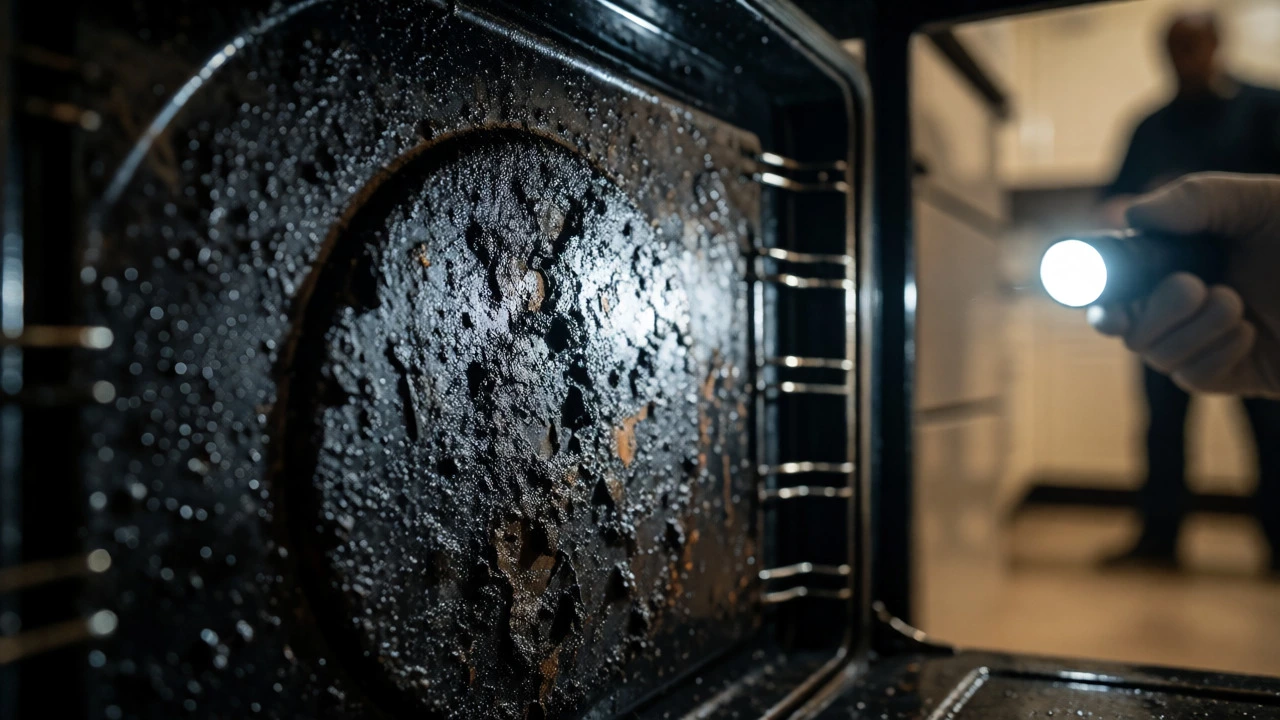
- The Interior Walls: Are there large patches of black, flaky residue? Can you see the original color of the enamel?
- The Glass Door: Is the inner pane clear? Grease smears here are highly visible and easy to fix.
- The Racks and Trays: These are often overlooked. If they are warped, heavily soiled, or missing, expect a charge.
- The Seals: Rubber seals around the door collect grime. If they are black and sticky, it signals poor hygiene.
- The Exterior: Handles, control knobs, and the surrounding cabinet fronts must be free of sticky fingerprints and grease splatters.
If you can run a damp cloth across the interior walls and pick up loose debris rather than scraping off hardened carbon, you are usually safe. If the cloth comes back black and greasy, you haven’t done enough.
Diy vs. Professional: When to Call the Pros
Can you do it yourself? Yes. Should you? That depends on the state of the oven. Modern self-cleaning ovens use pyrolytic cycles to burn off residue, which makes DIY easier. Older conventional ovens require manual scrubbing with caustic chemicals or steam methods.
DIY cleaning works best if the grime is light to moderate. You’ll need a good degreaser, steel wool (for cast iron racks only, not enamel), and elbow grease. Steam cleaning using water and vinegar can loosen light dirt, but it rarely removes heavy carbon buildup. If you spend four hours scrubbing and still see black spots, you’ve wasted your time and energy.
| Method | Cost Estimate | Time Required | Effectiveness on Heavy Grime | Risk of Damage |
|---|---|---|---|---|
| DIY Chemical Spray | £5 - £10 | 2 - 4 Hours | Moderate | Low (if ventilated) |
| Steam/Vinegar Method | Under £5 | 3 - 5 Hours | Low | Very Low |
| Professional Deep Clean | £60 - £90 | 1 Hour (Service Time) | High | Negligible |
Hiring a specialist oven cleaning service is often cheaper than losing £100+ from your deposit. Professionals use industrial-grade cleaners and disassemble the oven to clean behind panels and under elements. They also provide a receipt, which acts as insurance. If the landlord argues, you show the invoice proving you paid for a deep clean. In Leeds and many other UK cities, these services are readily available and often bundle in hob and extractor fan cleaning, which are frequently inspected alongside the oven.
Step-by-Step Checklist for a Deposit-Safe Oven
If you decide to tackle this yourself, follow this protocol to ensure you hit the mark. Don’t skip steps.
- Remove Everything: Take out all racks, trays, and grill pans. Soak them in hot water and dishwasher tablets overnight. This breaks down grease without scrubbing.
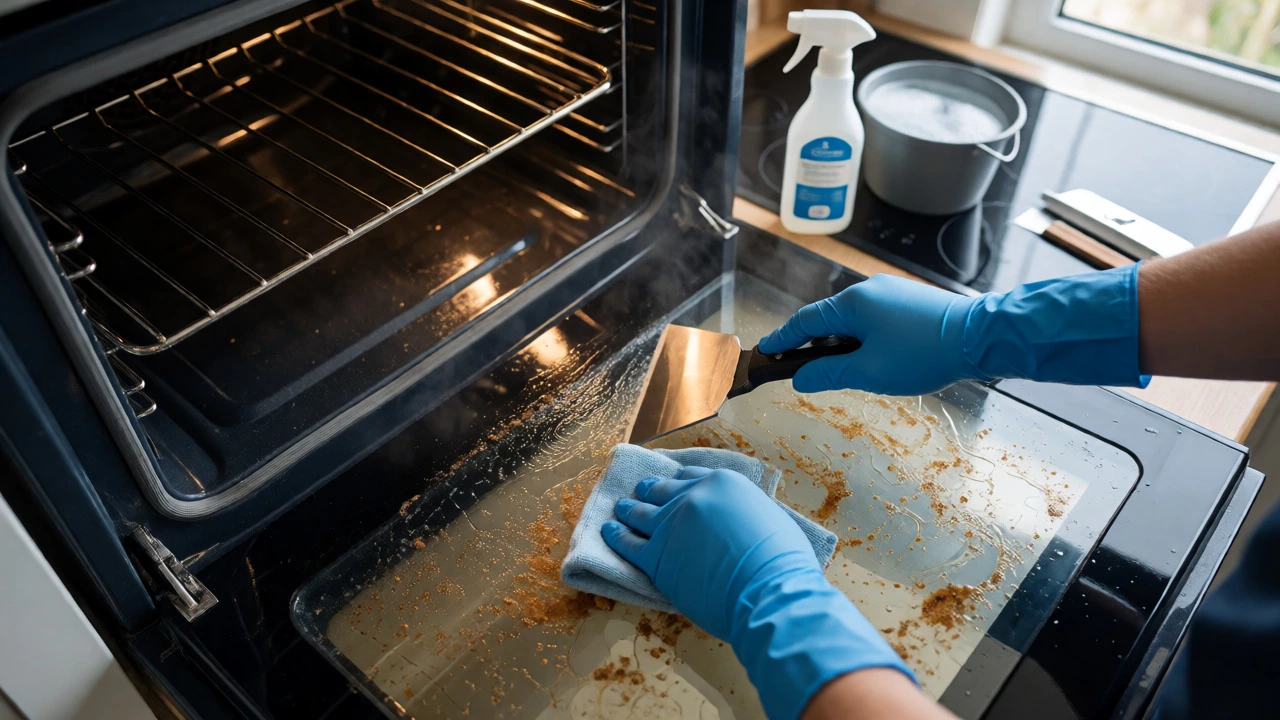
- Clean the Glass: Use a razor blade scraper gently on the glass door to lift baked-on spills. Follow with a microfiber cloth and glass cleaner.
- Tackle the Interior: Apply a strong oven cleaner to the walls and floor. Let it sit for the recommended time (usually 20-30 minutes). Do not let it dry out completely.
- Wipe Down: Use a non-scratch scouring pad. Wipe in circular motions. Rinse the cloth frequently in clean water. Repeat until the cloth stays white.
- Clean the Seals: Use an old toothbrush with baking soda paste to scrub the rubber door seal. This area traps bacteria and smells.
- Polish the Exterior: Clean the handles, knobs, and surrounding cabinets. Grease travels further than you think.
- Final Check: Turn on the oven light. Look for shadows or remaining dark spots. If you see any, spot-clean them again.
Pro Tip: Pay attention to the top element and the bottom heating plate. These areas trap fat splatter. If they are covered in thick black gunk, the oven will smell bad when heated, which is another reason landlords deduct money.
Common Pitfalls That Cost Deposits
Even well-meaning tenants make mistakes. The biggest one is assuming that "clean" means "wiped." A quick wipe-down after cooking is fine for daily life, but it doesn’t count for end-of-tenancy standards. Another error is damaging the enamel. Using harsh abrasive pads on delicate enamel surfaces can cause permanent scratches. Scratches look like dirt and can lead to deductions because they suggest rough treatment.
Also, don’t forget the hob and extractor fan. Often, the oven is clean, but the filter above it is dripping with yellow grease. Inspectors view the kitchen appliances as a unit. If the oven is pristine but the hood is filthy, you might still face a deduction for "general kitchen hygiene."
When to Negotiate
If you’ve cleaned thoroughly and the landlord still claims the oven is dirty, ask for photographic evidence. Compare their photos with your move-in photos (if you have them) or your post-cleaning photos. If the issue is minor wear, such as faint scratches or slight discoloration, politely remind them of the fair wear and tear clause. If the issue is genuine neglect (e.g., you never cleaned it once in two years), accept the deduction gracefully. Fighting a valid claim costs more in stress than the £50 fee.
Does the oven need to be brand new?
No. It needs to be clean and functional. Minor scratches, discoloration from heat, and small stains that resist removal are considered fair wear and tear. However, thick layers of burnt-on grease or food residue are not acceptable.
Do I need to hire a professional cleaner?
Not strictly, but it is highly recommended for older ovens or if you want to guarantee your deposit return. Professional cleaners provide receipts that serve as proof of effort, which helps if disputes arise. DIY is fine if the oven was already relatively clean when you moved in.
What if my oven has a self-cleaning function?
Run the self-cleaning cycle before you leave. Afterward, wipe away the ash residue. Self-cleaning burns off grime but leaves behind grey ash that must be removed manually. If you skip wiping the ash, the landlord may consider the oven dirty.
Are scratches on the oven rack deductible?
Usually no, unless the racks are severely rusted or bent due to misuse. Normal wear from sliding pots and pans is expected. However, if the racks are coated in unremovable grease, they should be replaced or deeply cleaned.
How much does professional oven cleaning cost in the UK?
Prices vary by region and oven size, but typically range from £60 to £90 for a single oven. This often includes cleaning the hob and extractor filters. Compared to potential deposit deductions of £100-£200, it is a worthwhile investment.