Upholstery Baking Soda Suitability Checker
Verdict
SuitabilityYou’ve spilled coffee on your favourite armchair, or maybe the kids have tracked mud across the beige sectional. Your first instinct might be to reach for a chemical spray, but there’s a humble white powder sitting in your kitchen cupboard that claims to do it all: baking soda is a sodium bicarbonate compound widely used as a mild abrasive and deodoriser in household cleaning. But does it actually work on upholstery? The short answer is yes, but with major caveats. It’s not a magic eraser for deep-set stains, and if you use it wrong, you could end up with a crusty, white-dusted mess that looks worse than the original spill.
Here’s the reality: baking soda excels at absorbing odours and lifting fresh, surface-level spills from natural fibres. It fails miserably on oil-based stains or delicate silks. If you’re hoping to restore a ten-year-old sofa to showroom condition with just this pantry staple, you’ll be disappointed. But if you want a safe, cheap way to keep your furniture smelling fresh and handle minor accidents before they set, it’s one of the best tools in your kit. Let’s break down exactly how to use it without ruining your fabric.
The Science Behind the Powder
To understand why baking soda works (and where it doesn’t), you need to look at its chemistry. Sodium bicarbonate is alkaline, which means it neutralises acidic odours like sweat, pet urine, and food spills. It also has a crystalline structure that acts as a gentle abrasive. When you rub it into fabric, those tiny crystals help dislodge dirt particles trapped between fibres. However, unlike commercial enzymatic cleaners, baking soda lacks enzymes that break down proteins found in blood, milk, or grass stains. That’s why it struggles with biological messes.
Think of baking soda as a sponge rather than a solvent. It absorbs moisture and locks in smells. This makes it perfect for refreshing a musty couch after a damp winter here in Sheffield, but poor choice for removing a greasy pizza slice stain. The key is managing expectations. You aren’t stripping the fabric; you’re refreshing it.
When to Use Baking Soda on Furniture
Not all fabrics are created equal. Using baking soda on the wrong material can cause permanent damage. Here is a quick guide to compatibility:
- Cotton and Linen: These natural fibres tolerate baking soda well. They are sturdy enough to handle the mild abrasion and absorb the powder without retaining residue easily.
- Polyester Blends: Generally safe, but because polyester holds oils more stubbornly, baking soda alone often isn’t enough for grease spots. It works best for odour control here.
- Wool and Silk: Proceed with extreme caution. Wool is sensitive to pH changes, and while baking soda is mild, leaving it too long can dull the sheen. Silk should almost never be treated with dry powders unless tested on a hidden spot first.
- Microfibre: Tricky territory. Microfibre traps powder deep within its split fibres. Vacuuming often leaves a chalky haze behind. Spot testing is non-negotiable.
| Fabric Type | Suitability | Risk Level | Best For |
|---|---|---|---|
| Cotton/Linen | High | Low | Odour removal, fresh spills |
| Polyester | Medium | Low | General refresh, light dust |
| Wool | Low | Medium | Brief odour treatment only |
| Silk/Velvet | Very Low | High | Rarely recommended |
| Leather | No | High | Can dry out and crack leather |
Step-by-Step: The Dry Refresh Method
This is the safest way to use baking soda on upholstery. It’s ideal for general maintenance when there are no visible stains, just a lingering “old house” smell or slight staleness from daily use.
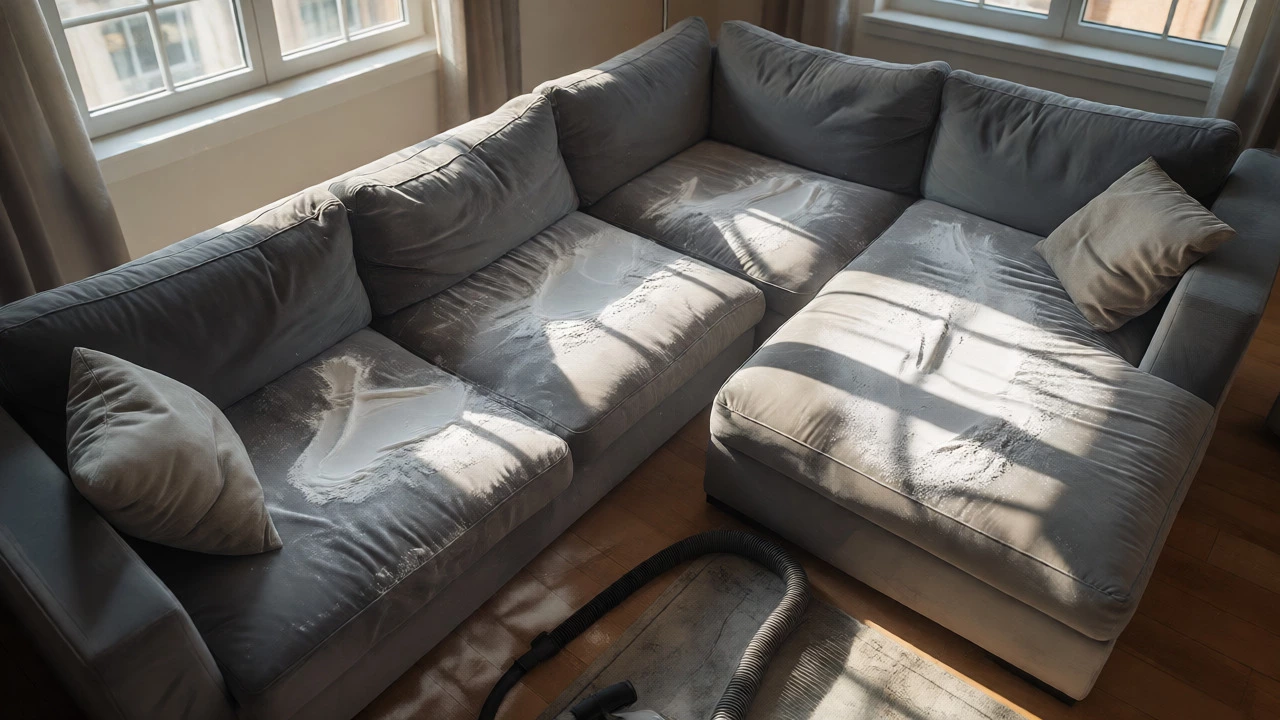
- Vacuum First: Never skip this step. Baking soda will mix with existing dust and crumbs, creating a muddy paste if applied over debris. Use an upholstery attachment to remove loose dirt thoroughly.
- Apply Generously: Sprinkle a thin, even layer of baking soda over the entire surface. Don’t worry about being neat; you want full coverage. For heavily soiled areas, you can apply a slightly thicker coat.
- Work It In Gently: Use a soft-bristled brush or a clean cloth to lightly work the powder into the fibres. Do not scrub hard, especially on delicate weaves. You just want the powder to penetrate the top layer.
- Wait: Let it sit for at least 30 minutes. For strong odours, leave it overnight. The longer it sits, the more odour molecules it absorbs.
- Vacuum Thoroughly: This is critical. Use a vacuum with a HEPA filter if possible. Go over the area multiple times, changing directions (horizontal then vertical) to pull powder out of the weave. Any leftover powder will look like white specks once it dries.
Tackling Fresh Spills Before They Set
If you’ve just knocked over a glass of red wine or juice, act fast. Baking soda can save the day if you catch it within minutes. The goal here is absorption, not cleaning.
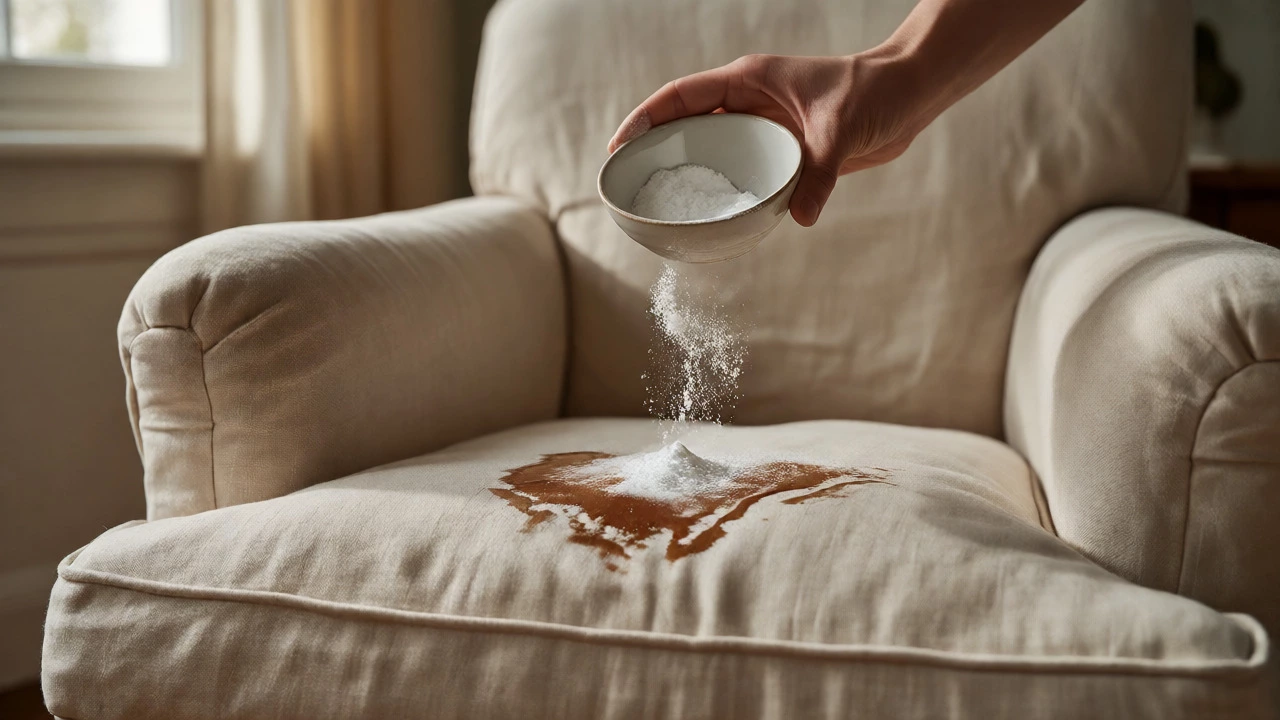
First, blot-never rub-the excess liquid with a clean white cloth. Rubbing pushes the stain deeper into the foam cushion. Once you’ve lifted as much liquid as possible, pile a generous mound of baking soda directly onto the wet spot. Cover the entire damp area plus an inch around it. Let the powder sit until it clumps together and turns greyish, indicating it has absorbed the moisture. This usually takes 15-20 minutes. Vacuum away the clumps immediately. If the stain remains, you may need a follow-up treatment with a vinegar solution, but baking soda handles the bulk of the moisture.
What Baking Soda Cannot Do
It’s frustrating when home remedies fail, so let’s be clear about the limitations. Baking soda is not a degreaser. If you have a buttery popcorn stain or makeup smear, the powder will absorb the water content but leave the oil behind. You’ll likely see a halo effect where the centre is cleaner but the edges remain dark.
Additionally, baking soda does not disinfect. While it inhibits bacterial growth by changing pH levels, it won’t kill pathogens like Staphylococcus aureus or E. coli effectively. If you’re cleaning up after a sick guest or a pet accident involving solid waste, rely on a proper disinfectant or professional steam cleaning instead. Relying solely on baking soda for hygiene is a common mistake that leads to lingering bacteria.
Mixing Solutions for Stubborn Marks
For tougher jobs, you can combine baking soda with other household items to create a paste. This increases its cleaning power but requires careful rinsing.
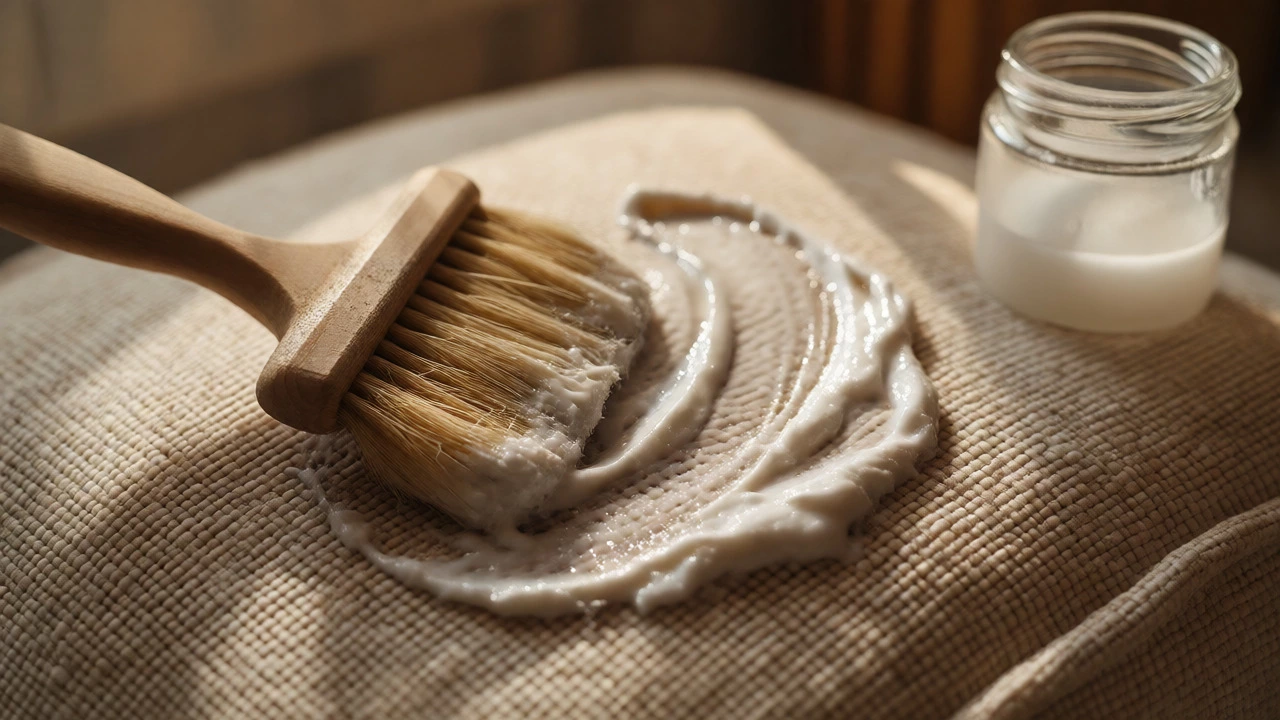
A popular recipe mixes three parts baking soda with one part water. Stir until it forms a thick consistency similar to toothpaste. Apply this paste to the stain using a soft brush. Let it dry completely-this can take several hours depending on humidity. Once dry, the paste hardens and lifts the stain as it crystallises. Vacuum it away. For organic stains like vomit or pet urine, adding a few drops of white vinegar to the paste creates a fizzing reaction that helps lift residues, though the effervescence itself does little cleaning; it’s the mechanical action of the bubbles that helps.
Be warned: wet pastes carry a higher risk of water rings. Always test on an inconspicuous area, like the back of a cushion, before treating the front of your sofa.
Common Mistakes to Avoid
Most people ruin their upholstery with baking soda not because the product is bad, but because of user error. Here are the pitfalls I see most often:
- Using Too Much Water: Trying to make the paste too runny saturates the foam underneath. Foam cushions take days to dry and can develop mould if they stay damp inside.
- Ignoring Colourfastness: Some dyes bleed when exposed to moisture, even mildly alkaline solutions. Always check the manufacturer’s tag. If it says “S” (solvent only), avoid water-based methods entirely.
- Skipping the Vacuum: Leaving residue behind attracts more dirt. White powder looks like dust later, making the furniture appear dirty again quickly.
- Applying to Leather: Baking soda is abrasive and drying. On leather, it strips natural oils, leading to cracks. Stick to specific leather conditioners.
Alternatives Worth Considering
If baking soda doesn’t cut it, what else can you try? Cornstarch is a good alternative for oily stains because it absorbs grease better than baking soda. Simply sprinkle cornstarch on the grease spot, let it sit for an hour, and vacuum. For ink or marker stains, rubbing alcohol on a cotton ball often works better than any powder.
Commercial foaming cleaners offer convenience but come with a price tag and potential chemical residues. Enzymatic cleaners are superior for pet accidents because they digest the proteins causing the smell. Keep baking soda in your rotation for routine care, but don’t hesitate to upgrade to specialised products for heavy-duty issues.
Will baking soda bleach my upholstery?
No, baking soda is not a bleaching agent. It is a mild abrasive and deodoriser. However, if you leave it on coloured fabrics for too long or use excessive water, it might cause slight fading in some synthetic dyes. Always test on a hidden area first to ensure colourfastness.
How long should I leave baking soda on a sofa?
For general odour removal, 30 minutes is sufficient. For strong smells like pet urine or smoke, leave it overnight (8-12 hours). Ensure the room is dry; high humidity can prevent the powder from working effectively.
Can I use baking soda on microfiber sofas?
Yes, but carefully. Microfiber traps powder easily. Use a very small amount, work it in gently with a soft brush, and vacuum extensively. Residual powder can make microfiber feel stiff or look chalky if not fully removed.
Does baking soda remove coffee stains?
It helps if the stain is fresh. Blot the liquid first, then apply baking soda to absorb remaining moisture. For old, set-in coffee stains, baking soda alone is rarely effective. You may need a mixture of baking soda and hydrogen peroxide or a dedicated enzyme cleaner.
Is baking soda safe for pets and children?
Generally, yes. Baking soda is non-toxic. However, inhaling large amounts of fine powder can irritate lungs, so keep pets and kids away during application and vacuuming. Also, ensure you vacuum thoroughly so they don’t ingest residual powder.