Baking Soda Timing Calculator
How Long Should You Leave Baking Soda?
Optimize your mattress cleaning based on conditions
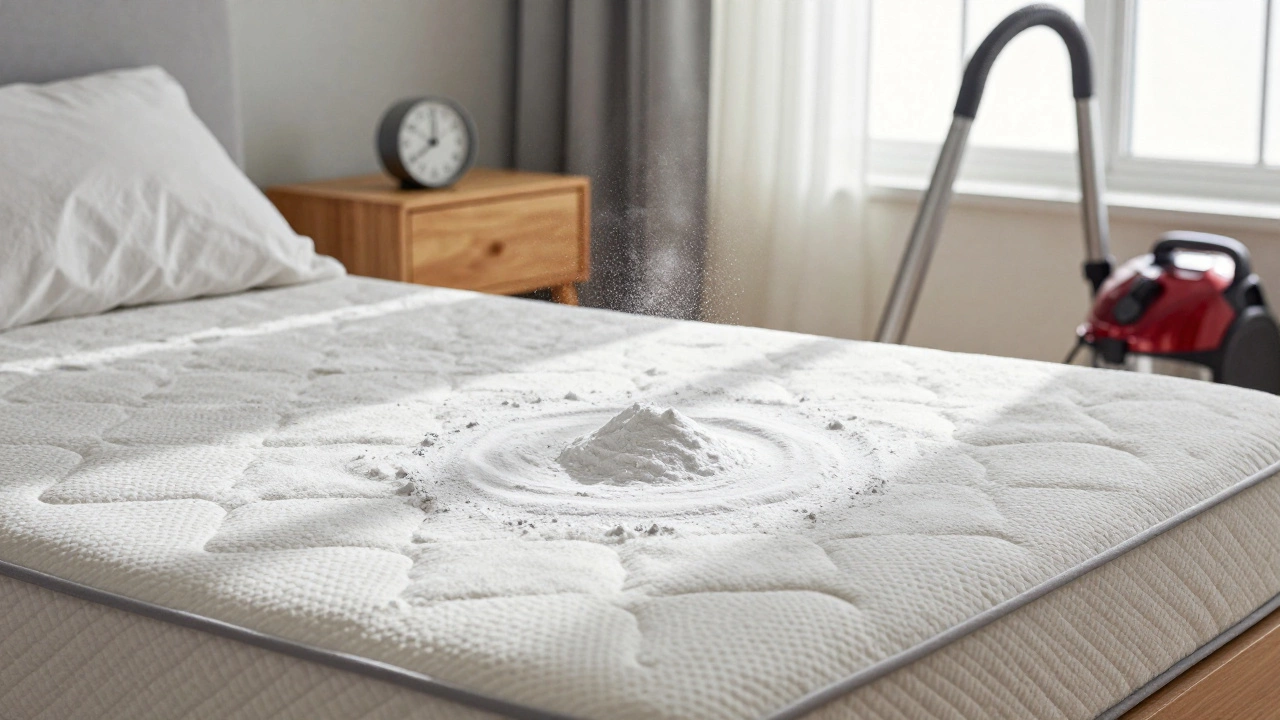
You’ve heard the advice: sprinkle baking soda on your mattress, let it sit for hours or overnight, then vacuum it up. It’s supposed to pull out odors, absorb moisture, and leave your bed fresh. But what if you forget about it? What happens if you leave baking soda on a mattress too long?
It Won’t Damage the Mattress - But It Might Not Help Either
Baking soda is gentle. It won’t eat through fabric, break down foam, or rust springs. Even after weeks, your mattress won’t fall apart. That’s the good news. The bad news? Leaving it on longer than needed doesn’t make it work better. Baking soda absorbs odors and moisture by sticking to particles in the air and surface. Once it’s saturated - usually within 4 to 8 hours - it stops working. After that, it’s just sitting there, collecting dust, skin flakes, and maybe even new smells.
One person left baking soda on their mattress for three weeks after a pet accident. They thought more time meant more cleaning. When they finally vacuumed, the powder was still there - in clumps. The odor was gone, yes, but the mattress felt gritty. And the vacuum cleaner? It clogged twice. That’s not a win.
Moisture Can Get Trapped - and That’s a Problem
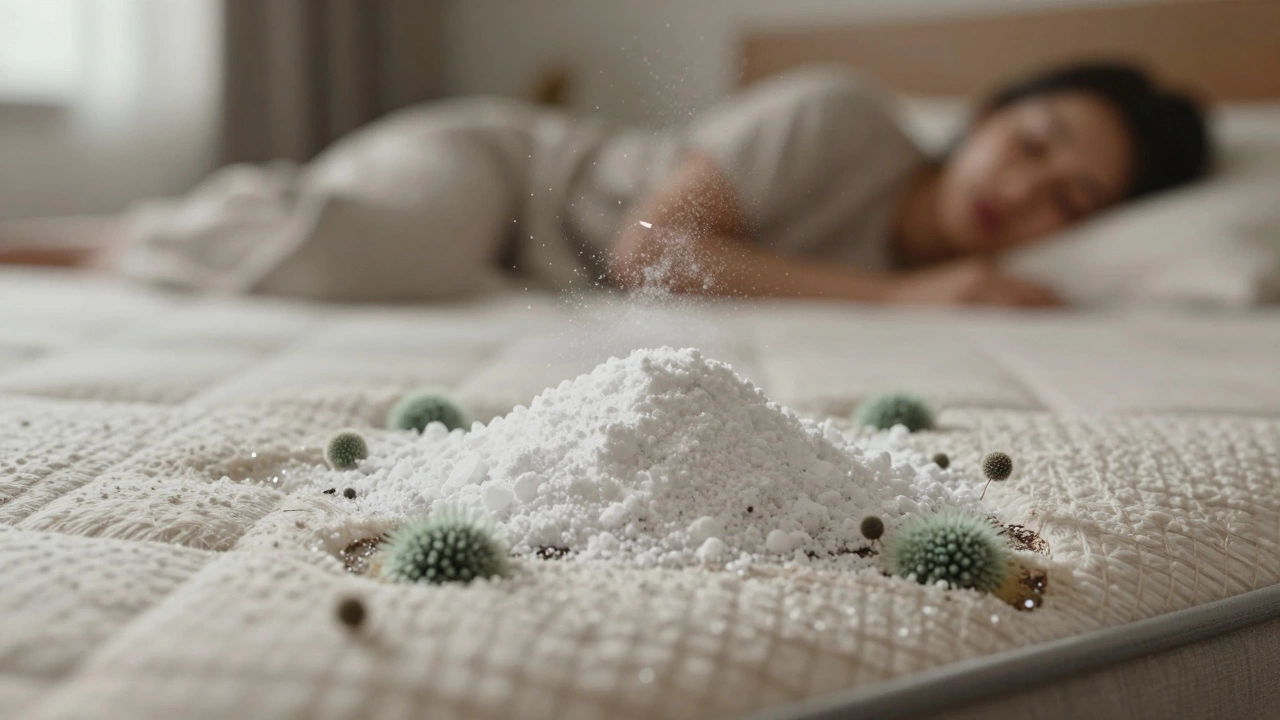
Baking soda doesn’t just absorb smells. It absorbs water. If your mattress was damp - from sweat, spills, or high humidity - the baking soda pulls that moisture into itself. But if you leave it on too long, especially in a humid room, the moisture doesn’t just disappear. It gets trapped between the baking soda and the mattress fabric. That creates a perfect environment for mold and mildew to grow, even if you can’t see it.
Studies from the Journal of Occupational and Environmental Hygiene show that hidden moisture in mattresses can lead to microbial buildup in as little as 10 days. You won’t smell it right away. But over time, you might notice a musty odor returning, or worse - your allergies get worse after sleeping. That’s not baking soda doing its job. That’s baking soda hiding a bigger problem.
Vacuuming Gets Harder - and Messier
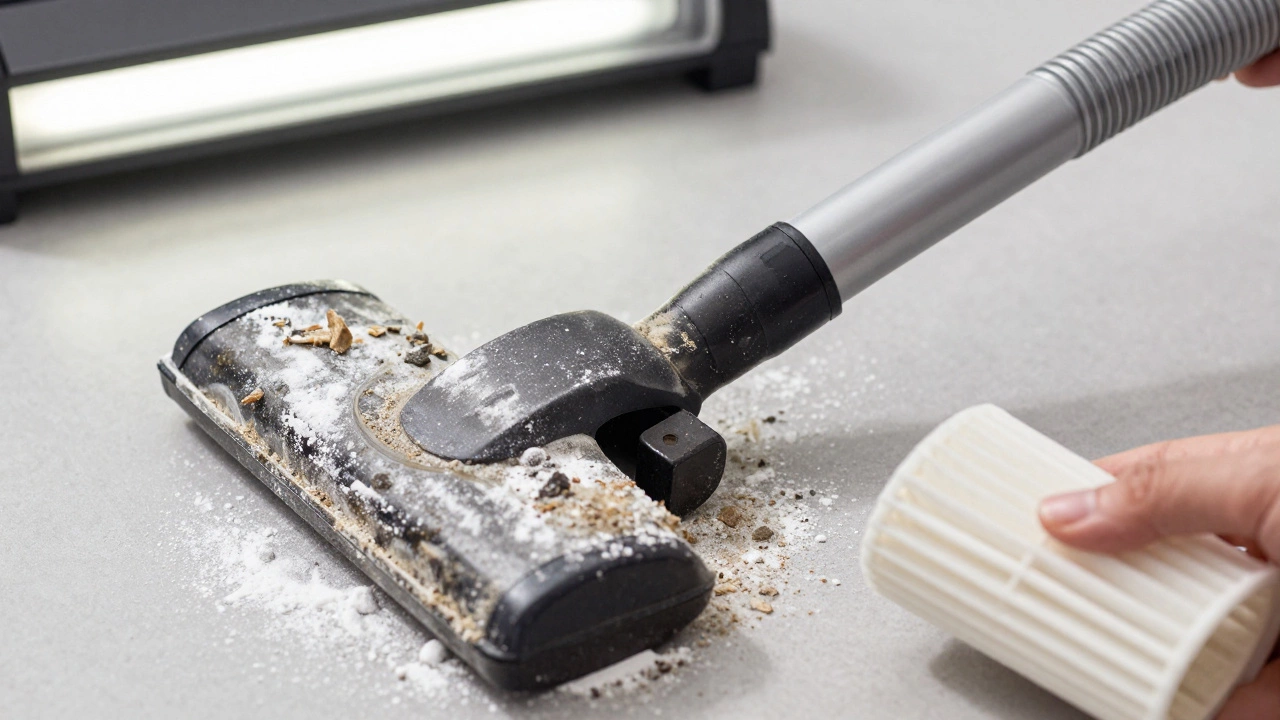
Think about how baking soda behaves. It’s fine powder. When it’s fresh, your vacuum sucks it up easily. But if it sits for days, it clumps. Dust, dead skin, and oils from your body mix with it. That creates a sticky paste. Your vacuum’s hose might clog. The filter gets coated. You’ll end up with a vacuum that smells like old sweat and needs cleaning itself.
One homeowner tried to vacuum baking soda that had been on the mattress for 10 days. The vacuum motor started overheating. She had to disassemble the machine, clean out the brush roll, and replace the filter. The cost? $45. The time? Two hours. All because she forgot to vacuum.
It Can Residue on Your Skin and Sheets
Even after vacuuming, some baking soda particles stay behind. You might not notice them - until you roll over in bed and feel a fine grit on your skin. Or you wake up with a rash on your arms or back. That’s not common, but it happens. People with sensitive skin or eczema are more likely to react. Baking soda has a high pH - around 9. That’s not harmful in small doses, but when it’s constantly rubbing against your skin for days, it can dry out your natural barrier.
There’s no official medical report linking baking soda residue to skin issues, but dermatologists at the American Academy of Dermatology warn that alkaline substances left on skin for prolonged periods can disrupt pH balance. If you’re waking up itchy, it’s worth considering whether your mattress is still holding onto cleaning residue.
What’s the Right Amount of Time?
Here’s the simple rule: leave baking soda on your mattress for 1 to 8 hours. Overnight is fine - but only if you’re going to vacuum it first thing in the morning. Don’t leave it for days. Don’t leave it for weeks. Set a reminder on your phone. If you’re cleaning after a spill, wait 6 hours. If you’re doing routine odor control, 4 hours is enough.
Pro tip: Cover the mattress with a clean sheet or towel while the baking soda sits. That keeps dust out and makes vacuuming easier. And always use a vacuum with a HEPA filter. Regular vacuums just kick the powder back into the air.
Alternatives That Work Better - and Faster
If you’re tired of guessing how long to leave baking soda on, try these proven methods:
- White vinegar spray: Mix equal parts water and vinegar in a spray bottle. Lightly mist the mattress, then blot with a towel. Vinegar kills odor-causing bacteria instantly and dries fast. Let it air out for 30 minutes.
- Activated charcoal: Place small sachets of activated charcoal under the mattress or on top. It absorbs odors more efficiently than baking soda and doesn’t leave residue. Great for ongoing use.
- UV-C light sanitizer: Handheld UV-C devices kill dust mites and bacteria in under 10 minutes. No powder, no mess, no waiting.
These options don’t require you to remember when to vacuum. They’re cleaner, faster, and more reliable.
When to Call a Professional
If your mattress smells bad even after cleaning - or if you see dark spots, stains, or mold - baking soda won’t fix it. That’s a sign of deep moisture damage or microbial growth. Professional mattress cleaners use steam extraction and antimicrobial treatments that reach deep into the core. It costs $80-$150, but it’s cheaper than replacing a ruined mattress.
Also, if you have asthma, allergies, or young kids, don’t risk leaving powders on bedding. Use non-powder methods. Your lungs will thank you.
Final Takeaway
Leaving baking soda on your mattress too long won’t destroy it - but it won’t help either. It turns from a cleaning tool into a mess-maker. The goal isn’t to leave it longer. The goal is to leave it just long enough to work, then remove it completely. Eight hours max. Vacuum well. Move on.
Your mattress doesn’t need a spa day. It needs a quick, clean, and timely clean.