Pressure Washer Nozzle Selector
Choose Your Surface Type
Select your surface type and material to see recommended nozzle selection.
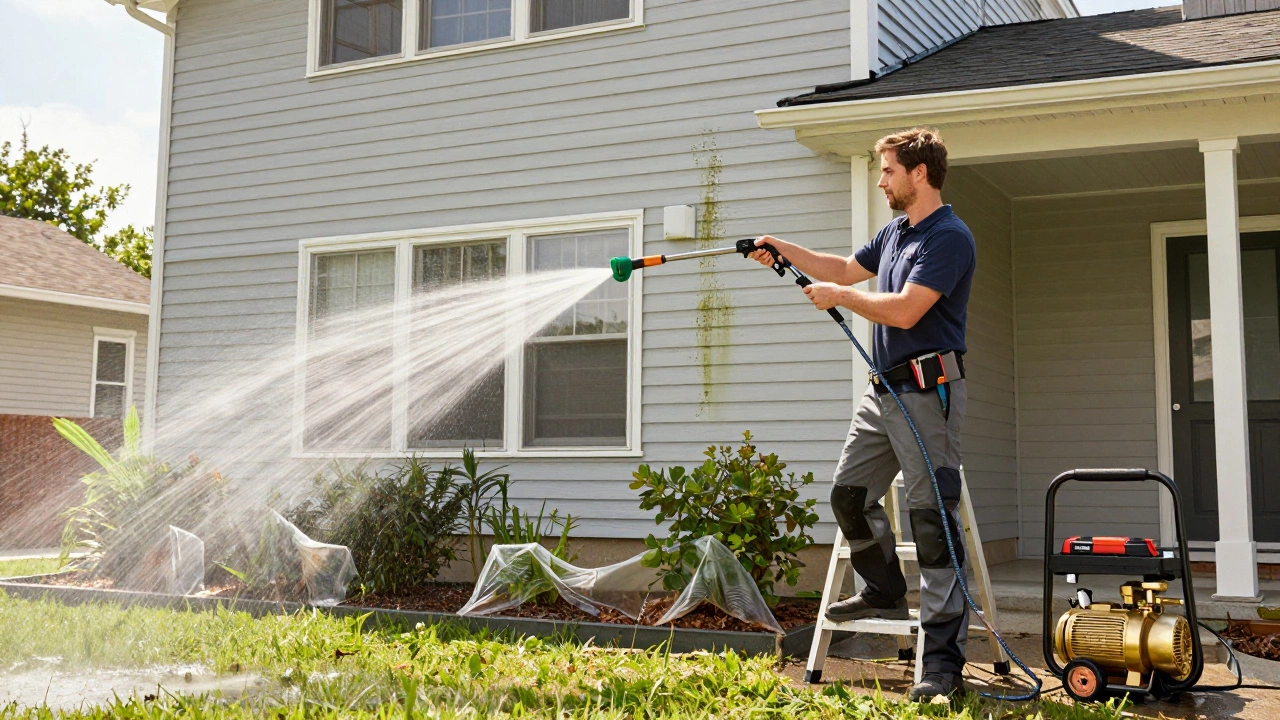
When you see a house that looks like it just got a fresh coat of paint-except it didn’t-chances are a professional pressure washer was behind it. The dirt, mold, algae, and decades of grime vanish in minutes. But what’s actually in their hands? It’s not just a hose and a nozzle. Professionals use a specific mix of equipment, chemicals, and technique that turns a weekend chore into a precision job.
What’s Inside a Professional’s Pressure Washer
Most homeowners buy a gas-powered pressure washer from the hardware store, maybe 2,000 to 2,500 PSI. That’s fine for cleaning a driveway or a patio. But for a full house? That’s like using a toothbrush to scrub a football field.
Professionals use machines rated between 3,000 and 4,000 PSI. These aren’t the kind you rent for a day-they’re commercial-grade units built for daily use. Brands like Karcher, Hotsy, and pressure washer manufacturers like NorthStar or General Pump dominate the scene. These machines have industrial pumps, brass or ceramic pistons, and engines that run for 10+ hours straight without overheating.
They also use hot water systems. While most home units are cold water only, pros use heated pressure washers. Hot water breaks down grease, oil, and stubborn algae faster. It’s especially critical in humid climates like Brisbane, where mold and mildew cling to siding like glue. A 180°F water stream cuts cleaning time in half and reduces the need for harsh chemicals.
The Nozzle Matters More Than You Think
It’s not just about power-it’s about control. Professionals don’t point and spray. They use different nozzles for different surfaces.
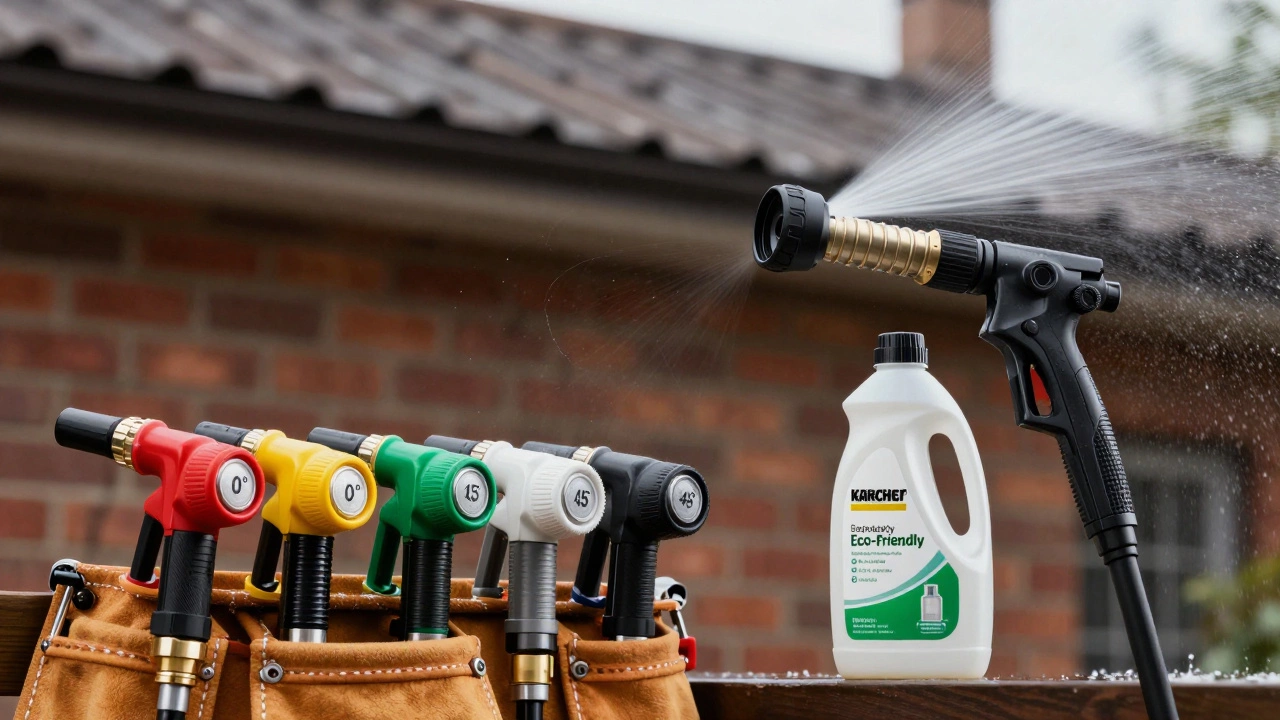
- 0-degree nozzle (red): Used only for stripping paint or cleaning concrete. Never on wood, vinyl, or stucco.
- 15-degree nozzle (yellow): For tough grime on driveways or patios. Still too strong for most house exteriors.
- 25-degree nozzle (green): The go-to for siding, fences, and decks. It gives enough force to clean without gouging.
- 40-degree nozzle (white): For delicate surfaces like aluminum trim or windows. Used for rinsing off soap.
- Low-pressure rotary nozzle (black): For gentle cleaning on roofs or fragile materials. Rotates in a circular pattern, distributing pressure evenly.
Many pros carry a turbo nozzle-a hybrid that spins the water stream in a tight spiral. It increases cleaning power by up to 40% without increasing PSI. That’s a game-changer on brick or stone facades where you need to blast away dirt but can’t risk cracking mortar.
Chemicals: Not Just Water
Water alone won’t kill mold on your vinyl siding. Professionals use targeted cleaning solutions that are safe for surfaces but lethal to biological growth.
- Sodium hypochlorite (bleach-based): Used for mold, mildew, and algae. Typically mixed at 1-3% concentration. Too strong and it kills plants or fades paint.
- Specialized house wash formulas: These are pH-balanced, biodegradable cleaners designed for exterior surfaces. Brands like Simple Green Pro, Karcher Eco-Friendly House Wash, or Sun Joe’s House & Siding Cleaner are common. They don’t require rinsing as thoroughly as bleach and are safer for landscaping.
- Soft wash systems: For roofs, stucco, or older homes with fragile materials, pros use low-pressure (under 500 PSI) spray systems with concentrated cleaners. The solution sits on the surface for 10-15 minutes, then rinses off gently. This prevents damage and lasts longer than high-pressure cleaning.
One mistake homeowners make is using store-bought deck cleaners on house siding. Those are too acidic and can eat through paint or sealants. Pros know exactly which chemical matches which surface.
Accessories: The Hidden Tools
Behind every great pressure washing job are the tools nobody sees.
- Extension wands: 10-20 feet long, allowing pros to clean second-story siding without ladders. Made from lightweight aluminum or fiberglass to reduce fatigue.
- Surface cleaners: A rotating circular head with dual nozzles that sprays in a wide pattern. Used for driveways, patios, and garage floors. It cleans evenly without streaks or gouges.
- Water filtration systems: For areas with hard water, pros use filters to remove minerals that leave spots on windows or siding after drying.
- Protective gear: Gloves, goggles, and sometimes respirators when using bleach or strong cleaners. Also, drop cloths and plastic sheeting to shield plants, windows, and AC units.
One pro trick in Brisbane: they’ll often pre-wet surrounding plants with clean water before spraying. This creates a barrier so chemicals don’t get absorbed by roots. It’s a small step, but it prevents dead shrubs after a cleaning job.
Technique: It’s All About Distance and Movement
Pressure washing isn’t about brute force. It’s about rhythm.
Professionals start at the top of the house and work down. They keep the nozzle 12 to 18 inches away from the surface. Too close, and you’ll strip paint or dent vinyl. Too far, and the water loses power and just splashes around.
They move the wand in slow, overlapping strokes-like painting with water. No holding the stream in one spot. Even on stubborn stains, they let the chemical do the work. Letting the cleaner sit for 5-10 minutes before rinsing is standard practice. Rushing leads to streaks and incomplete cleaning.
They also avoid spraying upward under siding panels. Water can get trapped behind the material and cause rot. Always spray downward, with the grain of the material.
What They Don’t Use
There are a few things you’ll never see a pro use:
- Electric pressure washers under 2,000 PSI: Too weak for full-house jobs. They’re for small patios or bikes.
- DIY bleach mixes from the grocery store: Too concentrated. Can damage surfaces and harm the environment.
- High-pressure cleaning on wood shingles or clay tiles: These materials crack under 2,500 PSI. Soft washing is the only safe method.
- Unprotected electrical outlets or vents: Pros cover them with waterproof tape or plastic caps before starting.
Why It’s Worth Hiring a Pro
Buying a $500 pressure washer might seem like a smart move. But consider this: a single mistake-holding the nozzle too close, using the wrong chemical, or blasting water into a gap-can cost thousands in repairs. Water damage behind siding, cracked tiles, ruined paint jobs, or dead landscaping aren’t cheap fixes.
Professionals carry insurance. They know local regulations. In Brisbane, some councils require permits for pressure washing near storm drains because of runoff chemicals. Pros handle that. They also know which products are approved for use near waterways.
And time? A pro can clean a 2,500-square-foot house in 3-4 hours. A homeowner might spend two full weekends and still miss spots.
What to Ask Before Hiring Someone
If you’re hiring a pro, don’t just pick the cheapest. Ask:
- Do you use hot water or cold water systems?
- What PSI do you use on vinyl siding?
- Do you use soft wash for roofs?
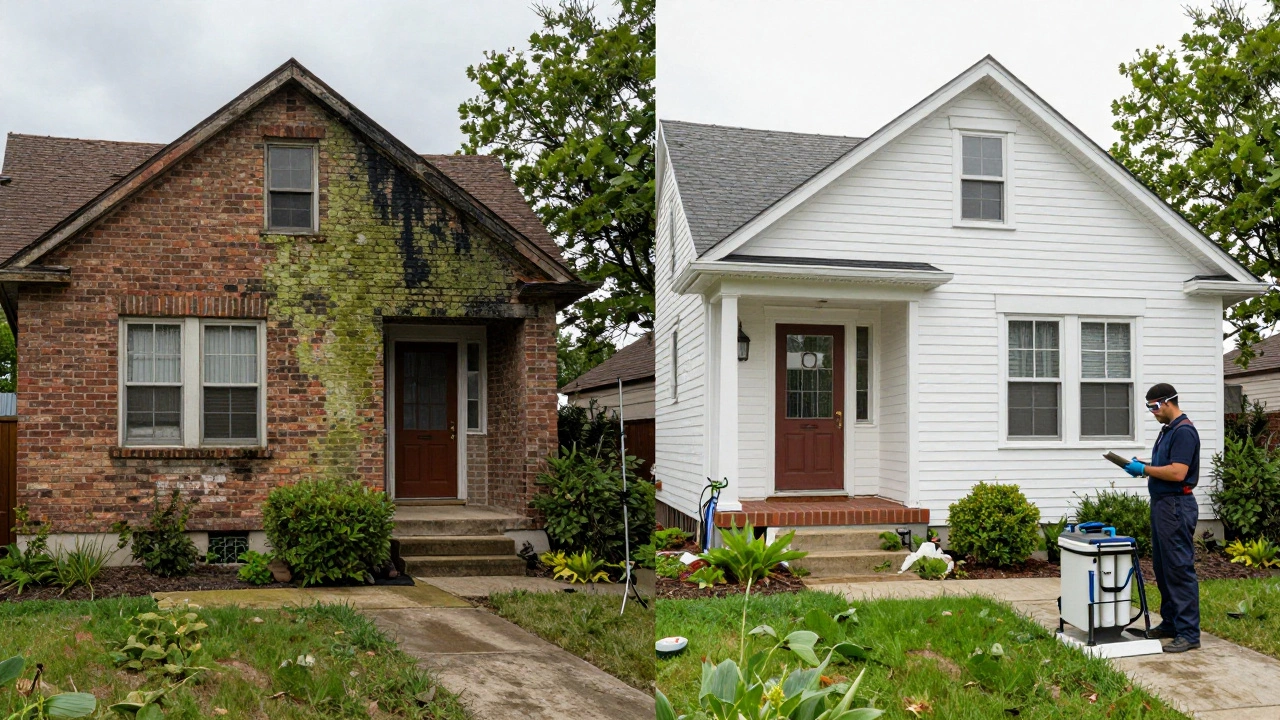
- Can you show me before-and-after photos of similar homes?
- Do you cover plants and windows?
- Do you have liability insurance?
A good pro will answer without hesitation. If they say, “I just use the hose,” walk away.
Can I use a pressure washer on my roof?
You shouldn’t use high pressure on a roof. Asphalt shingles, clay tiles, and metal roofs can crack, loosen, or get damaged under pressure. Professionals use soft washing-low-pressure spray with a biodegradable cleaner that kills mold and algae without force. This method lasts longer and doesn’t void roof warranties.
What’s the best PSI for cleaning house siding?
For vinyl, aluminum, or fiber cement siding, 2,500 to 3,000 PSI is ideal. Use a 25-degree nozzle and keep the wand 12-18 inches away. Higher pressure risks denting or stripping paint. Lower pressure won’t remove stubborn grime. Always test on a small, hidden area first.
Is it safe to pressure wash brick?
Yes, but carefully. Brick can handle 2,500-3,000 PSI, but the real danger is the mortar between bricks. High pressure can erode mortar over time, leading to water leaks. Use a 25-degree nozzle, keep distance, and avoid spraying directly into joints. Many pros use a soft wash method for older brick homes to preserve the integrity of the structure.
Do I need to clean my house every year?
Not necessarily. In places like Brisbane, where humidity and rain encourage mold and algae, cleaning every 2-3 years is typical. If your home is shaded by trees or near the coast (salt air accelerates grime), once a year makes sense. Look for dark streaks, green patches, or chalky residue-those are signs it’s time.
Can pressure washing damage windows?
Yes, if done wrong. High pressure can crack glass or break seals between double-pane windows. Pros cover windows with plastic or tape and use a 40-degree nozzle for rinsing. They avoid spraying directly at window edges or frames. If you’re doing it yourself, stick to a garden hose and mild cleaner for windows.
What’s the difference between hot and cold water pressure washers?
Cold water removes dirt and dust effectively. Hot water (140°F+) breaks down grease, oil, and biological growth like mold and algae faster. For house cleaning in humid climates, hot water reduces chemical use and cuts cleaning time. Most residential units are cold water only. Professionals use hot water machines for better results and efficiency.