Pressure Washing Surface Safety Checker
Select a surface to see safety information and recommended settings.
Is pressure washing hard? If you’ve ever stood in front of a grimy driveway, moldy patio, or algae-covered fence and thought, “I could do that myself”-then you’re not alone. But then you see the machine, hear the noise, and wonder: is this something a regular person can handle without wrecking their property-or themselves?
The short answer? It’s not hard if you know what you’re doing. But it’s easy to mess up if you don’t.
Pressure washing isn’t magic-it’s physics
Pressure washers work by forcing water through a tiny nozzle at high speed. That’s it. No chemicals, no magic wands. Just water under pressure. The numbers matter: most home models run between 1,300 and 3,000 PSI (pounds per square inch). For reference, a garden hose runs at about 40 PSI. That’s 75 times more force.
That kind of force can strip paint, gouge wood, or crack brick if you point it wrong. But used right, it removes decades of dirt from concrete in minutes. The trick isn’t strength-it’s control.
What makes pressure washing feel hard?
People think it’s hard because they’ve seen the damage. A neighbor’s fence got shredded. A kid’s bike got blasted into next week. A patio turned white and patchy. These aren’t accidents-they’re mistakes.
Here’s what trips most beginners up:
- Using the wrong nozzle. The red 0° tip is for industrial cleaning. Never use it on your house.
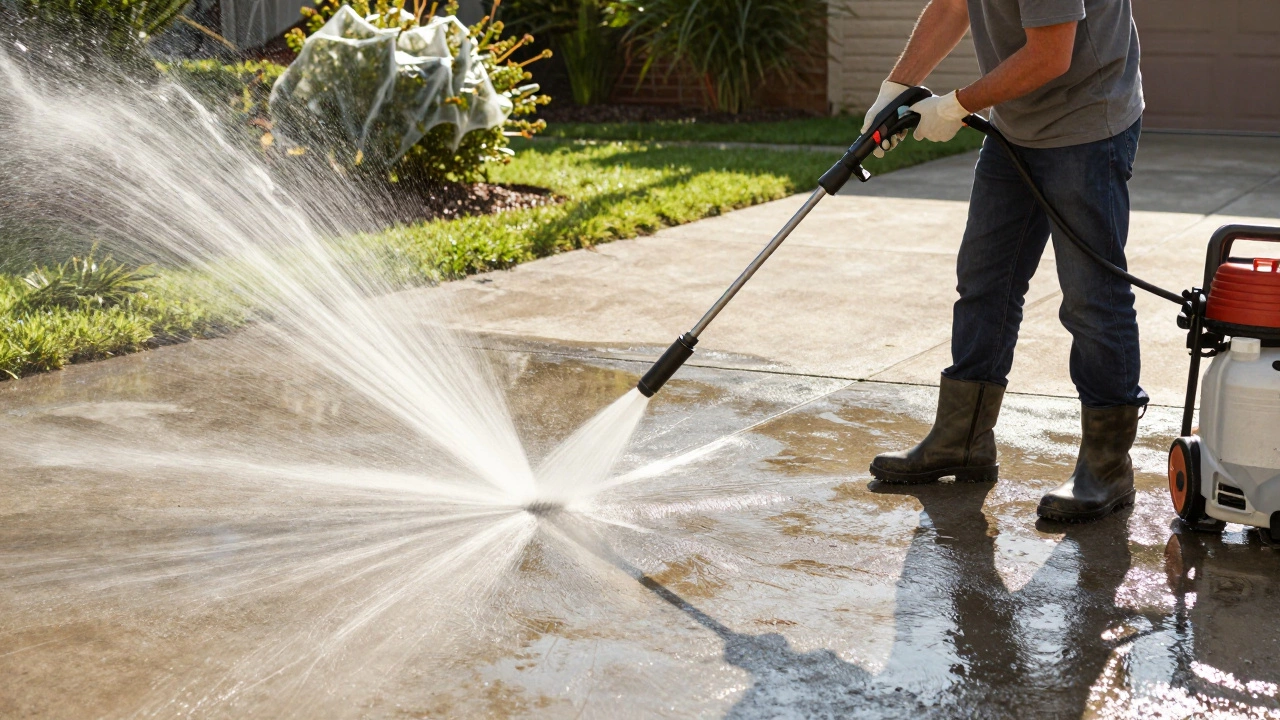
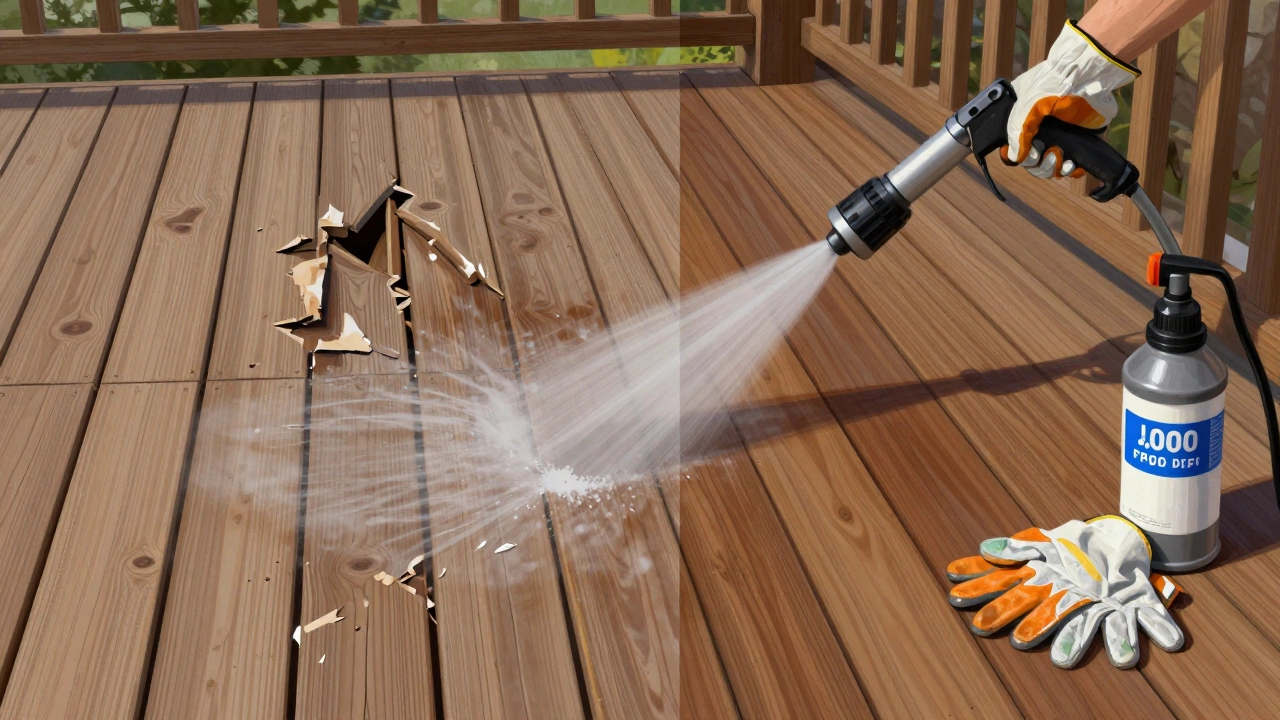
- Holding the wand too close. Two feet is the sweet spot for most surfaces. Get closer, and you risk erosion.
- Skipping prep. Leaves, dirt, and loose debris need to be swept away first. Otherwise, you’re just grinding grime into the surface.
- Not using detergent. For grease, algae, or mold, water alone won’t cut it. A good detergent breaks down the grime so pressure can rinse it away.
- Working in the wrong weather. Don’t pressure wash on a windy day. The water blows everywhere. And never do it in freezing temperatures-water left behind can freeze and crack surfaces.
These aren’t secrets. They’re basic safety rules. Treat the machine like a power tool-not a toy.
What surfaces can you safely clean?
Not everything can take pressure. Here’s a quick guide:
| Surface | Safe? | PSI Range | Tip |
|---|---|---|---|
| Concrete driveway | Yes | 2,500-3,000 | Use a 25° nozzle. Start from the far end and work toward the drain. |
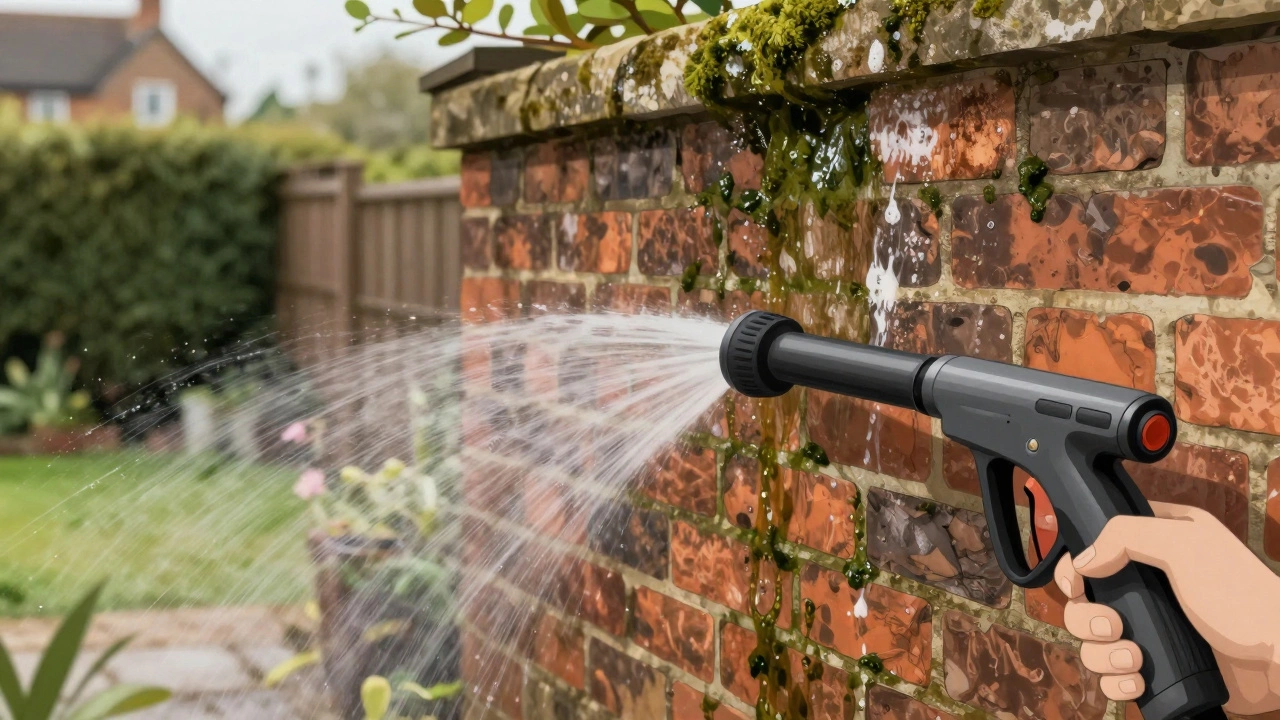
| Brick or stone walls | Yes | 1,500-2,000 | Hold the wand at a 45° angle. Don’t spray vertically-water can seep into mortar. |
| Wood decks | Yes, but carefully | 1,000-1,500 | Use a wide fan tip. Test on a hidden spot first. Old, weathered wood can splinter. |
| Vinyl siding | Yes | 1,000-1,500 | Always spray downward. Never upward-you’ll force water behind the panels. |
| Roof shingles | No | N/A | Pressure will strip granules. Use a soft wash with low-pressure sprayer and algae cleaner instead. |
| Windows | No | N/A | Even low pressure can crack seals. Use a squeegee and soapy water. |
| Painted surfaces (old or peeling) | No | N/A | Pressure will strip paint. Strip it manually or hire a pro. |
Some surfaces need special care. Asphalt driveways? Fine. But if your driveway is 20 years old and cracked, pressure washing might widen the cracks. That’s not the machine’s fault-it’s the surface’s age.
Do you need a fancy machine?
You don’t need to spend £500 on a professional-grade washer. A decent electric model under £200 will handle most home jobs. Gas-powered units are louder and heavier, but they’re better for big jobs like driveways or fences.
Here’s what to look for:
- PSI: 1,800-2,400 is ideal for most homeowners.
- GPM (gallons per minute): 1.4-2.0 is enough. Higher GPM cleans faster, not harder.
- Nozzles: At least 5 tips-0°, 15°, 25°, 40°, and soap applicator.
- Weight: Under 20 lbs if you’re not strong. You’ll be holding it for 30-60 minutes.
- Power: Electric is quieter and easier to store. Gas gives more power but needs fuel and maintenance.
Brands like Kärcher, Sun Joe, and DeWalt have reliable entry-level models. You don’t need the most expensive one. Just make sure it comes with a soap tank and a variety of nozzles.
How long does it take?
A typical 2-car driveway (about 400 sq ft) takes 30-45 minutes with a 2,000 PSI machine. A fence (100 sq ft) takes 15-20 minutes. A patio? 20-30 minutes.
But prep time matters. Sweeping, covering plants, moving furniture, and connecting hoses? That’s another 20-40 minutes. So plan for an hour or two total.
It’s not a 5-minute job. But it’s way faster than scrubbing by hand.
What about safety?
Pressure washers aren’t toys. They can cut skin. They can throw rocks. They can slip on wet surfaces.
Here’s what to wear:
- Sturdy shoes with grip-wet surfaces are slippery.
- Safety glasses-debris flies everywhere.
- Long pants and gloves-no bare skin near the spray.
- Ear protection-if you’re using a gas model.
And never point the wand at people, pets, or plants. Even at low pressure, it can cause injury.
When should you hire a pro?
You don’t have to do it yourself. Hire a pro if:
- Your house has stucco, stone, or delicate siding.
- You’re cleaning a roof or second-story walls.
- You’re not comfortable with power tools.
- You’ve tried and messed it up already.
Professional pressure washing in the UK costs between £100 and £250, depending on size and surface. That’s less than a new pressure washer-and you won’t risk damaging your property.
Final verdict: Is pressure washing hard?
No. It’s not hard. But it’s not easy either.
It’s a skill. Like using a lawnmower or a drill. You need to learn the basics, respect the tool, and take your time.
If you’re willing to read the manual, test on a small area, and wear the right gear, you’ll get great results. If you rush, skip prep, or use the wrong nozzle-you’ll end up with more work than you started with.
Pressure washing isn’t about brute force. It’s about smart technique. And once you get the hang of it, you’ll wonder why you ever cleaned your driveway with a hose and a broom.
Can I pressure wash my house myself?
Yes, but only if you know your surfaces. Vinyl siding, brick, and concrete are safe with the right pressure and nozzle. Avoid wood decks if they’re old, and never pressure wash windows, roofs, or painted surfaces. Always start low and test in an inconspicuous spot.
Do I need to use detergent with a pressure washer?
For grease, mold, algae, or oil stains-yes. Water alone won’t break them down. Use a detergent designed for pressure washers. It attaches to the nozzle and mixes with water as you spray. Let it sit for 5-10 minutes before rinsing for best results.
What’s the best pressure washer for beginners?
An electric model with 1,800-2,400 PSI and a 1.4-2.0 GPM flow is ideal. Look for one with at least 5 nozzles and a soap tank. Sun Joe SPX3000 or Kärcher K2 is a solid, affordable pick for homeowners.
Can pressure washing damage my property?
Absolutely-if you use too much pressure, the wrong nozzle, or spray too close. It can strip paint, gouge wood, crack brick mortar, or even blast away roofing granules. Always follow manufacturer guidelines and start with the lowest effective setting.
How often should I pressure wash my home?
Once a year is enough for most homes in the UK. If you live near trees, by the coast, or in a rainy area, you might need it twice a year. Too often can wear down surfaces. Too rarely lets grime build up and become harder to remove.
Next steps
If you’re ready to try it:
- Buy or rent a machine with the right PSI and nozzles.
- Read the manual-yes, actually read it.
- Sweep the area and cover plants, electrical outlets, and doors.
- Start with a wide nozzle (25° or 40°) and hold the wand 18-24 inches away.
- Work in sections, overlapping strokes to avoid streaks.
- Rinse the machine and store it dry.
If you’re unsure, hire a local pro. It’s cheaper than replacing a damaged fence or repainting your siding.