Pressure Washer Power Calculator
Understanding Cleaning Power
Pressure washers combine two key measurements to determine cleaning effectiveness:
The cleaning power is calculated by multiplying PSI × GPM. For example, a 2,000 PSI washer with 1.8 GPM delivers 3,600 cleaning units.
Important: Higher PSI alone doesn't mean better cleaning. You need the right combination of PSI and GPM for your specific job.
Calculate Your Cleaning Power
Selecting the Right Nozzle
Nozzles determine the spray pattern and are critical for effective cleaning without damage.
Pro Tip: For most home projects, you need at least 25° and 40° nozzles plus the soap nozzle.
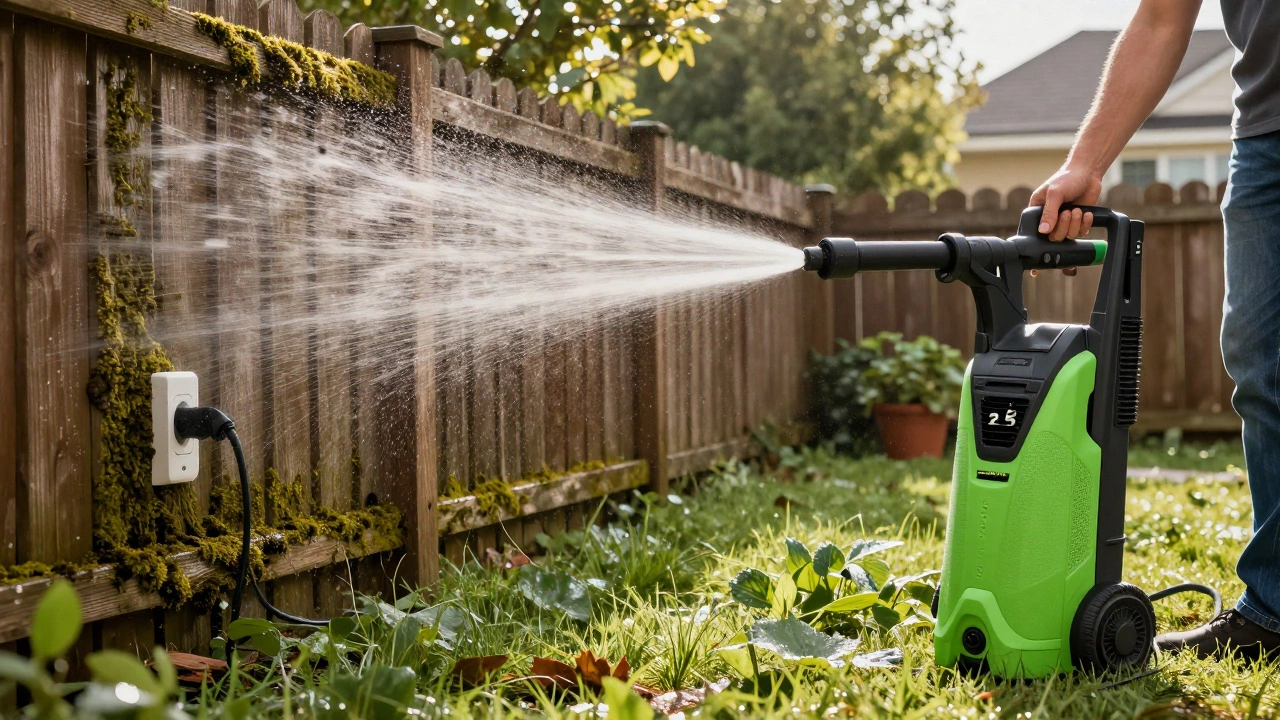
Choosing the right pressure washer isn’t about picking the loudest or most expensive model on the shelf. It’s about matching the machine to your actual cleaning jobs - whether that’s scrubbing your driveway after a wet season, cleaning mold off your fence, or prepping your deck for paint. Too weak, and you’ll be there all day. Too powerful, and you could crack your concrete or strip paint off your shed. The trick is knowing what you’re really cleaning, and what kind of pressure and flow actually do the job.
Understand PSI and GPM - Not Just the Numbers
Every pressure washer lists two key numbers: PSI (pounds per square inch) and GPM (gallons per minute). People fixate on PSI, but GPM matters just as much. PSI tells you how hard the water hits. GPM tells you how much water flows. Together, they determine cleaning power.
For example, a 1,800 PSI machine with 1.5 GPM delivers 2,700 cleaning units (PSI × GPM). A 3,000 PSI unit with only 1.2 GPM gives you 3,600 cleaning units - stronger on impact, but less water to rinse away dirt. If you’re cleaning oily driveways or sticky grime, you need more water flow. For light dirt or siding, higher PSI with lower flow works fine.
Most homeowners don’t need more than 2,500 PSI. Anything above 3,000 PSI is overkill unless you’re cleaning industrial surfaces or removing stubborn paint. In Brisbane’s humid climate, mildew and algae grow fast. A 2,000-2,500 PSI unit with 1.8-2.2 GPM handles most jobs without risking damage.
Electric vs Gas: Which One Fits Your Life?
Electric pressure washers are quiet, plug-in, and low-maintenance. They’re great for small jobs: patios, garden furniture, bikes, or the occasional car wash. Most electric models top out around 2,000 PSI, which is enough for 80% of household tasks. They’re lighter, easier to store, and don’t need fuel or oil changes. If you live in an apartment or have a small backyard, electric is your friend.
Gas models deliver more power - 2,500 to 3,500 PSI - and are better for large surfaces like driveways, fences, or brick walls. They’re louder, heavier, and need regular maintenance: oil changes, fuel stabilizer, spark plug checks. But if you’re tackling a full-house clean-up once or twice a year, gas is worth the extra effort. In Australia, where outdoor spaces are big and dirt builds up fast, gas units are the go-to for serious cleaning.
Here’s the real test: if you can’t roll a 20kg machine across your yard without sweating, you’ll never use it. Weight matters. So does cord length. If your electric washer’s cord only reaches halfway to your driveway, you’re stuck with an extension cord - and the risk of tripping or overheating.
Nozzle Types Matter More Than You Think
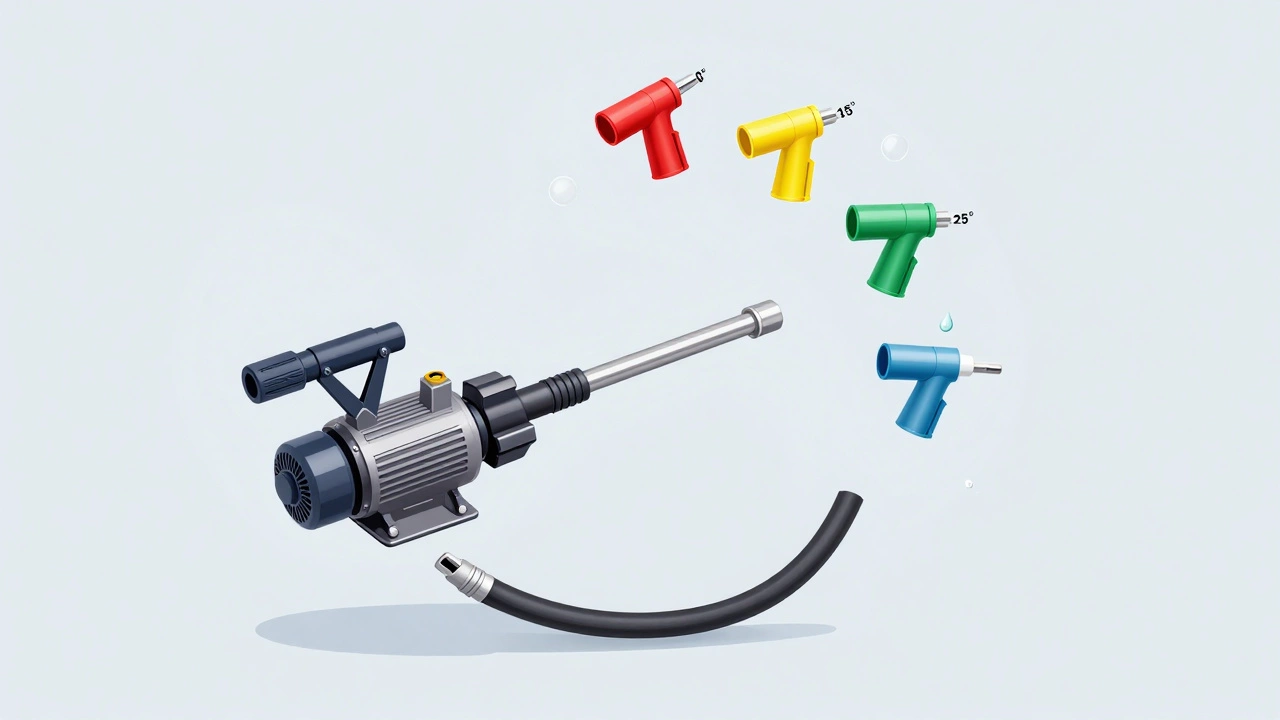
Pressure washers come with multiple nozzles, each with a different spray angle. These aren’t just accessories - they’re your control system.
- 0° (red): Straight, needle-like stream. Only for stripping paint or rust. Never use on siding, wood, or concrete - it’ll gouge the surface.
- 15° (yellow): Narrow cone. Good for stubborn stains on driveways or removing graffiti. Use with caution.
- 25° (green): Medium spray. The all-rounder. Best for cleaning decks, fences, and siding. Safe for most surfaces.
- 40° (white): Wide fan. Perfect for rinsing off soap or cleaning large flat areas like patios. Gentle enough for cars.
- Soap nozzle (black)**: Low-pressure, wide spray. Only for applying detergent, never for rinsing.
Many cheap models give you one nozzle and call it a day. Don’t buy those. You need at least three: 25°, 40°, and soap. Some higher-end models include a turbo nozzle - a rotating tip that spins the water into a circular pattern. It’s like a power brush, and it cuts cleaning time in half on tough grime.
Portability and Storage Are Hidden Factors
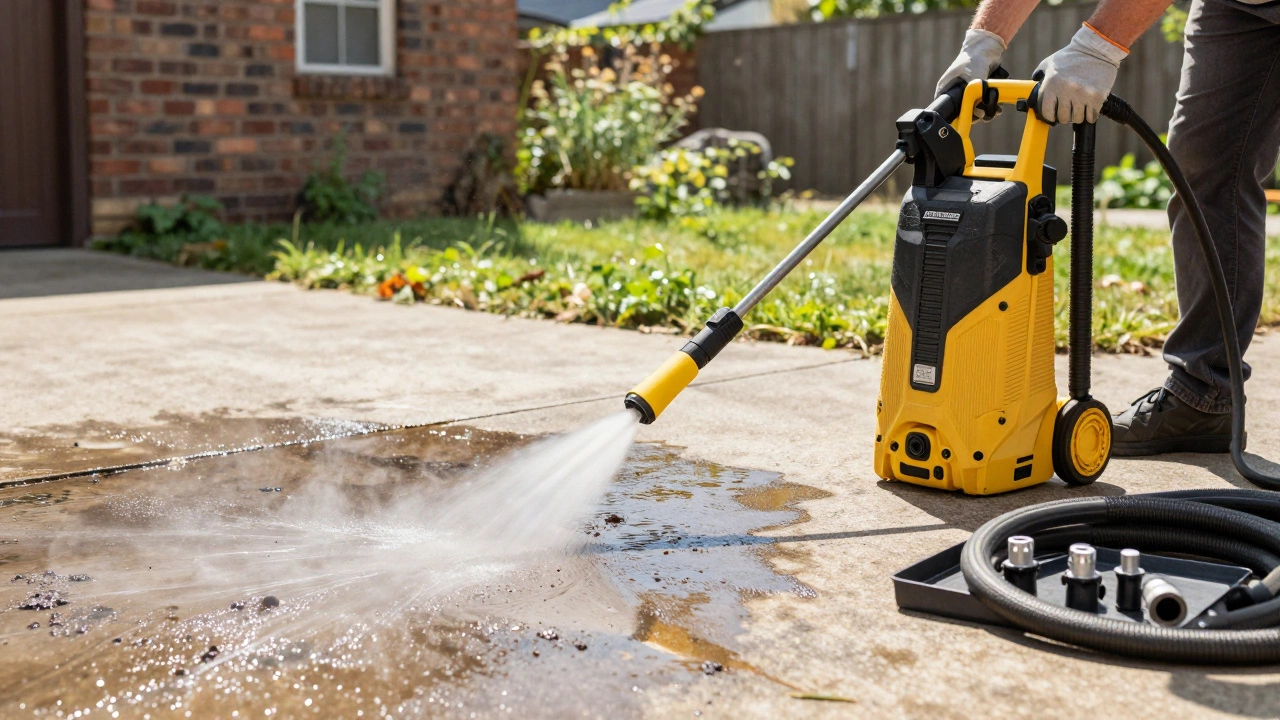
Pressure washers aren’t just tools - they’re storage problems. If you live in a small backyard or a unit with limited space, size matters. Look for models with built-in handles and wheels. Some gas units weigh over 40kg - hauling that up and down stairs isn’t practical.
Check for hose reels. A good washer has a hose that winds neatly into a reel on the unit. No tangled messes. Also, look for tool trays. You’ll need to store nozzles, wands, and maybe a detergent bottle. If the tray’s flimsy or missing, you’ll lose parts in the garage within weeks.
In Brisbane, where rain is common and humidity is high, rust is a silent killer. Look for units with powder-coated frames and stainless steel fittings. Avoid plastic pump housings unless they’re labeled as industrial-grade. Most budget models use cheap plastic pumps that crack or leak after a few seasons.
Detergents and Chemical Compatibility
Pressure washers aren’t just water cannons - they’re delivery systems. Most have a detergent tank or suction hose for applying cleaners. But not all detergents are safe.
Never use bleach-based cleaners unless the manufacturer says it’s okay. Bleach eats rubber seals and corrodes metal parts. Instead, use biodegradable pressure washer detergents. Brands like Karcher, Sun Joe, and Simple Green make safe, effective options that break down dirt without harming plants or concrete.
If you’re cleaning your driveway, look for a degreaser. For siding or fences, use a mold and mildew remover. Some units even have built-in chemical tanks that auto-mix detergent with water. These are great for beginners - no measuring, no spills.
Pro tip: Always rinse the system with clean water after using detergent. Leftover soap inside the pump can dry and clog the valves. A quick 30-second flush after every use doubles the life of your machine.
What You Don’t Need - And What You Shouldn’t Skimp On
Do you need a 4,000 PSI gas washer with a 50-foot hose and a 10-year warranty? Probably not. Most people overbuy because they think more power equals better results. It doesn’t. It just means more noise, more weight, and more money spent.
What you should spend on:
- Pump quality: Look for axial cam pumps (not triplex unless you’re a pro). They last longer and handle frequent use better.
- Hose durability: Rubber or reinforced PVC, not cheap vinyl. A 25-foot hose is ideal for most homes.
- Wand material: Aluminum or composite. Avoid plastic wands - they bend and break under pressure.
What you can skip:
- Multiple pressure settings - most models have one fixed pressure.
- Smart features like Bluetooth or apps - they’re gimmicks.
- Extra accessories like surface cleaners - buy those separately if you need them later.
Stick to brands with local service centers. Karcher, Honda, and Ryobi have parts and repair support in Australia. If your pump dies and you can’t find a replacement part, you’re stuck with a very expensive paperweight.
Real-World Example: What I Use in My Brisbane Backyard
I’ve got a 2,300 PSI electric pressure washer with 1.9 GPM. It’s 12kg, folds up small, and plugs into a standard outlet. I use it every 3-4 months to clean my concrete patio, my wooden pergola, and the side of my house where moss builds up after summer rains. I use the 25° nozzle for most jobs, the 40° for rinsing, and the soap nozzle for mildew cleaner. I rinse the system after every use. It’s been running for three years without a single issue. No oil changes. No fuel. No noise complaints from neighbors. It’s the perfect balance for a typical Aussie home.
If you’re cleaning a 200m² driveway or a two-story house, go gas. But if you’re like most people - cleaning a patio, a car, or a fence - electric is faster, quieter, and cheaper. You don’t need to be a pro to get great results. You just need the right tool for the job.