Oven Burnt Residue Cleaner Recommender
Select your situation below to get a personalized cleaning recommendation.
Select your situation to see the recommendation
We'll tell you the best method based on your inputs
There’s nothing worse than looking into your oven after a spill and seeing a black, crusty mess stuck to the bottom. It’s not just ugly-it smells bad, heats unevenly, and can even smoke when you turn the oven on again. You’ve tried scraping it with a spatula. You’ve sprayed commercial cleaners. Nothing works. But here’s the truth: you don’t need harsh chemicals or expensive services to get burnt stuff off the bottom of your oven. With a few simple, safe, and cheap methods, you can bring it back to life without lifting a finger for hours.
Why burnt residue is so hard to remove
Burnt food, grease, and sugar don’t just stick-they chemically bond to the metal surface. When oil or food spills and bakes at high temperatures, it turns into carbonized gunk. This isn’t dirt you can wipe away. It’s like hardened tar. Regular cleaners just sit on top. You need something that breaks that bond. That’s where heat, moisture, and time come in.
Method 1: Baking soda and vinegar (the most effective home hack)
This is the method most professional cleaners use behind the scenes. It’s non-toxic, cheap, and works better than most store-bought sprays.
- Remove oven racks and set them aside.
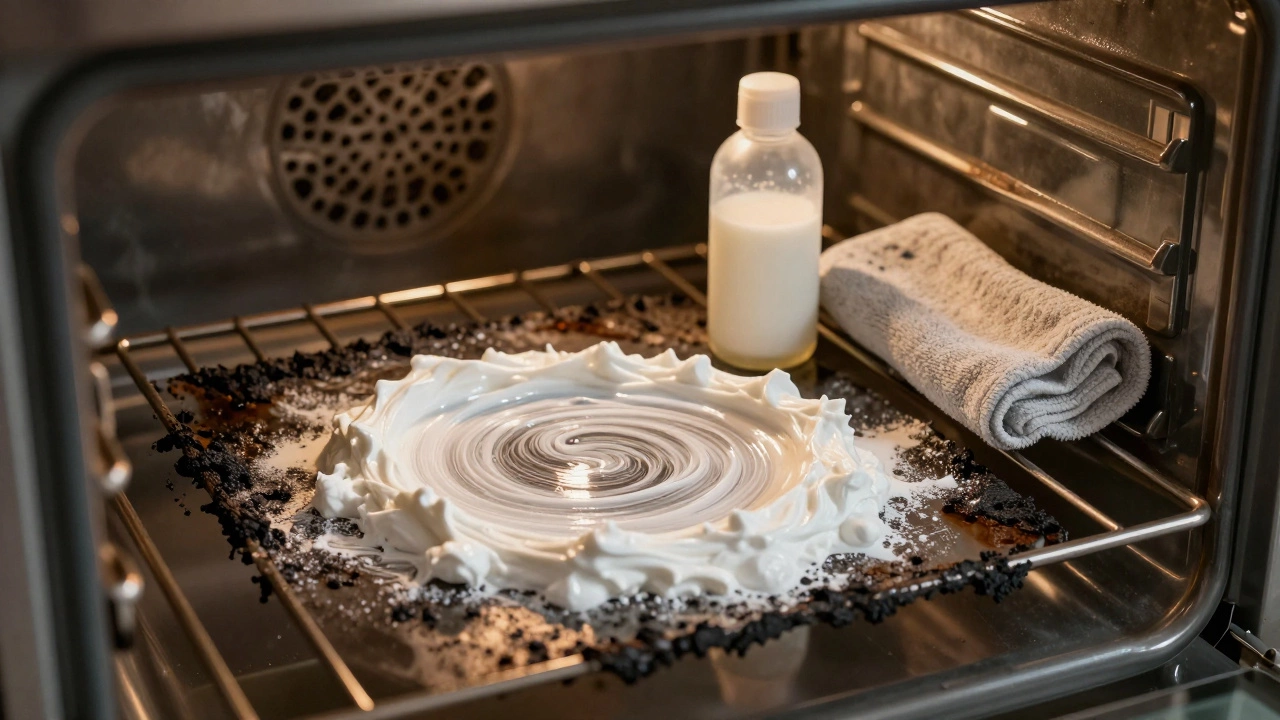
- Make a thick paste with ½ cup of baking soda and just enough water to form a spreadable consistency-like toothpaste.
- Use a sponge or spatula to spread the paste all over the burnt areas. Don’t worry about the glass door or heating elements-just focus on the bottom and sides where the gunk is thickest.
- Let it sit overnight. Seriously. Eight to twelve hours. The baking soda slowly breaks down the carbon bonds.
- The next day, spray white vinegar directly onto the paste. It will fizz. That’s the reaction doing the work.
- Wipe it away with a damp cloth. Most of the grime should lift right off. For stubborn spots, use a plastic scrubber (never metal-it scratches).
This method works because baking soda is mildly abrasive and alkaline, which neutralizes acidic burnt residues. Vinegar’s acidity helps dissolve the remaining residue. Together, they’re a powerhouse.
Method 2: Steam cleaning with water and dish soap
If you don’t have baking soda on hand, or if the mess is fresh, steam is your friend.
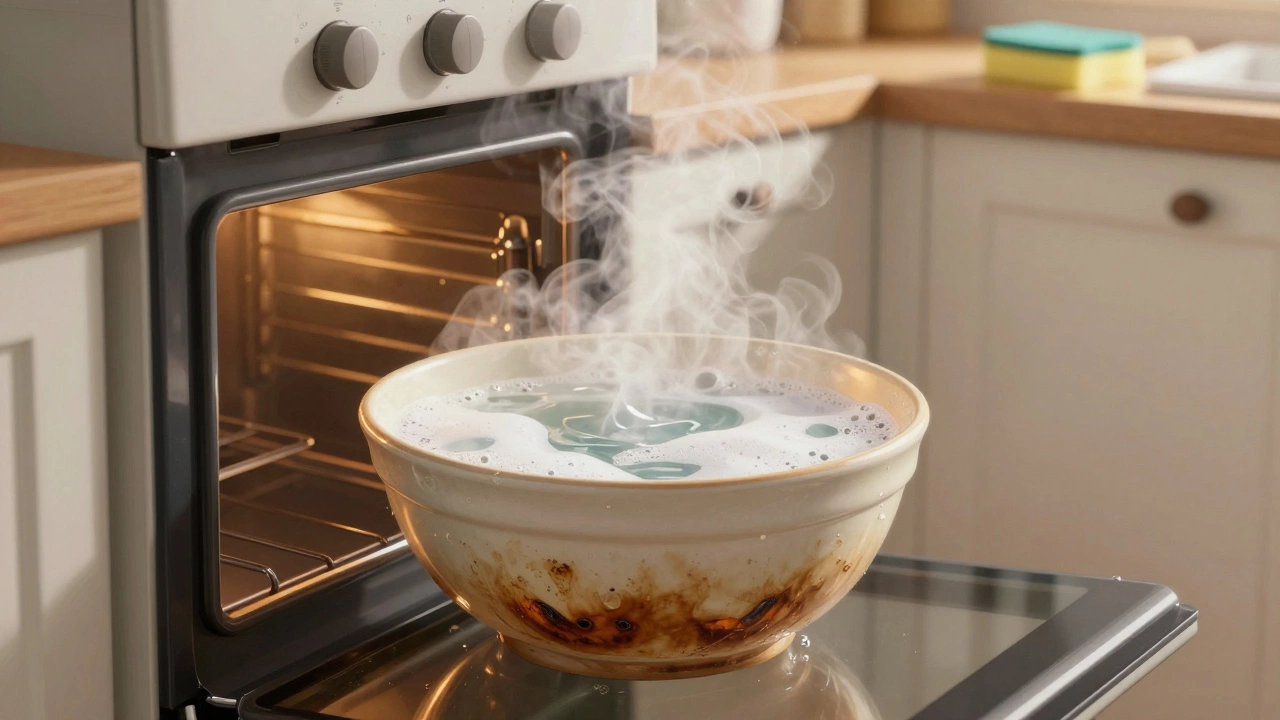
- Place a large oven-safe bowl or dish in the bottom of the oven.
- Add 1 cup of hot water and 2 tablespoons of dish soap.
- Turn the oven on to 200°C (390°F) and let it run for 20-30 minutes.
- Turn off the oven and leave the door closed for another 30 minutes. The steam will soften the grime.
- Wipe the bottom with a damp cloth. The burnt bits should slide off like wet paper.
This works especially well for recent spills that haven’t fully carbonized. It’s gentle on enamel coatings and safe for self-cleaning ovens.
Method 3: Commercial oven cleaners (use with caution)
Some people swear by aerosol oven cleaners like Easy-Off. But here’s the catch: they contain lye (sodium hydroxide), which eats through grease-but also skin, eyes, and lungs. If you use them:
- Wear gloves and open all windows.
- Never use on self-cleaning ovens-the chemical reaction can damage the coating.
- Follow the time limits on the label. Leaving it on too long can etch the metal.
- Rinse thoroughly with water afterward. Residue can cause smoke or bad smells during your next bake.
For most households, baking soda and vinegar are safer, cheaper, and just as effective. Save the chemical cleaners for truly ancient, decades-old ovens that have never been cleaned.
What not to do
There are a lot of myths out there. Don’t:
- Use steel wool or metal scrapers-they scratch the enamel and create spots where future gunk sticks faster.
- Try bleach-it reacts with oven residues and can create toxic fumes.
- Use the self-clean cycle unless you’re ready to deal with smoke, odor, and potential damage to the oven’s sensors. It’s a nuclear option.
- Leave water sitting in the oven after cleaning. Moisture leads to rust, especially on older models.
Prevention: Stop the mess before it starts
Once your oven is clean, don’t let it get dirty again. Here’s how:
- Line the bottom with a piece of aluminum foil (but never cover the heating element). It catches drips and can be replaced monthly.
- Place a baking sheet on the lowest rack when roasting or baking messy foods like chicken or casseroles.
- Wipe up spills as soon as the oven cools down. A damp cloth once a week prevents buildup.
- Use oven-safe lids or covered dishes to reduce splatters.
These small habits cut cleaning time by 80%. In Brisbane’s humid climate, grease doesn’t dry out-it just gets harder. Stay ahead of it.
When to call a pro
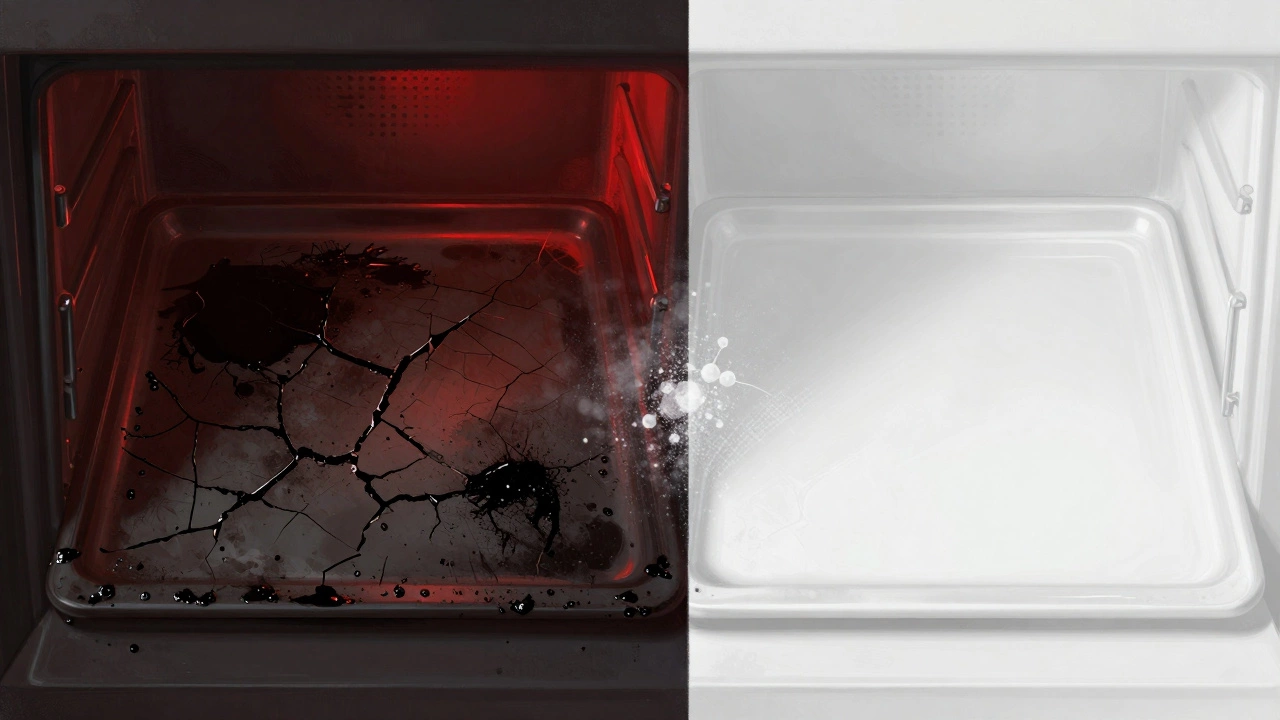
If you’ve tried all these methods and the bottom is still black, cracked, or peeling, your oven’s enamel coating may be damaged. That’s not just a cleaning issue-it’s a safety one. Damaged enamel can flake off into your food or cause uneven heating. If you see:
- Large chunks missing from the bottom
- Visible rust spots
- Smoke or strange smells even after cleaning
It’s time to consult a repair technician. Replacing the oven base is cheaper than buying a whole new oven.
Real-world results
A friend in Woolloongabba had an oven that hadn’t been cleaned in seven years. Her daughter’s birthday cake had overflowed and baked into a solid black layer. She tried the baking soda paste overnight. The next morning, she wiped it off with a cloth. Not a single spot remained. She said it looked like new. No chemicals. No fumes. Just time and patience.
You don’t need magic. You don’t need to spend hundreds. You just need to give the right method enough time to work.
Can I use lemon juice instead of vinegar?
Yes, lemon juice can work in place of vinegar because it’s also acidic. But it’s weaker, so you’ll need more of it and more time. For best results, stick with white vinegar-it’s stronger, cheaper, and more reliable.
How often should I clean my oven bottom?
If you bake or roast regularly, clean the bottom every 3 months. If you only use the oven occasionally, once every 6 months is fine. The key is to wipe up spills right away-waiting makes cleaning harder.
Is it safe to use baking soda in a self-cleaning oven?
Absolutely. Baking soda won’t damage the oven’s coating or sensors. In fact, it’s recommended by many oven manufacturers as a safe alternative to the self-clean cycle, which can overheat and damage internal parts.
Why does my oven still smell after cleaning?
A faint smell after cleaning is normal, especially if you used vinegar. Run the oven at 150°C for 10-15 minutes to burn off any residue. If the smell persists, you may have missed a spot or left cleaning product behind. Wipe again with a clean, damp cloth.
Can I clean the oven while it’s still warm?
No. Never clean a hot oven. The heat can cause cleaning solutions to evaporate too quickly, making them less effective. It’s also dangerous-steam and chemicals can burn you. Always wait until the oven is cool to the touch.