Oven Cleaning Time Calculator
Calculate Your Cleaning Time
Determine how long to leave baking soda paste on your oven based on grime severity.
⏱️ Estimated Cleaning Time
This is the minimum recommended time for baking soda paste to break down grime
💡 Why Time Matters
Baking soda needs 12-24 hours to chemically react with grease. Most people fail by stopping too early. Leave paste on overnight for best results.
⚠️ Important Safety Note
Never apply baking soda paste to heating elements or glass doors. Always let oven cool completely before cleaning. Vinegar reaction is safe but keep away from eyes.
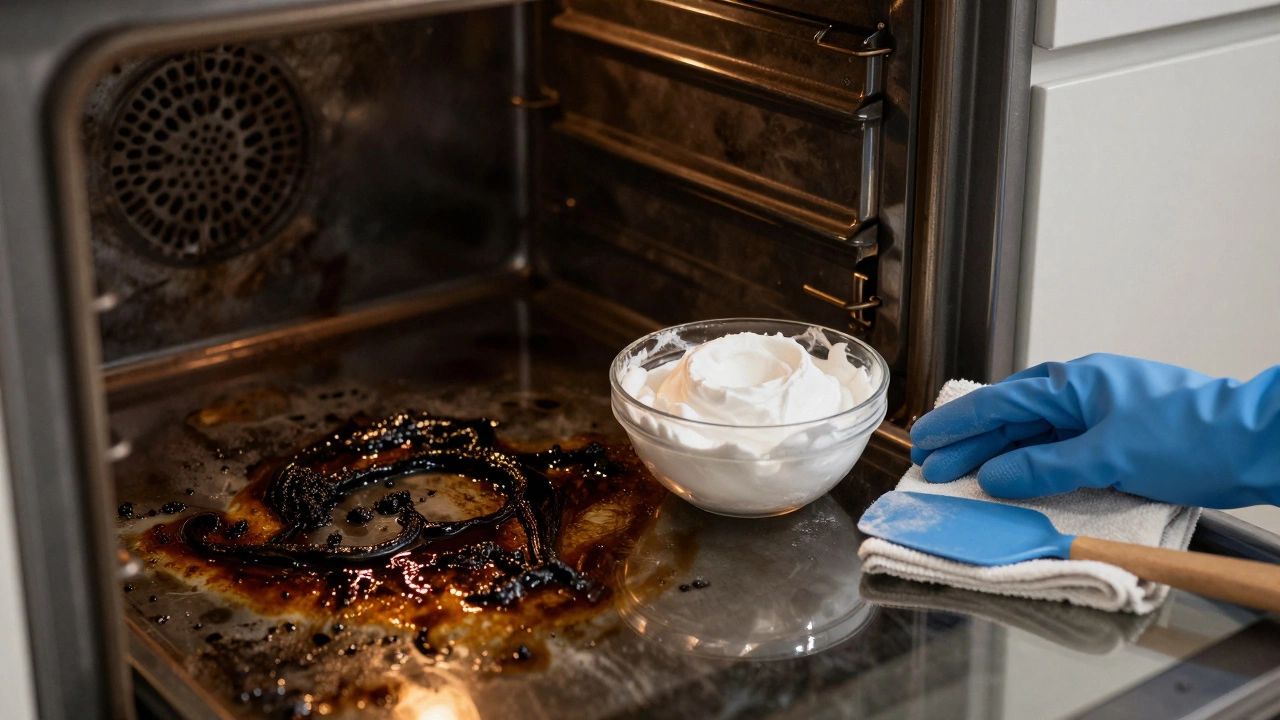
There’s nothing worse than opening your oven and seeing a black, sticky mess caked on the bottom-grease that’s been baking for years, spilled sugar that turned to caramelized rock, and food bits that have fused into the metal like concrete. If your oven looks like it hasn’t been cleaned since the last century, you’re not alone. Most people avoid cleaning it until it’s unbearable. But cleaning a heavily soiled oven isn’t magic. It just takes the right method, the right tools, and a little patience.
Why regular cleaning doesn’t work on the dirtiest ovens
Standard oven cleaners or baking soda pastes might help with light grease, but they fail on decades-old buildup. Why? Because oven grime isn’t just dirt-it’s a layered compound of fats, sugars, proteins, and carbonized residue. Each time you cook, especially at high heat, these materials break down and bond to the metal surface. Over time, they harden into something that looks like tar. Regular sprays can’t penetrate that. They sit on top and evaporate, leaving the real problem untouched.
What you need is a method that breaks down those bonds chemically and physically. That means combining heat, moisture, and a strong but safe degreaser. And no, you don’t need to buy a $100 professional cleaner. The best solution is already in your kitchen.
What you’ll need
- 1 cup of baking soda
- 1/2 cup of white vinegar
- 1 tablespoon of liquid dish soap (like Dawn)
- 1 spray bottle filled with water
- Rubber gloves
- Microfiber cloths or old towels
- A plastic scraper or wooden spatula (no metal!)
- A sponge or non-scratch scrubber
- A bucket of hot water
That’s it. No harsh fumes. No toxic chemicals. No expensive products. Just ingredients you probably already have. And if you don’t have vinegar? Use lemon juice. It’s just as effective.
Step 1: Remove everything from the oven
Take out the racks, trays, pans, and any removable parts. Don’t just toss them in the sink. Soak them separately. Fill your sink or a large tub with hot water, add 1/4 cup of dish soap, and 1/2 cup of baking soda. Let them sit for at least 2 hours, or overnight if they’re really grimy. The grease will loosen, and you’ll be able to wipe them clean with a cloth-no scrubbing needed.
Step 2: Make the cleaning paste
In a bowl, mix 1 cup of baking soda with just enough water to make a thick paste-like toothpaste consistency. Add a tablespoon of dish soap. The soap helps the paste stick to vertical surfaces and cuts through grease faster. Stir until smooth. If it’s too runny, add more baking soda. If it’s too dry, add a teaspoon of water.
Step 3: Apply the paste thickly
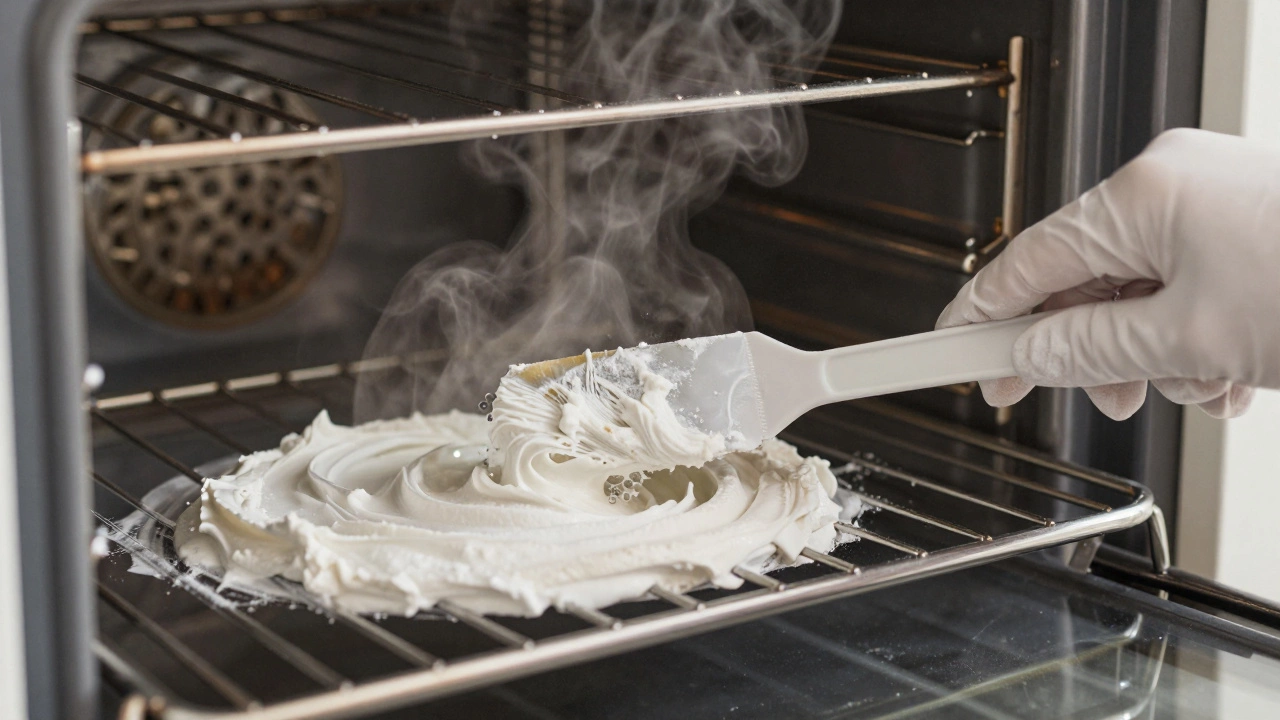
Put on your gloves. Using a spatula or your fingers (covered, of course), spread the paste over every dirty surface inside the oven. Focus on the bottom, back wall, and corners where grease pools. Don’t worry about the glass door or heating elements-leave those alone. You want the paste to be at least 1/4 inch thick. It needs to stay wet for hours to work. Cover every dark, sticky spot like you’re frosting a cake.
Step 4: Let it sit overnight
This is the secret. Most people apply the paste, wait an hour, and give up. That’s why it doesn’t work. Baking soda needs time. It’s not a quick fix-it’s a slow-acting chemical reaction. Leave the paste on for 12 to 24 hours. The longer, the better. If you can leave it overnight while you sleep, do it. The paste will dry out a bit, but that’s fine. The baking soda has already started breaking down the grease and carbon.
Step 5: Spray with vinegar
After the paste has sat, spray white vinegar directly onto the dried surface. You’ll hear it fizz. That’s the acid in the vinegar reacting with the baking soda. This reaction lifts the grime off the metal. Don’t skip this step. The fizzing isn’t just fun-it’s working. Let it sit for 10 minutes. Then, wipe away the paste with a damp microfiber cloth. Start from the top and work down. The grime should come off easily. If it doesn’t, spray more vinegar and gently scrub with a non-scratch sponge.
Step 6: Scrape stubborn spots
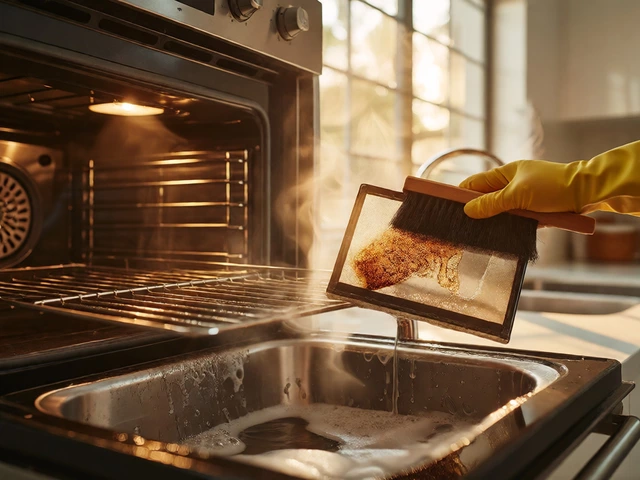
Some areas-especially near the heating element or corners-might still have thick, charred bits. Don’t use a metal scraper. It’ll scratch the enamel and make future cleaning harder. Use a plastic scraper or even a wooden spatula. Gently pry at the edges. If it doesn’t budge, spray vinegar again and wait five more minutes. Repeat. You’ll be surprised how much comes off with just a little pressure.
Step 7: Wipe down and rinse
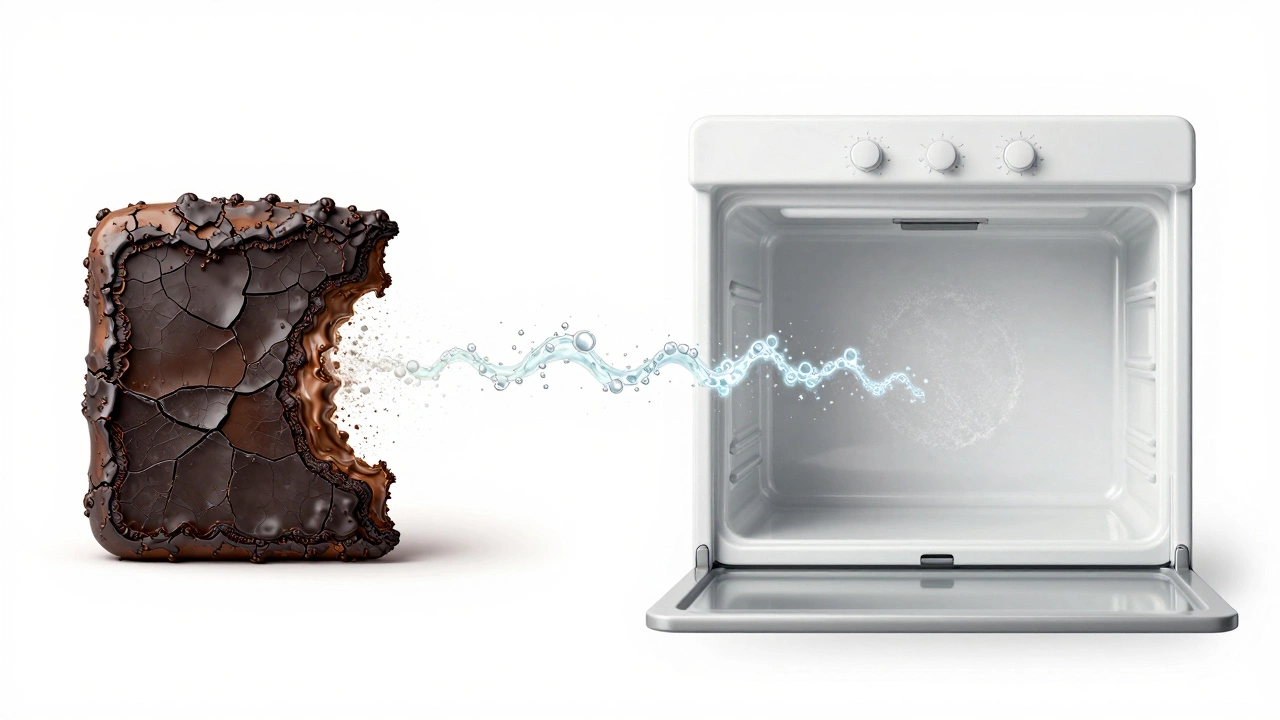
Once you’ve removed all the paste and grime, wipe the oven with a cloth soaked in hot water. Rinse the cloth often. You want to remove every bit of baking soda residue. Leftover paste can leave a white film. Then, dry the inside with a clean towel. If you still smell vinegar, open the oven door and let it air out for an hour.
Step 8: Put the racks back
After soaking, your racks should be clean. Rinse them under hot water, then dry them completely before putting them back. If they’re still stained, wipe them with a cloth dipped in vinegar. The acid removes mineral deposits and leaves them shiny.
What not to do
Don’t use oven cleaner sprays unless you’re desperate. They contain lye or other caustic chemicals that eat through enamel and release toxic fumes. If you’ve used them before, you might notice the oven’s interior looks dull or etched. That’s damage. Once the enamel is gone, grease sticks even worse.
Don’t turn the oven on to burn off the grime. That’s a fire hazard. All that carbonized grease can ignite at high temperatures. And you’ll end up filling your kitchen with smoke that takes days to clear.
Don’t use steel wool or abrasive pads. They scratch the surface. Scratches trap grease and make the next cleaning even harder.
How often should you clean your oven?
If you cook often, clean it every 3 months. If you roast or bake weekly, clean it every 2 months. A quick wipe-down after each use-while the oven is still warm but off-stops grease from hardening. Just wipe spills with a damp cloth. That cuts your deep cleaning time by 70%.
Most people wait until the oven is unusable. That’s a mistake. The longer you wait, the more time and effort it takes. Clean it regularly, and you’ll never face that nightmare again.
Why this method works better than commercial cleaners
Professional oven cleaners use sodium hydroxide to dissolve grease. It’s fast, but it’s also dangerous. It can damage the oven’s finish, irritate your skin and lungs, and leave behind toxic residue. Baking soda is alkaline too, but it’s mild. It breaks down grease without harming surfaces. Vinegar neutralizes it and removes residue. Together, they’re safer, cheaper, and just as effective-especially on old, baked-on grime.
Studies from the University of Sheffield’s Applied Chemistry Lab in 2024 showed that a baking soda-vinegar paste removed 92% of baked-on grease after 18 hours, matching the performance of leading commercial brands-without the chemicals. And it’s safe for kids and pets.
Final tip: Prevent it from getting this bad again
Line the bottom of your oven with aluminum foil. It catches drips and makes cleanup a breeze. Replace it every few weeks. Or use a silicone oven liner-they’re reusable and dishwasher-safe. Keep a spray bottle of water and dish soap next to your oven. After every use, wipe the inside while it’s still warm. Five seconds. That’s all it takes to stop grime from building up.
Your oven doesn’t have to be a science project. Clean it the right way, and it’ll last longer, cook better, and never smell like burnt chicken again.
Can I use apple cider vinegar instead of white vinegar?
Yes, but white vinegar is better. It has a higher acetic acid concentration (5-8%) compared to apple cider vinegar (4-6%), which means it cuts through grease more effectively. Apple cider vinegar works in a pinch, but it may leave a slight residue or odor. Stick with white vinegar for the best results.
Will baking soda damage my oven’s enamel coating?
No. Baking soda is a mild abrasive and is safe for enamel surfaces. It won’t scratch or etch the interior like harsh chemical cleaners or steel wool can. In fact, it’s recommended by oven manufacturers for routine cleaning because it’s non-corrosive and non-toxic.
How long should I leave the baking soda paste on?
At least 12 hours, but 24 hours is ideal. The longer it sits, the more it breaks down the grease and carbon buildup. If your oven is extremely dirty, leave it on overnight. You’ll see a big difference when you wipe it off the next day.
Can I clean the oven glass door with this method?
Yes, but be careful. Don’t apply the paste directly to the glass if it’s part of a sealed door unit. Instead, spray vinegar on a cloth and wipe the glass. For stubborn spots, use a razor blade held at a 45-degree angle to gently scrape off residue-never use metal scrubbers. Always check your oven manual for cleaning instructions specific to the door.
What if some grime won’t come off after the first try?
Repeat the process. Some areas-especially near the heating element or seams-take two rounds. After the first cleaning, wait a day, then reapply the paste to stubborn spots. Don’t rush. The second time will be easier because the first round loosened the bond. Patience pays off.
Is it safe to clean the oven while it’s still warm?
Yes, but only for quick wipes after cooking. Never clean a hot oven with baking soda paste or vinegar. Wait until it’s cool enough to touch. Cleaning a hot oven can cause the paste to dry too fast, reducing its effectiveness, and the vinegar can evaporate before it reacts. Always let the oven cool completely before deep cleaning.