Baked-On Grease: How to Remove It and Prevent It from Coming Back
When baked-on grease, a thick, hardened layer of oil and food residue that sticks to oven walls, racks, and stovetops after repeated heating. Also known as carbonized grease, it’s not just ugly—it’s a fire hazard and a magnet for bacteria. You’ve probably seen it: that black, glossy crust in the bottom of your oven that won’t budge no matter how much scrubbing you do. It’s not laziness. It’s chemistry. Grease doesn’t just dry—it polymerizes. Heat turns oils into plastic-like gunk that bonds to metal and enamel. That’s why regular cleaners fail. You need the right method, not just more elbow grease.
Removing baked-on grease isn’t about picking the strongest chemical. It’s about breaking down the molecular structure. Natural oven cleaning with baking soda and vinegar works because baking soda is alkaline—it neutralizes acidic fats. Vinegar’s acidity helps dissolve mineral deposits. Together, they loosen the bond without toxic fumes. But if you’re dealing with years of buildup, you might need something stronger. Oven cleaner with lye or caustic soda works fast, but it’s dangerous if misused. Always ventilate. Always wear gloves. And never mix it with vinegar—that creates toxic chlorine gas.
What really matters is prevention. If you wipe spills while they’re still warm, you stop grease from hardening. A simple spray of water and dish soap after cooking keeps buildup to a minimum. Some people line their oven trays with foil or silicone mats—effective, but not a substitute for cleaning the oven itself. The real trick? Clean regularly. Once a month is enough if you cook often. Let it sit for too long, and you’re back to scraping.
You’ll find posts here that break down exactly what dissolves baked-on grease—whether it’s store-bought sprays, DIY pastes, or steam methods. Some use ammonia. Others swear by citric acid. We tested them all. You’ll also see how to clean oven racks without scrubbing, how to avoid damaging enamel, and why some "miracle" cleaners are just overpriced water. There’s no magic bullet, but there are proven steps that work every time.
Whether you’re cleaning your own kitchen or helping a client with end-of-tenancy cleaning, knowing how to handle baked-on grease saves time, money, and stress. This collection gives you the facts—not the fluff. No hype. Just what works, what doesn’t, and how to keep your oven clean without turning it into a science project.
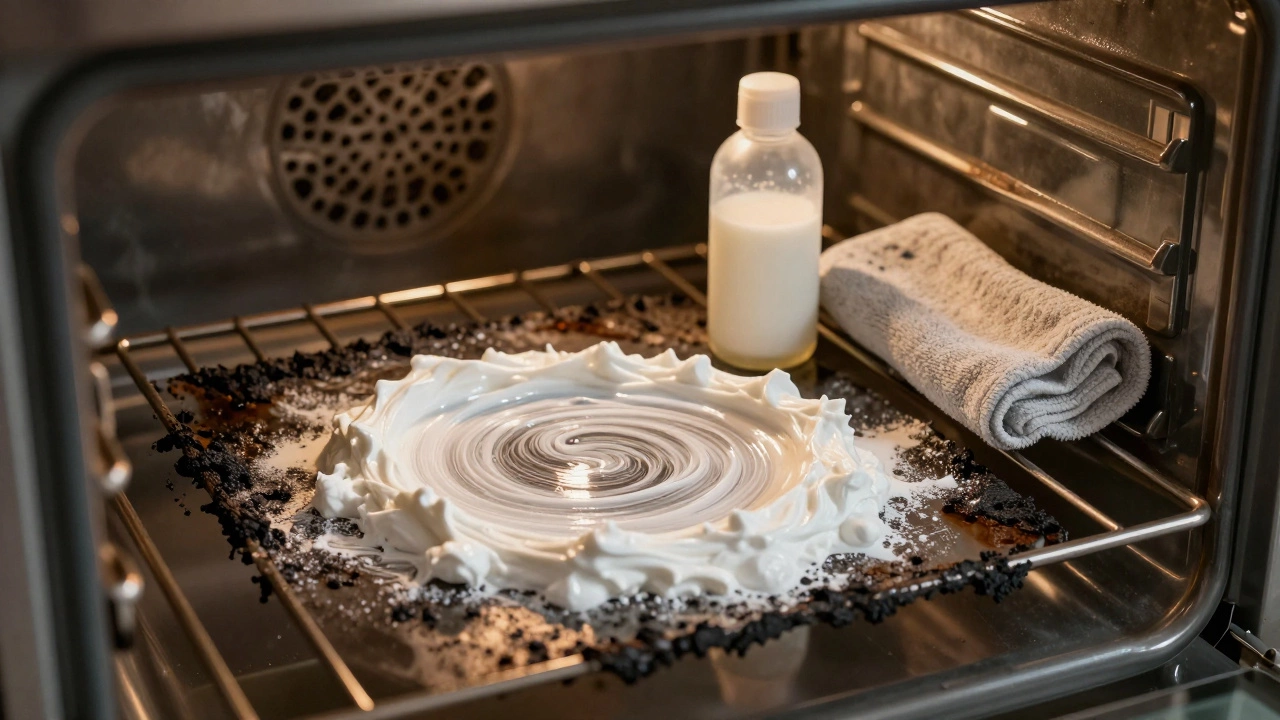
How to Get Burnt Stuff Off the Bottom of Your Oven
Learn how to remove burnt gunk from your oven bottom using safe, cheap, and effective methods like baking soda and vinegar. No harsh chemicals needed.
Read More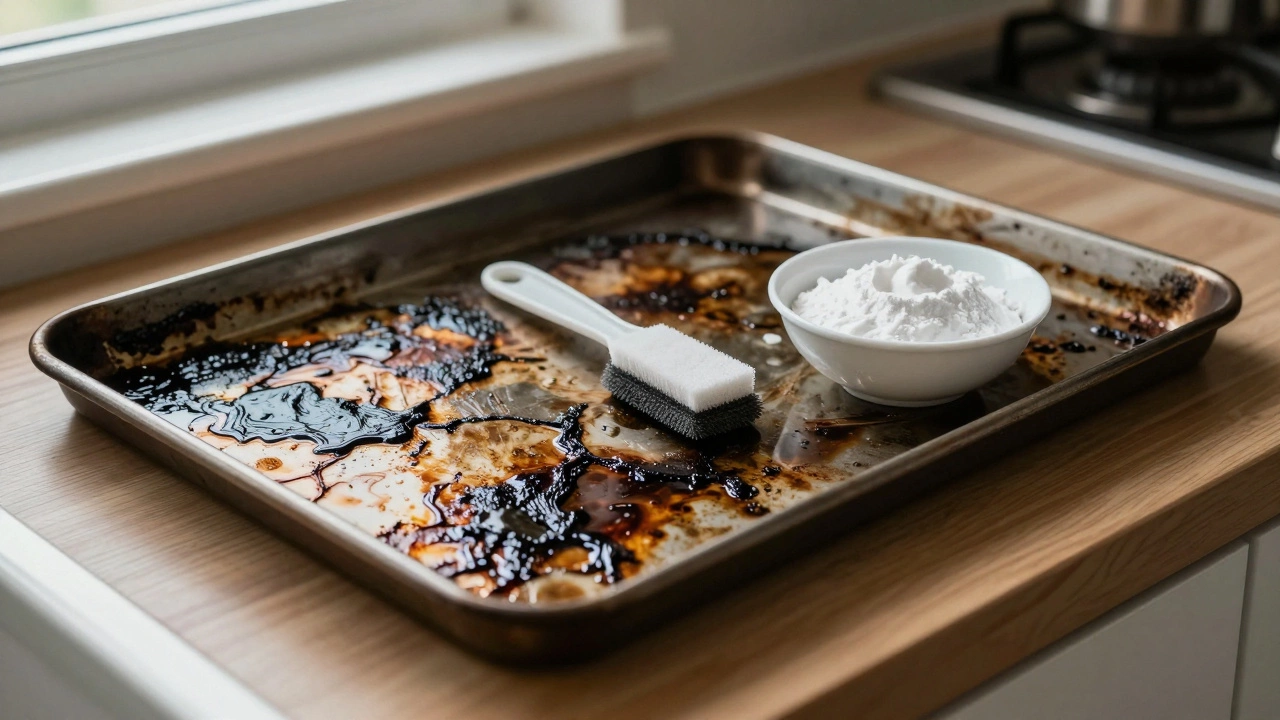
How to Remove Baked-On Grease from Oven Trays
Learn how to remove baked-on grease from oven trays using baking soda and vinegar-no harsh chemicals needed. A simple, safe, and effective method that works every time.
Read More