Pressure Washer for House: What You Need to Know Before You Buy
When you’re looking for a pressure washer for house, a high-pressure water tool used to clean exterior surfaces like driveways, siding, and decks. It’s not just a fancy hose—it’s a tool that can save hours of scrubbing, but only if you use it right. Also known as a power washer, it’s one of the most popular tools for homeowners who want to tackle dirt, mold, and grime without chemicals. But here’s the thing: not all pressure washers are made the same. Some are too weak to do the job. Others are so powerful they’ll strip paint, crack brick, or ruin your deck if you don’t know how to hold the nozzle.
That’s why knowing your surface cleaning, the process of removing dirt, algae, and stains from outdoor materials like wood, concrete, and vinyl matters. A pressure washer for house use isn’t just about water pressure—it’s about matching the right PSI (pounds per square inch) to your surface. Vinyl siding? Stick to 1,000–1,500 PSI. Concrete driveways? You can go up to 3,000 PSI. But wood decks? Too much pressure and you’ll gouge the wood. And don’t forget the cleaning equipment, tools like nozzles, detergents, and wands that work with pressure washers to improve results. A 0-degree nozzle is great for concrete, but deadly on a fence. The right detergent can break down grease and mold before the water even hits the surface.
Many people buy a pressure washer for house use thinking it’s a one-size-fits-all fix. Then they end up with streaky siding, damaged gutters, or a ruined patio. The truth? It’s not the machine that fails—it’s the lack of understanding. That’s why the posts below cover real experiences: what sprays to use before pressure washing, the hidden downsides of running your own pressure washing service, and how to avoid the most common mistakes that turn a quick clean into a costly repair job. You’ll find guides on choosing the right machine, safety tips you won’t find on the box, and how to clean without wrecking your property. No fluff. Just what works.
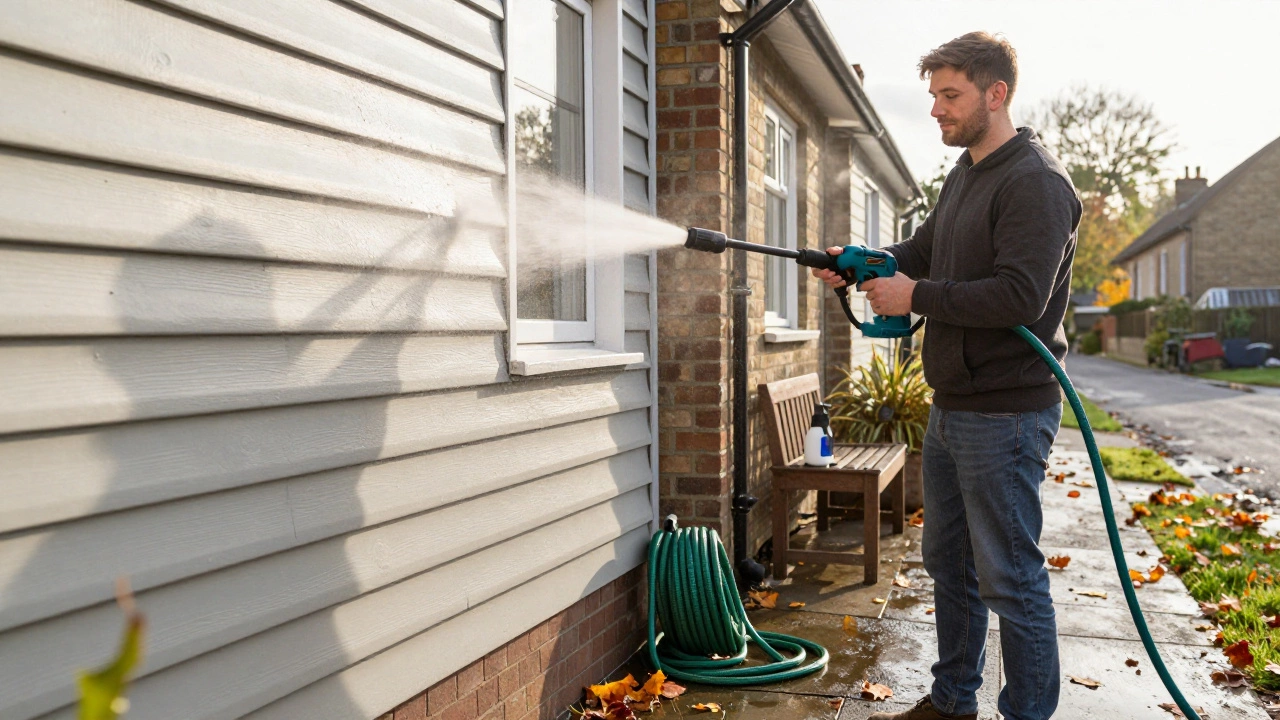
What Kind of Pressure Washer Do I Need to Clean My House?
Find the right pressure washer for your home without overpaying or damaging surfaces. Learn PSI and GPM needs, electric vs gas, attachments, and safe techniques for UK houses.
Read More