House Pressure Washer Guide: What You Need to Know Before You Start
When you're dealing with dirt that won't budge—mold on siding, grimy driveways, or algae-covered patios—a house pressure washer, a high-pressure water tool designed for cleaning exterior surfaces of homes and property. Also known as power washer, it's not just a fancy garden gadget—it's a tool that can save hours of scrubbing if used right. But here's the thing: most people buy one, use it once, and then regret it. Why? Because they don’t know what surfaces it can safely clean, or worse, they use it on something it’ll damage.
A house pressure washer, a high-pressure water tool designed for cleaning exterior surfaces of homes and property. Also known as power washer, it's not just a fancy garden gadget—it's a tool that can save hours of scrubbing if used right. But here's the thing: most people buy one, use it once, and then regret it. Why? Because they don’t know what surfaces it can safely clean, or worse, they use it on something it’ll damage.
It’s not just about the machine. What you spray before you wash matters just as much. pressure washing chemicals, specialized detergents designed to break down dirt, mold, and grease before high-pressure water hits the surface can make the difference between a quick clean and a total mess. Some cleaners are made for concrete, others for wood, and a few are safe for vinyl siding. Using the wrong one can strip paint, damage seals, or leave streaks that last for months.
You also need to know what not to clean. Pressure washers aren’t magic wands—they’ll ruin window seals, peel old paint, and force water into gaps that lead to rot. Even brick can crack if you hold the nozzle too close. And don’t even think about using it on your car’s paint or roof shingles unless you’ve watched a pro do it first.
People think pressure washing is just about power, but it’s really about control. The right nozzle, the right distance, the right angle—it all adds up. A 15-degree nozzle gives you a focused stream for stubborn grime. A 40-degree nozzle spreads the water out for gentle cleaning on siding. And if you’re cleaning a deck, you need to follow the grain, not go sideways.
Weather matters too. You can’t pressure wash in freezing temps—water will freeze in cracks and make things worse. And if it’s windy, you’ll end up spraying your neighbor’s fence instead of your own. Most pros wait for a calm, dry day with temps above 50°F.
And then there’s safety. Those nozzles can cut skin. The water pressure is strong enough to knock you off your feet if you’re not careful. Always wear eye protection, closed-toe shoes, and gloves. Never point it at people, pets, or electrical outlets. And if you’re cleaning near windows or doors, tape them shut—water will sneak in.
What you’ll find in the posts below isn’t just theory. It’s real advice from people who’ve been there: the mistakes they made, the products they swear by, and the shortcuts they discovered after years of washing houses, driveways, and fences. You’ll learn what sprays work best before you start, why some people avoid pressure washing altogether, and how to tell if your home even needs it.
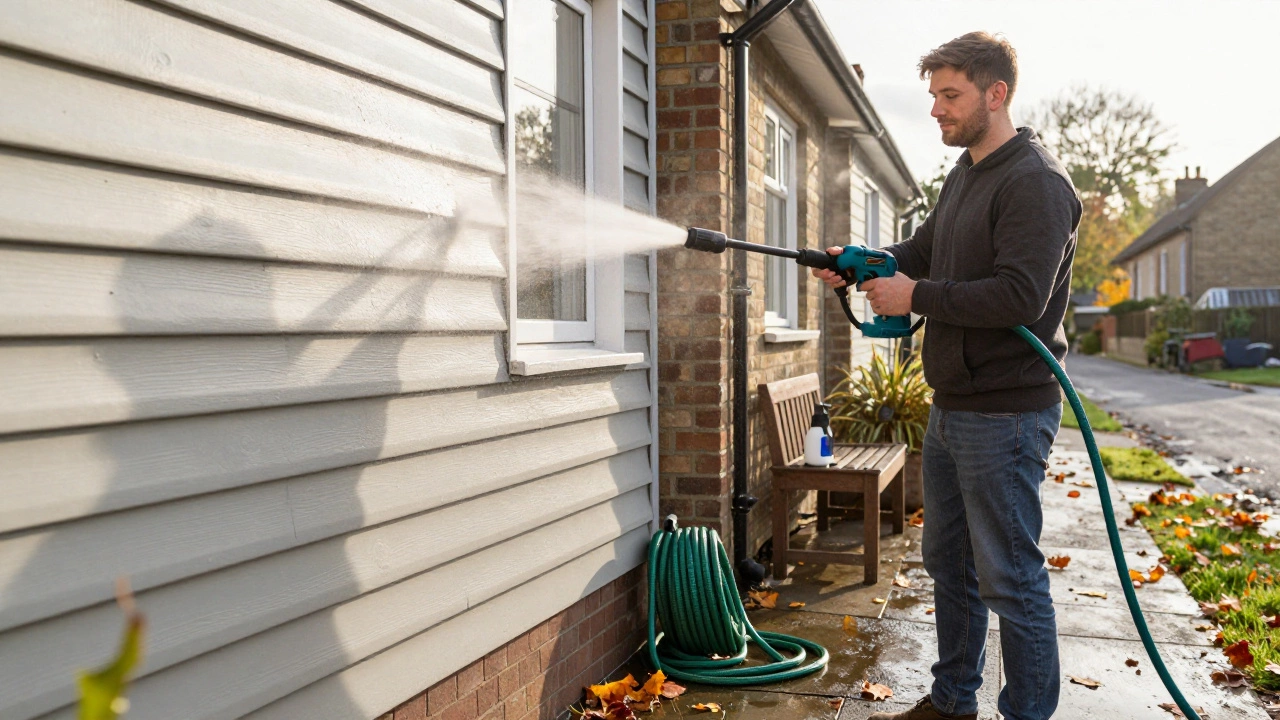
What Kind of Pressure Washer Do I Need to Clean My House?
Find the right pressure washer for your home without overpaying or damaging surfaces. Learn PSI and GPM needs, electric vs gas, attachments, and safe techniques for UK houses.
Read More