Clean Oven Trays: Proven Methods, Tools, and Tips That Actually Work
When you’re trying to clean oven trays, the heavy, baked-on grease that sticks to them isn’t just ugly—it’s a fire hazard and a magnet for bacteria. Also known as oven tray degreasing, this task is one of the most hated parts of deep cleaning, but it doesn’t have to be a nightmare. You don’t need harsh chemicals or hours of scrubbing. What you need is the right approach—and the right tools.
Baked-on oven grease, a stubborn residue formed from fats, sugars, and food particles that carbonize under high heat. This isn’t just dirt—it’s a chemical bond that regular dish soap can’t break. That’s why most store-bought oven cleaners work: they use lye or other strong alkalis to dissolve that bond. But if you’re worried about fumes, skin irritation, or damaging your oven’s enamel, there are safer ways. Vinegar, baking soda, and hydrogen peroxide can do the job too, especially when given time to soak. The key isn’t strength—it’s patience. And if you’re using a pressure washer to clean outdoor grill trays? That’s a different story. You need the right PSI, and you absolutely don’t want to spray that near your oven’s control panel.
Natural oven cleaning, a growing trend backed by people who want to avoid toxic fumes around kids, pets, or sensitive lungs. It’s not just about being eco-friendly—it’s about avoiding residue that can contaminate your next meal. Baking soda paste, left overnight, lifts grease without scratching. Vinegar spray after the paste breaks down the grime and neutralizes odors. Some swear by combining the two, but don’t mix them in a bottle—it just makes fizz and wastes product. Apply them in layers, not at once. And don’t forget the racks. Those are often the worst offenders. Remove them. Soak them in hot water and dish soap. Let them sit. Scrub with a non-scratch pad. Rinse. Dry. It’s simple, but most people skip the soak and end up frustrated.
What kills people is rushing. They spray, wait ten minutes, scrub hard, and give up when it doesn’t vanish. Grease doesn’t work that way. It takes hours to loosen. Some pros leave trays soaking in the bathtub overnight. Others use the oven’s self-clean cycle—but that’s only safe if your oven is in good condition and you have good ventilation. If your trays are warped or coated with non-stick material, skip the high heat. It’ll ruin them.
You’ll also find people recommending commercial grease removers, industrial-strength cleaners designed for restaurants and commercial kitchens. These work fast, but they’re overkill for home use. They’re expensive, dangerous if misused, and often contain chemicals that linger even after rinsing. For most households, a good DIY method beats a fancy bottle every time. And if you’re cleaning after a big holiday meal? Do it the day after, not the week after. Grease hardens the longer it sits.
There’s no magic spray. No one-size-fits-all hack. But there are proven steps that work every time—if you follow them. The posts below cover exactly that: what dissolves grease best, which tools won’t scratch your trays, how to clean without breathing toxic fumes, and even what to do if your trays are already damaged. You’ll find real-life methods from people who’ve been there, not marketing fluff. No fluff. Just results.
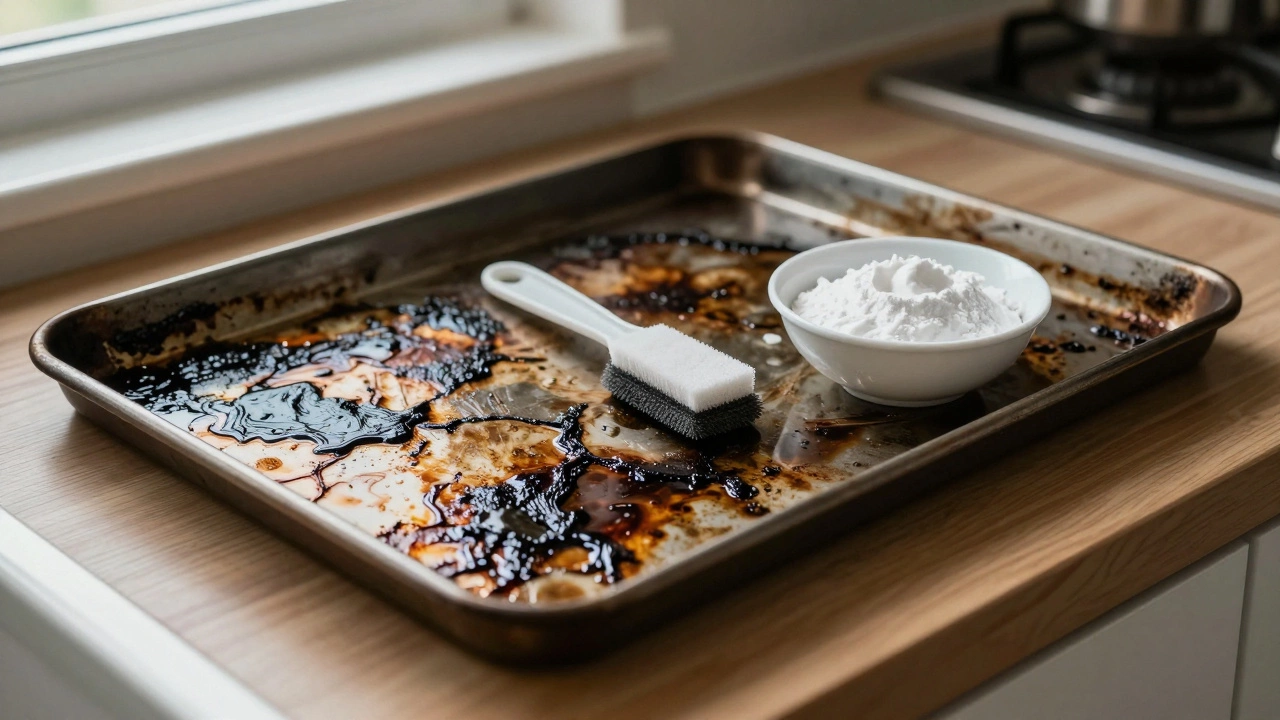
How to Remove Baked-On Grease from Oven Trays
Learn how to remove baked-on grease from oven trays using baking soda and vinegar-no harsh chemicals needed. A simple, safe, and effective method that works every time.
Read More