Bed Urine Stain: How to Remove It and Prevent Future Damage
When a bed urine stain, a persistent discoloration and odor caused by urine soaking into mattress fabric or padding. Also known as urine damage, it doesn’t just look bad—it can ruin sleep, trigger allergies, and cost you hundreds if ignored. Whether it’s from a child, a pet, or an adult with medical issues, the problem is the same: urine seeps deep, leaves bacteria behind, and smells worse over time. Most store-bought cleaners just mask the odor, but they don’t kill the enzymes that keep reactivating when the area gets damp. That’s why the right fix isn’t about scrubbing harder—it’s about using the right science.
The real enemy here isn’t the urine itself, but the enzyme cleaner, a biological solution that breaks down organic matter like urine proteins and urea at a molecular level. Also known as bio-enzymatic cleaner, it’s the only type that truly eliminates the source of the smell, not just covers it up. Without it, you’re stuck in a cycle of cleaning, re-staining, and re-odorizing. And if you’re using bleach or vinegar alone? You might be making it worse. Vinegar can set ammonia-based stains, and bleach can damage mattress fibers while releasing toxic fumes. The best approach combines targeted enzyme treatment with proper drying—because moisture is what lets mold and bacteria thrive.
Related to this are mattress cleaning, the process of removing stains, odors, and allergens from mattress surfaces to restore hygiene and comfort. Also known as bedding sanitation, it’s not just about spots—it’s about preventing long-term damage. A single urine incident can reduce a mattress’s lifespan by years if not handled right. That’s why many professional cleaners use steam extraction after enzyme treatment, but only if the mattress is designed to handle moisture. Most foam or spring mattresses aren’t. That’s why quick action matters: blot, don’t rub; use cold water first; and always test a hidden spot before treating the whole area.
And don’t forget pet urine removal, a specialized form of stain treatment focused on eliminating odors from animals, which often re-mark the same spot if the smell lingers. Also known as animal accident cleanup, it’s one of the most common reasons people call in pros. Dogs, cats, and even rabbits can leave behind stains that seem gone—but their noses tell a different story. If your pet keeps returning to the same bed, it’s not a behavioral issue—it’s a cleaning issue. Fix the smell, and you fix the behavior.
There’s no magic spray, no miracle wipe. But there is a proven, step-by-step method that works every time if you start fast and stick to the science. You’ll find real-life guides below showing exactly how to do it with household items, what products actually deliver results, and how to protect your mattress so this never happens again. No fluff. No hype. Just what works.
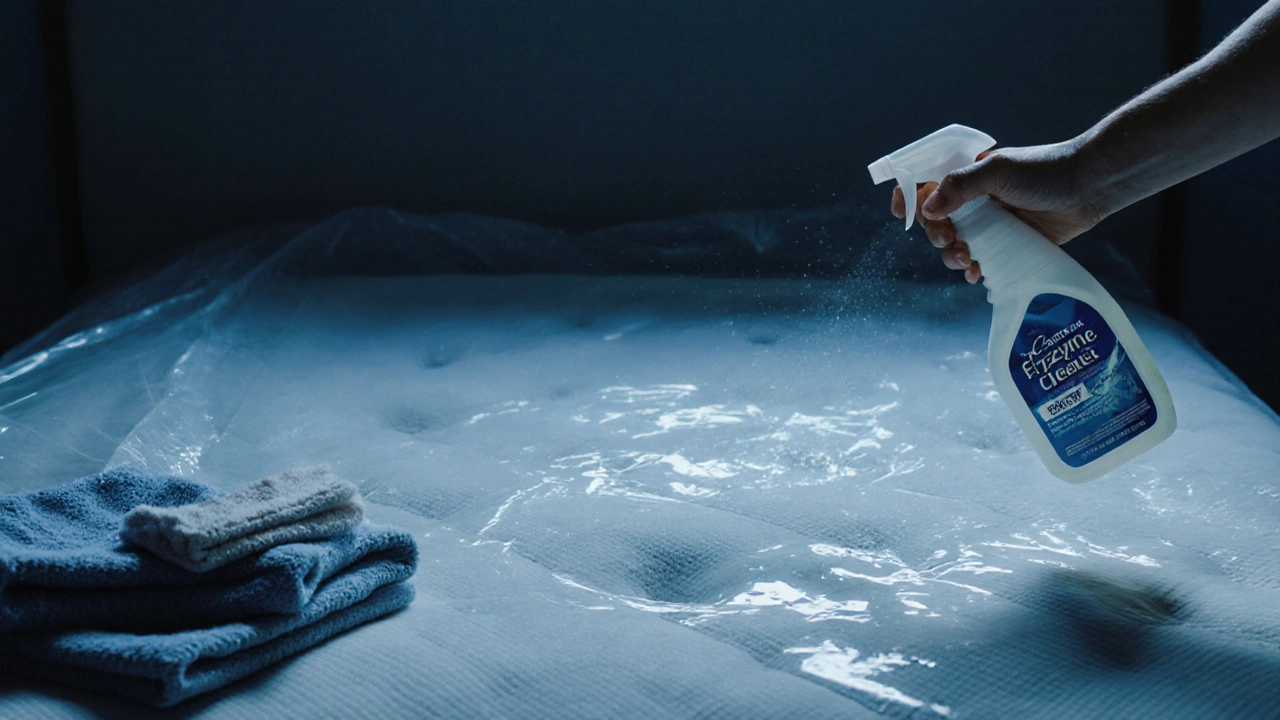
What Kills Human Urine Smell in Mattresses? Ultimate Guide
Learn what actually kills human urine smell in mattresses-not just masks it. Discover the science behind enzyme cleaners, step-by-step cleaning, and when to replace your mattress.
Read More